
Tonight Kodiak will host an event in our Signal series, with leading autonomy experts. Specifically, my colleague Shubham Shrivasta will host Wei Zhan. Dr. Zhan is the Chief Scientist at Applied Intuition, and also co-founder of Berkeley DeepDrive.
Tonight Kodiak will host an event in our Signal series, with leading autonomy experts. Specifically, my colleague Shubham Shrivasta will host Wei Zhan. Dr. Zhan is the Chief Scientist at Applied Intuition, and also co-founder of Berkeley DeepDrive.
A couple of weeks back, on Wednesday, August 12, I went to New York City with some Kodiak colleagues to ring the opening bell on the NASDAQ stock exchange. This was so much fun!
Our CEO, Don Burnette, gave a brief speech, and then everyone got on stage to count down to 9:30am and ring the bell to open trading. The event producers had us clap and cheer for about 90 seconds, as various networks like CNBC and Fox Business cycled through, covering the start of the trading day. 90 seconds was a lot of time to cheer!
David Wicks, NASDAQ VP of East Coast listings, hosted us. He said he’s rung about 3000 bells in his years at NASDAQ, and ours was the best 😉
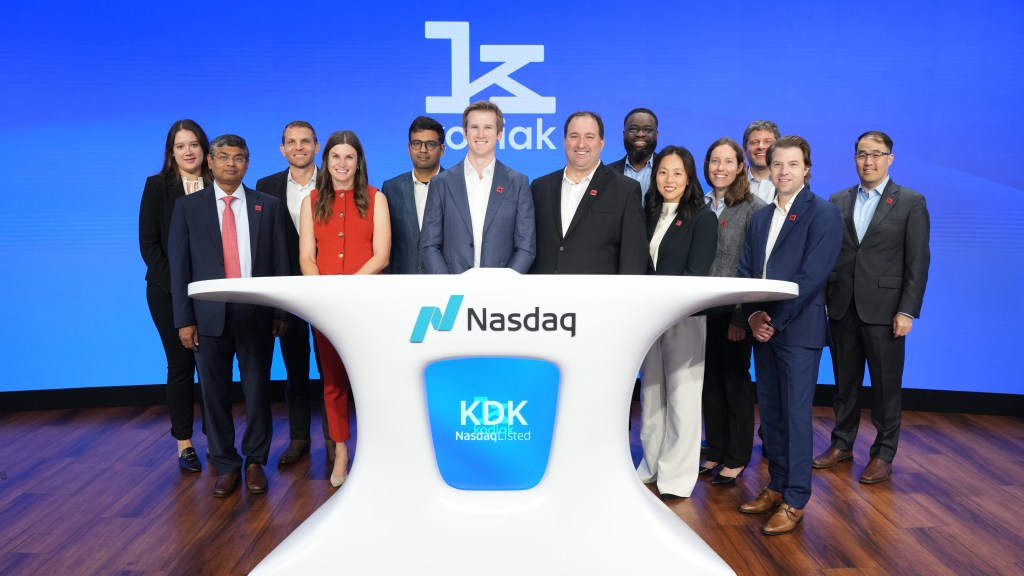
I got my photo on Times Square, for a second 🌟
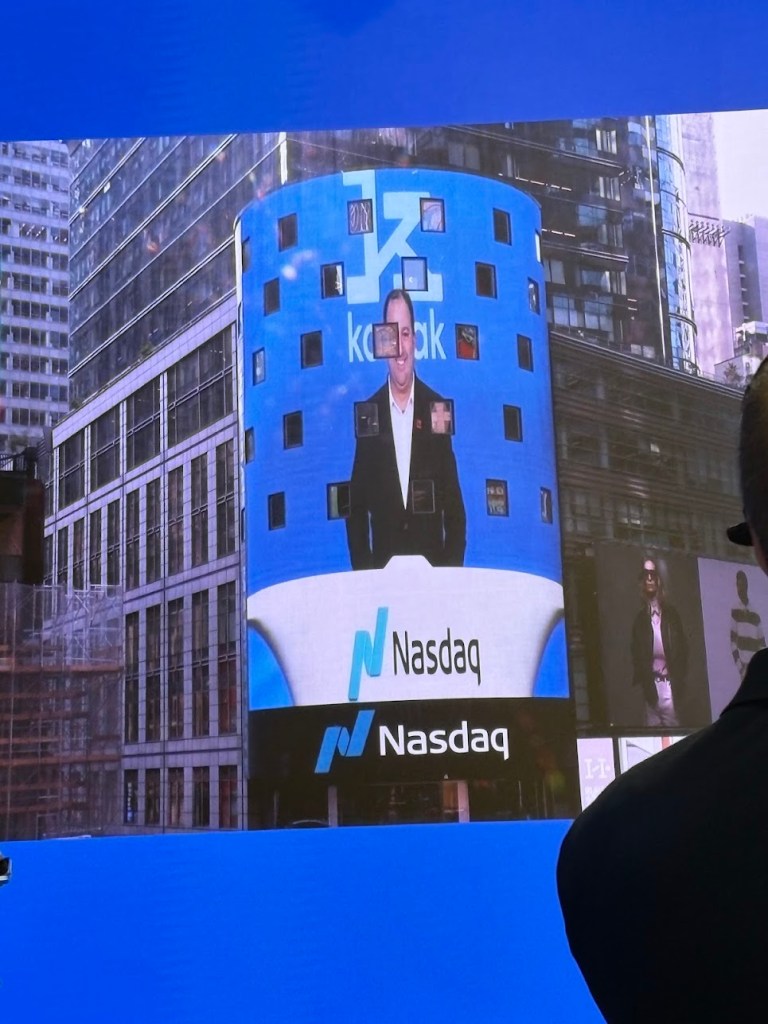
The NASDAQ was up for the day!
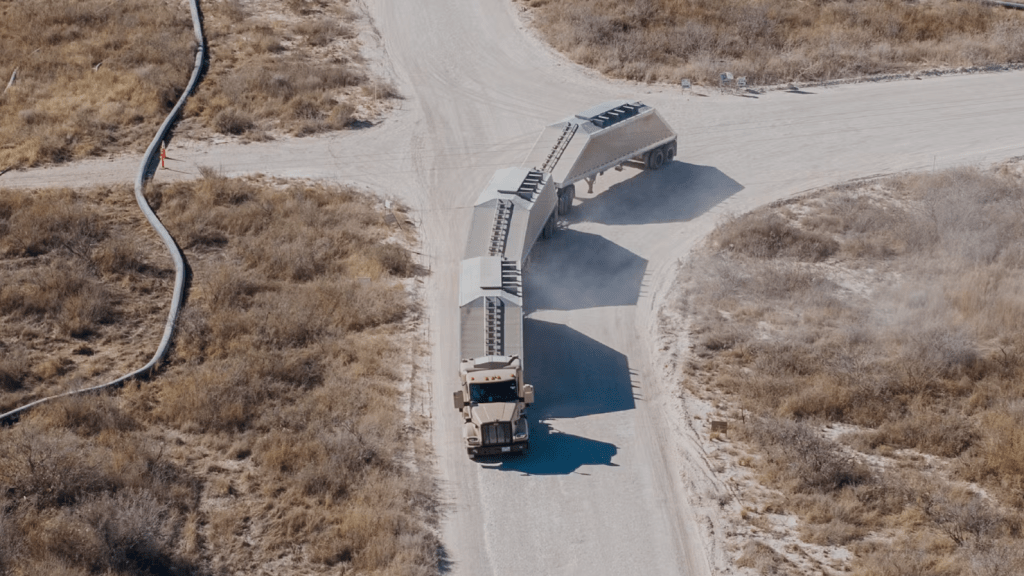
One of my big achievements at Kodiak this year was leading the effort to support hauling triple trailers driverlessly – a world first! I wrote a blog post about all of the parts required to make this work – Perception, Planning, Controls, State Estimation, Systems, Cloud Computing.
This is a world-first!
Hauling half a football field worth of truck through a six meter-wide cattle guard is an incredible challenge. I’m proud that we pulled it off, and grateful to the team for everyone’s incredible work.
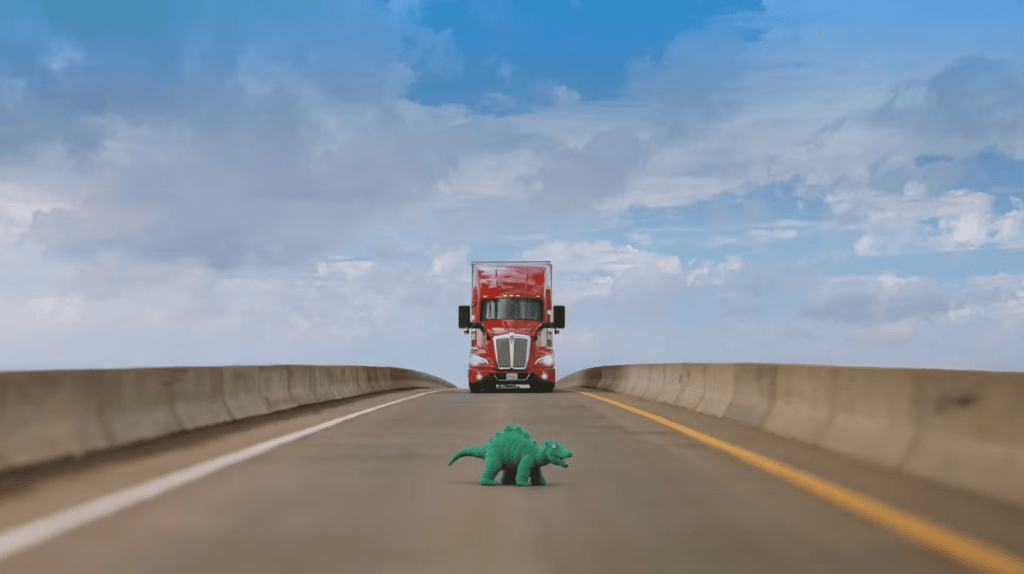
The hardest challenge is autonomous vehicle development isn’t technical – it’s raising enough money to keep going 💸
The hardest technical challenge, however, is determining when you are ready to remove the safety driver and let the system operate on its own. Once you’re able to make that assessment, the task list to get to “ready” becomes clear, and progress is steady.
Kodiak just published a blog post on two of the major tools we use to determine when we are ready to “go driverless.” We use these tools every day, and we’ve used them to go driverless in an increasing range of domains. We’re using them to prepare to go driverless on the highway.
The tools are heavily dependent on probability and statistics. The first tool, in fact, we call “probabilistic risk assessment.”
In simple terms, the Kodiak PRA decomposes scenarios into three primary factors:
- Scenario Exposure: How often does our vehicle encounter this type of operating scenario?
- Collision Likelihood: Given that our vehicle encounters this operating scenario, how likely is it that a collision occurs?
- Severity of Collisions: How severe would the collision in this scenario be?
The second tool is called “Breakpoint.” This tool feeds values into the three factors of the PRA:
BreakPoint deliberately injects realistic, time-varying errors onto the signals that flow through the autonomy system in order to ensure that the autonomy system still drives safely in both normal and extreme conditions. Better yet, BreakPoint actively guides its search adversarially, actively trying to drive our system into a “collision” situation, thus helping us discover autonomy failure modes. Then, BreakPoint tooling helps us estimate the risk associated with this failure mode, and this information flows directly into our PRA.
If you’re interested in solving the hardest technical challenge in autonomous vehicle development, you should read the blog post.
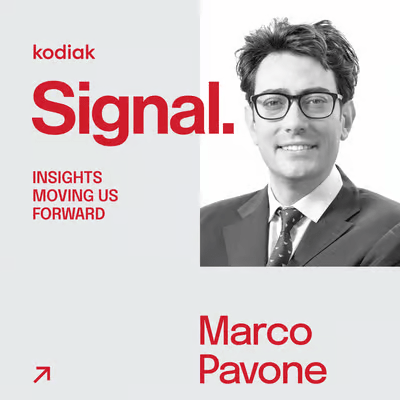
Come to Kodiak next Tuesday evening, May 26th! We will be hosting Signal, our ongoing speaker series.
This session’s guest will be Stanford Professor Marco Pavone. Professor Pavone also leads autonomous vehicle research at NVIDIA.
There will of course be recruiters, if you are interested in working at Kodiak! But not required 🙂
The event is open to the public, at 6pm Tuesday evening, in our Mountain View office. Please RSVP!
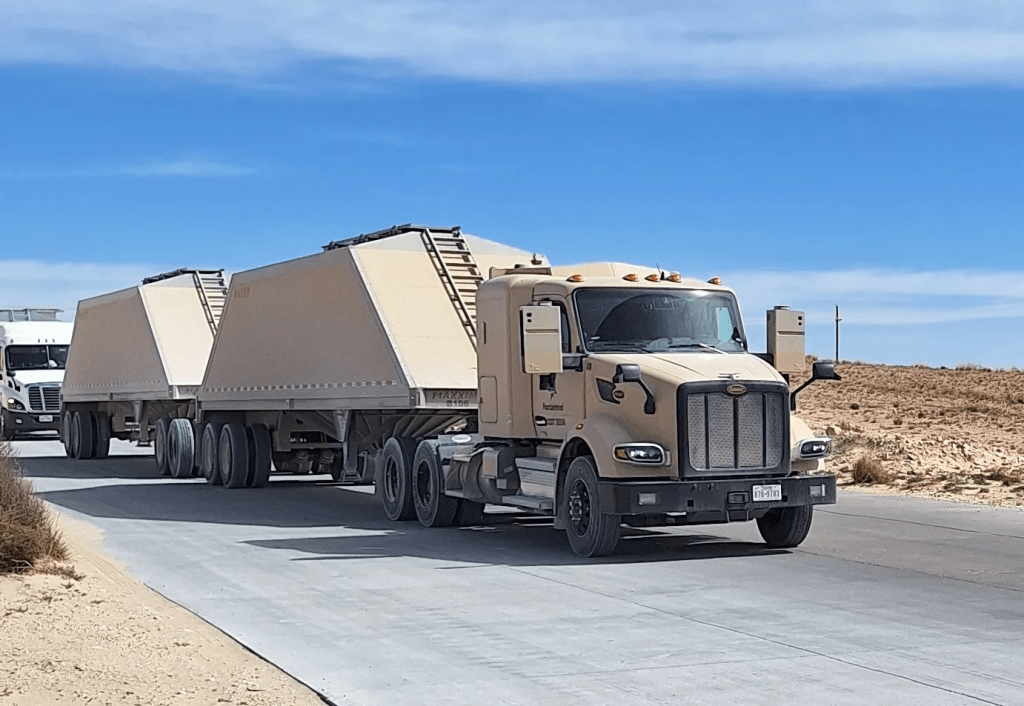
Bloomberg columnist Thomas Black recently traveled to the Permian Basin to observe Kodiak’s autonomous trucks hauling sand for Atlas Energy Solutions. He came away with a really deep understanding and a great write-up of the early stages of autonomous trucking.
Kodiak is operating 28 driverless trucks to haul sand, and the startup, which began trading publicly in September, is under contract to deliver an additional 72 to Atlas…The trucks pick up the sand at the end of a $400 million, 42-mile conveyor belt — aptly named the Dune Express — that Atlas built to ship sand from the mine to a staging area deep in the oil patch, allowing the company to bypass several crowded public roads.
He also nods toward the Dune Express, Atlas’s massive conveyor belt.
Although many people think of chatbots when it comes to artificial intelligence, the conveyor belt, like its cousin the driverless truck, has the components of physical AI. Sand whirls along on a belt with almost 69,000 rollers that have sensors that monitor speed, vibration and other variables and flag the need for preventative maintenance. Another sensor detects any tear of steel cables in the belt. A slew of cameras and fiber optic cable allow the conveyor to be monitored remotely.
The Permian Basin is tough to reach – you have to fly to Dallas or another southwestern hub city, and then catch a connecting flight, and then drive an hour or two. Not a lot of people have gotten out there to see what’s going on. Kudos to Thomas Black for putting in the legwork.
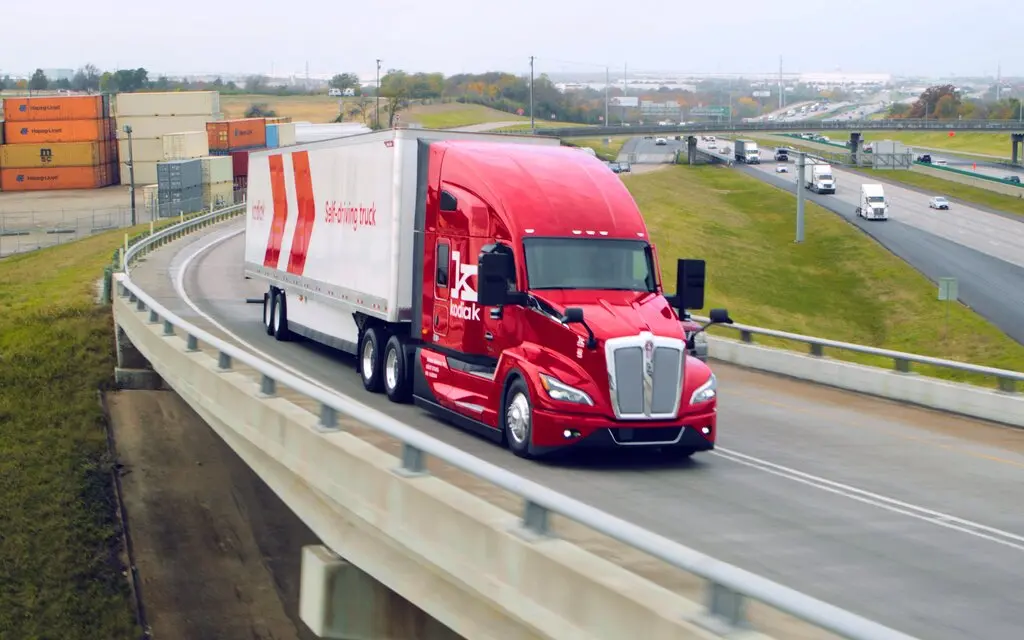
The New York Times has a story out about Kodiak and other autonomous vehicle companies that are planning to go driverless on the highway this year.
Don Burnette, the chief executive and founder of Kodiak, whose partners include Bosch and Roush Performance, said it would have self-driving semis with no drivers on long-haul routes in the second half of this year.
The article suggests various obstacles, but also implies (correctly) that companies will solve these along the way to going driverless.
One of the great contributions of Waymo has been to show the public that safe driverless vehicles are a reality. Arguing about this used to a dead-end, because some people would say, “driverless wouldn’t be safe,” and then other people would say, “driverless will be safe,” and nobody would really be persuaded. Now people can see that driverless robotaxis are safe, and driverless trucks are a natural extension of that.
2026 is going to be great!

Kodiak today announced our 2025 Q4 earnings. This was especially exciting for me, because we publicized one of my big projects from the second half of last year – hauling triple trailers autonomously in the Permian Basin.
As our CEO Don Burnette said:
We recently became the first AV company to pull triple trailers, which, when combined with the tractor, weigh over 275,000 pounds, or 137 tons, and extend more than half the length of a football field. Hauling triples requires extreme precision and enables us to provide our industrial customers higher asset utilization and a more cost-effective solution.
I led this project, working closely with my Kodiak colleagues on our Perception, Planning, Controls, Systems, Infrastructure, and Product teams.
One of the major challenges with triples is just how massive they are. Think about how large the red and white tanker truck is, in the preceding photograph. Now look at how small that tanker looks, next to our triple trailer truck. That’s how big triple trailers are!
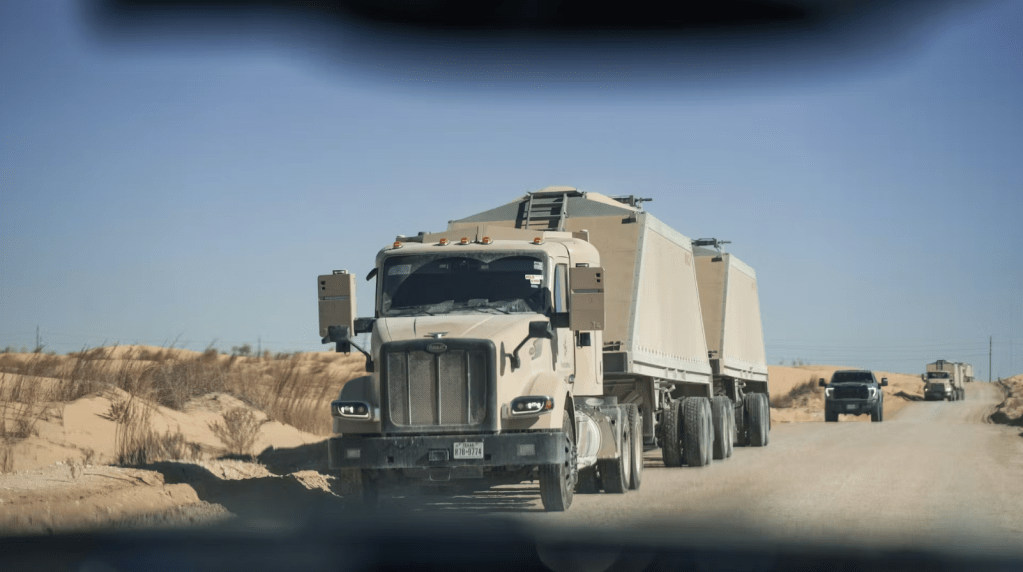
My colleague Pete Bigelow just wrote about his first trip to the Permian Basin, to observe Kodiak self-driving trucks first-hand.
The sand-colored tractors and their trapezoid-shaped trailers all look the same as they enter and exit the roads around the main depot. Only a careful eye can discern between the human-driven trucks and the ones powered by an autonomous system.
That’s the way it should appear.
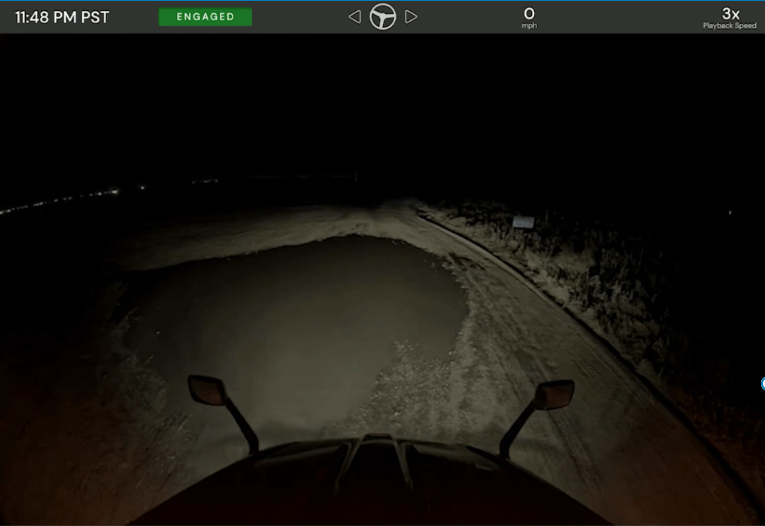
My Kodiak colleague, Sandeep Baddam, describes the traversability framework we built to traverse puddles, potholes, and ditches in the Texas oilfields.
These “negative obstacles” are a major challenge of driving on dirt roads. Sandeep has achieved key results in navigating through and around these elements. Our traversability framework considers many dimensions of such negative obstacles, including depth, gradient, type, area, and then decide how to move longitudinally and laterally, to keep the truck safe and our freight moving.
Great work, Sandeep!

