
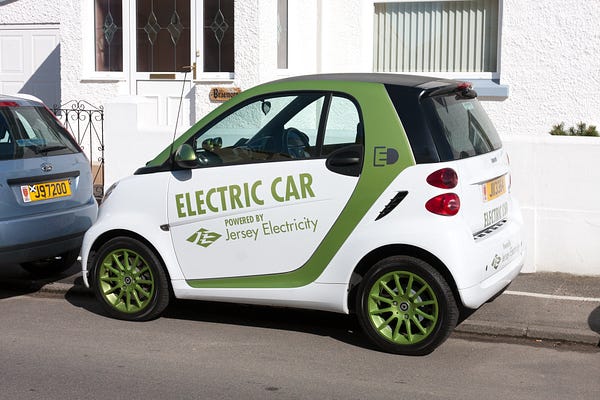
I have recently been reading The Great Race by Levi Tillemann, which is a history of the automotive industry and the quest for the electric car, in particular.
At the end of the book, Tillemann spends a few pages riffing on the brief recent history of, and potential for, self-driving cars. Since most of the book is focused on the electric vehicle and it’s environmental benefits, it’s no surprise that Tillemann’s thoughts on autonomous vehicles also converge on environmental benefits.
A few original (to me) points Tilleman makes have to do with the potential for self-parking and the materials requirements of cars.
On the parking front, it is widely believed that autonomous vehicles will sharply decrease parking needs, making everyone’s lives better. But what Tillemann pointed out that I hadn’t considered, is the environmental and time-saving benefits of this. In particular, drivers spend a lot of time circling around their destinations, looking for parking. Eliminating this circling will bring meaningful benefits.
Perhaps a more significant benefit will be the reduction in materials needed to construct cars. As Tillemann writes, “Cars that don’t crash could also be much smaller and lighter, with fewer safety features.”
As I understand it, a lot of the environmental cost of a car comes not even burning fuel for driving, but in the initial construction. If we can make building cars simpler and cheaper, this will ease resource and financial constraints.
Originally published at www.davidincalifornia.com on September 18, 2015.
 David Silver