
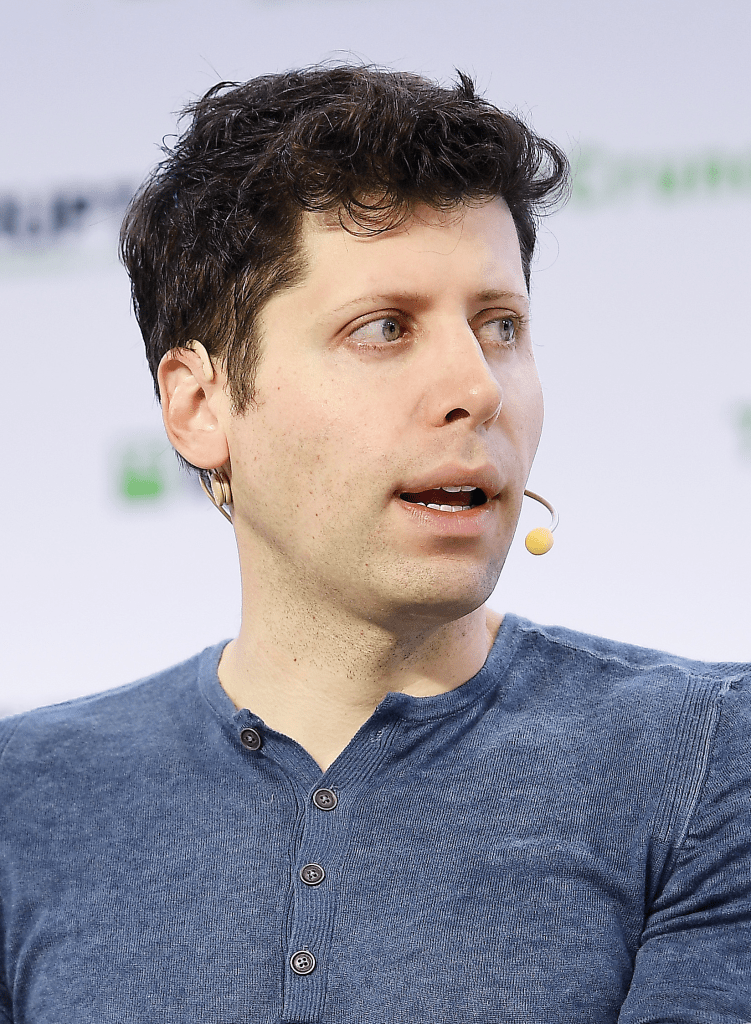
The OpenAI leadership saga has captivated me this weekend, as it has seemingly all of Silicon Valley Twitter. On Friday afternoon, OpenAI, the company behind ChatGPT, unexpectedly and kind of shockingly fired their CEO, Sam Altman.
To put it like that, though, is perhaps a little misleading, because it wasn’t really the whole of OpenAI that did the firing, it was more specifically the OpenAI board of directors.
In the 24 hours following the announcement, Twitter has had a field day with this one. My favorite tweet:
The various characters sketched in the tweet are the members of OpenAI’s board of directors. (Technically, the “former Tesla sr product manager” is incoming acting CEO Mira Murati, who is not yet on the board. And the tweet omits OpenAI co-founder and biard member Ilya Sutskever, who is both a leading figure in AI research and the catalyst of the current uproar. But the tweet is great and its essence is correct.)
The situation at OpenAI reminds me a little of Dan Amman’s departure from Cruise a few years ago.
Like Altman, Amman’s employees were fond of him, and like Altman, the firing was completely unexpected, by the public, the employees, and the company itself.
And, like Altman, Amman worked for a startup with an unusual governance structure.
In Altman’s case, the governance structure is a confusing mish-mash of a non-profit that owns and controls a “capped” for-profit company.
In Amman’s case, Cruise was and still is a majority-owned (but not wholly-owned) subsidiary of General Motors.
And, in both cases, the CEO’s departure seems related to the respective unusual governance structures. The rumor seems to be that Sutskever and the rest of the OpenAI board were unhappy with Altman’s focus on growth and commercial success. Perhaps this focus came at the expense of AI safety.
And in Amman’s case, the news reporting after the fact was that Amman pushed too hard and too repeatedly for a Cruise IPO, that would have more formally separated Cruise from GM. In Cruise’s case, the reporting is that the board was entirely made up of GM employees, all of whom had day jobs reporting up to Mary Barra, GM CEO. So basically the board was Mary Barra.
All situations are unique and of course Altman’s and Amman’s firings have lots of specific nuance. But it seems like there is a lesson here, in that unusual governance structures can cause problems for CEOs who approach their roles similarly to how the CEO of a standard venture-backed startup might.
Unusual governance structures lead are often the product of idiosyncratic missions and interests. Probably all employees, from the CEO on down, should consider those idiosyncracies and their implications.
 David Silver