Aurora’s FirstLight Lidar

Fast Company has a nice article up about Aurora, with a particular emphasis on its proprietary first-light lidar. The sub-headling is “The Pittsburgh startup is pinning its hopes on a far-seeing lidar sensor.”

Four or five years back, a lot of AV companies were buying up sensor start-ups, although it was often hard to tell whether the acquisitions were focused on the sensor product or were purely acquihires.

Aurora has evidently stuck with its in-house FirstLight lidar sensor, and claims that sensor can see up to 1300 feet (400 meters). It’s always hard to know what to make of lidar metrics, because of the quantity vs. quality trade-off. You can configure the sensor to get a single lidar point at very long range, but at the cost of field of view, and also lots of false positive returns.

A lidar that got high-quality data at 400 m would be great. Although Aurora’s own blog post on the topic hints at the trade-offs involved.

An FMCW lidar sensor may only receive a few returns on an object 300m away, but if those hits give a velocity value of interest (e.g., moving towards the vehicle at >70 mph) our perception system knows the object is important because it is approaching quickly.

In any case, it’s interesting that while many AV companies have spun down their sensor acquisitions and gone with vendored components, Aurora is touting its in-house sensor.

Remote Assistance At Zoox

The New York Times has a cool article up today about remote assistance at Zoox.

Remote assistance is mostly a quiet topic for autonomous vehicle companies. It refers to an umbrella of tools that humans in a remote operations center can use to help an autonomous vehicle.

Depending on the company, these remote assistance tools can include everything from fully driving the vehicle, to provide suggestions or information to the software stack, to bringing the vehicle to an immediate stop.

Zoox relies on guidance, but seemingly not full remote driving.

“We are not in full control of the vehicle,” said Marc Jennings, 35, a Zoox remote technician. “We are providing guidance.”

Here’s how the Times describes an encounter:

If a Zoox robot taxi encounters a construction zone it has not seen before, for instance, a technician in the command center will receive an alert — a short message in a small, colored window on the side of the technician’s computer screen. Then, using the computer mouse to draw a line across the screen, the technician can send the car a new route to follow around the construction zone.

And here’s a Zoox video on the topic.

Founder Mode

Paul Graham, the founder of Y-Combinator, posted an essay this weekend entitled, “Founder Mode.”

I read a lot of tweets about this essay before I actually clicked through to read the essay itself. Y-Combinator being the Silicon Valley force that it is, a lot of the tweets were sycophantic, which in turn primed me to dislike the essay.

Once I read the essay, however, I found it pretty humble and on-point, although not as earth-shattering as its promoters proclaim.

The essay starts off with a reference to a talk by Airbnb founder & CEO Brian Chesky. The essay’s praise for this talk (which as far as I know was behind closed doors and maybe unrecorded) is over-the-top.

But then the essay moves on with a lot more humility and a nice dose of concision.

Graham writes that a lot of founders have trouble scaling. They hire management teams and defer to those teams and the strategy doesn’t work out. If the founders are smart, they stop deferring to the managers, and step back into “founder mode.”

Fair enough.

The insights of the essay, I think, are two-fold. One is that non-founder executives tend be very good at “managing up,” and maybe not so good at actually managing.

C-level execs, as a class, include some of the most skillful liars in the world.

Graham’s other insight is that not much is known about this “founder mode.”

There are as far as I know no books specifically about founder mode…But now that we know what we’re looking for, we can search for it. I hope in a few years founder mode will be as well understood as manager mode. 

The first insight, about the perils of executives who are only good at managing up, strikes me as really important, although not original to Graham. I’ve worked in start-ups for most of my career and have seen and observed this. Perhaps I have even written about it. I’m confident many people noticed it before me.

That said, I think surprisingly few founders and CEOs and even start-up employees are aware of the phenomenon. If Paul Graham throws the force of his influence behind it, I think that would be to the benefit of the entire start-up ecosystem.

The second insight, about the dearth of knowledge on “founder mode” is perhaps more original and also more nebulous. Does this “founder mode” really exist? What does it entail? Graham is pretty open that he doesn’t yet know.

Perhaps, as he writes, knowing that we’re even looking for it will bring it into focus.

Uber To Offer Cruise Autonomous Vehicle Rides

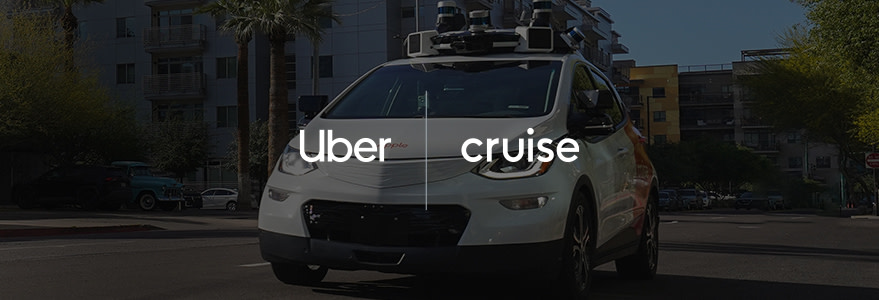
Uber and Cruise announced that next year Uber customers will be able to hail Cruise autonomous vehicles.

A year ago Waymo was feeling the heat from Cruise, which was launching in lots of different markets. Waymo responded by cutting its trucking business and moving faster to launch in San Francisco and Los Angeles, as well as open up rides to Phoenix Sky Harbor Airport.

A year later, Cruise has fallen behind and Waymo has surged ahead. Now Uber is feeling the heat from Waymo.

Ironically, Uber is addressing this by partnership with Cruise. The irony has levels. Alphabet (the parent of both Google and Waymo) invested in Uber, and then famously sued Uber, and now Uber is partnering with Waymo’s rival. Uber shut down its own autonomous vehicle operation due to safety incidents; similarly, safety incidents brought Cruise’s momentum to a halt. And, of course, now Uber is trying to use Cruise as protection against Waymo, whereas a year ago Cruise looked like it might surpass Waymo.

The world has come so far in a year. And in, along some dimensions, wound up in a similar place.

Autonomous Vehicle Fundraising

After a fairly long dry spell, a bunch of AV companies have raised a lot of money recently.

The numbers are staggering and reflect both the amount of money it’s taking to get self-driving technology into the market, and also the potential size of the market, which could justify these investments.

Kodiak has been super cash-efficient, having raised only about $150 million so far. We have driverless vehicles on the road for less than a billion dollars. It’s possible and we are doing it!

Kodiak Goes Driverless In The Permian Basin

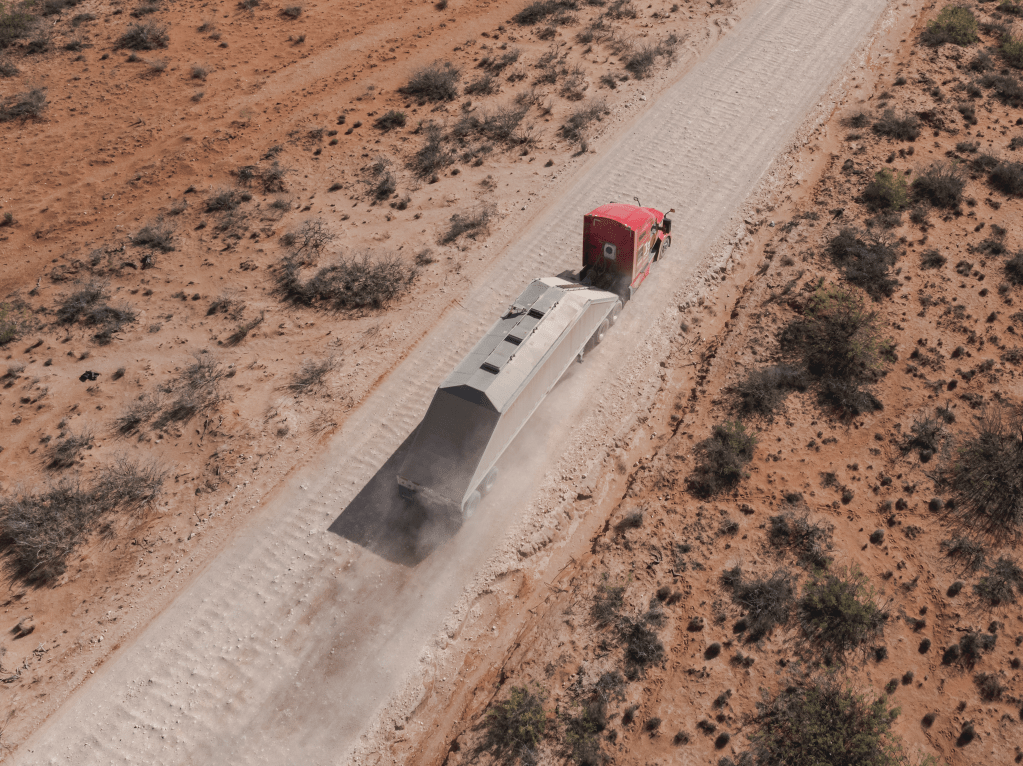
Kodiak recently announced publicly a project that I have been helping to lead for the better part of the year – driverless industrial trucking in the West Texas Permian Basin. We’ve partnered with Atlas Energy Solutions, a top purveyor of proppant, the sand necessary for oil fracking.

Don Burnette, our CEO, has consistently emphasized the necessity of Kodiak becoming a self-sustaining, revenue-generating business. Our industrial business, with companies like Atlas, will make that happen.

West Texas is a different environment than I-40 through urban East Texas. In many ways, the domain is simpler – slower speeds and less traffic. But there are new challenges, such as two-way bidirectional roads and intersections. Expanding the Kodiak Driver to this domain has been a lot of fun.

My First Driverless Waymo Rides

A few months ago I made it off the waitlist for Waymo One, and a few weeks ago I ventured up to San Francisco, solely for the purpose of taking my first driverless Waymo rides.

Years ago I had ridden around Mountain View in a driver-in Waymo Chrysler Pacifica minivan. This time, though, I used the app to hail my own Waymo Jaguar iPace rides.

A few thoughts:

  • The vehicle feels very smooth at 35 mph, on wider, faster streets. My memory is that when I was at Cruise, several years ago now, we were limiting ourselves to 25 mph.
  • Pickup took a while. I started at the edge of the city, took a ride to downtown, and then hailed a different ride back. On each end, pick-up took 15-20 minutes. This was late on a pretty quiet night, so presumably not much contention for vehicles.
  • The “hard” in-vehicle experience is great, especially sitting in the front passenger seat.
  • The “soft” in-vehicle experience is fine. Nothing bad, but nothing special, either. If you connect the Waymo One app on your phone to the vehicle, I think you can select some radio playlists.
  • The rooftop dome, which has a Waymo ‘W’ icon in the photo above, is used to communicate with the public. It has some symbols for pick-up and drop-off.
  • It felt a little expensive. Maybe $25 each way, when I might have guessed $10-$15. I guess Uber and Lyft have gotten more expensive, too.

Overall, it felt super normal and simultaneously a marvel of engineering. Not a particularly tough route or time of day. But just like a person.

Motional’s Bridge Loan

TechCrunch recently reported that Motional secured a bridge loan to keep operating while it lines up its next financing. The company had been, or maybe still is, a joint venture between Hyundai and Aptiv, the Tier 1 automotive supplier. However, Aptiv announced in January that robotaxis are proving too expensive, and stopped financing Motional.

Details on the bridge loan are scant. Motional simply put out a press release that the short-term financing will give “shareholders” time to discuss longer-term financing and “solidify alignment” on Motional’s strategic direction. Motional does say it is “in negotiations to finalize” its next round of funding.

I suppose the issue here may be that Hyundai, or whoever is leading the next financing round, wants to make sure they own enough of Motional that they aren’t just funding the company for Aptiv’s benefit. Perhaps the next round of financing involves selling Aptiv’s ownership stake, in addition to securing new cash. Just speculation, of course.

Startup Employee Compensation

I saw this tweet yesterday, from Gokul Rajaram, who is a board member at several prominent tech companies.

The tweet seems correct, as far as it goes, but it’s worth noting that startups have to compensate employees somehow. It’s interesting to pair the attitude in this tweet with the common refrain that hiring great tech talent is incredibly hard.

Surely to some extent the answer is to compensate employees with equity, although startup equity has some complications:

  • It’s usually illiquid
  • Stock options require employees to eventually put forward cash to exercise; if the employees are working largely for equity, raising the cash to exercise becomes hard
  • Equity compensation turns employees into investors in the company; this has a lot of benefits but also turns the stereotypical employer-employee relationship on its head – employees are now in a position to ask the same hard questions of executive leadership that investors ask

The liquidity issue is typically the largest – you can’t pay the rent or the mortgage or the groceries or the childcare provider with stock.

So we get back to cash compensation.

Of course, the tweet frames its recommendations in terms of extraneous spend. Is a nice office or a bonus extraneous?

I think you could argue about a plush office, although note that a luxurious work environment has value to employees. Maybe just taking that money and giving it to employees as cash would be better, but I guess a nice office is possibly more psychologically and tax advantageous than cash.

And I guess a bonus could be extraneous if it were totally unexpected. But a lot of companies build bonuses into their published compensation structure and employees factor this as a core part of their compensation.

I have other thoughts about bonuses as a part of compensation. There are some significant plus and minuses, from all points of view – deciding whether to take part of cash compensation and put it into a bonus form is non-trivial.

But in the context of the tweet – sure, companies should avoid extraneous spend. They should probably avoid extraneous spend even after they become cash-flow positive! Extraneous spend is wasteful, by definition.

But companies also need to compensate employees in order to attract and retain them. Employee compensation is not extraneous! Let’s not be penny-wise pound-foolish here.

Applied Intuition Raises A $250M Series E

Applied Intuition just raised a $250 million Series E funding round, valuing the simulation company at $6 billion. Many people have observed that in a gold rush, the most valuable business is selling picks and shovels. Applied Intuition fits that bill – they tout that 18 of the top 20 automakers in the world world work with them.

Most autonomous vehicle companies that I have seen have several different types of simulations:

  • Video-game like simulations that look realistic but more expensive to run
  • Playback of logged data from the real-world
  • Hypothetical “synthetic” situations
  • High-fidelity physics simulation

Often there are other types of simulation, as well.

An advantage of working with Applied, as Kodiak does, is the commonality between these scenarios. Since a single company is developing all of these engines, with a product team to coordinate, the simulation products overlap closely. As an engineering customer, this is a big benefit.