
May Mobility Raises A Series D

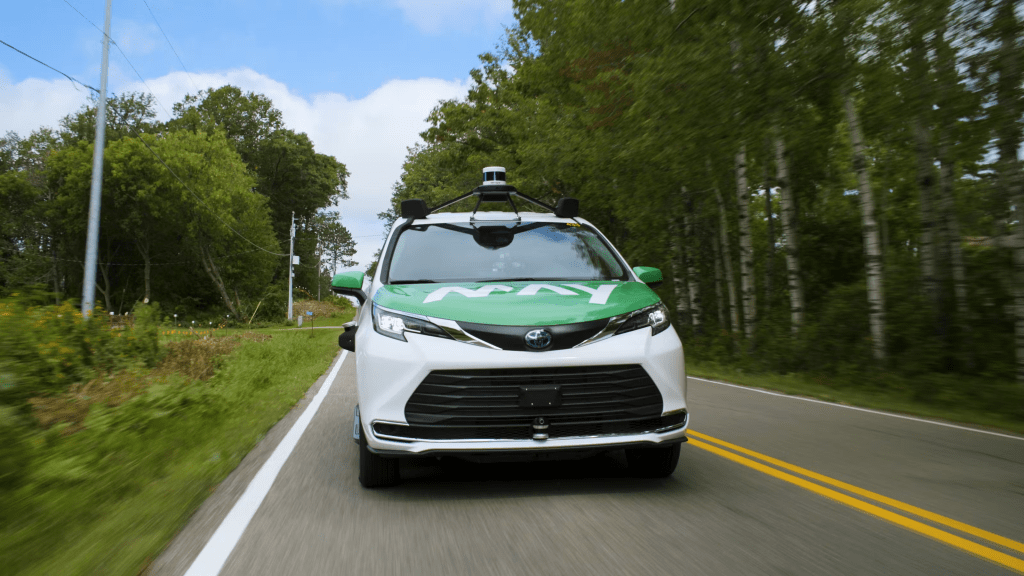
May Mobility raised a $105 million Series D venture capital round!

This is great, both because it is good news for the AV space generally, and because May, specifically, is a kind of awesome “little engine that could” endeavor.

May has been around for a long time, quietly plugging away at different autonomous vehicle deployments, mainly in the AV shared-ride shuttle domain. They’re based out of Michigan, unlike so many of the other AV startups that are Silicon Valley-based. And they’ve held a much lower profile, but also managed to outlast, much larger efforts, like Argo and Uber ATG and Lyft Level 5.

The Series D was led by NTT, a Japanese telecommunications company. The press release indicates some sort of partnership with Toyota:

The companies will work with Toyota Motor Corporation to develop an autonomous driving ecosystem, working with local stakeholders to deploy May Mobility-equipped autonomous vehicles across a variety of vehicle platforms. The companies will incorporate May Mobility’s technology to enhance Japanese transportation networks.

I am curious to what extent this will integrate with, or provide an alternative to, Toyota’s own Woven Planet AV efforts.

Tesla Autopilot Wins In Court

Tesla just won an important civil lawsuit related to liability for a crash that occurred on an Autopilot-enabled vehicle.

The crash killed the driver and Tesla owner, and severely injured two passengers, including a child.

Civil litigation has longed seemed like the big risk Tesla has been running – the US is a very litigious country, Tesla stock is amazingly valuable, and so the company seems like a natural target for plaintiffs lawyers.

I’m frankly surprised it’s taken this long to get to a major Autopilot litigation result, so I wonder if this is just the tip of the iceberg or if the number of claims really is a trickle.

This recent result indicates that Tesla can beat these claims, but the problem is that Tesla basically has to beat them every time, since any one jury can award tremendous punitive damages.

I kind of suspect the most problematic situation for Tesla (or any other automotive ADAS system, I don’t think this problem is necessarily unique to Tesla) will be fatalities outside the vehicle – pedestrians or passengers in other vehicles, for example.

Who Led Aurora’s Latest Investment Round?

Every month or two, I pull up the SEC EDGAR filings for Aurora, the main company besides Kodiak in the autonomous trucking space.

What I keep hoping to learn is who or what lead the $820 million investment round Aurora announced over the summer.

I only realized today that I will never see that information, because the original press release on the investment round is explicit that whoever led the round has somehow invested $600 million in a public company in a way that does not require SEC reporting.

Concurrent with the public offering, Aurora sold 222,222,216 shares of its Class A common stock in a private placement exempt from the registration requirements of the Securities Act of 1933, as amended (the “Securities Act”), at a sale price equal to $2.70 per share.

I don’t really understand how that is possible, since the SEC website is itself quite explicit:

If your company has registered a class of its equity securities under the Exchange Act, shareholders who acquire more than 5% of the outstanding shares of that class must file beneficial owner reports on Schedule 13D or 13G until their holdings drop below 5%.

A $600 million investment in Aurora, would be well above the 5% reporting threshold – Aurora’s current market cap is $2.7 billion, and even its peak market cap for the year-to-date is only double that.

I guess some securities lawyer figured out a way to do this without reporting it.

Waymo To Operate Autonomous Vehicles On Uber’s Network

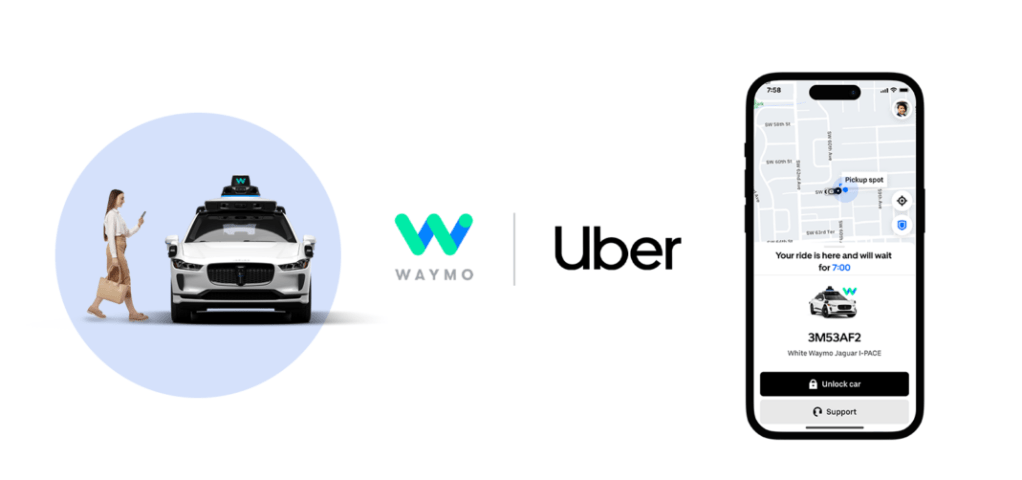
Uber and Waymo are partnering to offer autonomous vehicle rides on Uber’s network.

So much water has passed under the bridge in the last five years that it’s almost possible to forget how surprising this is. But long ago, Waymo (and its parent, Alphabet) sued Uber for trade secret theft, related to its acquisition of Otto, the self-driving start-up founded by ex-Google engineer Anthony Levandowski.

People like Eric Schmidt were getting deposed! Uber CEO Travis Kalanick exited the company, in part due to the fallout.

Here we are, all these years (not that many!) later, and Waymo is partnering with Uber to offer autonomous vehicles.

The advantage for each side is obvious – Waymo can use Uber’s massive customer network to scale its fleet, and take advantage of Uber’s human drivers to provide service to customers when demand for rides outstrips what Waymo can supply.

And Uber gets AVs onto its network. When Uber sold off its own Advanced Technology Group to Aurora a few years ago, the bet was that eventually it would be able to license autonomous driving from a variety of different providers in the future. That list of providers has dwindled, but Waymo remains at the forefront.

Autonomous Trucks And Truck Drivers Will Thrive Together

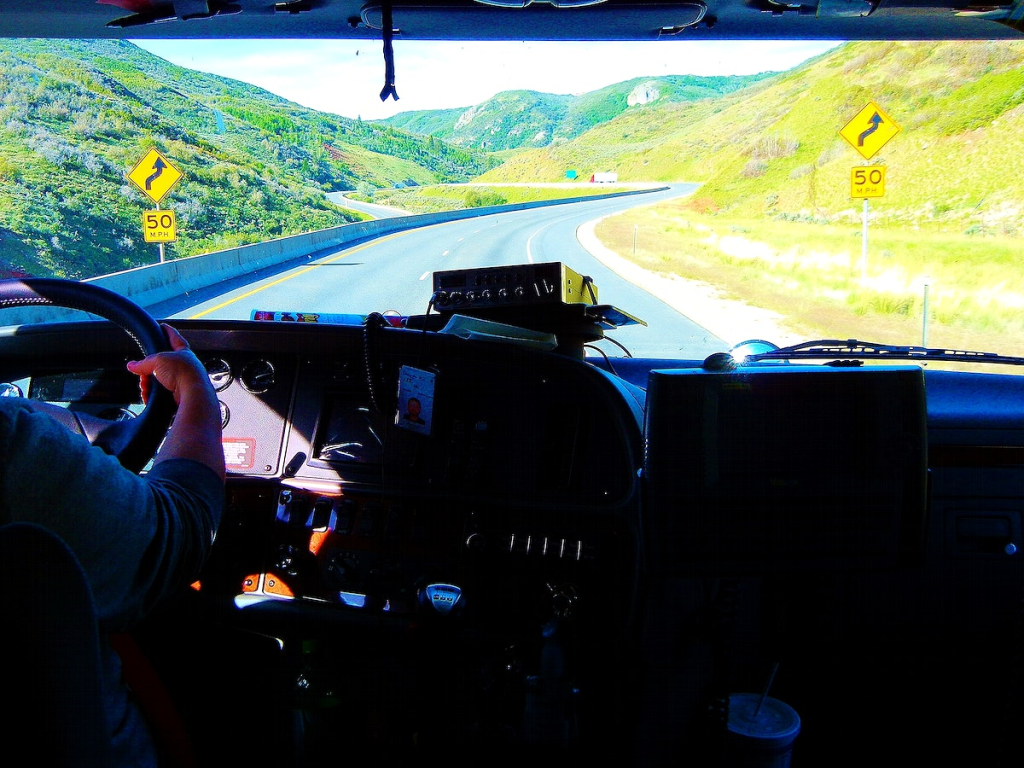
Fortune has an op-ed up today from the Autonomous Vehicle Industry Association, highlighting that human truck drivers won’t just co-exist with autonomous trucks, human truck drivers will thrive.

The thrust of the article is that the demand for truck driving is so robust, and AV trucking is so nascent, that human truck drivers will be able to progress in their careers for years, probably decades, to come.

The article also highlights all the new and high-paying jobs the AV industry opens up to truckers:

Currently, AV companies hire truck drivers with commercial driver’s licenses (CDLs) to support testing and development, teaching autonomous trucks to drive safely. Additionally, the industry is creating new jobs such as terminal operators, fleet and vehicle technicians, remote assistance specialists, dispatchers, mapping experts, engineers, and more. These jobs are open to the full spectrum of skills and educational backgrounds.

One other point, that is a little nuanced, is that AV trucking should actually increase the demand for certain types of highly-desirable trucking jobs.

AV trucks are going to make their impact on long-haul trucking, from coast-to-coast, well before they impact urban trucking. Urban trucking is just much more suitable to human drivers, for a variety of reasons, including both the difficulty of urban driving and the non-driving responsibilities (e.g. freight handling) that urban truck drivers fulfill.

As AV trucks increase the amount of long-haul freight, demand for urban truck drivers is likely to soar, creating great opportunities for human truck drivers.

Cruise Blog Post On The Recent Hit And Run Collision

Cruise makes the important point that the hit-and-run driver is still at large. Safer streets require that we catch and correct human drivers who hit pedestrians, as in this case.

Cruise’s overview of their own vehicle’s actions is basically consistent with what the news has reported.

They include a simulation showing that, had a Cruise AV been driving in place of the human driver who performed the hit-and-run, the Cruise AV would have avoided contact with the pedestrian.

NVIDIA, Foxconn & AI Factories

Gizmodo has a writeup (HT Reilly Brennan) about NVIDIA and Foxconn teaming up to build AI factories.

The article quotes NVIDIA CEO Jensen Huang, “This is a factory that takes data input, and produces intelligence as an output.”

As I understand it, the gist is that Foxconn will make cars, and the data from those cars will flow back to data centers running tons of NVIDIA processors, to gather intelligence from the data.

I guess the cars will also have NVIDIA chips in them, and I’m not totally clear who owns and runs the data centers. But both of those points seem secondary.

The main idea is that NVIDIA is going to have massive processing power in data centers, fed by data from Foxconn cars.

That kind of changes NVIDIA from a chip-seller, to a service provider, as Huang notes.

Huang says Nvidia is also in a transition, from a graphics chip maker into a data center scale computing company, claiming “most of the computers of the future that are interesting are going to be data center scaled.”

California DMV Suspends Cruise’s Driverless License

On the heels of a number of non-fatal collisions, in which Cruise AVs were often not at fault, the California DMV today suspended Cruise’s driverless operating license.

The DMV stated that Cruise AVs “are not safe for public operation.”

As far as I can tell, there does not appear to be any data supporting this decision.

That said, the DMV statement mentions that, “The DMV has provided Cruise with the steps needed to apply to reinstate its suspended permits.” Perhaps those undisclosed steps contain data-based metrics.

Perhaps the most worrisome sentence in the DMV statement is, “The manufacturer has misrepresented any information related to safety of the autonomous technology of its vehicles.”

On the whole, the statement seems quite opaque to me. More transparency from the DMV would be ideal.

Mercedes-Benz Electric Truck

Mercedes-Benz just announced a new electric truck, the eActros, with a 310-mile range. Mercedes, which sells trucks primarily in European, estimates that range covers 60% of long-haul trucks in Europe, according to Ward’s Auto.

The Mercedes-Benz Trucks website has a flashy video and touts 5 benefits:

  • Sustainability
  • Usability
  • Charging
  • Total Cost of Ownership
  • Driving Experience

The charging strengths of the eActros include smart charging, scaling the charging capacity with the truck’s usage and needs.

There’s also a nifty little web tool that estimates how long it takes to charge each of the different eActros models.

Mercedes-Benz Trucks is partnering with Siemens and other providers to help truck buyers install on-site charging infrastructure. This is probably a bigger deal for commercial trucks than personal passenger vehicles.

And this is good to know:

The eActros has a CCS2 connection and thus conforms with the general standard for charge connections in the passenger car sector. Cars and vans which are equipped for charging with direct current via a CCS2 connection can therefore be charged at charging stations for the eActros.