Google’s Training Simulator

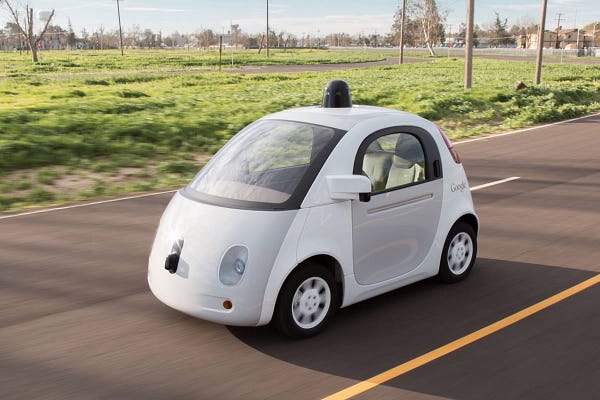
Google’s self-driving car team just released its January report, which highlights the role played by its simulator in improving its driving algorithms.

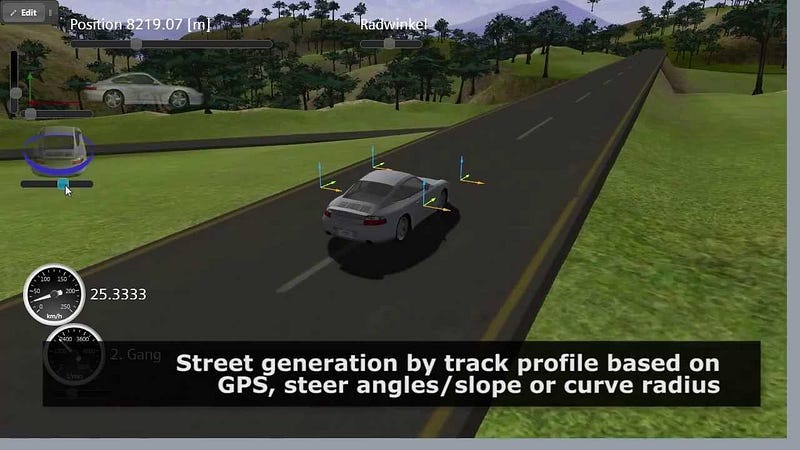
With our simulator, we’re able to call upon the millions of miles we’ve already driven and drive those miles again with the updated software. For example, to make left turns at an intersection more comfortable for our passengers, we modified our software to adjust the angle at which our cars would travel. To test this change, we then rerun our entire driving history of 2+ million miles with the new turning pattern to ensure that it doesn’t just make our car better at left turns, but that the change creates a better driving experience overall.

And the simulator isn’t not limited to what the car has already seen:

We can also create entirely new scenarios in our simulator, allowing us to concentrate on perfecting a particular skill. For example, to test our car’s performance in a three car merge, we will create thousands of variations of this situation (each car travelling at different speeds, and nudging to merge at different times) and then test that our car drives as intended each time.

To me, this is one of the coolest parts of machine learning. Without actually going out and getting new data, which can be expensive and slow, we can use data that we already have, and warp it to create lots of new data, which rapidly improves the learning rate of machines.


Originally published at www.davidincalifornia.com on February 3, 2016.

Andrew Ng on Self-Driving Cars

Andrew Ng is a computer science professor at Google, the Chief Scientist at Baidu Research, and, most importantly, he re-taught me Machine Learning recently.

Last Friday, on Quora, he answered the question, “When will self-driving cars be on roads?”

Here’s an excerpt from his response:

I hope we’ll have a large number of vehicles on roads within 3 years, and be mass producing them in 5.

But:

Machine learning is good at getting your performance from 90% accuracy to maybe 99.9%, but it’s never been good at getting us from 99.9% to 99.9999%. I think it is more promising to start with a different goal: A shuttle/bus that can only drive one bus route or just in a small region. If we can make sure that route’s road surface and lane markings are well maintained, that there’s no construction, etc. then we’re within striking distance of making that truly safe. This then lets us slowly add routes and gradually grow the regions in which we can drive safety. This is the approach we’re taking at Baidu; I hope other groups will also adopt this approach.

Read the whole thing. It’s very short, but anything from Andrew Ng is insightful.


Originally published at www.davidincalifornia.com on February 3, 2016.
GM’s Autonomous Vehicle Team

GM is putting together a team to focus on autonomous vehicles.

“Doug Parks, GM’s vice president for global product programs, will become vice president for autonomous technology and vehicle execution, reporting to Mark Reuss, head of global product development. Parks will oversee efforts to develop new electrical and battery systems and software for autonomous and electric vehicles, GM said in a statement. The appointments will be effective Feb. 1.”

All that according to Times of India.

That description sounds mostly like a re-org, which is less inspiring than we might hope. My experience is that re-orgs are rarely helpful.

What would be great is to see GM pour more resources into an off-site autonomous vehicle center, or bring in some key hires, or build up a team with new hires, even if it takes cuts to other parts of the business.


Originally published at www.davidincalifornia.com on February 1, 2016.

Vertical Integration

Fortune runs with a story about Lyft and Uber and the merits and demerits of vertical integration:

“From a purely technical perspective, it’s unlikely that Uber’s in-house mapping efforts will be able to compete with the massive scale of Waze’s crowdsourced information. Waze is something like the Wikipedia of mapping with, as of last year, almost 300,000 editors worldwide contributing regular updates — all for free.”

Of course this is to some extent a matter of options. Uber has raised enough money to at least attempt building its own features, whereas Lyft is more cash-constrained.

But, as Malcolm Gladwell will tell you, sometimes being smaller comes with surprising advantages.


Originally published at www.davidincalifornia.com on February 1, 2016.

Facebook Event-Based Ride-Sharing

News just surfaced of a Facebook transportation patent:

“The new feature Facebook appears ready to launch asks its users attending an event to select whether or not they are driving.

If the Facebooker is driving, they can then select their number of passengers, set of potential passengers and departure location, along with a radius of where they would be willing to pick up other passengers.

The social media network will identify potential matches of people needing rides to the same event. If the user selects that he or she needs a ride to the event, Facebook will list friends with seats available.”

To be clear, this is a patent, not an actual, existing feature. Yet.


Originally published at www.davidincalifornia.com on February 1, 2016.

The Zombie Problem

Cars last for a long time. In the United States, the average car lasts for about 15 years.

As cars become more reliant on software, this introduces something called the Zombie Problem.

“A car can be on the roads for decades, but the company that made it and the suppliers of its components aren’t likely to keep providing software updates for its full lifetime. ”

There are a few different solutions to this problem:

  1. Do nothing. Owners of older cars will have to bear the risks posed by out-of-date software.
  2. Maintain the software. This will be expensive.
  3. Design cars and components for backward compatibility. This might accelerate disruption in the industry, as newer entrants don’t have to carry the cost of supporting older vehicles.
  4. Consolidate around a few larger software suppliers. This allows the software suppliers to amortize the cost of backward compatibility across many more vehicles.

Originally published at www.davidincalifornia.com on February 1, 2016.

Google’s Self-Driving Car Facility

Over at Backchannel, Steven Levy has an amazing behind-the-scenes look at Google’s self-driving car test facility on the grounds of the former Castle Air Force Base in Merced County, California.

“Mission control at Castle is a double-wide trailer that seems more like the op center at a construction site than a dispatch center for the future. There are desks, a ratty sofa, and instead of the high-end espresso maker commonly found at the company’s facilities, a coffeemaker that Joe DiMaggio would recognize. The most Googley objects are what look like military-grade water ordnance; they are actually Bug-a-Salt rifles that shoot pellets at the swarms of insects that are ubiquitous during the Central Valley summer.”

The piece is titled “License to (Not) Drive”. Read the whole thing.


Originally published at www.davidincalifornia.com on January 26, 2016.

The Language of Autonomous Driver Assistance Systems

As I’ve done more work on autonomous driver assistance system (ADAS) components — on topics such as computer vision, localization, and controls — one topic that keeps popping up is the prevalence of C++ and, to a lesser extent, Python.

This is in some ways a stop backward, because I have worked in Ruby for the last five years, and Ruby is a powerful and concise language, especially with the Rails libraries layered on top of it.

Getting something done in C++ is considerably more verbose and open to bugs.

That said, C++ is fast. All of the beauty of Ruby comes at the cost of processes running behind the scenes to facilitate the beauty of the code. Garbage collectors, dynamic memory allocation, code compilation — all of those things take time.

In a car, time is crucial, far more so than on the web. So C++ it is.


Originally published at www.davidincalifornia.com on January 25, 2016.

Death-Proof Cars

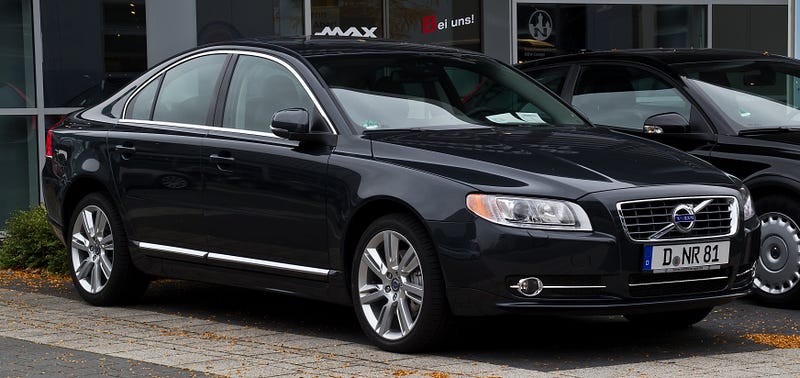
According to CNN, Volvo pledges that by 2020, all of their new cars and SUVs will be death-proof.

Volvo has made a shocking pledge: By 2020, no one will be killed or seriously injured in a new Volvo car or SUV.

I also didn’t know this:

Fatality-free vehicles are not unprecedented. In fact, there already are some, and they’re not just Volvos. According to data from the Insurance Institute for Highway Safety, there are nine vehicle models — including the Volvo XC90 — in which no one in the United States died in the four years from 2009 to 2012, the most recent period for which data is available.

However, note that drivers will still retain the ability to commit vehicular suicide.

CNN lists the principal components of the system as:

  1. Adaptive Cruise Control
  2. Auto Lane-Keeping Assistance
  3. Collision Avoidance
  4. Pedestrian Detection
  5. Large Animal Detection

Originally published at www.davidincalifornia.com on January 24, 2016.