One of the intriguing aspects of the autonomous vehicle race is the uncertainty it has generated, even among long-established automobile companies.
Ford is partnering with Google, GM is partnering with Lyft, Toyota is scrambling to keep up, and none of them has as good an idea of what the future will look like as they did ten years ago.
Uber is first and foremost a transportation service, but it has also bought out Carnegie Mellon University’s vaunted robotics department, in hopes of building its own autonomous vehicles. And Uber has a mapping project underway.
Elon Musk has begun to muse about Tesla launching a ride-sharing service to compete with Uber.
All of this looks like a lot of hedging, as companies try to cover their bases until the best niche for them clarifies.
One of the things they teach in business school is that entrepreneurs shouldn’t hedge. So who’s not hedging?
Toyota, although maybe just due to a slow start. Perhaps Google and Ford, although they are partnering. Apple, maybe, although they’re so secretive it’s impossible to know what they’re doing.
It’s hard to say that there’s a single company that has a crystal clear vision for what the future will look like and their role in it.
And that just points to how uncertain the future has become in the auto industry.
NVIDIA: The graphical chip producer has developed a next-generation, water-cooled super-computer, capable of fitting in the trunk of a self-driving car. The PX2 computer will help cars process images and recognize objects.
Velodyne: LIDAR is the perhaps the most important component of an autonomous vehicle system, and also the most expensive. The world’s chief LIDAR manufacturer announced a smaller (and presumably cheaper) LIDAR system the size of a hockey puck.
Toyota: A new study finds that Toyota has more self-driving car patents than any other company (Google, somewhat surprisingly, ranks 24th). “Non-US companies tend to be more aggressive in filing patent applications than American companies.”
HERE: The navigational company jointly owned by several automakers is building a cloud-based mapping platform, seemingly to rival Google Maps.
Kia: The South Korean car manufacturer is getting into the autonomous vehicle race, but a little bit late. “Kia aims to have fully self-driving cars on the road by 2030 (yes, 14 years from now).”
Faraday Future: This isn’t technically an autonomous vehicle announcement, since Faraday is ostensibly focused on electric vehicles, but the upstart is taking shots at Tesla. “And then after 9 years, [Tesla] delivered their first mass market production vehicle…Faraday Future was founded just 18 months ago…we already have a staggering 750 employees globally, breaking ground on a 3 million square foot factory in just a few weeks, and we will deliver our first production vehicle in only a couple years time.”
“Automakers are moving more slowly, adding limited autonomy that Delphi says could prevent 80 percent of crashes. There are a few reasons for this, not the least of which is full autonomy is exceedingly difficult (engineers must plan for almost every possible contingency) and exceedingly expensive (LIDAR, essential to fully autonomous driving, costs more than the average car).”
There is also this:
“The company’s among the industry’s biggest suppliers, and has over the past century pioneered many technologies consumers take for granted, including electric starters (1911), in-dash car radios (1936), and integrated navigation systems (1994). It’s involved in some of the industry’s most interesting and innovative technology, including BMW’s gesture control system and the vehicle-to-vehicle communication technology Cadillac will roll out next year.”
One of the big dichotomies in the self-driving car world is whether to build a mechanism for the driver to take control back from the machine, or whether to completely skip that phase and move straight to machine-only driving.
This is obviously a huge investment, and a strategic investment, different than if a generic financial firm had fronted the cash.
“GM and Lyft said they will work together to develop a network of self-driving cars that riders can call up on-demand,” reports the Charlotte Observer.
“More immediately, America’s largest automaker will offer Lyft drivers vehicles for short-term rent through various hubs in U.S. cities.”
A driver in this transaction is certainly a fear that self-driving cars, combined with ride-sharing services, will up-end GM’s business model.
“Traditional automakers’ reluctance to make bold moves is linked to the fact that self-driving technology could fundamentally undermine the auto industry’s core business model: selling cars to people.”
The Huffington Post reports that the average cost per year to own a car is $8,698, and that the average car owner only uses the car 5% of the time. Rent-a-car, in the form of Uber and Lyft, is coming soon to a family near you.
According to media accounts, the vaunted Consumer Electronics Show is turning into an auto show.
Ten percent of CES floorspace will be taken up by the automotive industry.
Notably, however, Google and Tesla — currently the two most visible companies in the autonomous driving space — will not be in attendance.
Faraday Future, however, will be front and center. Tomorrow night the new hot tech-auto startup backed by Chinese billionaire Jia Yeuting will unveil a prototype car.
This is an interesting strategy, and suggests a reason that cars will go from being a relatively fragmented industry, to a relatively consolidated, network-effects-driven industry.
There are no huge revelations, but it’s an insightful case study of yet another subset of jobs that self-driving cars will change, although maybe not “disrupt”.
“We do have some plans that we’d like to do in the next few years,” she said. “I think the topic has brought us more questions than answers.”
Questions like:
When will the technology fully be adopted and what impact will it have on traffic flow? How will automated cars and regular drivers interact?
If cars are able to move closer to one another without drivers, how much more capacity will an existing road be able to have? HRTPO says a current interstate lane can handle nearly 2,300 cars an hour. Self-driving technology means maybe 20 or 30 percent more could occupy that same stretch of highway.
Would the technology make future projects currently being planned become obsolete? If so, how does that change funding and project priorities?
How will drivers’ safety be affected?
How does the law adapt to impaired individuals in an automated vehicle? How do cities make up for speeding or parking ticket revenue if they become a thing of the past?
What happens to land use, especially parking, if the cars can store themselves in less-dense areas? Will people move farther away from work if they don’t have to pay attention during a commute?
What will it mean for long-term deals like the 58-year tolling agreement between the state and Elizabeth River Crossing to run the Midtown and Downtown Tunnels? A spokesperson said the contract doesn’t mention any stipulations for what would happen if self-driving cars change transportation, but that doesn’t mean it couldn’t be amended in the future.
The Motley Fool has published a list of important numbers for self-driving cars.
Many of these numbers are familiar for industry followers. Google has 53 self-driving cars, that travel at 25 mph, etc.
However, two number stand out.
6 states currently permit autonomous vehicles. However, several more states, like Virginia and Texas, state that autonomous vehicles are allowed by default. Perhaps I am biased as a Virginian, but I suspect development may shift to those states with the fewest restrictions.
The other number that stands out is actually an inequality. “61,883 < 730,000”. Actually, 61,883 <<< 730,000.
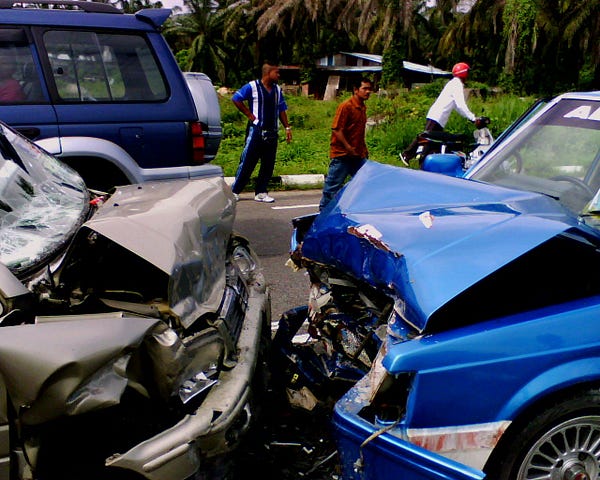
The Motley Fool does a good job putting those numbers in context. In the last six months, Google vehicles have been involved in one fender-bender per 61,883 miles. The national average, however, is 730,000. Which indicates that human-driven cars are much less likely to be involved in accidents than Google cars.
There are a few considerations, to be sure. For one, Google cars have never been “at fault” in these accidents. It’s always been the driver of the other car who has been at fault.
Also, Google has to report all of its accidents, whereas many human drivers cause minor accidents and never report them.
Nonetheless, the huge disparity in these numbers indicates that Google cars may need to get less accident-prone before they are released to the general public.
Since the announcement that Ford and Google are setting up a partnership, there has been relatively little news as to what that partnership will entail.
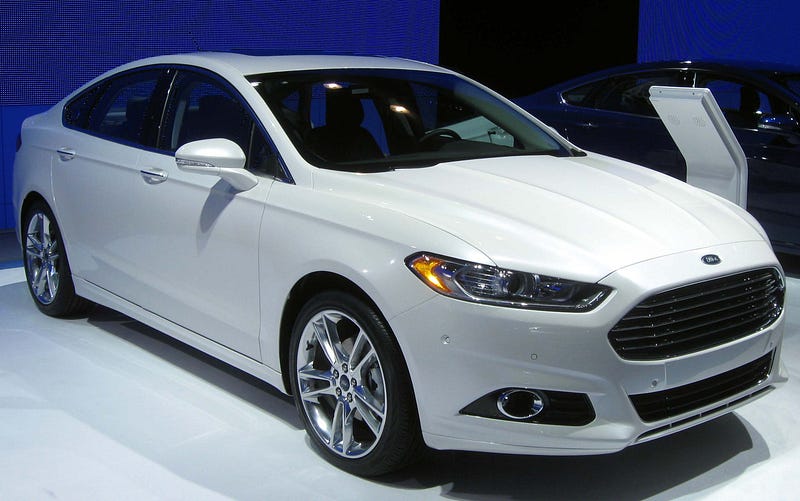
There has been some recent speculation that Google will work with Ford to turn the Fusion into the first mass-market autonomous vehicle.
By using Ford-built vehicles, Google would save billions in development costs. It would not have to design, build, test, manufacture and validate cars for safety and emissions. A deal would free the tech giant to focus on developing the automated driving software in use in a fleet of 53 self-driving bubble cars on the road in California and Texas. Those 53 cars, by the way, were assembled in Detroit by Roush Enterprises, a supplier closely aligned with Ford.
Devices like the Nexus phone series provide a model for how such a partnership would work. Google would provide the specs, and the partner would do the manufacturing.






 David Silver