This is a free, short synopsis of what robotics is, what jobs are available, what skills are necessary to get those jobs, how much those jobs pay, and what companies are hiring.
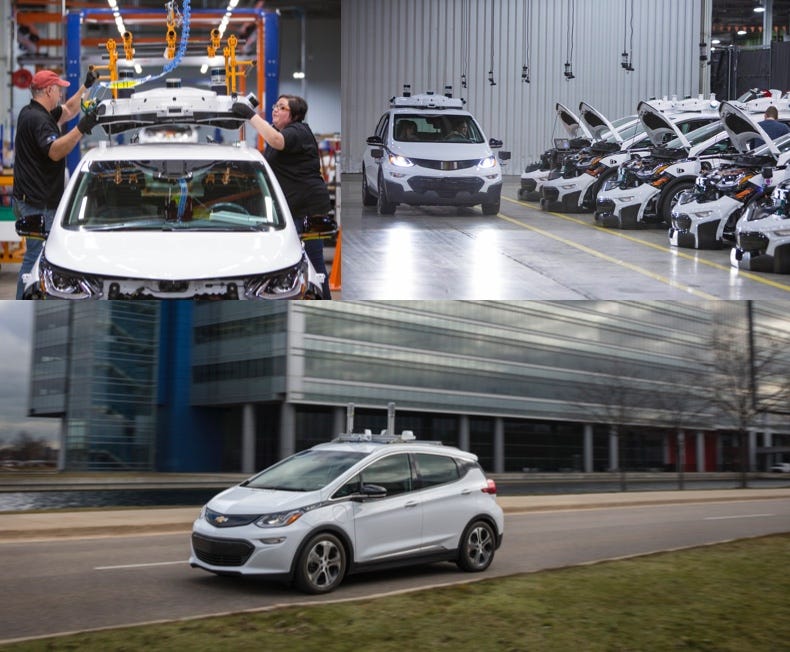
Cruise, already staffed at about 1,000 people, is looking to double in size, primarily by hiring engineers.
Cruise probably has driven more miles autonomously than any company except Waymo — maybe into the mid-single-digit millions of miles. Waymo has somewhere between 15 and 20 million miles.
Cruise reportedly has ~1,000 staff and is looking to double to 2,000. Similarly, Waymo has ~1,000 employees.
Cruise has been hoovering up billions of dollars in investment from companies like SoftBank. Part of the SoftBank playbook involves growing so big, so fast, that nobody wants to challenge you.
The autonomous vehicle industry is constrained by a number of factors besides just cash: hardware, safety, engineers. But cash solves a lot of problems, so hold onto your seat.
Meya used the scholarship to build a portfolio that landed her a software engineering role at Workday. Ana applied her computer vision skills to a project she’s developing for a Fulbright Scholarship. And Hirza used her new skills to transition from a test engineer role to a software development engineer role.
Udacity student stories are great, and these are especially moving. Check it out.
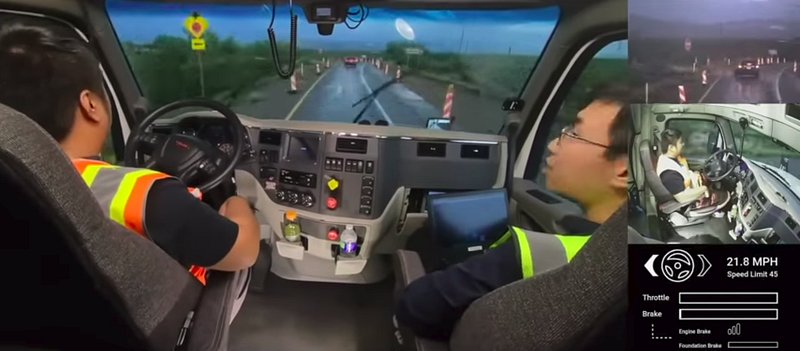
I was impressed that Chuck Price from TuSimple mentioned they have 50 trucks on the road and are already hauling real freight between Arizona and Texas. Sounds like California is coming soon.
Tomorrow (Sunday), I will be speaking on the AI-AI-Oh! panel, about training data for machine learning. You should come!
We are going head-to-head for audience size with the CTO of Walmart, who is presenting about shopping in the conference room next door, and I want to win.
This is my first time at SXSW and goodness is it an overwhelming event. There must be thousands of events over 10 days, and they’re always adding new topics. Somehow I missed that Malcolm Gladwell is interviewing Chris Urmson right now!
I present tomorrow, and I’ll be here for a few more days after that, so let me know if you’d like to say hello!
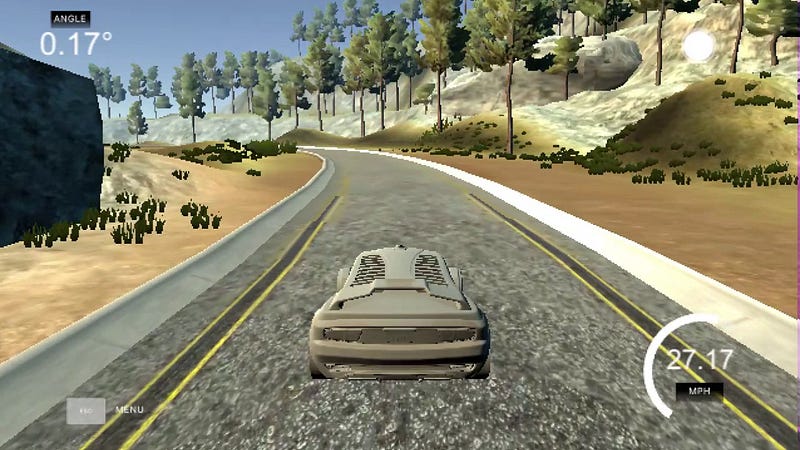
The weird thing is that so many teams evaluate this landscape and decide to build their own solutions. Waymo’s Carcraft is the most famous, but we made the same decision at Udacity a few years ago. We evaluated the simulation solutions on the market in the fall of 2016, found that none of them quite met our needs, and decided to build our own simulators in Unity.
That struck me as pretty interesting, too. We’ve seen lots of partnerships in the traditional automotive industry, as car makers position themselves to compete with tech and ridesharing companies. Announcements from the tech and ridesharing space, however, tend to feel more like supplier relationships than partnerships. This blog post is has the feel of an Uber-Voyage-Applied Intuition partnership.
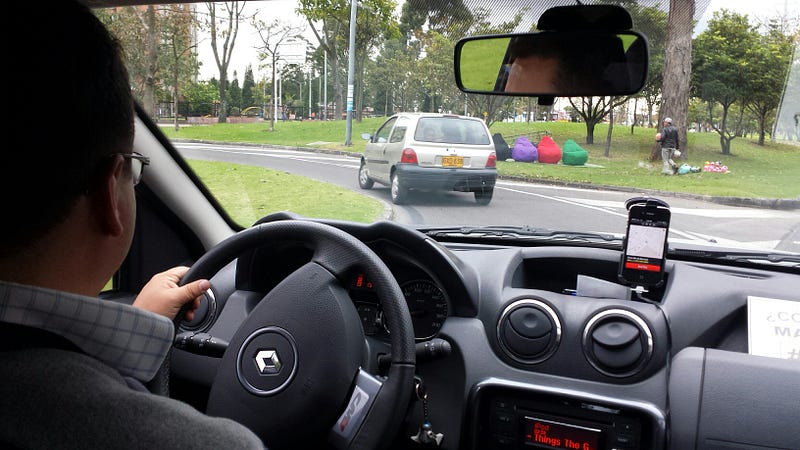
I was at work late tonight and missed my train, so I splurged for a ride home. My driver was pretty talkative, and told me he had done 8,900 rides and tracked the resulting data meticulously.
He volunteered a number of observations that struck me.
Demographics. His most common passenger is a solo female rider. He had a number of hypotheses for this, but none of them struck me as obviously correct. One hypothesis that might be incorrect in his particular case, but correct more generally, is the urban gender divide. Ridesharing is primarily an urban phenomenon, and my intuition is that women outnumber men in urban area (I’m having a surprisingly hard time finding a link that discusses this, though). San Francisco has a basically equal gender distribution, though.
Phones. Clear age divide in riders who talk to the driver. People under 25 look at their phones the whole ride.
Tipping. Older riders are more likely to tip. I think of this largely as a form of self-imposed price discrimination. Shared ride customers are less likely to tip.
Duration. Rides in San Jose (a less dense city) tend to be much longer.
Lost and Found. Charging your phone in the car increases your likelihood of leaving it behind by 5–10x, according to this driver.
I wonder which of these observations would impact self-driving cars. The male-female divide caught my attention, especially because of perceived safety. As an engineer, I think mostly about the safety of the virtual driver system, but female passengers in particular might also consider the safety issues related to entering a stranger’s car.
Tipping seems important for a few reasons. It’s a form of price discrimination that will probably vanish with autonomous driving systems. It’s also a kind of Coasean division, like franchising. This driver seemed really concerned with providing services that would generate tips in his car, in a way that I imagine would be hard to scale to a whole fleet.
Reuters columnists Paul Lienert and Jeffrey Dastin have a column that is pegged on Amazon’s multi-hundred million dollar investment in electric truck maker Rivian. But what the post really does is highlight how much Amazon is investing in the entire mobility sector.
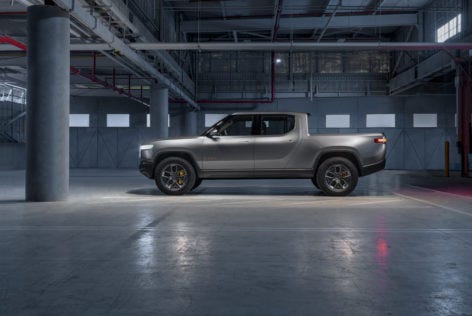
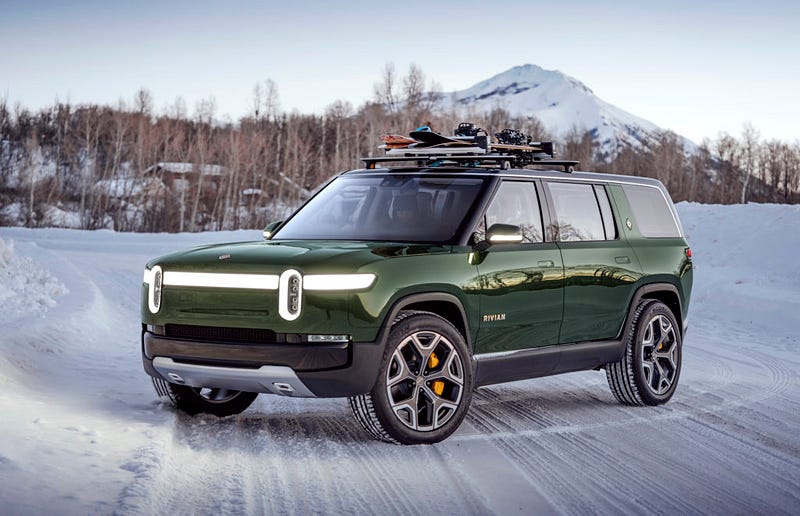
Rivian
Amazon is leading a $700 million investment round in an electric truck maker that has yet to launch a product. “ Amazon is hoping Rivian will assist it in its development of delivery vehicles that will bolster its logistics network,” according to Reuters.
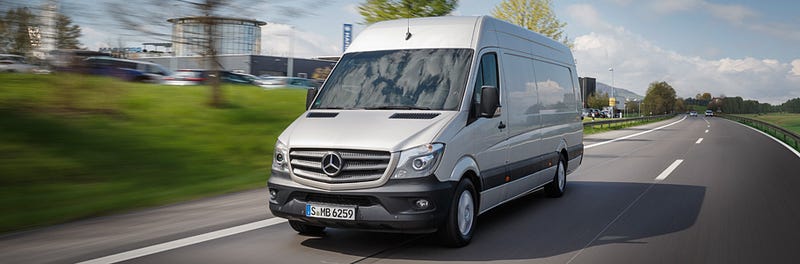
Mercedes
Also from Reuters: “Last year, Mercedes said Amazon had become the biggest customer of its Sprinter vans, securing 20,000 vehicles for delivery contractors.”
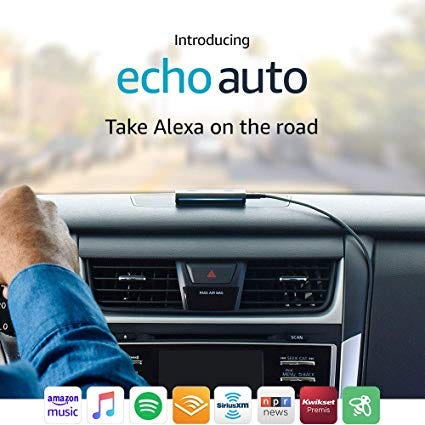
Alexa
Amazon is not going to play dead while Android Auto and Apple CarPlay win the in-car infotainment market. “Working with BMW AG, Ford Motor Co and Toyota Motor Corp, Amazon has enabled its Alexa virtual assistant to be installed in new models so drivers can dictate what music they want to hear and what tasks they want it to perform, hands-free.”
Aurora
“Amazon has stepped up its investment in the car sector, participating in a $530 million funding round announced last week in self-driving car startup Aurora Innovation Inc.”
Here are even more Amazon investments not listed in that Reuters column.
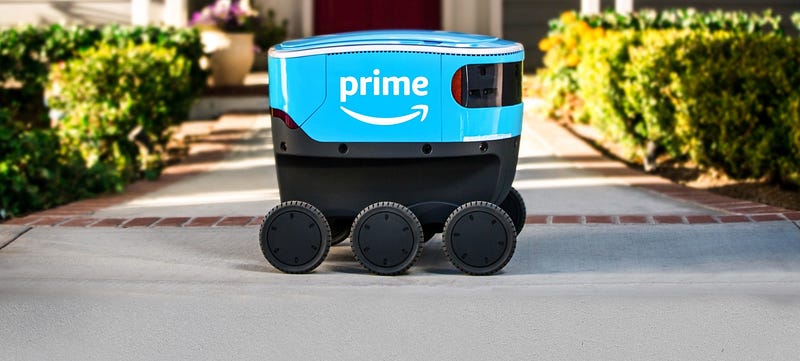
Scout
On January 23rd, Amazon announced: “ Starting today, these devices will begin delivering packages to customers in a neighborhood in Snohomish County, Washington.”
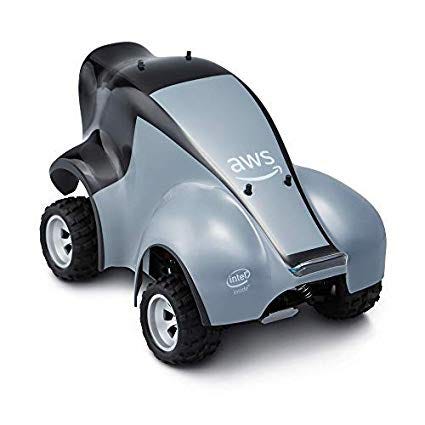
AWS DeepRacer
In the spirit of driving AWS usage, Amazon commercialized a mini-self-driving car concept that had become popular among hackers. “AWS DeepRacer is the fastest way to get rolling with machine learning, literally. Get hands-on with a fully autonomous 1/18th scale race car driven by reinforcement learning, 3D racing simulator, and global racing league.”
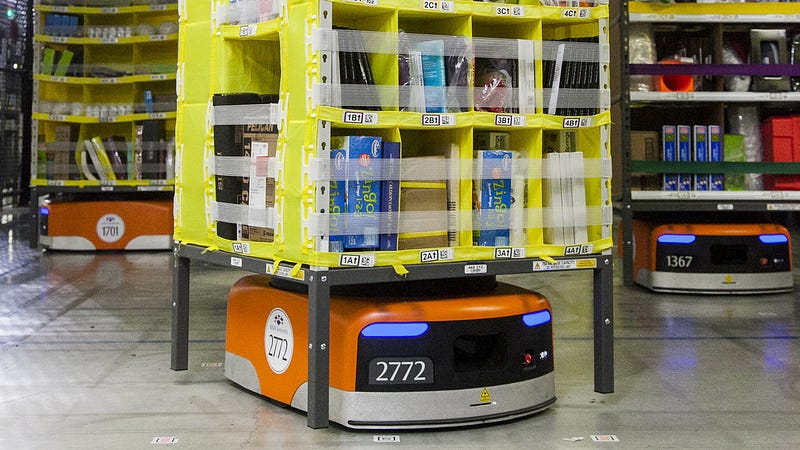
Amazon Robotics
Amazon Robotics is the most “real” of all of these efforts, having been acquired as Kiva Systems in 2012. According to The New York Times, “ Amazon now [July, 2018] has more than 100,000 robots in action around the world, and it has plans to add many more to the mix.”
Amazon has quietly kind of gone everywhere in this market.
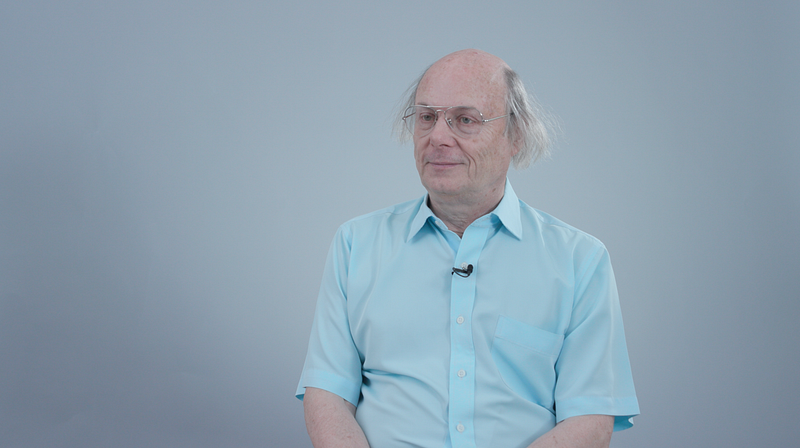
I flew over to New York last night so that I could spend this afternoon filming with C++ creator Bjarne Stroustrup. It was so much fun!
Bjarne spent the afternoon answering so many questions about the C++ programming language. He’s incredibly amenable and gracious.
Udacity has an upcoming C++ Nanodegree in the works. Bjarne’s wisdom about the language will be an important contribution to explaining why he and the C++ standards committee designed the language to be the way it is.
The beginning of the calendar year means that the California DMV releases each company’s annual report on disengagements in its autonomous vehicle program. A “disengagement” is an instance in which a human safety driver takes control of the vehicle because the autonomous systems fails.
The disengagement reports are difficult to compare across companies, because different companies have different standards, such as under what circumstances a safety driver should intervene. That doesn’t stop the comparisons, though.
Waymo has the lowest disengagement rate: “1 disengage per 11,017 miles self-driven.” Cruise follows with a rate of, “once every 5,205 miles.” On top of that, Cruise likes to emphasize that it drives in San Francisco, a more challenging environment than most of Waymo’s suburban miles.
Apple and Tesla came in for shaming, although for different reasons. Apple published the worst disengagement rate of any company: once per mile. Tesla reports no self-driving miles, at all, which raises questions about the validity of its “full self-driving” feature set.
All of the disengagement data, though, elides an important fact, which is that disengagements require a human behind the wheel. That means that, almost a year after Waymo tried out fully driverless vehicles in Arizona, and several months after winning approval to go driverless in California, it’s not yet past the disengagement stage.
This is was widely reported a few months ago, so it’s not news. But it’s a reminder that there’s still a ways to go yet.



 David Silver