Waymo To Operate Autonomous Vehicles On Uber’s Network

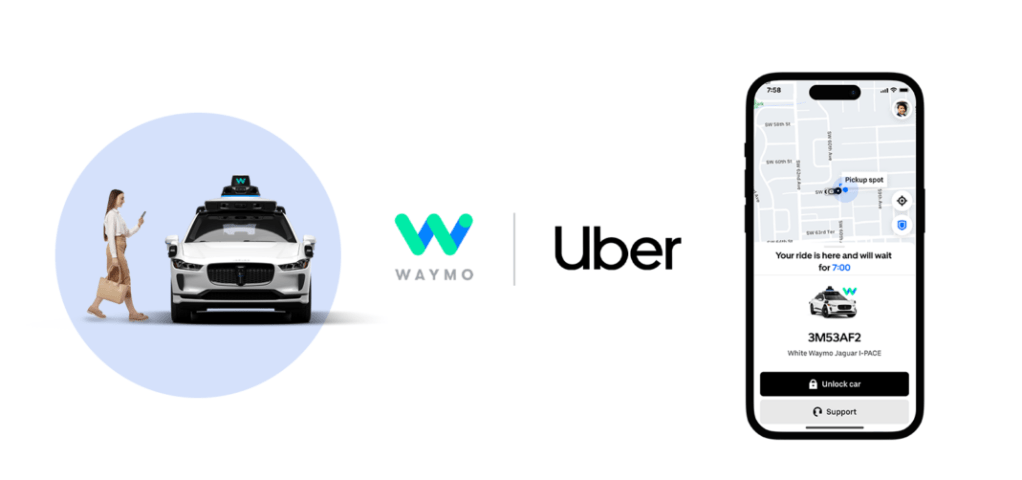
Uber and Waymo are partnering to offer autonomous vehicle rides on Uber’s network.

So much water has passed under the bridge in the last five years that it’s almost possible to forget how surprising this is. But long ago, Waymo (and its parent, Alphabet) sued Uber for trade secret theft, related to its acquisition of Otto, the self-driving start-up founded by ex-Google engineer Anthony Levandowski.

People like Eric Schmidt were getting deposed! Uber CEO Travis Kalanick exited the company, in part due to the fallout.

Here we are, all these years (not that many!) later, and Waymo is partnering with Uber to offer autonomous vehicles.

The advantage for each side is obvious – Waymo can use Uber’s massive customer network to scale its fleet, and take advantage of Uber’s human drivers to provide service to customers when demand for rides outstrips what Waymo can supply.

And Uber gets AVs onto its network. When Uber sold off its own Advanced Technology Group to Aurora a few years ago, the bet was that eventually it would be able to license autonomous driving from a variety of different providers in the future. That list of providers has dwindled, but Waymo remains at the forefront.

Autonomous Trucks And Truck Drivers Will Thrive Together

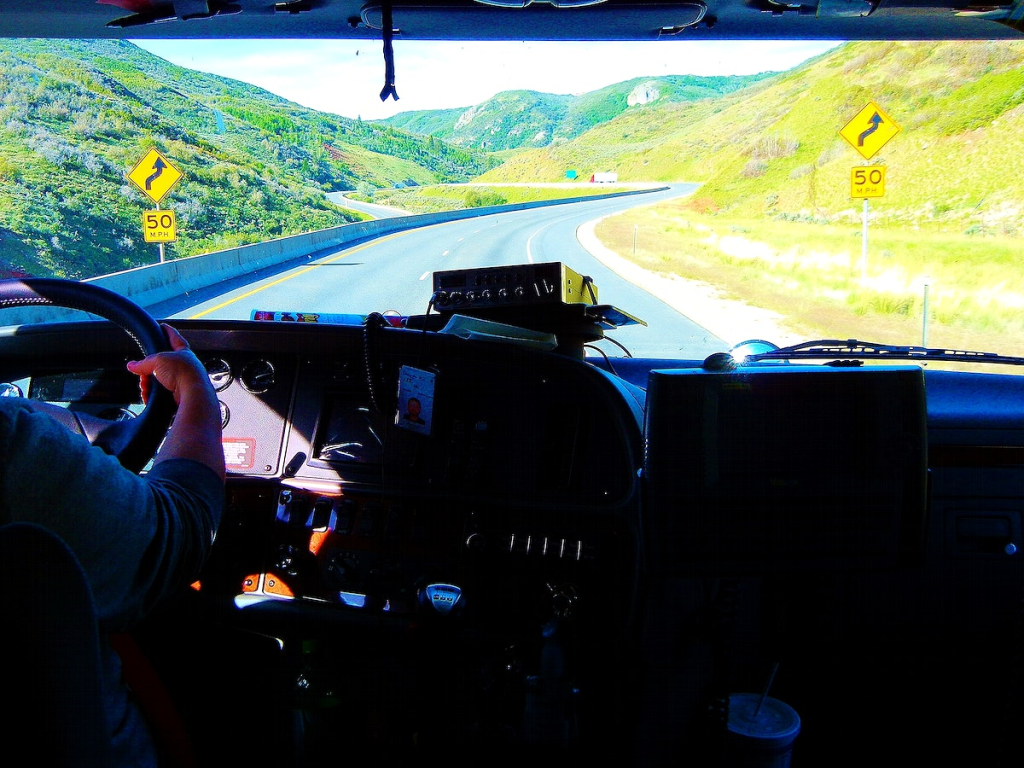
Fortune has an op-ed up today from the Autonomous Vehicle Industry Association, highlighting that human truck drivers won’t just co-exist with autonomous trucks, human truck drivers will thrive.

The thrust of the article is that the demand for truck driving is so robust, and AV trucking is so nascent, that human truck drivers will be able to progress in their careers for years, probably decades, to come.

The article also highlights all the new and high-paying jobs the AV industry opens up to truckers:

Currently, AV companies hire truck drivers with commercial driver’s licenses (CDLs) to support testing and development, teaching autonomous trucks to drive safely. Additionally, the industry is creating new jobs such as terminal operators, fleet and vehicle technicians, remote assistance specialists, dispatchers, mapping experts, engineers, and more. These jobs are open to the full spectrum of skills and educational backgrounds.

One other point, that is a little nuanced, is that AV trucking should actually increase the demand for certain types of highly-desirable trucking jobs.

AV trucks are going to make their impact on long-haul trucking, from coast-to-coast, well before they impact urban trucking. Urban trucking is just much more suitable to human drivers, for a variety of reasons, including both the difficulty of urban driving and the non-driving responsibilities (e.g. freight handling) that urban truck drivers fulfill.

As AV trucks increase the amount of long-haul freight, demand for urban truck drivers is likely to soar, creating great opportunities for human truck drivers.

Cruise Blog Post On The Recent Hit And Run Collision

Cruise makes the important point that the hit-and-run driver is still at large. Safer streets require that we catch and correct human drivers who hit pedestrians, as in this case.

Cruise’s overview of their own vehicle’s actions is basically consistent with what the news has reported.

They include a simulation showing that, had a Cruise AV been driving in place of the human driver who performed the hit-and-run, the Cruise AV would have avoided contact with the pedestrian.

NVIDIA, Foxconn & AI Factories

Gizmodo has a writeup (HT Reilly Brennan) about NVIDIA and Foxconn teaming up to build AI factories.

The article quotes NVIDIA CEO Jensen Huang, “This is a factory that takes data input, and produces intelligence as an output.”

As I understand it, the gist is that Foxconn will make cars, and the data from those cars will flow back to data centers running tons of NVIDIA processors, to gather intelligence from the data.

I guess the cars will also have NVIDIA chips in them, and I’m not totally clear who owns and runs the data centers. But both of those points seem secondary.

The main idea is that NVIDIA is going to have massive processing power in data centers, fed by data from Foxconn cars.

That kind of changes NVIDIA from a chip-seller, to a service provider, as Huang notes.

Huang says Nvidia is also in a transition, from a graphics chip maker into a data center scale computing company, claiming “most of the computers of the future that are interesting are going to be data center scaled.”

California DMV Suspends Cruise’s Driverless License

On the heels of a number of non-fatal collisions, in which Cruise AVs were often not at fault, the California DMV today suspended Cruise’s driverless operating license.

The DMV stated that Cruise AVs “are not safe for public operation.”

As far as I can tell, there does not appear to be any data supporting this decision.

That said, the DMV statement mentions that, “The DMV has provided Cruise with the steps needed to apply to reinstate its suspended permits.” Perhaps those undisclosed steps contain data-based metrics.

Perhaps the most worrisome sentence in the DMV statement is, “The manufacturer has misrepresented any information related to safety of the autonomous technology of its vehicles.”

On the whole, the statement seems quite opaque to me. More transparency from the DMV would be ideal.

Mercedes-Benz Electric Truck

Mercedes-Benz just announced a new electric truck, the eActros, with a 310-mile range. Mercedes, which sells trucks primarily in European, estimates that range covers 60% of long-haul trucks in Europe, according to Ward’s Auto.

The Mercedes-Benz Trucks website has a flashy video and touts 5 benefits:

  • Sustainability
  • Usability
  • Charging
  • Total Cost of Ownership
  • Driving Experience

The charging strengths of the eActros include smart charging, scaling the charging capacity with the truck’s usage and needs.

There’s also a nifty little web tool that estimates how long it takes to charge each of the different eActros models.

Mercedes-Benz Trucks is partnering with Siemens and other providers to help truck buyers install on-site charging infrastructure. This is probably a bigger deal for commercial trucks than personal passenger vehicles.

And this is good to know:

The eActros has a CCS2 connection and thus conforms with the general standard for charge connections in the passenger car sector. Cars and vans which are equipped for charging with direct current via a CCS2 connection can therefore be charged at charging stations for the eActros.

Jaywalking Is About To Change

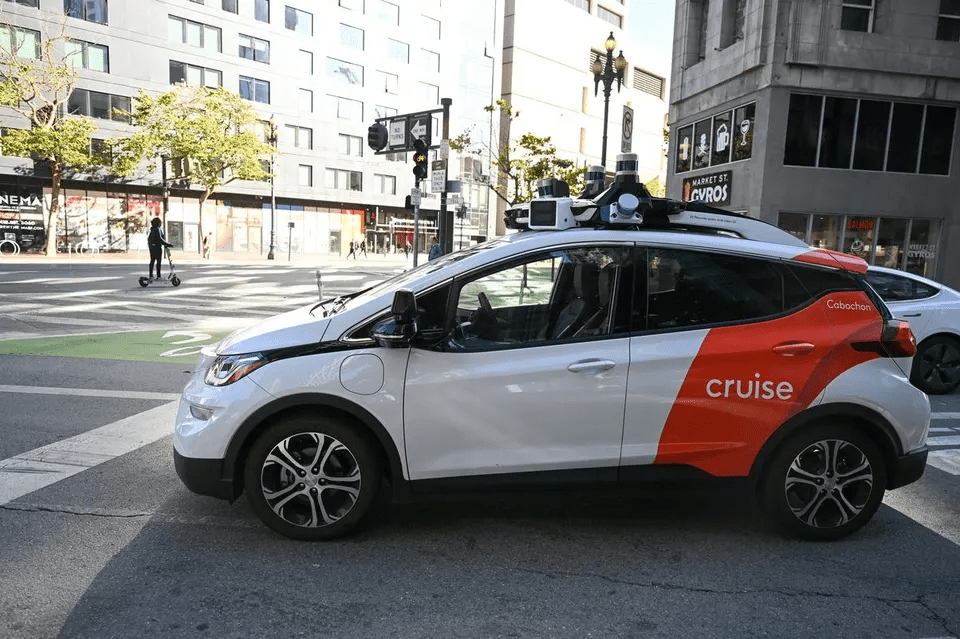
My former employer, Cruise, has been in the news a bunch recently. They’re expanding rapidly to new cities. And in their home city of San Francisco, they’re carrying lots of delighted passengers. But they’re also making headlines for blocking traffic and occasionally colliding with things.

NHTSA recently opened an investigation into some of these Cruise collisions.

The only documentation available about the investigation, so far, comes from the legally-mandates reports Cruise filed. In both reported cases, Cruise’s (subtly but clearly stated) perspective is that the incidents resulted from jaywalking.

There are a bunch of interesting angles to these reports: the incidents took place at night, Cruise’s reports seem accurate but maybe understated relative to the severity of at least one collision, and in both cases the pedestrians were allegedly jaywalking.

The jaywalking aspect of these incidents has some interesting broader implications.

Jaywalking is currently, I think, an intentionally overlooked issue. It’s rarely enforced, except maybe pretextually. When jaywalking leads to collisions with human drivers, I suspect those collisions often go unreported (as do most minor collisions). And when the jaywalking collisions do get reported, they don’t make the news – they’re a routine, uneventful, and regrettable aspect of urban life.

But the presence of self-driving cars raises the stakes for these types of collisions. A collision that would pass unremarked upon when John Q. Public is the pedestrian and Jane Q. Human is the driver becomes a news event when a robot is driving and Waymo or Cruise is involved.

At some point maybe the newsworthiness of these collisions will fade. But the presence of deep-pocketed corporations will, I suspect, continue to keep politicians’ and regulators’ and plaintiffs attorneys’ attention.

And that attention, I think, might ultimately be what changes the stakes for jaywalking. What is currently a tacitly-accepted nuisance traffic violation might start to receive a lot more scrutiny. And that might motivate both more enforcement and also more solutions, pushed by all sides.

Solve for the equilibirum, as Tyler Cowen likes to write.

Waymax

I remember from my time at Udacity that easy-to-use open-source simulators are hard to come by. Waymo just released Waymax, a simulator for behavioral planning, which looks pretty cool.

The simulator is written with JAX, an ML-focused numerical analysis library, which sets up Waymax to work nicely with neural networks.

The GitHub repo has some pretty nice Google Colab tutorials, which I might try out over the coming days.

Live Think Autonomous Podcast

On Tuesday, November 7, I’ll be recording a live podcast with Jeremy Cohen of Think Autonomous.

Jeremy was one of the earliest students in the Udacity Self-Driving Car Nanodegree Program. He now has an online education startup of his own, offering advanced courses in many of the topics key to self-driving.

The podcast will record with a live (virtual) audience from 9-10am PT on Tuesday, November 7. Click here to register to attend!