Wireless Car Charging

Google recently contracted with Hevo Power and Momentum Dynamics to install wireless car charging pads on its campus, according to engadget.

It sounds like pretty early stages, but apparently the pads are shaped kind of like manhole covers, and they use a technology called resonant magnetic induction to power cars hovering nearby.

It seems pretty early yet, but imagine if this works and entire highways get covered by these types of pads. It might work a little like cellular data — charging just happens in the background, without car owners ever having to think about it.


Originally published at www.davidincalifornia.com on February 8, 2016.
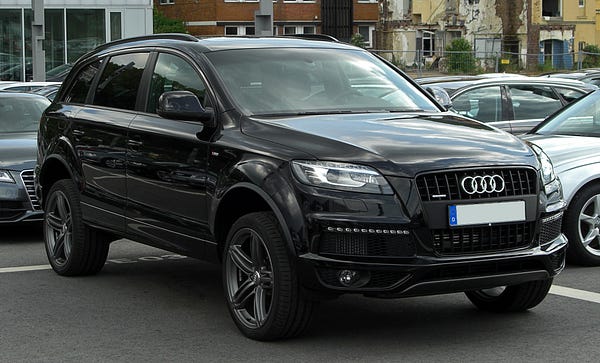
Nannytech

Doug Newcomb at PCMag gushes about “nannytech” — autonomous driver assistance systems that help prevent vehicle accidents without taking over the car completely.

I don’t love the term “nannytech”, but Newcomb’s enthusiasm makes me think he’s on to something:

“But the best thing about the [Audi] Q7’s large collection of driver-assist technologies is the remarkable amount of control the driver has over the systems’ warnings.”

It’s not clear from Newcomb’s piece if the driver control aspect is great because it’s such an improvement of previous systems (think of the incessant seatbelt-warning bells), or because it’s so much better than the fear of turning over the whole car to a computerized driver.

But it’s something to chew on, and it would be interesting to see some stats on just how much safer various “nannytech” technologies make human drivers.


Originally published at www.davidincalifornia.com on February 5, 2016.

Google Cars Heading to Washington

Washington state, that is. For “bad weather” driving experience. As anyone who has been to Seattle knows, they get a lot of rain there.

This seems like a smaller and more natural leap that snow driving. My guess is that snow is relatively rare as a fraction of total miles driven, although certainly not negligible. Rain is common everywhere.

Western Washington state also has mountains with snow a relatively short drive from the Seattle area, so that’s not out of the question, either.

Notably, Washington governor Jay Inslee is welcoming the move, in contrast to California DMV officials who have been notably more cautious about self-driving cars. Federalism in action.


Originally published at www.davidincalifornia.com on February 4, 2016.

Tesla and the Price of Gas

CNN reports that Wall Street is worried about how Tesla will weather record-low gas prices. CNN calls it “Tesla’s worst nightmare”.

Color me unconvinced.

Tesla, even with the Model 3, is not competing on price. They’ve succeeded in building a car that competes on quality and technology and brand.

At the margin they’ll certainly lose a few customers due to a higher total cost of ownership, but I hardly see this as Tesla’s worst nightmare. I think gas could go to $0 and Tesla would still sell a ton of cars.


Originally published at www.davidincalifornia.com on February 4, 2016.

Andrew Ng on Self-Driving Cars

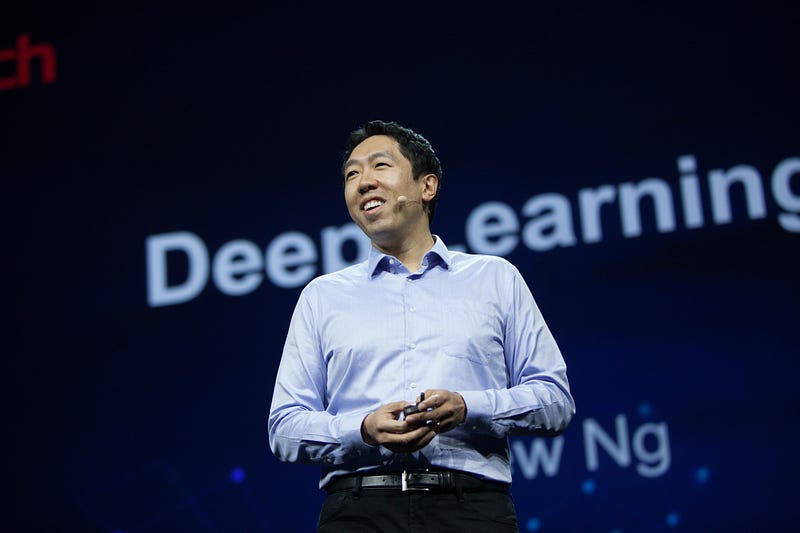
Andrew Ng is a computer science professor at Google, the Chief Scientist at Baidu Research, and, most importantly, he re-taught me Machine Learning recently.

Last Friday, on Quora, he answered the question, “When will self-driving cars be on roads?”

Here’s an excerpt from his response:

I hope we’ll have a large number of vehicles on roads within 3 years, and be mass producing them in 5.

But:

Machine learning is good at getting your performance from 90% accuracy to maybe 99.9%, but it’s never been good at getting us from 99.9% to 99.9999%. I think it is more promising to start with a different goal: A shuttle/bus that can only drive one bus route or just in a small region. If we can make sure that route’s road surface and lane markings are well maintained, that there’s no construction, etc. then we’re within striking distance of making that truly safe. This then lets us slowly add routes and gradually grow the regions in which we can drive safety. This is the approach we’re taking at Baidu; I hope other groups will also adopt this approach.

Read the whole thing. It’s very short, but anything from Andrew Ng is insightful.


Originally published at www.davidincalifornia.com on February 3, 2016.

Google’s Training Simulator

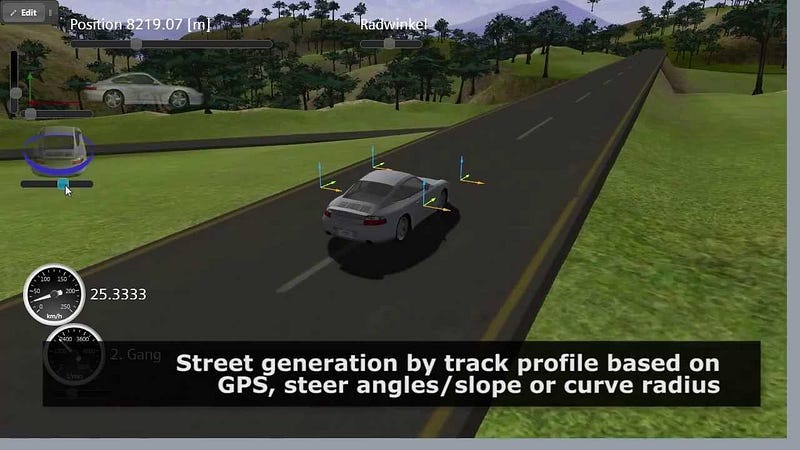
Google’s self-driving car team just released its January report, which highlights the role played by its simulator in improving its driving algorithms.

With our simulator, we’re able to call upon the millions of miles we’ve already driven and drive those miles again with the updated software. For example, to make left turns at an intersection more comfortable for our passengers, we modified our software to adjust the angle at which our cars would travel. To test this change, we then rerun our entire driving history of 2+ million miles with the new turning pattern to ensure that it doesn’t just make our car better at left turns, but that the change creates a better driving experience overall.

And the simulator isn’t not limited to what the car has already seen:

We can also create entirely new scenarios in our simulator, allowing us to concentrate on perfecting a particular skill. For example, to test our car’s performance in a three car merge, we will create thousands of variations of this situation (each car travelling at different speeds, and nudging to merge at different times) and then test that our car drives as intended each time.

To me, this is one of the coolest parts of machine learning. Without actually going out and getting new data, which can be expensive and slow, we can use data that we already have, and warp it to create lots of new data, which rapidly improves the learning rate of machines.


Originally published at www.davidincalifornia.com on February 3, 2016.

Porsche Is Not Into Self-Driving Cars

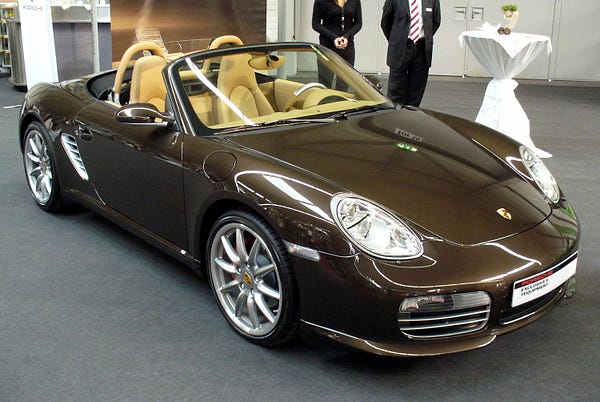
Porsche’s CEO has no plans to build a self-driving car.

“One wants to drive a Porsche by oneself,” says Oliver Blume, CEO of the performance car company.

All of this is according to BGR, by the way.

There’s a certain amount of logic to this. People get excited about driving a Porsche because of how fun it is to drive a Porsche, not how fun it is to ride in one. Or at least that is what I’m told (I’ve never driven a Porsche, although I’ve ridden in one).

I’m trying to think of analogies, and coming up a little bit blank.

People still go camping, even though hotels exist? People cook their own food, even though restaurants exist?

The best analogy I can find comes out of the auto industry, appropriately enough.

People still drive manual transmissions, even though automatic transmissions exist. I really like manual transmissions, in fact.

Porsche is only a moderate-volume car maker to begin with, but I will be interested to see whether they can maintain that position in the face of self-driving cars, or whether they will become more a luxury niche brand, more akin to Lamborghini or Rolls-Royce.


Originally published at www.davidincalifornia.com on February 3, 2016.

The Zombie Problem

Cars last for a long time. In the United States, the average car lasts for about 15 years.

As cars become more reliant on software, this introduces something called the Zombie Problem.

“A car can be on the roads for decades, but the company that made it and the suppliers of its components aren’t likely to keep providing software updates for its full lifetime. ”

There are a few different solutions to this problem:

  1. Do nothing. Owners of older cars will have to bear the risks posed by out-of-date software.
  2. Maintain the software. This will be expensive.
  3. Design cars and components for backward compatibility. This might accelerate disruption in the industry, as newer entrants don’t have to carry the cost of supporting older vehicles.
  4. Consolidate around a few larger software suppliers. This allows the software suppliers to amortize the cost of backward compatibility across many more vehicles.

Originally published at www.davidincalifornia.com on February 1, 2016.

Facebook Event-Based Ride-Sharing

News just surfaced of a Facebook transportation patent:

“The new feature Facebook appears ready to launch asks its users attending an event to select whether or not they are driving.

If the Facebooker is driving, they can then select their number of passengers, set of potential passengers and departure location, along with a radius of where they would be willing to pick up other passengers.

The social media network will identify potential matches of people needing rides to the same event. If the user selects that he or she needs a ride to the event, Facebook will list friends with seats available.”

To be clear, this is a patent, not an actual, existing feature. Yet.


Originally published at www.davidincalifornia.com on February 1, 2016.

Vertical Integration

Fortune runs with a story about Lyft and Uber and the merits and demerits of vertical integration:

“From a purely technical perspective, it’s unlikely that Uber’s in-house mapping efforts will be able to compete with the massive scale of Waze’s crowdsourced information. Waze is something like the Wikipedia of mapping with, as of last year, almost 300,000 editors worldwide contributing regular updates — all for free.”

Of course this is to some extent a matter of options. Uber has raised enough money to at least attempt building its own features, whereas Lyft is more cash-constrained.

But, as Malcolm Gladwell will tell you, sometimes being smaller comes with surprising advantages.


Originally published at www.davidincalifornia.com on February 1, 2016.