Disengagement

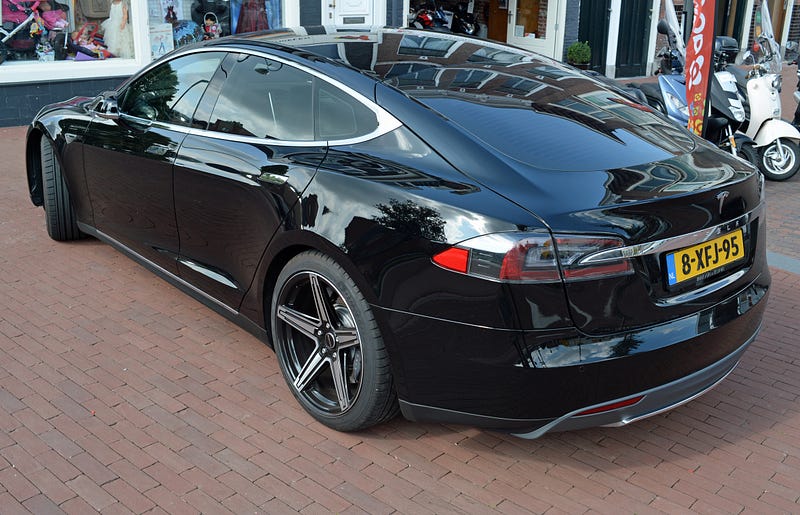
The California DMV has just released a series of reports summarizing the data on self-driving car “disengagement”. That’s the term for when a human has to take over driving from the computer in an emergency.

The California DMV gets this data as part of the self-driving car licensing process, which requires car companies to report various data to the state.

The DMV released reports for each company testing self-driving cars. According to the report on Google:

Over the course of the testing — which took place between September 2014 and December 2015 — the vehicles covered 523, 958 miles. Google’s vehicles covered the majority of that — 424,331 — and the Google’s autonomous technology handed control to the driver 272 times and a test driver felt compelled to intervene 69 times.

The days of self-driving cars are getting ever-closer, but they’re not quite there yet.


Originally published at www.davidincalifornia.com on January 13, 2016.
Driving in the Snow

Big news in the self-driving car world from Ford Motor Company:

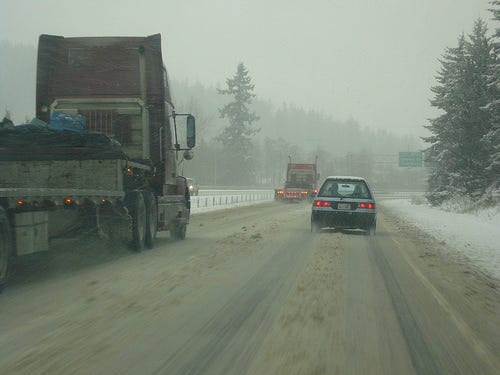
Ford Motor Company (NYSE:F) is breaking away from other autonomous car developers in a major way. The company is testing its self-driving car in snow condition, thus becoming the first of autonomous vehicle developers to take on such a challenge. Others such as Alphabet Inc (NASDAQ:GOOG)’s Google have mostly been testing their autonomous vehicle prototypes in dry, sunny weather conditions.

Testing an autonomous car in winter weather presents a greater but necessary challenge. The challenge is that the sensors used to keep autonomous vehicles on the road can hardly work unless the road and the environment of the vehicle are clear for better visibility. However, when it is raining or snowing and the lanes aren’t clear, maintaining a fully autonomous vehicle on the road and within the safety parameters becomes a herculean task.


Originally published at www.davidincalifornia.com on January 12, 2016.

Tesla Summon Feature

Tesla continues to push the boundaries of autonomous driving with its new Summon feature:

Tesla released today the version 7.1 of its software for the Model S and X. The new update includes everything we told you about when Tesla started testing the build with beta testers last month: UI improvements, a new self-parking feature, ‘Driver Mode’ and Autopilot restrictions, but the automaker is also introducing the “Summon” feature, which enables the Model S to drive itself without anyone in the car.

And this:

Once it will be combined with Tesla’s upcoming robot charging station (here’s a video of the prototype), the Summon feature is expected to eventually eliminate any hassle having to do with charging your electric car.

Brave new world.


Originally published at www.davidincalifornia.com on January 11, 2016.

VTTI Autonomous Vehicle Safety Report

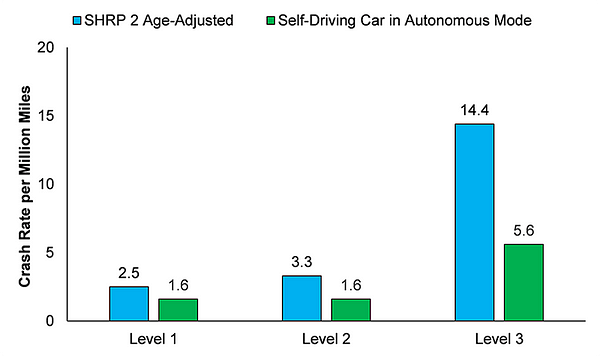
The Virginia Tech Transportation Institute (VTTI) has just published a report on the safety levels of autonomous vehicles compared to human-driven cars.

The VTTI numbers contradict earlier back-of-the-envelope calculations by The Motley Fool. Those earlier numbers indicated that self-driving cars were involved in far more accidents (per mile driven) than traditional cars, although the accidents were all the fault of the human-driven cars.

The VTTI report is much more thorough, although it was also commissioned by Google, so of course there is a conflict of interest issue.

One of the major differences between the VTTI report and The Motley Fool calculations is that VTTI (quite reasonably) controls for the fact that many crashes go unreported. This is particularly true of crashes that result in no injuries and minimal property damage.

However, self-driving cars are required to report all crashes, so a straight comparison of uncontrolled statistics is misleading.

After adjusting the human-driver crash numbers upward (to account for unreported crashes), self-driving cars appear to be involved in far fewer accidents than human-driven cars. This is especially true for Level 3 (minimal property damage) crashes.


Originally published at www.davidincalifornia.com on January 10, 2016.

Toyota Ramps Up

I mentioned previously that Toyota is coming into the autonomous vehicle game a little bit late, even if they do have more self-driving patents than any other company.

However, they are getting into the field in a big way, with offices in Silicon Valley and Boston, and a host of heavy hitters in the lineup:

  • Eric Krotkov, Former DARPA Program Manager — Chief Operating Officer
  • Larry Jackel, Former Bell Labs Department Head and DARPA Program Manager — Machine Learning
  • James Kuffner, CMU Professor and former head of Google Robotics — Cloud Computing
  • John Leonard, Samuel C. Collins Professor of Mechanical and Ocean Engineering, MIT — Autonomous Driving
  • Hiroshi Okajima, Project General Manager, R&D Management Division, Toyota Motor Corporation — Executive Liaison Officer
  • Brian Storey, Professor of Mechanical Engineering, Olin College of Engineering — Accelerating Scientific Discovery
  • Russ Tedrake, Associate Professor in the Department of Electrical Engineering and Computer Science, MIT — Simulation and Control

In particular, I am somewhat familiar with Russ Tedrake, having taken his edX course on Underactuated Robotics. He is a fast-rising start in the robotics world, although thus far his specialty has been walking robots, not driving robots.

It looks like Toyota has a lot of leaders on the team. Now the question is whether they can stock up worker bees.


Originally published at www.davidincalifornia.com on January 9, 2016.

Finding a Niche

One of the intriguing aspects of the autonomous vehicle race is the uncertainty it has generated, even among long-established automobile companies.

Ford is partnering with Google, GM is partnering with Lyft, Toyota is scrambling to keep up, and none of them has as good an idea of what the future will look like as they did ten years ago.

Uber is first and foremost a transportation service, but it has also bought out Carnegie Mellon University’s vaunted robotics department, in hopes of building its own autonomous vehicles. And Uber has a mapping project underway.

Mobileye, until now a computer vision company, is also entering the mapping space.

Elon Musk has begun to muse about Tesla launching a ride-sharing service to compete with Uber.

All of this looks like a lot of hedging, as companies try to cover their bases until the best niche for them clarifies.

One of the things they teach in business school is that entrepreneurs shouldn’t hedge. So who’s not hedging?

Toyota, although maybe just due to a slow start. Perhaps Google and Ford, although they are partnering. Apple, maybe, although they’re so secretive it’s impossible to know what they’re doing.

It’s hard to say that there’s a single company that has a crystal clear vision for what the future will look like and their role in it.

And that just points to how uncertain the future has become in the auto industry.


Originally published at www.davidincalifornia.com on January 7, 2016.

News Out of CES

Lots of autonomous vehicle news out of this week’s Consumer Electronics Show in Las Vegas.

Ford: The automaker will be tripling the size of its self-driving Fusion vehicle fleet, to 30 cars. Meanwhile, right on the heels of its Google partnership, it is also entering a partnership with Amazon, focused on Amazon’s Echo (virtual assistant) product.

NVIDIA: The graphical chip producer has developed a next-generation, water-cooled super-computer, capable of fitting in the trunk of a self-driving car. The PX2 computer will help cars process images and recognize objects.

Velodyne: LIDAR is the perhaps the most important component of an autonomous vehicle system, and also the most expensive. The world’s chief LIDAR manufacturer announced a smaller (and presumably cheaper) LIDAR system the size of a hockey puck.

Toyota: A new study finds that Toyota has more self-driving car patents than any other company (Google, somewhat surprisingly, ranks 24th). “Non-US companies tend to be more aggressive in filing patent applications than American companies.”

HERE: The navigational company jointly owned by several automakers is building a cloud-based mapping platform, seemingly to rival Google Maps.

Kia: The South Korean car manufacturer is getting into the autonomous vehicle race, but a little bit late. “Kia aims to have fully self-driving cars on the road by 2030 (yes, 14 years from now).”

Faraday Future: This isn’t technically an autonomous vehicle announcement, since Faraday is ostensibly focused on electric vehicles, but the upstart is taking shots at Tesla. “And then after 9 years, [Tesla] delivered their first mass market production vehicle…Faraday Future was founded just 18 months ago…we already have a staggering 750 employees globally, breaking ground on a 3 million square foot factory in just a few weeks, and we will deliver our first production vehicle in only a couple years time.”


Originally published at www.davidincalifornia.com on January 6, 2016.

GM Invests in Lyft

The big news of the day in the autonomous vehicle world is that GM has invested $500 million in Lyft.

This is obviously a huge investment, and a strategic investment, different than if a generic financial firm had fronted the cash.

“GM and Lyft said they will work together to develop a network of self-driving cars that riders can call up on-demand,” reports the Charlotte Observer.

“More immediately, America’s largest automaker will offer Lyft drivers vehicles for short-term rent through various hubs in U.S. cities.”

A driver in this transaction is certainly a fear that self-driving cars, combined with ride-sharing services, will up-end GM’s business model.

“Traditional automakers’ reluctance to make bold moves is linked to the fact that self-driving technology could fundamentally undermine the auto industry’s core business model: selling cars to people.”

The Huffington Post reports that the average cost per year to own a car is $8,698, and that the average car owner only uses the car 5% of the time. Rent-a-car, in the form of Uber and Lyft, is coming soon to a family near you.


Originally published at www.davidincalifornia.com on January 4, 2016.

Delphi’s Self-Driving Car

In the run-up to CES, Wired reports on Delphi’s self-driving car.

“Automakers are moving more slowly, adding limited autonomy that Delphi says could prevent 80 percent of crashes. There are a few reasons for this, not the least of which is full autonomy is exceedingly difficult (engineers must plan for almost every possible contingency) and exceedingly expensive (LIDAR, essential to fully autonomous driving, costs more than the average car).”

There is also this:

“The company’s among the industry’s biggest suppliers, and has over the past century pioneered many technologies consumers take for granted, including electric starters (1911), in-dash car radios (1936), and integrated navigation systems (1994). It’s involved in some of the industry’s most interesting and innovative technology, including BMW’s gesture control system and the vehicle-to-vehicle communication technology Cadillac will roll out next year.”

One of the big dichotomies in the self-driving car world is whether to build a mechanism for the driver to take control back from the machine, or whether to completely skip that phase and move straight to machine-only driving.

Delphi is taking the incremental approach.


Originally published at www.davidincalifornia.com on January 4, 2016.