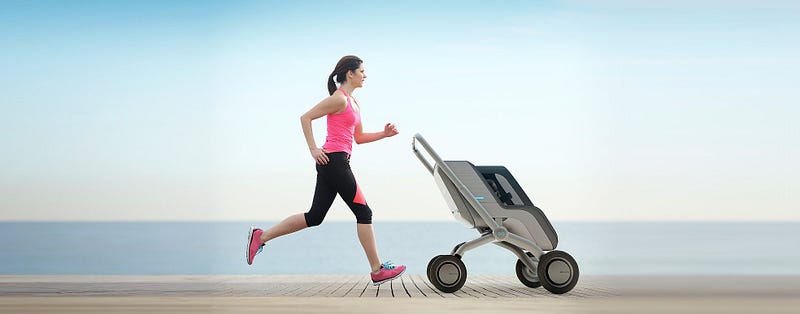
Smartbe, which is marketed as “the first intelligent stroller in the world,” uses a motion-tracking sensor to follow you wherever you go, allowing for hands-free strolling or an assisted push.
The company is here, and you can purchase one here.
One of the best things about owning a Tesla, at least if Twitter is to be believed, is the fact that every vehicle gets over-the-air software upgrades.
At first glance, this seems almost trivial. Everyone who owns a smartphone gets OTA upgrades, and they are as much a pain as a pleasure. Most of the time, it’s not even clear what benefit the upgrade delivers, so I usually chalk it up to some sort of invisible security patch.
But Tesla has been rolling out new features at such a clip, particularly its autonomous driving features, that users marvel that “it’s like I got a new car overnight”.
I’m not sure how long this can last — after all, we’ve already seen with mobile phones that the novelty plateaus eventually — but for the moment it seems like an exciting part of owning a Tesla, or any vehicle receiving periodic OTA upgrades.
One of the key selling points for self-driving cars is the ability to transport people who cannot drive themselves. Largely, this group is comprised of the very young and the very old.
The very old, in particular, are a huge market for some of the wealthier nations on earth. Japan, for instance.
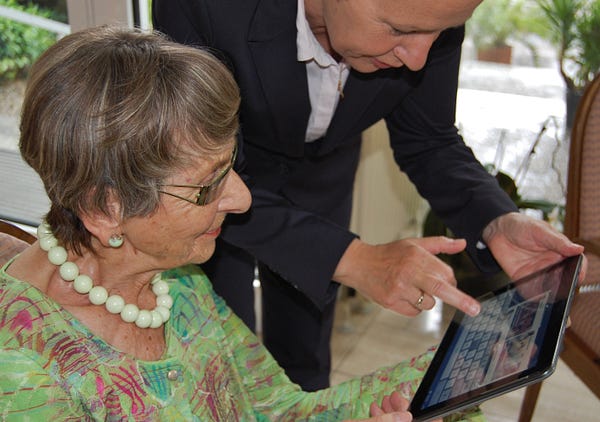
A big question is how readily the elderly will take to self-driving cars.
I think they will take to it like crazy. While old people have a reputation as technology late adopters, I think this is more a question of motivation than aptitude.
A lot of technology just isn’t useful enough to justify spending time and effort on, for an eighty year-old.
But when a technology brings a lot of utility (email, for instance), I have seen the elderly pick it right up.
Curtis Franklin, Jr. has the scoop at InformationWeek.
The virtual driver itself lives in a Linux cluster that sits in the trunk of the test vehicle. Williams said that the cluster is five nodes running Ubuntu Linux. Multiple nodes are required to handle all the sensor input and process it quickly enough to make driving decisions. Asked why there are five nodes in the cluster, Williams was succinct. “That’s all that would fit in the trunk,” he said.
Also, this:
Williams was quick to explain that assisting a human driver and creating a virtual driver are two distinct problems that share far less, electronically or conceptually, than it might seem at the outset. He said that the two programs are distinct, with separate management and development teams. [emphasis added]
President Obama’s 2016 State of the Union address included a proposal to spend $3.9 billion on driverless car initiatives over the next 10 years.
The headline number is a little bit like an NFL contract figure — eye-popping but of questionable veracity, since Obama will only be president for 1 more year. In fact, even if the next president was also committed to the program, it still wouldn’t be a sure thing, because in year 10 there will be yet another president.
And who knows, maybe in five years self-driving cars will be a done deal and the idea of spending government money promoting them will seem silly.
So while the financial figure is welcome, the real benefit might be in the regulatory accommodations.
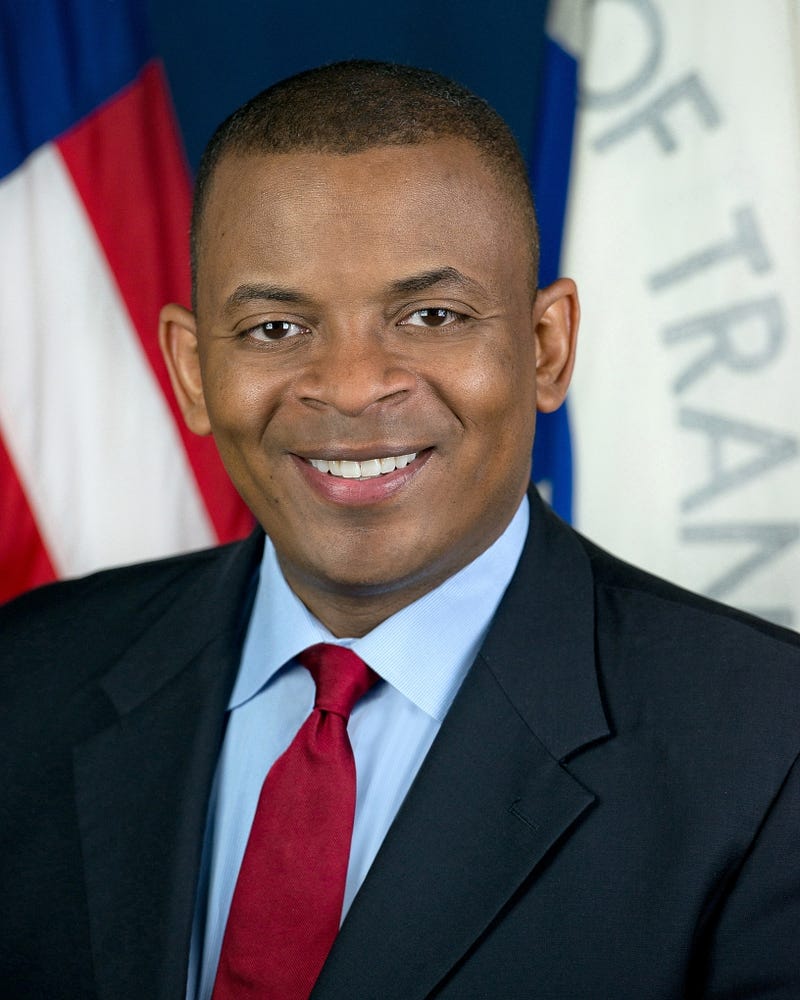
U.S. Transportation Secretary Anthony Foxx is making self-driving cars a big part of his final year in office.
“NHTSA said it will consider granting exemptions from regulations to automakers for up to 2,500 self-driving vehicles for on-road, real-world testing.”
There is a lot private money pouring into autonomous vehicles. What might need more than government money is government permission.
The California DMV has just released a series of reports summarizing the data on self-driving car “disengagement”. That’s the term for when a human has to take over driving from the computer in an emergency.
The California DMV gets this data as part of the self-driving car licensing process, which requires car companies to report various data to the state.
The DMV released reports for each company testing self-driving cars. According to the report on Google:
Over the course of the testing — which took place between September 2014 and December 2015 — the vehicles covered 523, 958 miles. Google’s vehicles covered the majority of that — 424,331 — and the Google’s autonomous technology handed control to the driver 272 times and a test driver felt compelled to intervene 69 times.
The days of self-driving cars are getting ever-closer, but they’re not quite there yet.
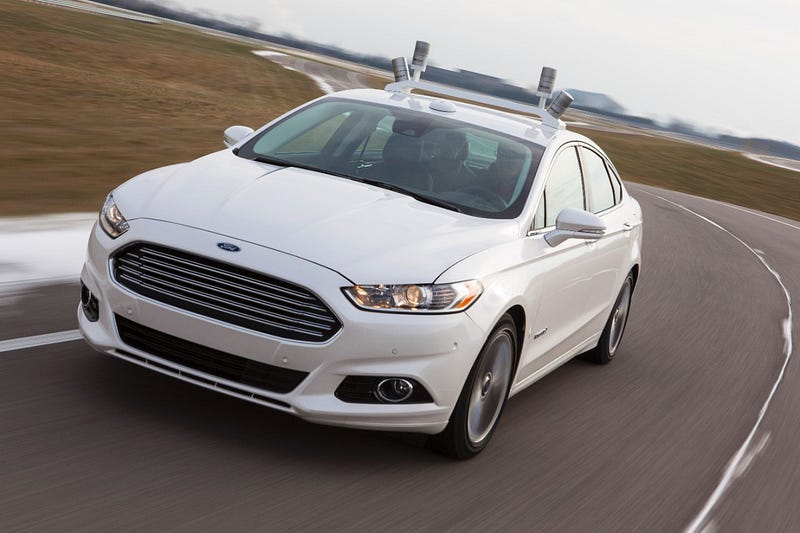
Big news in the self-driving car world from Ford Motor Company:
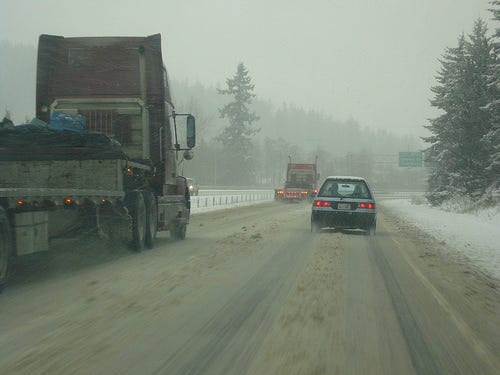
Ford Motor Company (NYSE:F) is breaking away from other autonomous car developers in a major way. The company is testing its self-driving car in snow condition, thus becoming the first of autonomous vehicle developers to take on such a challenge. Others such as Alphabet Inc (NASDAQ:GOOG)’s Google have mostly been testing their autonomous vehicle prototypes in dry, sunny weather conditions.
Testing an autonomous car in winter weather presents a greater but necessary challenge. The challenge is that the sensors used to keep autonomous vehicles on the road can hardly work unless the road and the environment of the vehicle are clear for better visibility. However, when it is raining or snowing and the lanes aren’t clear, maintaining a fully autonomous vehicle on the road and within the safety parameters becomes a herculean task.
Tesla continues to push the boundaries of autonomous driving with its new Summon feature:
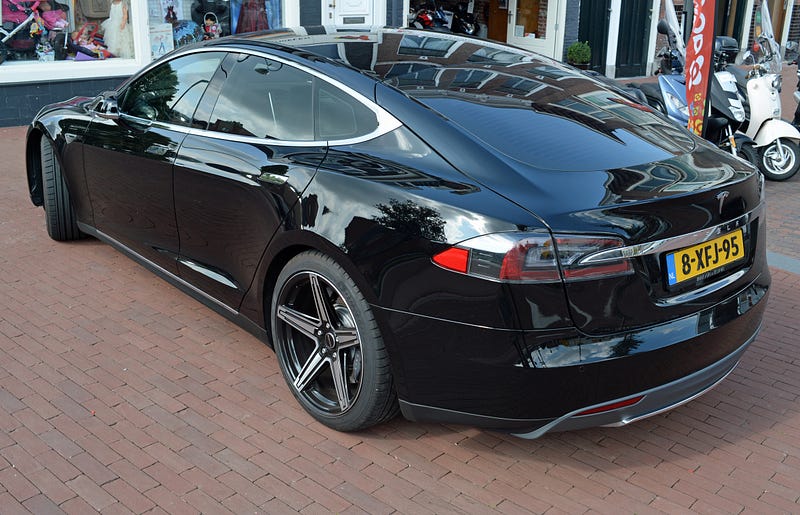
Tesla released today the version 7.1 of its software for the Model S and X. The new update includes everything we told you about when Tesla started testing the build with beta testers last month: UI improvements, a new self-parking feature, ‘Driver Mode’ and Autopilot restrictions, but the automaker is also introducing the “Summon” feature, which enables the Model S to drive itself without anyone in the car.
And this:
Once it will be combined with Tesla’s upcoming robot charging station (here’s a video of the prototype), the Summon feature is expected to eventually eliminate any hassle having to do with charging your electric car.
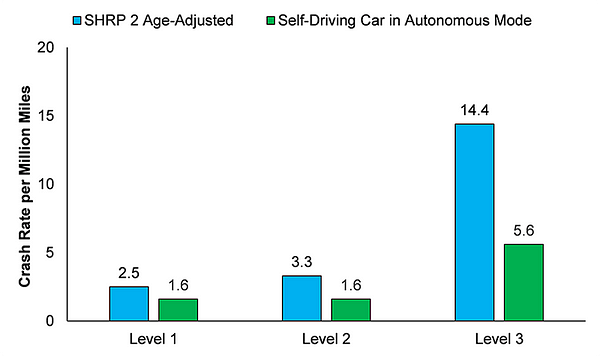
The Virginia Tech Transportation Institute (VTTI) has just published a report on the safety levels of autonomous vehicles compared to human-driven cars.
The VTTI numbers contradict earlier back-of-the-envelope calculations by The Motley Fool. Those earlier numbers indicated that self-driving cars were involved in far more accidents (per mile driven) than traditional cars, although the accidents were all the fault of the human-driven cars.
The VTTI report is much more thorough, although it was also commissioned by Google, so of course there is a conflict of interest issue.
One of the major differences between the VTTI report and The Motley Fool calculations is that VTTI (quite reasonably) controls for the fact that many crashes go unreported. This is particularly true of crashes that result in no injuries and minimal property damage.
However, self-driving cars are required to report all crashes, so a straight comparison of uncontrolled statistics is misleading.
After adjusting the human-driver crash numbers upward (to account for unreported crashes), self-driving cars appear to be involved in far fewer accidents than human-driven cars. This is especially true for Level 3 (minimal property damage) crashes.
I mentioned previously that Toyota is coming into the autonomous vehicle game a little bit late, even if they do have more self-driving patents than any other company.
Eric Krotkov, Former DARPA Program Manager — Chief Operating Officer
Larry Jackel, Former Bell Labs Department Head and DARPA Program Manager — Machine Learning
James Kuffner, CMU Professor and former head of Google Robotics — Cloud Computing
John Leonard, Samuel C. Collins Professor of Mechanical and Ocean Engineering, MIT — Autonomous Driving
Hiroshi Okajima, Project General Manager, R&D Management Division, Toyota Motor Corporation — Executive Liaison Officer
Brian Storey, Professor of Mechanical Engineering, Olin College of Engineering — Accelerating Scientific Discovery
Russ Tedrake, Associate Professor in the Department of Electrical Engineering and Computer Science, MIT — Simulation and Control
In particular, I am somewhat familiar with Russ Tedrake, having taken his edX course on Underactuated Robotics. He is a fast-rising start in the robotics world, although thus far his specialty has been walking robots, not driving robots.
It looks like Toyota has a lot of leaders on the team. Now the question is whether they can stock up worker bees.