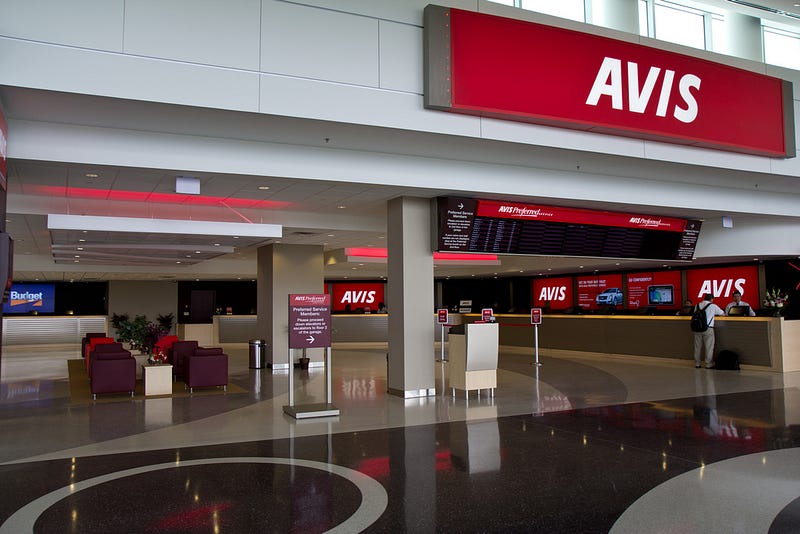
When I think of mobility, I think of Uber and Waymo and Ford, my old employer. But Avis very much considers themselves a mobility company.
Kaelin boils it down to, âWe provide solutions to get from Point A to Point B.â
And also this:
âFuture mobility will be connected, integrated, and on-demand. Connected cars put us in a strong position to provide those services,â Kaelin envisions.
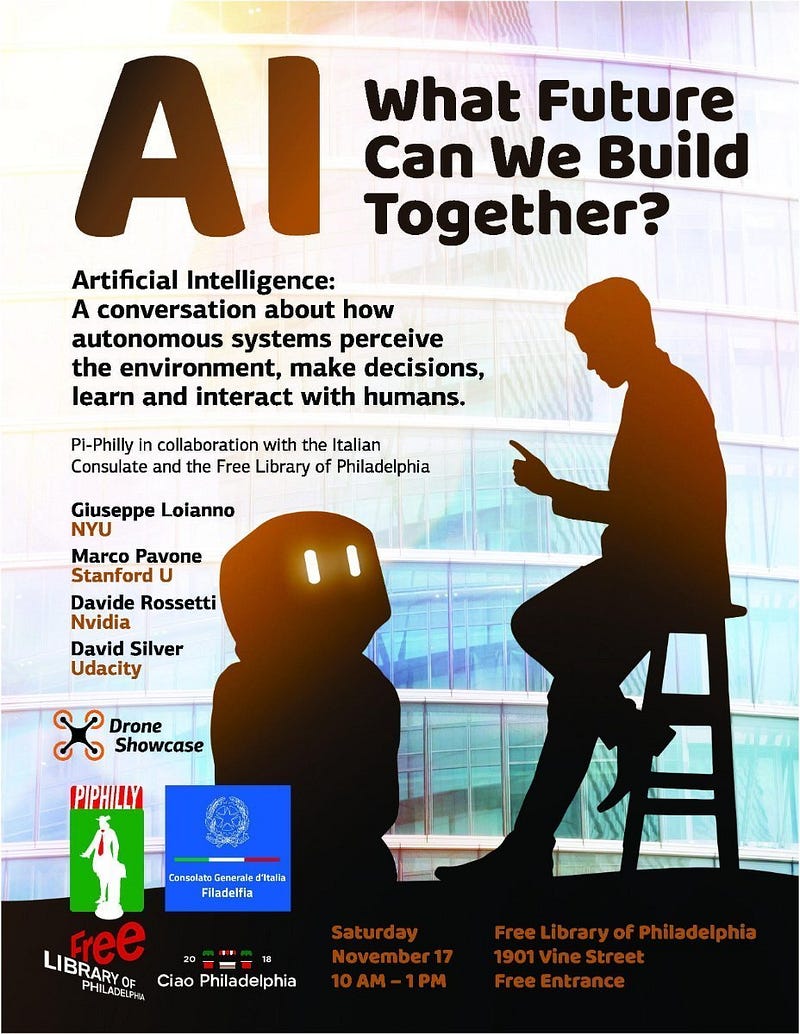
The Saturday before Thanksgiving I will be speaking at an event in Philadelphia, discussing artificial intelligence and the future. The event is hosted by the Free Library of Philadelphi and sponsored by the Italian Consulate.
This Thursday Iâll be moderating a panel on self-driving cars at EB Tech Day San Jose. The event is hosted by Elektrobit, a Udacity partner and a leading supplier of automotive software, particularly safety-critical software.
On the panel will be a number of self-driving car engineers and experts from Elektrobit and their partner company, iSystem:
Chris Schlink, Sr. Application Support Engineer, iSystem
Hurley Davis, Director of Engineering, U.S., EB
Volker Springer, Sr. Project Manager, EB
Chris Thibeault, Head of U.S. Product Expert Group, EB
My panel goes on-stage at 1pm, but the event goes all day, from breakfast to happy hour. A full day of autonomous vehicle technology đ
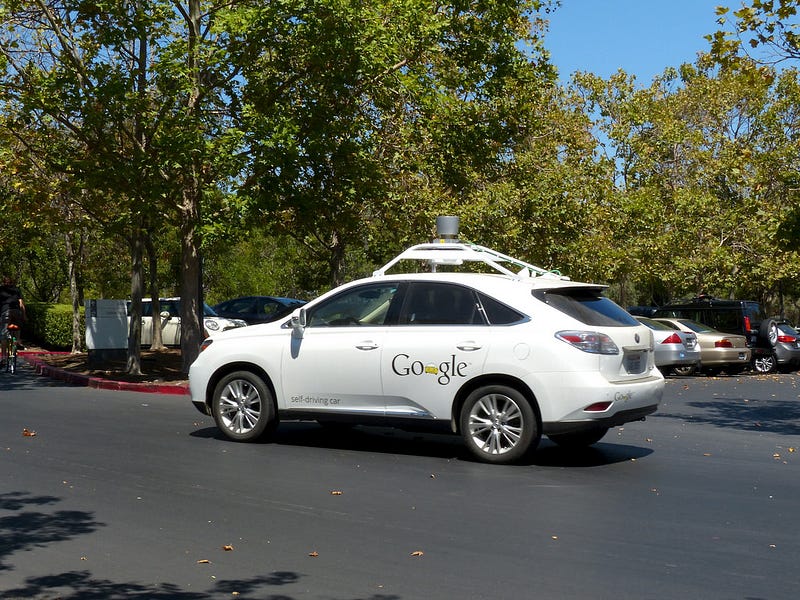
The early days of the Google Self-Driving Car Project were not that long agoâââonly 7 years ago, at the beginning of the decade. But that was before the self-driving car goldrush, back when Uber was only operating a limousine service, and before Lyft even existed. A lot can change in 7 years.
The New Yorker goes back to the early days to investigate, in particular, Anthony Levandowskiâs days at Google. Levandowski earned $120 million from his time at Uber, but The New Yorker reports that his time was replete with controversy.
âHiring could take months,â Levandowski told me. âThere was a program called WorkforceLogic, and just getting people into the system was super-complicated. And so, one day, I put ads on Craigslist looking for drivers, and basically hired anyone who seemed competent, and then paid them out of my own pocket. It became known as AnthonyforceLogic.â Around this time, Levandowski went to an auto dealership and bought more than a hundred cars. One of his managers from that period told me, âWhen we got his expense report, it was equal to something like all the travel expenses of every other Google employee in his division combined. The accountants were, like, âWhat the hell?â But Larry said, âPay it,â and so we did. Larry wanted people who could ignore obstacles and could show everyone that you could do something that seemed impossible if you looked for work-arounds.â
In the last few weeks, both Lyft and Uber rolled out (very different) subscription pricing models.
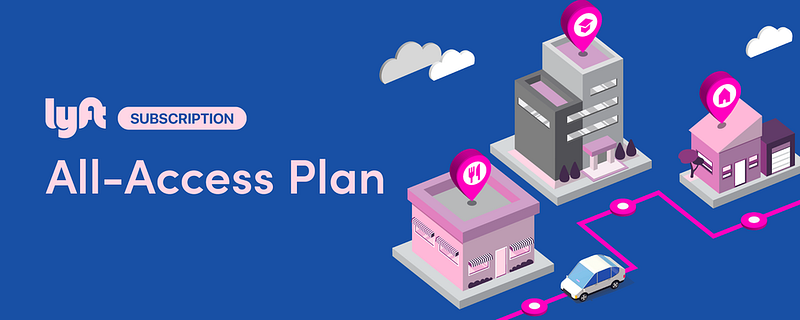
Lyftâs All-Access Plan offers 30 rides per 30 days (up to $15 per ride) for $299. This is basically a bulk purchase option. A Lyft power user would save $150 per month by subscribing instead of paying per ride. (30 rides * $15 per rideâ $299 subscription price =$151 savings)
Uberâs Ride Pass, by contrast, is essentially insurance against surge pricing. For $14.99 per month, Uber users escape the risks of surge pricing, plus they save approximately 15% off of normal fares. A user would probably need to spend $100 or more per month on Uber to come out ahead.
Each of these offers is a tiny, baby step toward all-you-can-eat subscription ridesharing. The marginal cost of each ride probably prohibits Lyft and Uber from diving headfirst into all-you-can-eat ridesharing. Hopefully self-driving cars will lower that marginal cost to the point that it becomes feasible.
My first professional job was with America Online, now AOL. I joined as a college intern in 2001, but there were still veterans around who could recall AOLâs switch from hourly to unlimited pricing.
22 years ago, AOL switched from plans that allowed for metered hourly Internet usage to plans that allowed unlimited Internet access. The pricing change brought in a wave of new customers, along with per-user usage increases that overwhelmed AOLâs infrastructure. It was one of the most significant things AOL ever did.
Ridesharing is getting closer to its all-you-can-eat moment.
Aspiring Self-Driving Car Engineers in India, apply today for the opportunity to work on autonomous vehicles, regardless of your financial situation!
KPIT, one of Indiaâs leading automotive software suppliers, just announced they are sponsoring 500 scholarships for Indian students to take Udacityâs Self-Driving Car Engineer Nanodegree program!
Since we launched the Nanodegree program two years ago, we have seen tremendous interest from students in India who want to learn about autonomous vehicles. Many of the Indian students who have enrolled in the Nanodegree program now work on autonomous vehicles at great Indian companies like KPIT, Ola, and Hi-Tech Robotics.
The KPIT Scholarships will provide the opportunity for any student in India to work on self-driving cars, regardless of their financial situation.
KPIT is making a tremendous investment in Indian software engineers. We are delighted to be able to work with Kishor Patil and the KPIT team to make this possible!
My latest post on Forbes.com discusses recent announcements from both Ford and Volkswagen to take their self-driving cars abroad.
âIn recent days both Ford and Volkswagen have announced plans to work on self-driving vehicles outside of their home markets. In Fordâs case, the target market is Beijing, whereas the Volkswagen effort will take place in Israel.â
The ventures are different, and offer distinct insights into each companyâs approach to autonomous vehicles. But the move to new markets may have a common inspiration.
âBy launching self-driving cars in other markets, automotive companies might be able to stand out and gain local advantages, instead of racing to catch up to Waymo in the US market.â
Credit to Innovusion, though: âimage-quality lidarâ really frames the issue in a way that I hadnât seen before. Cost aside, is it really possible to replace cameras with lidar?
Watching the Innovusion demo video, the answer seems to be âcloser, but not yetâ. The quality of the lidar scan is terrific. However, âimage qualityâ isnât quite right. Signs appear in the video and are illegible, and at least to my eyes the traffic signal was not classifiable.
Itâs exciting to see how much work is being done to push lidar resolution to a point that it is competitive with cameras.
It would also be exciting to see cameras develop their measurement abilities to compete with lidar and radar. Generally, cameras are terrific for detection and classification tasks, but they measure distances, heights, and other dimensions poorly.
And while many startups are jumping into the lidar space, comparatively fewer are working on perception with cameras. That work tends to be left to academic researchers, automotive manufacturers, and Tier 1 suppliers. Mobileye, the most prominent automotive computer vision specialty company (now part of Intel), has mostly been quiet about their computer vision work.
With so many companies pushing lidar resolution to camera-like levels, there might be an opening for some computer vision startups to push camera measurements to lidar-like levels.
On Friday, the Tesla blog announced the introduction of the Navigate feature to its Enhanced Autopilot system. Navigate will drive from exit-to-exit on the highway, and automatically change lanes to pass vehicles along the way.
Near the top of the post, Tesla writes, âuntil truly driverless cars are validated and approved by regulators, drivers are responsible for and must remain in control of their car at all times.â
That is a prominent disclaimer, but this feature basically looks like Level 3 partial autonomy. Depending on how aggressively Tesla requires drivers to keep their hands on the wheel, itâs not hard to imagine drivers diverting their attention elsewhere.
And that could be a great thing!
Tesla could start out by requiring drivers to basically keep their hands on the wheel at all times. Over time, as the software proves itself, Tesla could use over-the-air updates to slowly relax the requirements that drivers monitor the road.
Of course, Tesla could botch the rollout and cause lots of distracted driving accidents. But so far Tesla Autopilot has a great safety record, so I feel pretty good about this.
As the blog post notes, âSince we launched Autopilot in 2015, more than 1 billion miles of real-world driving data have been used to support the feature.â