* Open one door to prevent the self-driving car from moving * Break a window if doors are locked and immediate entry to the vehicle is necessary * Call Waymo to unlock the doors remotely if there is time Keep at least one door open until the vehicle engine is turned off (Step 7) or 12V Cut Loop under the hood is cut (Step 8)
There are several more options that require scissors, with pictures, all for emergency responders.
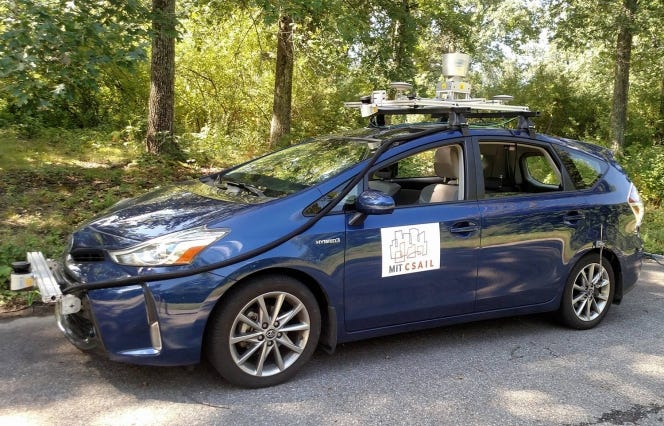
A research team from MIT built a self-driving car to operate on rural roads, without the need for high-definition maps. HD maps are one of the big limiting factors for self-driving cars, which need the maps in order to localize themselves on the road with near-exact precision.
Unfortunately, HD maps are super-expensive to build and maintain, so any progress on this front is a big deal.
The MIT project, MapLite, uses a combination of open-street map data and lidar data to navigate through unmapped environments. Instead of trying to build a map as it goes (a technique known as âsimultaneous localization and mappingâ), the vehicle merely uses lidar to identify flat, drivable surfaces, and then identifies a viable trajectory to reach its next waypoint.
All of this seems pretty straightforward, but what really struck me was a seemingly obvious thing they mention in the PR writeup.
âI imagine that the self-driving cars of the future will always make some use of 3-D maps in urban areas,â says [MIT graduate student Teddy] Ort. âBut when called upon to take a trip off the beaten path, these vehicles will need to be as good as humans at driving on unfamiliar roads they have never seen before. We hope our work is a step in that direction.â
I had always kind of assumed that vehicles relying on HD maps would be a stuck within their geofences, but of course thatâs not necessarily the case. A vehicle could use HD maps in urban areas, and then a non-HD map system in other areas. And of course there could be segments of the world in which neither approach is viable and thus those areas would be completely off-limits (until the mapping gets done, say).
Totally obvious when I write it down, but not something I had ever quite pieced together on my own.
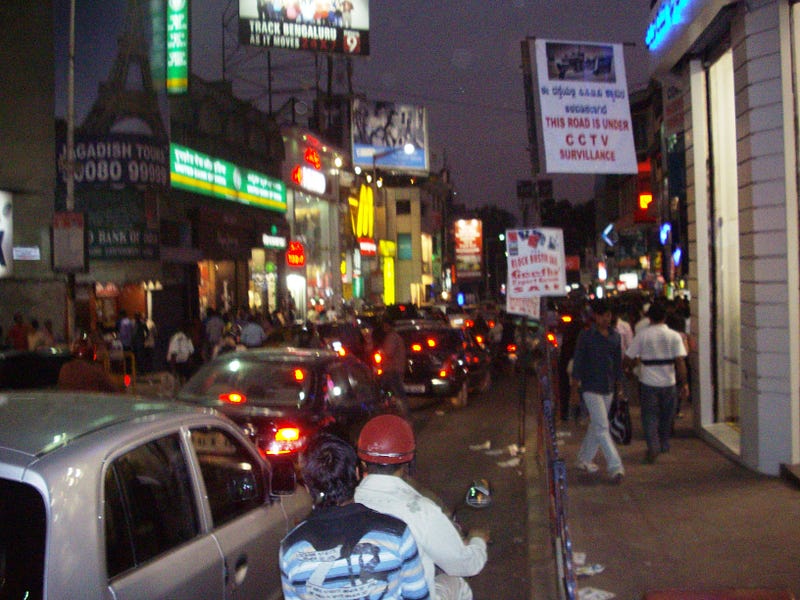
Iâve been in Bangalore, India, for the last two days and it has been a delightful trip. The traffic here is fiercesome, though. Even within India, Bangalore has a reputation for congestion on the roads.
Many of the Indians Iâve spoken with look at the traffic here and express skepticism that self-driving cars will ever come to India, or at least any time soon.
I suspect self-driving cars will arrive in India sooner than people expect, though. The key will be that the first experiments will start just as they did in the United States: in locations chosen specifically for their ease of driving.
For years, self-driving cars in the US only operated in Silicon Valley and Las Vegas. And there was a reason for that. Those locations are flat and sunny, and the streets are rectilinear. Even now, Waymoâs first public rollout is in Phoenix, which is flatter, sunnier, and more rectilinear still.
Something similar will happen in India. Self-driving cars wonât come to Bangalore firstâââthat would be crazy. Theyâll come first to private campuses and controlled-access public roads with good pavement and markings, where the challenge of getting self-driving cars to work will be more manageable.
Over time, self-driving cars will expand their footprint, in India and elsewhere, but there will be learning curve. Just as self-driving cars in the US have now reached Detroit and Pittsburgh and even Boston, eventually self-driving cars will get to Bangalore.
Lyft is serious about self-driving cars. Last fall, they announced they were funding 400 scholarships for Udacityâs Intro to Self-Driving Cars Nanodegree Program, with a focus on increasing diversity in the autonomous vehicle industry.
Today, Lyft and Udacity announced the Lyft Perception Challenge to identify top Udacity students to interview for positions on Lyftâs Level 5 self-driving car team.
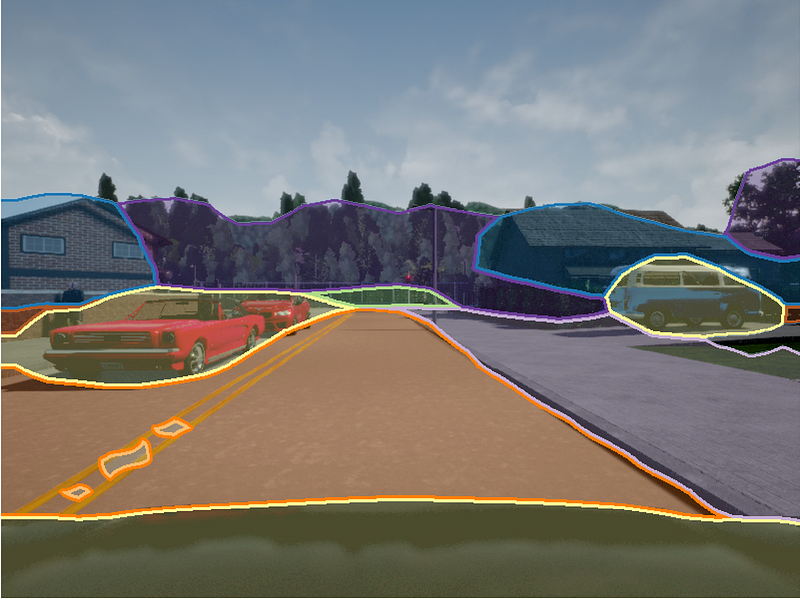
The project requires students to use computer vision techniques to identify and locate vehicles on the road. These are the same skills taught in the Udacity Self-Driving Car Engineer Nanodegree Program. We are excited to see what students develop even above and beyond what we teach in class!
Udacity Self-Driving Car students and alumni are invited to participate. The top 25 students with US work authorization will earn interviews with Lyftâs team. The top 150 candidates from around the world will be invited to special interview preparation workshops with Udacityâs Career Services team.
Our goal on the Udacity Self-Driving Car Team is to help connect as many students to jobs as possible. We are excited to be working with Lyft to achieve that goal and make self-driving cars a reality for everyone.
No surprise there. After all, it was the DARPA Grand Challenge that kicked off the autonomous vehicle revolution.
But this line struck me:
âAccording to [Undersecretary of Defense Michael] Griffin, 52 percent of casualities in combat zones are attributed to military personnel delivering food, fuel and other logistics.â
The post doesnât break out what portion of those causalties come from logistics personal who are attacked, versus just plain old vehicle collisions. But itâs plausible that a lot are due to collisions that donât involve troops being directly under attack.
One of Udacityâs big initiatives this year is to build our alumni network. Udacity has tens of thousands of graduates around the globe, and our goal is to help our alumni advance their careers in whatever direction they choose.
To that end, the Udacity Alumni Network has a calendar full of career-focused online events coming up. Over the next month alone, our Careers & Alumni teams will host:
The framework is currently modest, as expected for a first release, but helpful. And the point of the exercise is to engage the self-driving car community in building out a robust, open-source solution to autonomous vehicle testing.
What gets me really excited about this is the potential to create a path toward test-driven development for autonomous vehicles.
The Ruby on Rails world, which was my world for years, is fanatical about testing. Theylovetestingsomuch. One of Railsâ engineers most beloved development principles is Test-Driven Development.
TDD is the process of designing and developing your code using tests first. The mantra âred-green-refactorâ is familiar to any Rails engineer, as TDD requires:
Writing a test case
Verifying that the application fails the test case (red)
Writing the application code to pass the test case
Watching it pass (green)
Fixing and improving the application code (refactor)
Verifying that the application code still passes the test case
Rinse and repeat.
I loved this cycle as a Rails engineer and I love the idea that a public testing framework for autonomous vehicles could provide a red-green-refactor cycle for autonomous vehicle developers.
Take a self-driving car scenario. Watch the virtual driver software fail. Write the code to pass the scenario. Watch the virtual driver pass. Refactor. Verify that the virtual driver keeps on passing that test case forever.
Of course, we donât need a public, open-source testing framework to do this. Any self-driving car engineer anywhere can use TDD by themselves. But a public test suite would take a lot of the work out of TDD, by pre-specifying the hurdles that developers need to clear.
Hopefully that would lead to safer self-driving cars, sooner.
Didi Chuxing (a Udacity partner, ahem) has been in the news on a few fronts this week, and will probably show up a few more times with the upcoming Beijing Motor Show this week.
On the more traditional, human-driven, ride-hailing front, Didi is moving into Mexico, with a new office in Toluca. This seems ever-so-close to the lucrative US market, currently dominated by Uber and Lyft.
Building a self-driving car from scratch seems like a pretty big deal to me. Tesla is famously struggling with the challenges of manufacturing a car, and even automotive manufacturers like GM/Cruise are basically re-purposing existing vehicles into self-driving cars.
By contrast, Didi believes:
ââŚcurrent mainstream cars are heavily âoverspeccedââââpacked with equipment most drivers do not need such as engines and other technologies that allow them to go as fast a 150 mph (250 kmph).
Performance levels for ride-hailing and car-sharing service vehicles could be dialled down significantly, meaning they would not have to be so aerodynamic. Cars designed to carry just one or two people at a time to work or the shops could therefore be âboxierâ, with fewer seats and more space for luggage.â
Iâm excited to see what Didi comes up with for its âpurpose-builtâ self-driving cars. Big risk, big reward.