Next Steps For Cruise

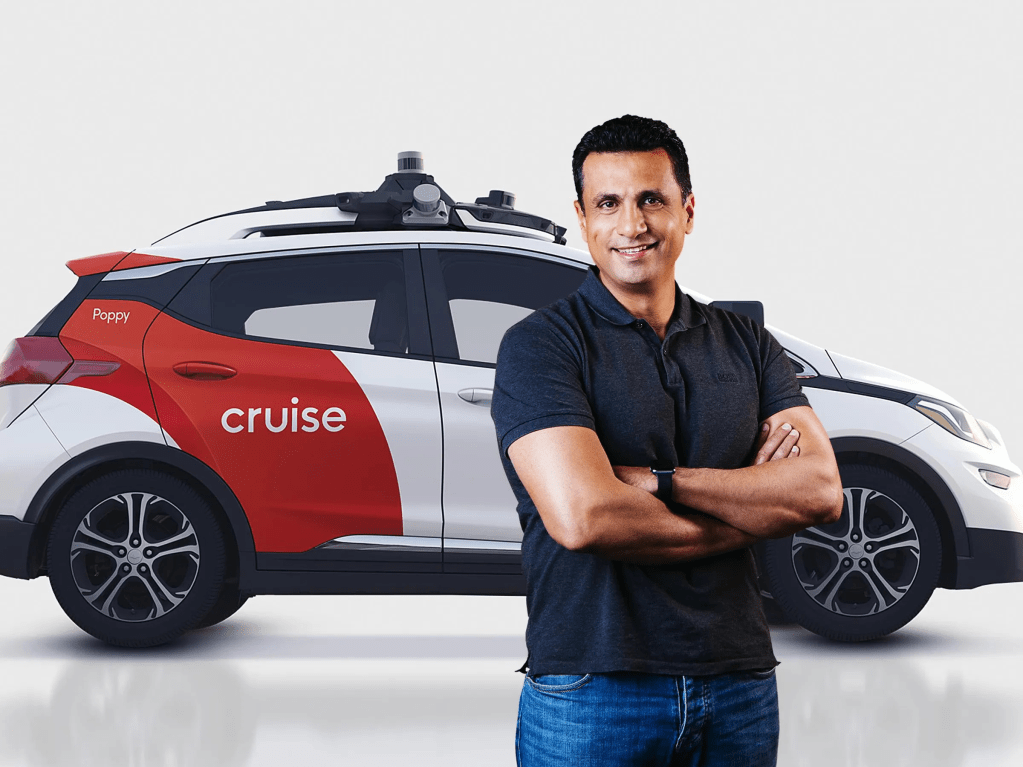
With founder & CEO & CTO Kyle Vogt’s resignation, Cruise’s EVP of engineering, Mohamed Elshenaway is now President, and seemingly running the company.

I never met Mo personally during my time at Cruise, but he was well-regarded and universally known by his nickname.

According to various news outlets, Mo sent a company-wide email on Thanksgiving Wednesday, outlining the next steps for Cruise. These include a continued focus on the Chevy Bolt (the tradeoff being delays in the future Origin platform), a renewal of driverless service in a single city, and a limited number of layoffs.

The speculation is that Cruise will begin driverless testing in a more friendly regulatory environment than San Francisco, probably Texas or Arizona. That makes sense politically, but culturally Cruise is highly tied to San Francisco. The logic was always to focus on the city that is both one of America’s toughest and home to the company’s headquarters and most of its employees. Once Cruise cracked San Francisco, everything else would be easier.

A few things have changed in the last few years that might call that logic into question:

  • Cruise employees are much more geographically distributed. The pandemic normalized remote work, and the tech boom made Cruise more flexible in hiring employees (especially engineers) beyond the Bay Area.
  • Waymo’s alternative approach of starting in a much easier environment – Phoenix – and then expanding to San Francisco seems to be successful.
  • Cruise’s non-fatal but repeated mishaps strained its relationship with California regulators and San Francisco city officials.

Another notable element of the reported email is that, while layoffs are coming, layoffs in engineering roles are previewed as minimal. One possible outcome could be that low performers might be culled, but otherwise the engineering organization would remain intact.

Perhaps the most important signal, at least to shareholders like myself, is that the plan seems to be for Cruise to continue as a robotaxi-focused mobility company distinct from General Motors.

In the aftermath of Kyle Vogt’s resignation, some people speculated that Mo’s elevation to president might foreshadow efforts to deprioritize operations and perhaps even bring the engineering team into General Motors. So far, that looks to be maybe not the case.

Unusual Startup Governance Structures

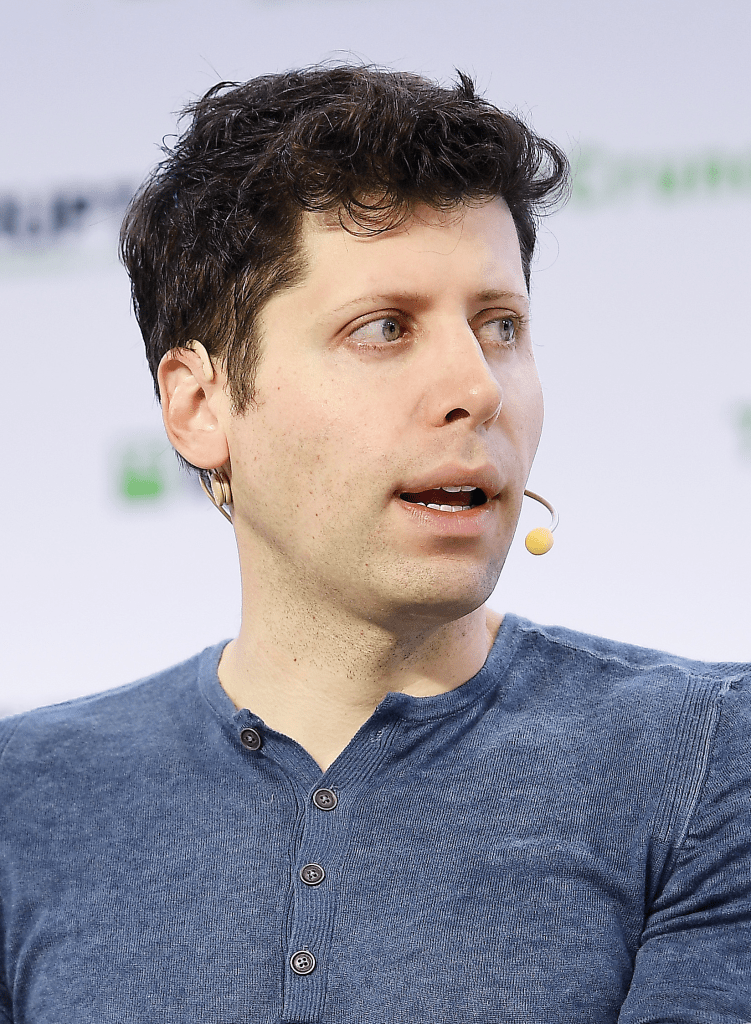
The OpenAI leadership saga has captivated me this weekend, as it has seemingly all of Silicon Valley Twitter. On Friday afternoon, OpenAI, the company behind ChatGPT, unexpectedly and kind of shockingly fired their CEO, Sam Altman.

To put it like that, though, is perhaps a little misleading, because it wasn’t really the whole of OpenAI that did the firing, it was more specifically the OpenAI board of directors.

In the 24 hours following the announcement, Twitter has had a field day with this one. My favorite tweet:

The various characters sketched in the tweet are the members of OpenAI’s board of directors. (Technically, the “former Tesla sr product manager” is incoming acting CEO Mira Murati, who is not yet on the board. And the tweet omits OpenAI co-founder and biard member Ilya Sutskever, who is both a leading figure in AI research and the catalyst of the current uproar. But the tweet is great and its essence is correct.)

The situation at OpenAI reminds me a little of Dan Amman’s departure from Cruise a few years ago.

Like Altman, Amman’s employees were fond of him, and like Altman, the firing was completely unexpected, by the public, the employees, and the company itself.

And, like Altman, Amman worked for a startup with an unusual governance structure.

In Altman’s case, the governance structure is a confusing mish-mash of a non-profit that owns and controls a “capped” for-profit company.

In Amman’s case, Cruise was and still is a majority-owned (but not wholly-owned) subsidiary of General Motors.

And, in both cases, the CEO’s departure seems related to the respective unusual governance structures. The rumor seems to be that Sutskever and the rest of the OpenAI board were unhappy with Altman’s focus on growth and commercial success. Perhaps this focus came at the expense of AI safety.

And in Amman’s case, the news reporting after the fact was that Amman pushed too hard and too repeatedly for a Cruise IPO, that would have more formally separated Cruise from GM. In Cruise’s case, the reporting is that the board was entirely made up of GM employees, all of whom had day jobs reporting up to Mary Barra, GM CEO. So basically the board was Mary Barra.

All situations are unique and of course Altman’s and Amman’s firings have lots of specific nuance. But it seems like there is a lesson here, in that unusual governance structures can cause problems for CEOs who approach their roles similarly to how the CEO of a standard venture-backed startup might.

Unusual governance structures lead are often the product of idiosyncratic missions and interests. Probably all employees, from the CEO on down, should consider those idiosyncracies and their implications.

So Many Teslas

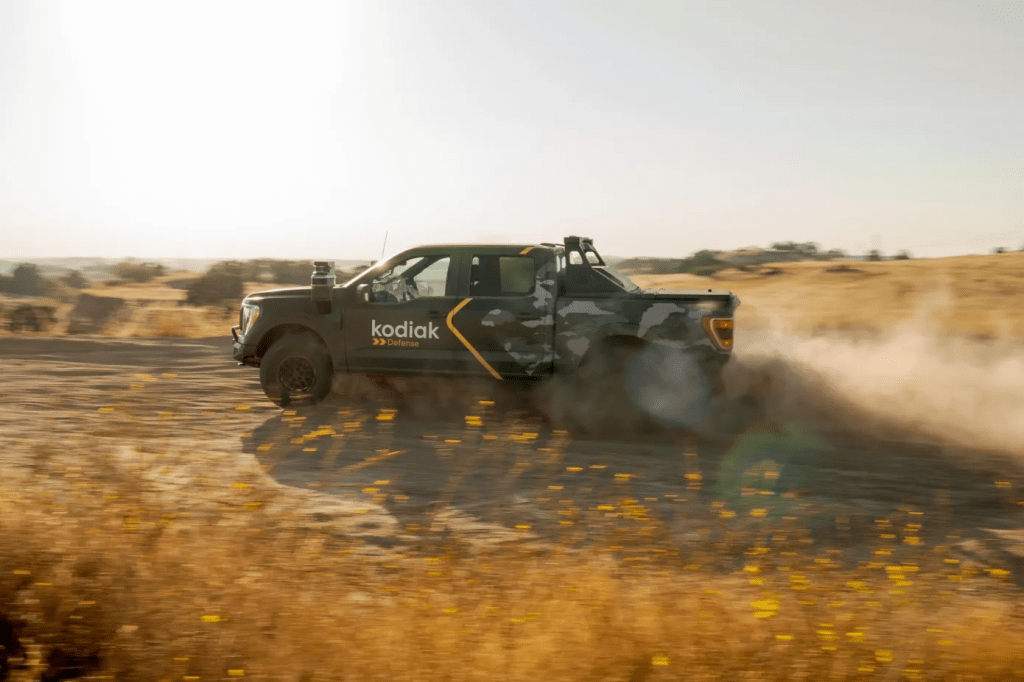
Every 23 year-old software developer I work with at Kodiak seems to have a Tesla.

That’s not quite true – one says its his girlfriend’s car, and another has a life goal of never owning a car. But otherwise everybody has a Tesla.

Checking with them, the monthly lease or financing cost is in the ballpark of $500-$700, although some are paying more so as to pay off the loan early. This is a thing you can do if you make $100,000+ entry-level software engineering salary in Silicon Valley, and you have no financial responsibilities!

The other racket is that new grads have learned that the year to buy the Tesla is your very first year. The $7500 federal tax credit for new EV purchases is ineligible to individuals with an income over $150,000 annually. If you graduate in May and start your job in August, you have a brief window to purchase the vehicle and get the $7500 tax credit. Otherwise you might get a raise or promotion or bonus in your second year of employment and become ineligible!

They did share with me one secret I should have used when buying a new-to-me car a few months ago (I purchased a used Nissan LEAF). Apparently it might be possible to purchase the vehicle in your child’s name and then the kid gets the tax credit?

My seven year-old has not yet cracked $150,000 annual earnings.

Me On The Think Autonomous Podcast

Jeremy Cohen, one of the original students in the Udacity Self-Driving Car Nanodegree Program, recently interviewed me for his Think Autonomous podcast.

It was a lot of fun!

We talked about Udacity, how we built the Nanodegree program, what Sebastian Thrun is really like (he’s great!), how self-driving trucks compare to robotaxis, my current work at Kodiak, and much more.

Jeremy has his own online education venture, focusing on advanced technical topics, thinkautonomous.ai. Check it out!

May Mobility Raises A Series D

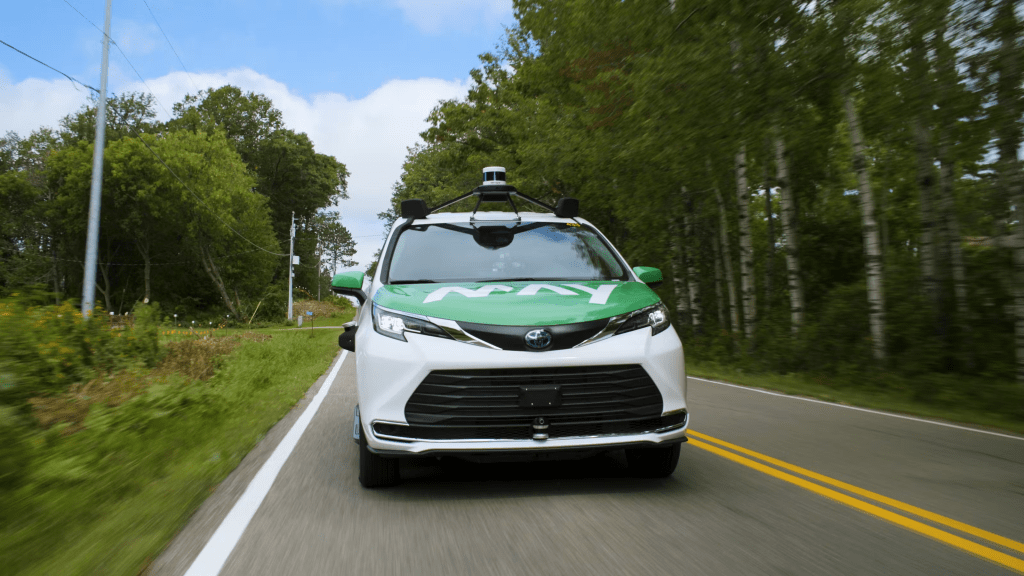
May Mobility raised a $105 million Series D venture capital round!

This is great, both because it is good news for the AV space generally, and because May, specifically, is a kind of awesome “little engine that could” endeavor.

May has been around for a long time, quietly plugging away at different autonomous vehicle deployments, mainly in the AV shared-ride shuttle domain. They’re based out of Michigan, unlike so many of the other AV startups that are Silicon Valley-based. And they’ve held a much lower profile, but also managed to outlast, much larger efforts, like Argo and Uber ATG and Lyft Level 5.

The Series D was led by NTT, a Japanese telecommunications company. The press release indicates some sort of partnership with Toyota:

The companies will work with Toyota Motor Corporation to develop an autonomous driving ecosystem, working with local stakeholders to deploy May Mobility-equipped autonomous vehicles across a variety of vehicle platforms. The companies will incorporate May Mobility’s technology to enhance Japanese transportation networks.

I am curious to what extent this will integrate with, or provide an alternative to, Toyota’s own Woven Planet AV efforts.

Tesla Autopilot Wins In Court

Tesla just won an important civil lawsuit related to liability for a crash that occurred on an Autopilot-enabled vehicle.

The crash killed the driver and Tesla owner, and severely injured two passengers, including a child.

Civil litigation has longed seemed like the big risk Tesla has been running – the US is a very litigious country, Tesla stock is amazingly valuable, and so the company seems like a natural target for plaintiffs lawyers.

I’m frankly surprised it’s taken this long to get to a major Autopilot litigation result, so I wonder if this is just the tip of the iceberg or if the number of claims really is a trickle.

This recent result indicates that Tesla can beat these claims, but the problem is that Tesla basically has to beat them every time, since any one jury can award tremendous punitive damages.

I kind of suspect the most problematic situation for Tesla (or any other automotive ADAS system, I don’t think this problem is necessarily unique to Tesla) will be fatalities outside the vehicle – pedestrians or passengers in other vehicles, for example.

Who Led Aurora’s Latest Investment Round?

Every month or two, I pull up the SEC EDGAR filings for Aurora, the main company besides Kodiak in the autonomous trucking space.

What I keep hoping to learn is who or what lead the $820 million investment round Aurora announced over the summer.

I only realized today that I will never see that information, because the original press release on the investment round is explicit that whoever led the round has somehow invested $600 million in a public company in a way that does not require SEC reporting.

Concurrent with the public offering, Aurora sold 222,222,216 shares of its Class A common stock in a private placement exempt from the registration requirements of the Securities Act of 1933, as amended (the “Securities Act”), at a sale price equal to $2.70 per share.

I don’t really understand how that is possible, since the SEC website is itself quite explicit:

If your company has registered a class of its equity securities under the Exchange Act, shareholders who acquire more than 5% of the outstanding shares of that class must file beneficial owner reports on Schedule 13D or 13G until their holdings drop below 5%.

A $600 million investment in Aurora, would be well above the 5% reporting threshold – Aurora’s current market cap is $2.7 billion, and even its peak market cap for the year-to-date is only double that.

I guess some securities lawyer figured out a way to do this without reporting it.

Waymo To Operate Autonomous Vehicles On Uber’s Network

Uber and Waymo are partnering to offer autonomous vehicle rides on Uber’s network.

So much water has passed under the bridge in the last five years that it’s almost possible to forget how surprising this is. But long ago, Waymo (and its parent, Alphabet) sued Uber for trade secret theft, related to its acquisition of Otto, the self-driving start-up founded by ex-Google engineer Anthony Levandowski.

People like Eric Schmidt were getting deposed! Uber CEO Travis Kalanick exited the company, in part due to the fallout.

Here we are, all these years (not that many!) later, and Waymo is partnering with Uber to offer autonomous vehicles.

The advantage for each side is obvious – Waymo can use Uber’s massive customer network to scale its fleet, and take advantage of Uber’s human drivers to provide service to customers when demand for rides outstrips what Waymo can supply.

And Uber gets AVs onto its network. When Uber sold off its own Advanced Technology Group to Aurora a few years ago, the bet was that eventually it would be able to license autonomous driving from a variety of different providers in the future. That list of providers has dwindled, but Waymo remains at the forefront.