Committee on Foreign Investment in the United States

Over at Back\Line, Colin McCormick writes about the potential for the Committee on Foreign Investment in the United States (CFIUS) to begin blocking the acquisition of autonomous vehicle-related companies by foreign entities.

CFIUS advises the President on whether to block corporate acquisitions that “threaten to impair national security”.

Until recently, I had never heard of CFIUS, but it’s been at the front of the news for torpedoing Broadcom’s acquisition of Qualcomm.

McCormick makes the point that mobility is at least as plausible an industry for CFIUS to monitor as semiconductors:

“There are two ways that autonomous vehicles might fall under CFIUS’ broad “national security” jurisdiction. The first is that this jurisdiction includes homeland security, and there have been growing concerns about the potential of autonomous vehicles for terrorism — for example, a cyber-hacker who took control of an autonomous vehicle could potentially crash it into any number of targets.

The second is based on the idea that some “critical technologies” provide economic advantages that are so great they can impact national security, and the U.S. must protect its dominance in them.”

I worry about this type of government regulation, as it seems ripe for abuse. Politicians or CEOs or others that have their own reasons for blocking a transaction can shout “National Security” and kill a perfectly legitimate business transactions.

But regardless of my own personal misgivings, CFIUS is becoming more prominent and its something for lawyers and executives and entrepreneurs in the industry to keep in mind.
Phantom Auto

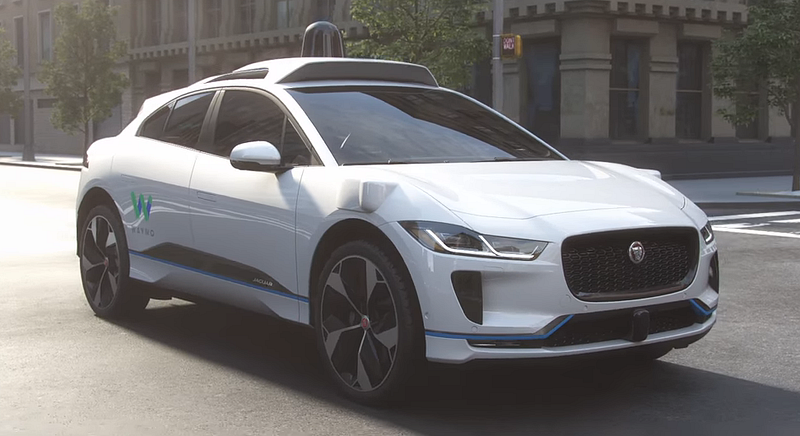
The state of California recently updated its self-driving car regulations to allow completely driverless vehicles on public roads — no safety driver at all. This has already been happening in Arizona with Waymo’s pilot there, and it’s good to see this come to California, as well.

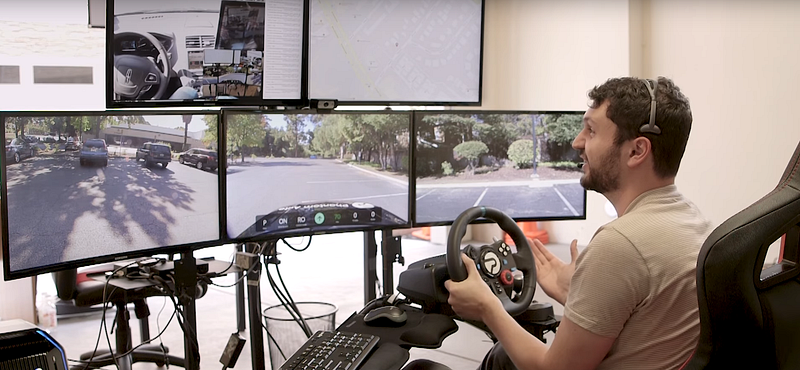
Part of this rollout is the requirement that driverless vehicles have the capacity for teleoperation, so that if they get into trouble, there is somebody remote who can move the vehicle to a safe space while help is on the way.

Our partners at Phantom Auto specialize in this, and they are alumni of Udacity’s self-driving car program. Check out what they do:

Autonomous Valet Parking at Parkopedia

Last week, the good folks at Parkopedia were kind enough to host Udacity at the London Self-Driving/Autonomous Car Meetup.

Today, as I was going through some old news alerts, I caught sight of something they had mentioned at the event: Parkopedia Wins Grant to Accelerate the Development of Autonomous Valet Parking Technology.

“ Brian Holt, Head of Autonomous Driving at Parkopedia, added, “Autonomous Valet Parking will be one of the first fully autonomous features available to the general public. Parkopedia is uniquely positioned to provide the full range of parking services including the detailed indoor parking maps required to power autonomous vehicles globally and the CCAV grant will enable us to accelerate the on-going development of this exciting new technology.””

Pretty cool!

And Brian is an alumnus of the Udacity Self-Driving Car Engineer Nanodegree Program, which of course makes us very proud.

NVIDIA and Udacity Intro to Self-Driving Cars

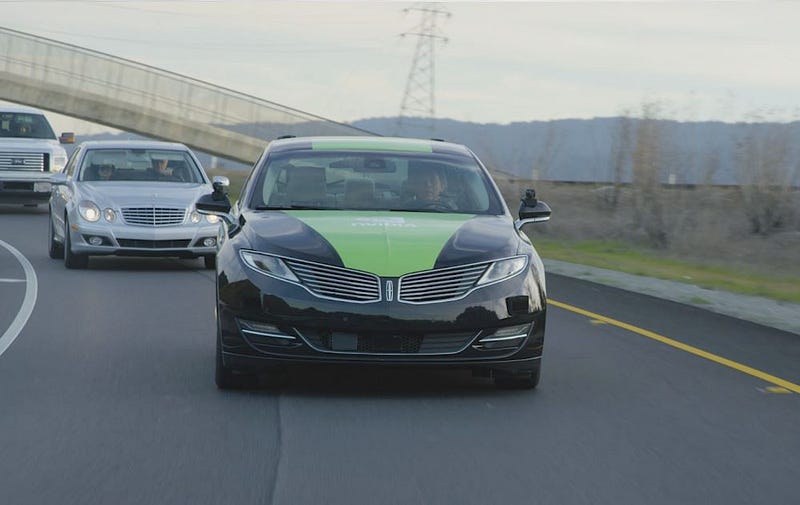
NVIDIA is the world’s leading deep learning company and a terrific Udacity partner, including for our Intro Self-Driving Cars Nanodegree Program. It’s a great relationship, because we are both excited to train lots of engineers to work on autonomous vehicles.

Here’s NVIDIA’s Danny Shapiro, talking about the NVIDIA’s BB8, and the potential for anybody to learn to become a self-driving car engineer.

Autonomous Trucking

A few big news stories out of the autonomous trucking world, which is a place that has been mostly quiet for the last year.

Embark

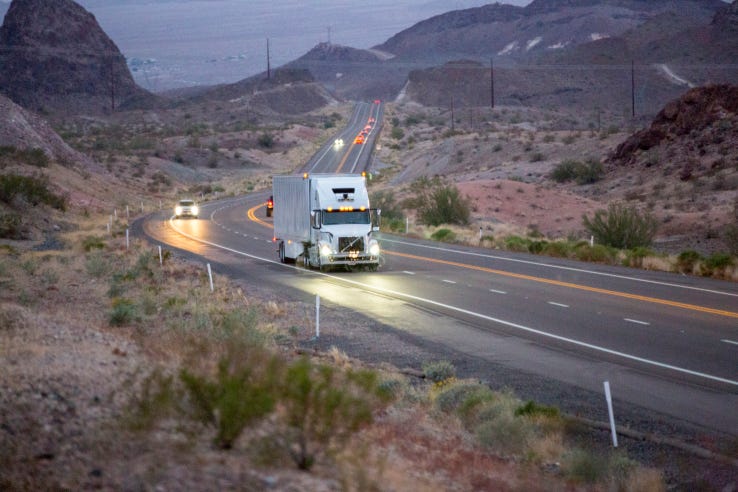
In February, an Embark self-driving truck traveled 2,400 miles, coast-to-coast along Interstate 10.

TechCrunch reports a number of interesting factoids. There was a safety driver. The safety driver had to take control of the vehicle many times (“usually only a few seconds”). Embark is not using high-definition maps, although they appear to be using lidar. Their goal is not to replace, but to augment, the human driver.

Uber Freight

Recently, TechCrunch also reported that Uber Freight is hauling real cargo using autonomous trucks in Arizona, albeit there appears to be a safety driver involved.

Uber’s promotional video has a few interesting notes of its own. They appear to be very careful to stay within Arizona state lines. They’re also making a big deal out of the human interest angle — the self-driving truck works in tandem with human truck drivers and makes their work more enjoyable. They can be home in time for dinner.

https://youtu.be/FqwtibdHSZM

Starsky Robotics

Riding the coattails of the Uber Freight press, Starsky Robotics upped the ante by sending a truly driverless vehicle — no safety driver — onto the highway.

Sort of. It was seven miles and the highway was totally closed to other traffic.

As somebody with a lot of extended family spread across Florida, I loved this observation:

“In true Florida Man fashion, founder and CEO Stefan Seltz-Axmacher decided to do something much bolder and a bit scarier: In mid-February, in the Sunshine State (where regulations are as lax as those in Arizona), he sent his truck down the road for a 7-mile journey — with nobody inside.”

Note that practically the first thing that appears in their promo video is an alligator. Florida!

Tesla

Not to be outdone, Elon Musk announced on Instagram that Tesla Semis are hauling batteries from the Nevada Gigafactory to the California car plant. It’s not clear whether Autopilot was involved.

https://www.instagram.com/p/BgCJlKbFckb

Waymo

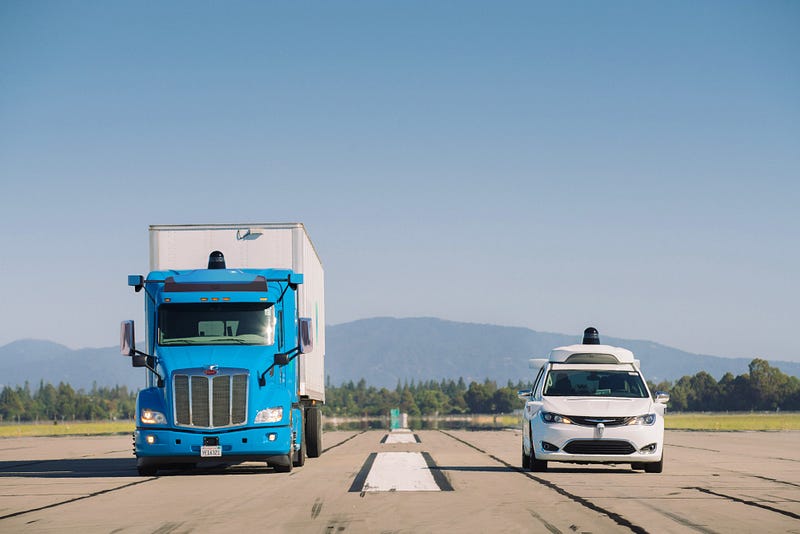
Finally, Waymo announced last week (on Medium, no less), that they are poised to begin delivering real self-driving freight in Atlanta. Atlanta, you will remember, is also the city where Waymo’s public ridesharing tests are coming next.

Waymo’s trucks will be hauling freight for…Google data centers. Hey, everybody’s gotta start somewhere.

Ironically, Waymo trucks do not have their own YouTube promotional video.

Pony.AI Launches China’s First Robotaxi Service

Add Guangzho, China, to the list of places where the general public can ride in self-driving cars, according to TechCrunch.

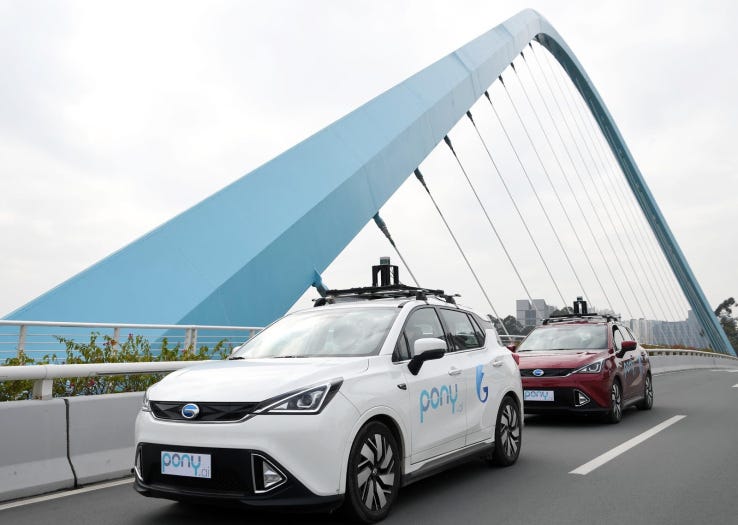
Autonomous driving technology startup Pony.ai has become the first company to operate an autonomous ride-hailing service on public roads for public users in China. The company, just over a year-old, recently raised $112 million in a Series A round to help it accelerate its efforts, and its fleet is running a nearly two-mile route in Nansha, Guangzhou, where its China HQ is located.

Between Baidu’s Apollo project, Didi self-driving robotaxi work, Momenta’s deep learning efforts, BYTON’s plans for electrics self-driving cars, and now Pony.AI, China is becoming a key player in the race toward autonomous vehicles.

Interestingly, Pony’s fleet includes: “four Lincoln MKZs, as well at two Guangzhou Automobile Group (GAC) Chuanqis.”

I wonder if the MKZs came from AutonomouStuff.

Update: Several commenters have pointed out, I think correctly, that with only six cars operating on a very short, fixed route, this isn’t really a “robotaxi” service. More like a proof of concept. Still a big step!

Toyota Research Institute — Advanced Development

The Silicon Valley office of Toyota Research Institute is within a long walk of Udacity’s headquarters in Mountain View, but they’ve been pretty quite about what they’re up to.

News today is that Toyota is creating a sister organization, based in Japan, called Toyota Research Institute — Advanced Development. TRI-AD will be headquartered in Tokyo as a partnership between Toyota and suppliers Aisin and Denso. Although Toyota is putting up 90% of the money.

Although the business will be located in Tokyo, it’s CEO will be current TRI CTO and former CMU professor James Kuffner, the chairman will be current TRI CEO Gil Pratt and former MIT professor Gil Pratt. And the language of TRI-AD is going to be English.

“This company’s mission is to accelerate software development in a more effective and disruptive way, by augmenting the Toyota Group’s capability through the hiring of world-class software engineers,” [says Kuffner].

It appears Toyota is setting up TRI as the pure research division and TRI-AD as the bridge to production, since TRI-AD will be in Japan and closer to Toyota’s main production facilities.

Oh, and did I mention they’re committing an additional $3 billion dollars to this?