Having grown up in Virginia, I generally keep tabs on Virginia news, especially when it comes to self-driving cars.
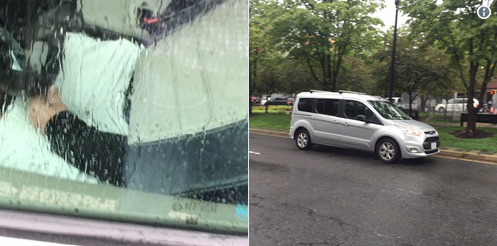
This story from ARLNow about a fake self-driving car in Virginia is a little silly. But it’s also bizarre enough to make me wonder what on earth is going on.
I assume that the Virginia Tech Transportation Institute is running some study on whether drivers will even notice self-driving cars. Mission accomplished on that one.
The follow-up tweet by Adam Tuss of NBC is the best. “I’m with the news, dude!”
Motion planning might be the area of autonomous vehicle development that is most open to new discovery right now.
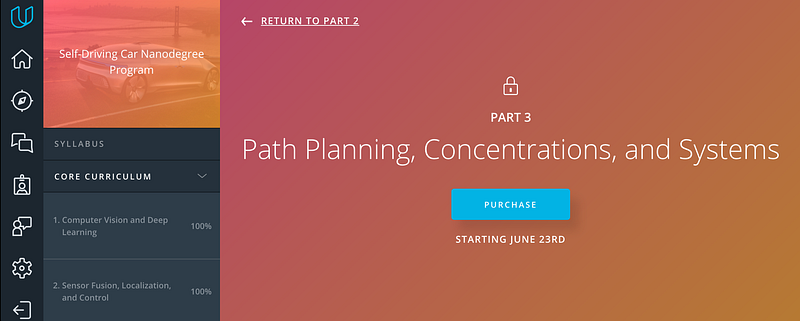
As part of the Udacity Self-Driving Car Nanodegree Program we teach a one-month module on Path Planning that covers environmental prediction, behavioral planning, and trajectory generation. These are the three key components of a planner.
Of these three components, trajectory generation is well understood, and environmental planning involves so much uncertainty that basic estimates are fine.
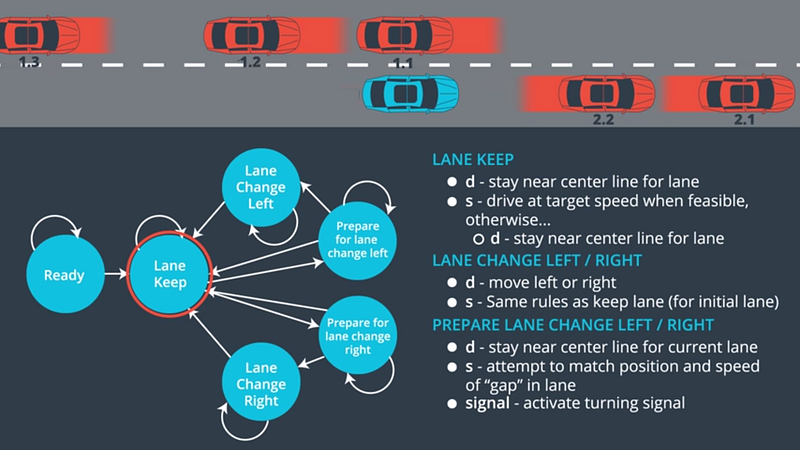
But behavioral planning remains an unsolved problem. How do you best determine which maneuver to make when cars and bikes and pedestrians are moving around?
One approach is to build a finite-state machine. This is in fact what we and our partners at Mercedes-Benz teach in the Nanodegree Program. Finite state machines work well for highway driving, which is structured. But it can break down in the chaos of urban driving; urban driving requires so many states.
So what other options are available?
Wikipedia’s entry on Motion Planning actually provides a pretty thorough high-level overview.
There are so many options! If you’re interested in becoming a path planner, it’s worth a quick read.
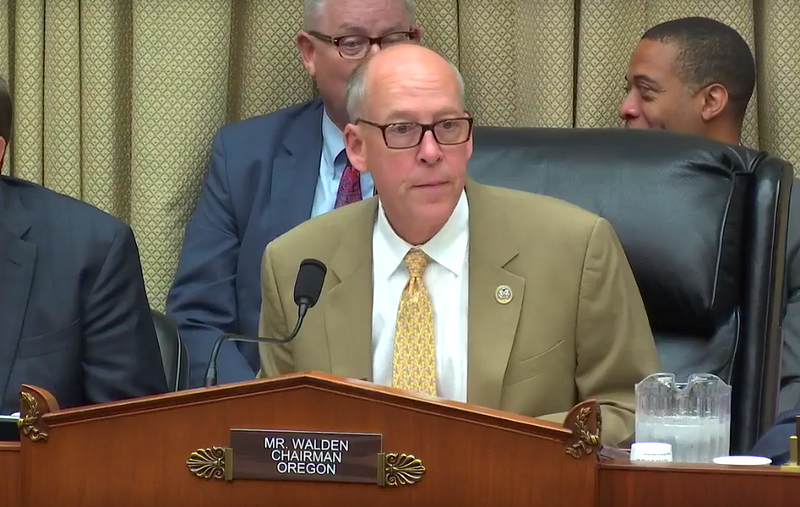
The United States Congress, which has been a pretty partisan institution lately, pushed forward a bill to support self-driving car adoption on a unanimous vote.
This is still a long way from becoming a law — right now it’s just a bill that got reported out of committee — but it’s got momentum.
I have a complicated reaction to this, based on a combination of my knowledge of the industry and my personal politics, but an interesting reaction was from my colleague Andrew, who posted this to our internal Slack channel and said, “It’s real now.”
Andrew’s sense was that for a bill to actually start working its way through Congress, there needs to be an army of lobbyists and interest groups who care enough about it to spend real money pushing it forward.
The fact that the automotive industry cares enough to move these bills forward convinces Andrew that they’re really serious.
A great irony of the mobile phone revolution of the late 2000s and early 2010s is that so few great technology companies grew out of that disruption. The companies that dominate the mobile ecosystem — Apple, Google, Facebook, Amazon, Netflix — were all born long before smartphones hit the market.
The largest tech company that grew out of the mobile revolution is (I think) Uber. Which is ironic because smartphones at first glance seem to have so little to do with ridesharing.
I once got to listen to Warren Buffett talk in person, and he relayed how in the 1990s he and Bill Gates spent a lot of time trying to figure out the key opportunities provided by the Internet. But search engines never occurred to them.
Similarly, when I was in business school in the 2000s, I spent a lot of time trying to figure out what the disruptions the smartphone would bring. Transportation never occurred to me.
Now the question is what disruptions will self-driving cars bring? And the answer might be something that isn’t occurring to anybody.
Less than two years ago, a team from Microsoft Research Asia made a huge splash by introducing ResNet, a deep neural network that used residual learning and “skip” connections blew away the competition in image classification.
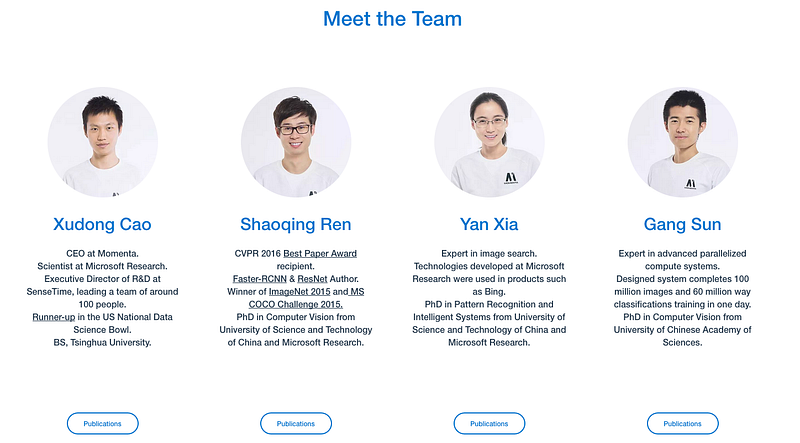
Sure enough, one of the co-authors of that paper, Shaoqing Ren, has departed MSRA to start a self-driving car company with some of his MSRA colleagues. Ren is also the author of the Faster-RCNN paper, making him something of a star in the world of deep learning.
This is news now because Momenta, the startup founded by Ren and his colleagues, just raised $46 million dollars in funding from NIO and Daimler and Sequoia China.
I know almost nothing about Momenta, but I’m taken by one section of their homepage, which describes their approach to data-driven path planning:
Our data-driven approach is to build a driver with billions of miles of driving experience. Crowdsourcing allows us to obtain billions of driving trajectories localized in semantic HD maps. By mapping from environment perception data to driving trajectories in semantic HD maps, we conduct autonomous driving planning. This provides us a unique and elegant framework to solve corner cases by adding corresponding data rather than adding rules.
I’m excited to see how the Momenta founders apply deep learning to path planning.
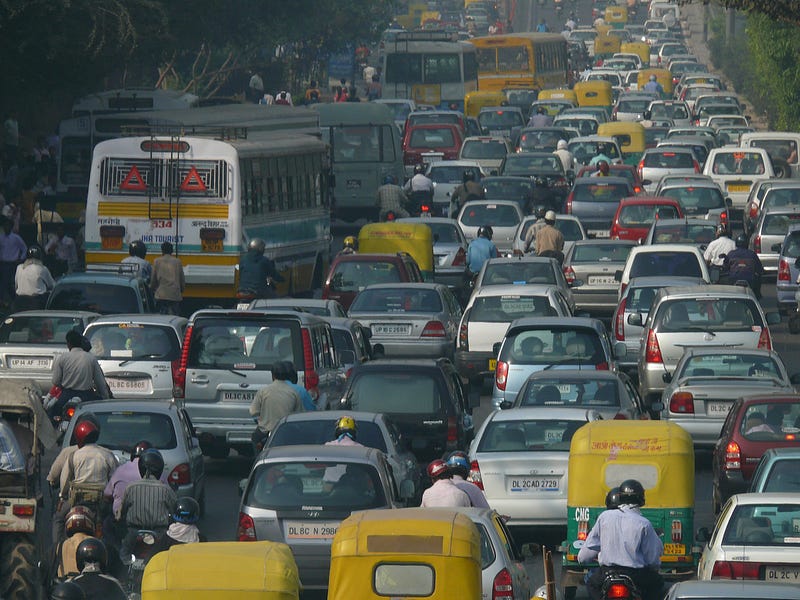
Union road transport and highways minister Nitin Gadkari said on Tuesday, “We won’t allow driverless cars in India. I am very clear on this. We won’t allow any technology that takes away jobs. In a country where you have unemployment, you can’t have a technology that ends up taking people’s jobs.”
This attitude crops up in other industries in the US, although often “safety” is the given reason, even when “jobs” is widely understood to be the real reason.
At least the Indian government is being honest about why they’re banning self-driving cars.
Nonetheless, it seems hard for me to believe this ban will last. More than any other country I can think of, India has seen its economy transformed because of information technology. It’s hard to believe the country will sit out the next wave of the computational future.
“There was a similar debate when computers came in. Not all technology leads to joblessness. You have to have the right balance. Technology has to coexist,” said Abdul Majeed, automotive leader, Price Waterhouse & Co.
Hiring partners tell us all the time that they want candidates who are excited about the field of autonomous vehicles. That’s part of what makes the Udacity Self-Driving Car Engineer Nanodegree Program so impressive — students from around the world have sought out the program in order to learn about the field.
In addition to the twelve different projects students must pass to earn the Nanodegree credential, many of our students go even further and build independent projects of their own.
Here are a few projects that different students have undertaken. Maybe they can inspire you to build your own independent project!
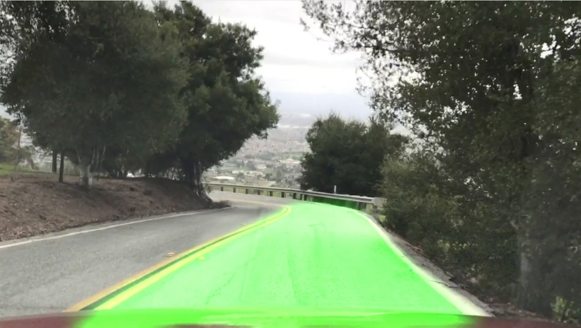
Michael is a student in both the Udacity Self-Driving Car Nanodegree Program and also the Udacity Machine Learning Nanodegree Program. For his MLND capstone project, he built a neural network to detect lanes on the road.
This blog post is a two-part series. Part 1 is all about collecting and labeling data, which is a major task in any machine learning project. In case the suspense is killing you, here’s Part 2, in which Michael uses convolutional layer visualization, transfer learning, and finally a segmentation network, to build a lane-finding model.
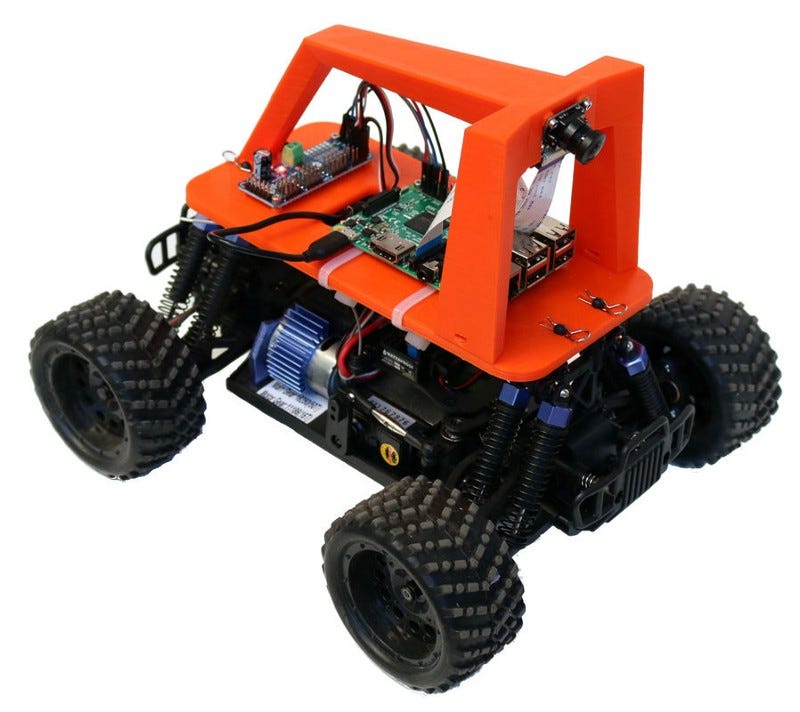
For anybody who is interested in building their own mini self-driving car, Yazeed has put together a five-part series on how he built his. Part 1: Equipment & Plan. Part 2: Hardware Setup. Part 3: Manual Control Using Raspberry Pi & Python. Part 4: Everything In Place. Part 5: Serverless Control Using Computer Vision 🙂
Kyle wrote up a deep and detailed blog post about modifying deep neural networks to incorporate uncertainty. Uncertainty is a core component of Bayesian logic, and we use uncertainty is algorithms like Kalman filters, which are crucial for fusing data from multiple sensors. Kyle follows guidance from the machine learning group at Cambridge University to compare differences in softmax activation functions and ultimately develop a confidence measure for classification values.
Bogdan constructed his own mini self-driving car using the Donkey hardware, but then built his own software stack. He got ROS running on a Raspberry Pi (!!) and trained a behavioral cloning neural network.
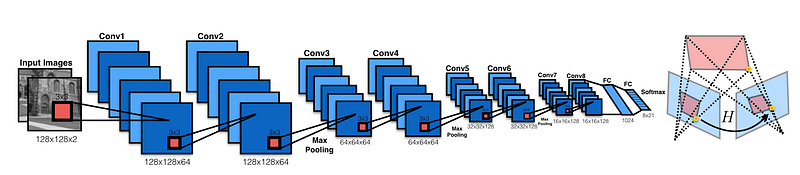
Mez implemented a paper from the team at Magic Leap for implementing homography with deep learning. Homography is the mapping of two different perspectives onto each other. So if you take a photo of a statue from the north side, and one from the south side, can you tell that it’s the same statue and can you figure out how to generate an image from the east or west side? Magic Leap is a virtual reality company, and you can see why this would be an important skill in virtual worlds.
I’m excited to be on a panel discussing Teaching Machines to Drive Like Humans. I suppose at this point my expertise is more on Teaching Humans to Teach Machines to Drive Like Humans, but I’ll try to add value anyway.
The me Convention runs from September 15th to 17th, and the International Motor Show runs ten days, from September 14th to 24th.
This will be my first visit to Germany and I’m looking forward to meeting people!
If you’re a current or perspective student in the Udacity Self-Driving Car Nanodegree Program and you’ll be in the area, let me know in the comments or by email (david.silver@udacity.com). We’re planning to organize an event or multiple events for Udacity students while I’m in Europe.
And if you’ll be there and you’d like to hire Udacity students, send me an email (david.silver@udacity.com) and I’d love to meet you, too!
A few weeks ago, I wrote about Lyft’s strategy of using their ride-sharing network as a platform for other companies’ autonomous vehicles, and the contrast this strategy drew with Uber, which is developing its own AVs. It seemed like Lyft’s strategy was playing out nicely.
Part of what makes Udacity special is how seriously we take student feedback, and I think how transparent we are about it. For the Self-Driving Car Nanodegree Program, we solicit student ratings at the end of every lesson, we talk with students in our Slack community, and we have a Waffle on which students report issues for us to address.
Students are our partners in building the world’s best autonomous vehicle educational program, and we’re always eager to learn what they think.
With that in mind, here are four reviews of the Udacity Self-Driving Car Engineer Nanodegree Program.
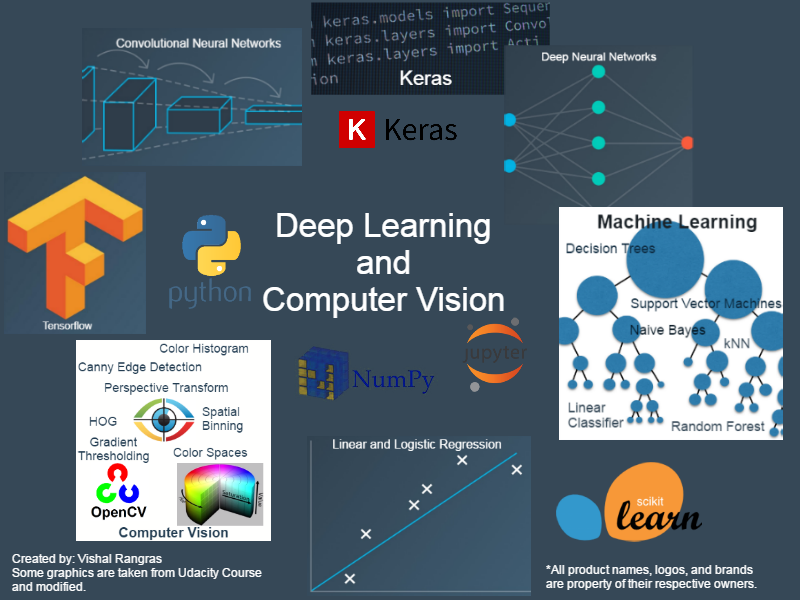
Vishal collects all of his Term 1 projects and reviews the key topics for each, as well as some of his results from the program so far. Great music underscoring his YouTube videos!
Milestones achieved so far:
Successfully completed Term 1
Got two interview calls for SDC job profile based on the skills learnt in the program
Started a small Artificial Intelligence Community in my current organization to share knowledge and make developers aware of these cutting-edge technologies.
Mithi walks through each module of Term 2 and describes the good (the material is rigorous and exciting!), the bad (C++ is hard), and the ugly (there are still some issues we need to fix). This type of enthusiastic and constructive critique is super-valuable to us in improving the Nanodegree Program.
Some people think that the first term had more material covered than this term and that you don’t need as many hours per week. I personally think I spent significantly more hours in this term than last term. Maybe it’s because I’m not as experienced in C++ and I didn’t do the `bonus challenges` of last term.
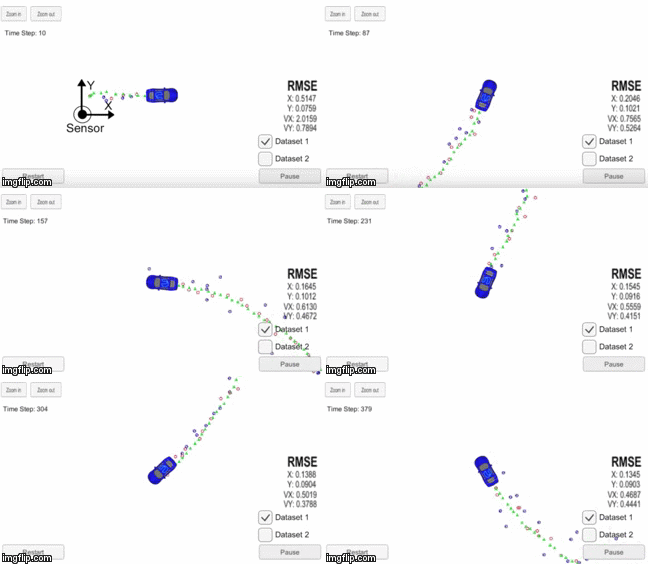
Darien provides an interesting perspective as a student who has been working with signal processing for many years. He is really impressed at the image processing power provided by newer tools like Keras, TensorFlow, and OpenCV. It’s a lot of fun for us to read about students who enjoy the material this much.
This course was a lot of fun. Multiple new techniques explained and understood… to some extend at least for me. This is just the tip of the iceberg on this field. It was a great experience, and I am looking forward to next term starting next week. It was a lot of work(more than the 10 hours per week forecasted by Udacity) but it worth every cent.
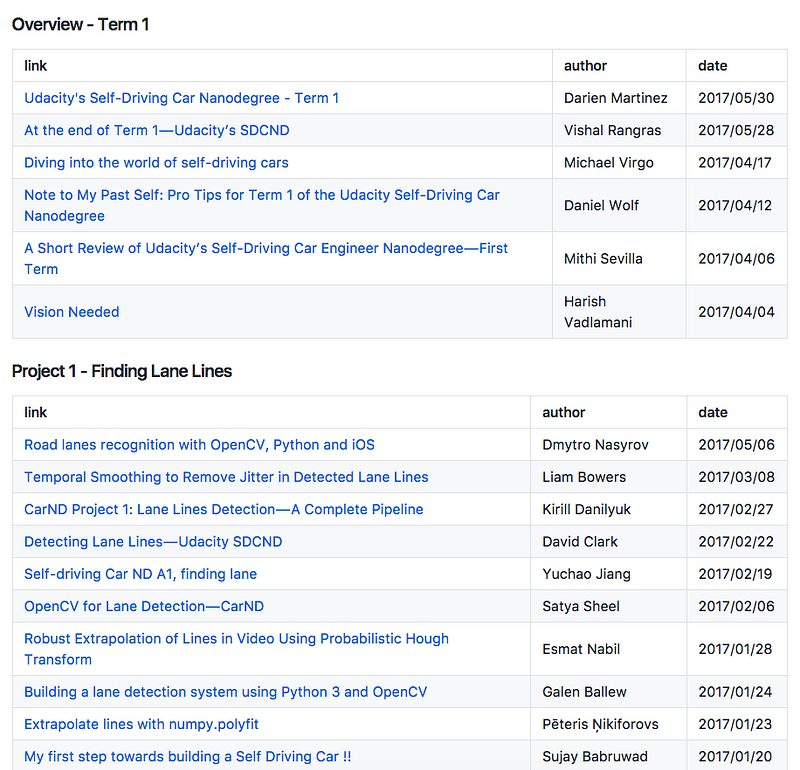
This isn’t precisely a “review” of the Self-Driving Car program, but Frank has put together a comprehensive list of student blog posts about each project in the Nanodegree Program. If you’re interested in reading about how different students approached a project, check it out!





 David Silver