2,000 Automobile Companies

The Motley Fool has a short piece out about Warren Buffett and self-driving cars. That piece references back to another article, this one in Fortune, and written by Buffett himself.

The dateline was 1999, and Buffett was taking a lot grief for his refusal to invest in the dot-com market.

Buffett’s view was that very few of these companies would survive over the long haul, and he wasn’t capable of picking the winners.

Well, I thought it would be instructive to go back and look at a couple of industries that transformed this country much earlier in this century: automobiles and aviation. Take automobiles first: I have here one page, out of 70 in total, of car and truck manufacturers that have operated in this country. At one time, there was a Berkshire car and an Omaha car. Naturally I noticed those. But there was also a telephone book of others.

All told, there appear to have been at least 2,000 car makes, in an industry that had an incredible impact on people’s lives. If you had foreseen in the early days of cars how this industry would develop, you would have said, ā€œHere is the road to riches.ā€ So what did we progress to by the 1990s? After corporate carnage that never let up, we came down to three U.S. car companiesā€Šā€”ā€Šthemselves no lollapaloozas for investors. So here is an industry that had an enormous impact on Americaā€Šā€”ā€Šand also an enormous impact, though not the anticipated one, on investors.

So the funnel went from 2,000 to 3.

And today, almost 20 years later, we still have Ford and GM and we sort of have Chrysler (as part of the Fiat-Chrysler conglomerate).

But we also have Tesla and Uber and Google and maybe Apple and startups like Otto and Comma.ai and McLaren.

Maybe here is the road to riches. But reading Buffett makes me a little less sure.
Civil Maps

News broke today that Ford has invested in a startup called Civil Maps, as part of a group that raised a $6.6 million funding round.

I did not work directly with Civil Maps while I was at Ford, but there was a lot of excitement around the company, so I have a general understanding of what they do.

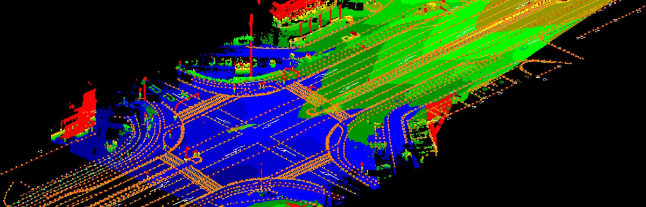
Civil Maps creates ā€œsemantic mapsā€, which differ from traditional maps in that semantic maps convert raw sensor data into units like lane lines and intersections and curbs.

In particular, Civil Maps’ semantic map format is super-compressed, which means that corrections can be transmitted over cellular networks. This makes it feasible to crowd-sourcing map data from people’s smartphones.

Mapping has been one of the chokepoints in the autonomous vehicle world, with less than a handful of companies capable of supplying the data that autonomous vehicles need to function. And almost all of those companies are owned in some fashion by OEMs.

  1. Google
  2. Apple
  3. HERE (owned by a consortium of German OEMs)
  4. Uber (their mapping program is under construction)
  5. OpenStreetMap

Ford’s investment in Civil Maps continues that pattern, and hopefully in a way that makes the field more competitive.

Joy and Fear

The Disney movie Inside Out features the five emotions running through a girl’s head: joy, saddness, anger, fear, and disgust. It’s a great movie that you’ve probably seen and if you haven’t seen it, you should.

I think that self-driving cars are driven by a little bit of both joy and fear.

The fear comes from the number of current automobile accidents: 32,000 US fatalities and 1.25 million worldwide fatalities per year.

Those are huge, almost unfathomable numbers. I suspect they mean a lot more if you’ve been personally touched by an automotive fatality. Fortunately, I haven’t been affected directly by that.

So for me the driving emotion is joy, which seems like a funny word to use. Maybe excitement?

Self-driving cars seem awesome to me for the sake of the technology, and even more so for how they will change the world. I hope this is a bigger technology breakthrough than anything we’ve seen since the Internet.

I always feel a little badly that I’m less moved by the safety issues, but I am so incredibly excited by the potential to make day-to-day living better.

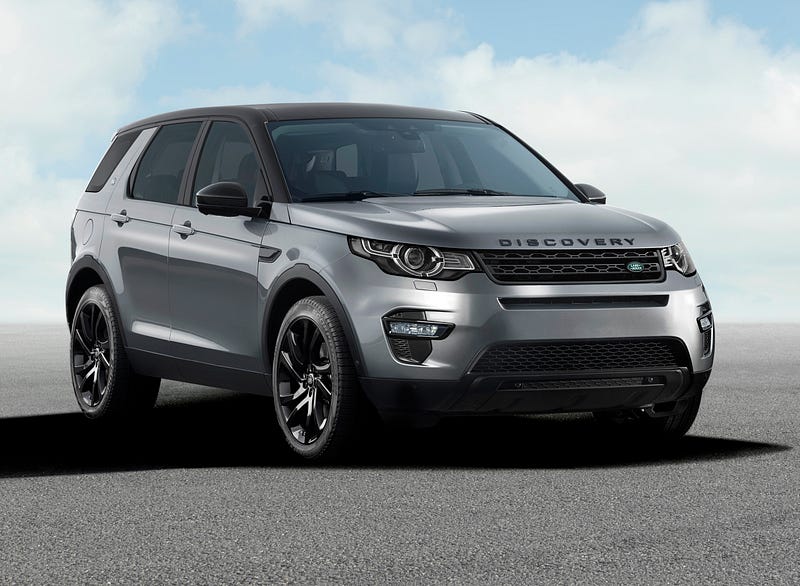
Jaguar to Launch Vehicle-to-Vehicle Test Fleet

The computer vision and machine learning parts of autonomous vehicles get a lot of press, but vehicle-to-vehicle communication strikes me as an underrated game-changer.

Jaguar is building out a research fleet to test just that:

Jaguar Land Rover recently announced that it would create a fleet of autonomous vehicles. The British luxury car maker would create more than 100 research vehicles over the next four years that would allow the company to develop and test Connected and Autonomous Vehicle (CAV) technologies, with the first of these research cars expected to hit the roads around Coventry and Solihull later this year.

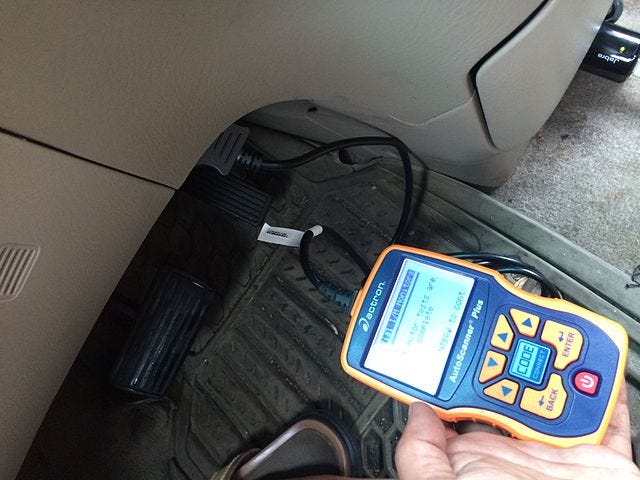
CAN Bus

Yesterday a colleague asked me what the term ā€˜CAN’ stands for, as in CAN bus, and I was embarrassed to admit I didn’t know. To be clear, I know what CAN is, just not what the acronym stands for.

According to Wikipedia, it stands for Control Area Network.

CAN is the standard protocol for communicating between electronic components of an automobile. It’s the language that the steering wheel uses to communicate to the wheel actuators in a drive-by-wire system, for example.

Think of it as the TCP/IP of the automotive world.

The CAN bus, which is the network carrying the CAN signals, turns out to be especially important in autonomous vehicles, as these vehicles are almost always drive-by-wire systems.

A traditional vehicle steering system, for example, involves a mechanical rack and pinion and no electronic signals. A drive-by-wire system, by contrast, involves sending electronic signals from the steering wheel to the wheel actuators (motors). Those signals travel over the CAN bus.

CAN is a bit-level protocol, and operates at a lower level of abstraction than some machine learning engineers are used to dealing with. But it’s a necessity for building a self-driving car.

Patents

This is old news, but six months ago Reuters reported that, ironically, foreign firms are outpacing U.S. firms when it comes to autonomous vehicle patents.

Toyota is, far and away, the global leader in the number of self-driving car patents, the report found. Toyota is followed by Germany’s Robert Bosch GmbH, Japan’s Denso Corp, Korea’s Hyundai Motor Co and General Motors Co. The tech company with the most autonomous-driving patents, Alphabet Inc’s Google, ranks 26th on the list.

The correlation between patents and autonomous vehicle progress seems low, though.

The raw number of patents does not necessarily equate to leadership in developing self-driving cars, [Reuters analyst Tony Trippe] said. Non-U.S. companies tend to be more aggressive in filing patent applications than American companies. The quality of patents is also important, since not all are created equal.

This also illustrates a divide between Silicon Valley and traditional automakers.

Silicon Valley tends be more skeptical of the value of patents, seeing them mostly as a defense against patent trolls. Traditional automotive companies rely more heavily on the intellectual property protection, and resultant competitive advantage, provided by patents.

Tesla Autopilot 2.0

Tesla Autopilot 2.0 is coming this year, according to anonymous sources.

The headline feature is the addition of a second front-facing camera to enable the car to recognize and stop at stop signs and stoplights.

That’s pretty awesome, and is worth a lot all by itself.

But what really caught my eye is the fact that Tesla is, in fact, using data from customers’ cars to learn how to drive better, and even build maps.

The Autopilot learns from all the vehicles equipped with the hardware in Tesla’s fleet (~80,000 vehicles) by building high precision maps, which it refines with every passing of a vehicle, and then downloads the map sections aligned with the vehicle’s GPS to help the vehicle’s own Autopilot system navigating the location in real-time with cross-checks from the vehicle’s sensors, primarily its front-facing camera and radar.

There are privacy considerations there, which Tesla will presumably have to address, but overall I think this is a huge win for self-driving technology, and for Tesla in particular.

Startup Watch: Zoox

News recently crossed the wires that Zoox, a self-driving car startup, just raised $200MM at a $1BB valuation.

And…that’s it.

Very little else seems to be known about Zoox.

Their homepage is a black screen with a small gray logo.

Business Insider reports that Zoox is a collaboration between Tim Kentley-Klay and Jesse Levinson, the former an Australian designer and the latter a Stanford-trained autonomous vehicle engineer.

In 2013, the company debuted some splashy renderingsof the car, nicknamed ā€œBoz,ā€ before reverting back into stealth mode. According to IEEE, the car is designed to not have windshields or a steering wheel or break pedal. Instead, it can drive in any direction while passengers sit inside, facing each other.

The funding news only broke because of an SEC document they had to file, which shows their address as being in a small shopping center in Menlo Park where I used to shop for groceries all the time.

Presumably that’s a front? Other news sources locate the company in Palo Alto, the city next door.

I’ll go back to that Safeway to buy a few heads of lettuce and see if I can find a super-awesome car.

Autonomous Vehicle Regulation

Two articles recently crossed my feed, addressing the question of autonomous vehicle regulation.

Hamza pointed me to an article on the progressive-leaning Vox.com arguing for banning Level 3 autonomy in cities.

More broadly, most of the problems facing autonomous vehicles, and the vast number of accidents they’re involved in, trace back to the continuing role played by unpredictable humans, either behind the wheel or piloting other vehicles. So NACTO [National Association of City Transport Officials] wants humans taken out of the picture; it supports full automation, as soon as possible.

Conversely, a post by Alex Tabarrok on the libertarian-leaning Marginal Revolution argues the benefits of a laissez-faire approach to autonomy, mainly by highlighting the costs of regulation.

Airbags began to be deployed in the 1970s, for example when they were not as safe as they are today but airbags improved over time and by the 1990s were fairly common. It was only in 1998, long after they were an option and the design had stabilized, that the Federal government required airbags in all new cars.

…

Had burdensome regulations been imposed on airbags in the 1970s the technology would have been delayed and the net result could well have been more injury and death.

My take is that we should hold off on regulation until we see a significant problem with externalities.

Once we get self-driving cars crashing into other vehicles and pedestrians at rates beyond what we see in human-driven cars, then we may have to throw on additional regulations in the name of public safety.

The recent Tesla accident was not that, not yet. But of course the next one might be.

Starting at Udacity

New week, new jobĀ šŸ™‚

A few weeks ago I got an offer to join the online education startup Udacity.

The offer was amazing, not so much because of the compensation (although that is great, thanks), but because of the opportunity to work on an amazing project.

I have a lot of experience participating in Udacity courses as a student. Their Artificial Intelligence for Robotics course was the very first step I took in becoming an autonomous vehicle engineer. I’ve also taken Udacity courses in parallel programming, deep learning, and other areas.

So I accepted the offer to join Udacity. I am crazy excited to start today.

I love Ford, I loved working at Ford, I recommend Ford highly to anyone hoping to work on autonomous vehicles, and I even hope to return there eventually.

But I think that what we’re building at Udacity justifies the decision.

The project is under wraps for a little while longer, but I don’t think I’m giving away the store to say that I will continue to work on self-driving cars. In fact, I’ll be working with Udacity co-founder Sebastian Thrun, who also won the DARPA Grand Challenge and founded Google’s self-driving car project.

Stay tuned!