Disruption Watch: Gasoline, Insurance, and Rental Cars

Gasoline: This article teases the headline of a gasoline-less future, but the article doesn’t really deliver on the headline.

I got to thinking, though — in a self-driving world, maybe gasoline doesn’t go away, but gas stations change a lot.

Modern gas station infrastructure is predicated on people stopping at stations that are convenient relative to their pre-existing routes. But if the car can drive itself to the station and fill up (or a station attendant fills it), then the stations no longer need such prime real estate.

It might also make sense to consolidate gas stations, much the way landfills are consolidated.

And that’s to say nothing of the convenience stores at the station, which presumably the self-driving car won’t need.

Could it be the end of iconic gas station price signs?

Insurance: A Cal Poly professor offers a contrarian take on insurance in the age of self-driving cars. Patrick Lin argues that a combination of corporate risk-aversion, personal privacy, and software bugs will necessitate the continued existence of auto insurance.

I think maybe so, but the industry might also be so different as to be almost unrecognizable. At some point that must count as the end of the auto insurance industry and the beginning of the self-driving car insurance industry.

Also, reinsurers may prove more adept at servicing this market than existing auto insurers.

Car Rental: A press release highlights a panel discussion about how self-driving cars will affect the rental car industry.

It sounds like early days for them, but it’s definitely on the radar.
Logistics Trends

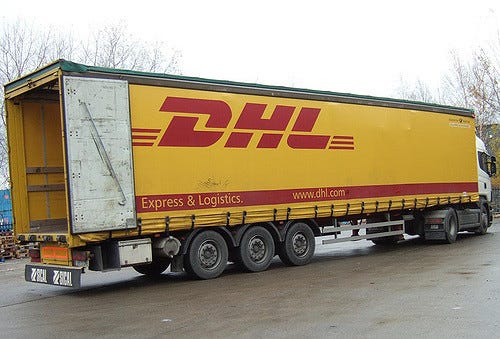
DHL has released the latest version of their Logistics Trend Report. The report breaks out two types of autonomous vehicles — aerial and ground.

Ground Logistics

The section on ground autonomous logistics is interesting and covers a lot of what we already know. DHL is using autonomous vehicles within warehouses. They will gradually move the vehicles into outdoor settings and then into uncontrolled environments (i.e. public streets) over time. Autonomous highway trucking will be important. The last mile problem will be the final issue to be resolved.

I was interested to see that DHL lists autonomous vehicles as having “high” potential impact on logistics, but they set the time frame as “> 5 years”.

Aerial Logistics

The more interesting section, for me, was their overview of “Unmanned Aerial Vehicles”. Note that this term subtly different from “autonomous” although the details don’t explore that distinction.

Many of the UAV points might seem obvious in retrospect, but I hadn’t thought of them before.

UAVs will basically become important for logistics in two scenarios:

  1. Where the value of a new service is high enough to justify the cost.
  2. Where the cost of an existing service is so high that it’s more economical to use UAVs than to continue the service.

An example of the first situation is aerial surveillance. The report states:

UAVs can monitor sites and assets to prevent theft and report suspected damage or maintenance requirements. They can also be used to coordinate major logistics operations on the ground.

An example of the second scenario is:

Rural delivery using UAVs is attractive for remote regions
that have limited logistics infrastructure or are hazardous
to access (e.g., islands during rough weather conditions,
villages located in mountain ranges). Logistics providers
can set up emergency delivery services (e.g., medicines)
for these communities.

It’s a brave new world ahead.

Safety Testing

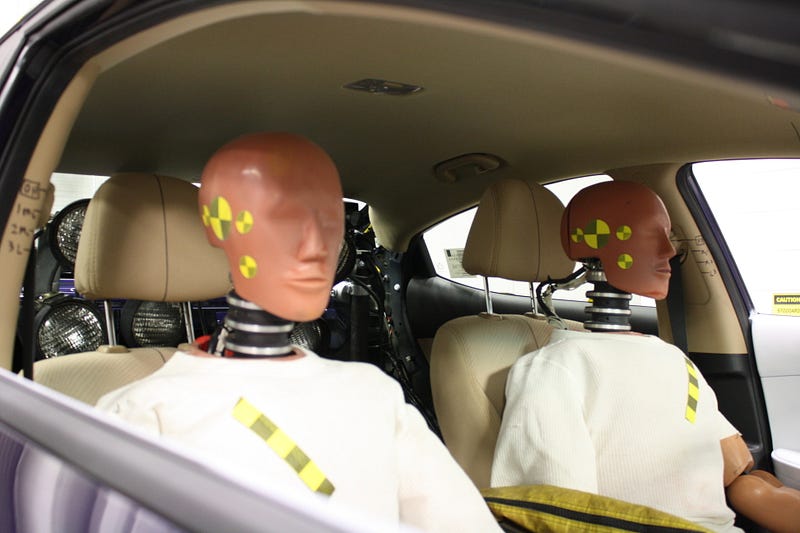
The RAND Corporation just released a study hypothesizing that auto companies will not be able to prove the safety of self-driving cars in any feasible amount of time.

The key findings of the study are:

Autonomous vehicles would have to be driven hundreds of millions of miles and sometimes hundreds of billions of miles to demonstrate their reliability in terms of fatalities and injuries.

Under even aggressive testing assumptions, existing fleets would take tens and sometimes hundreds of years to drive these miles — an impossible proposition if the aim is to demonstrate their performance prior to releasing them on the roads for consumer use.

Therefore, at least for fatalities and injuries, test-driving alone cannot provide sufficient evidence for demonstrating autonomous vehicle safety.

Developers of this technology and third-party testers will need to develop innovative methods of demonstrating safety and reliability.

Even with these methods, it may not be possible to establish with certainty the safety of autonomous vehicles. Uncertainty will remain.

In parallel to developing new testing methods, it is imperative to develop adaptive regulations that are designed from the outset to evolve with the technology so that society can better harness the benefits and manage the risks of these rapidly evolving and potentially transformative technologies.

The study includes some sophisticated econometrics and comes across as an exercise in applied math more than anything else.

Which isn’t to say that the study is wrong.

But I would be curious for a comparison between safety testing for autonomous vehicles and safety testing for new car models, or even airplanes. Or maybe let’s look at how Henry Ford safety-tested the Model T way back when.

I suspect there are situations in which this is a solved problem, and hopefully we can learn something from those scenarios that we can then apply to self-driving cars.

Dispatch.ai

Almost simultaneous to announcing their investment in Comma.ai, Chris Dixon at Andreesen Horowitz announced their investment in Dispatch.

Similar to Starship Technologies, a company we previously profiled, Dispatch aims to produce self-driving mini-delivery robots.

While Dispatch itself may become huge, to me the stories are:

  1. Chris Dixon has now planted his flag as one of the go-to autonomous vehicle investors.
  2. Dispatch, like Varden Labs, will target university campuses as their launching pad.

Connected Sunnyvale

With surprisingly little fanfare, Sunnyvale, California, appears to be experimenting with connected cars.

According to auto connected car news, Sunnyvale and Nissan just teamed up to deploy connected infrastructure to 130 square miles of roadway.

The article uses a new-to-me term: V2X. This stands for “vehicle-to-X (communication)”. More concretely, V2I=”vehicle-to-infrastructure”, V2V=”vehicle-to-vehicle”, and so forth.

The article is jargon-laden and a little hard to follow, but it appears that Nissan, Sunnyvale, and UC-Berkeley jointly set this up last summer as a test bed for connected infrastructure.

I mentioned earlier that Nissan has been fairly quiet on the autonomous vehicle front until recently, when it made a bold claim that it will launch lots of different autonomous vehicle models by 2020. This is further evidence that they’re serious.

Is the Phone Enough?

When Jack Dorsey first conceived of the payments company Square, he realize that the smartphone was, in fact, a supercomputer. That computing power obviated the need for cash registers.

I wonder if something similar will happen with self-driving cars.

For the moment, the focus of self-driving cars is on powerful computational devices, sometimes liquid-cooled, in the trunk of a car. This is especially important for GPU-based systems, which are the backbone of deep learning.

But what if we can get the computational needs of a car to run on a smartphone? Or an array of smartphones?

The video capability is there. The accelerometer is there. Can we streamline the computations to the point that the compute power is there?

That would truly enable self-driving cars for the masses.

Starship Technologies

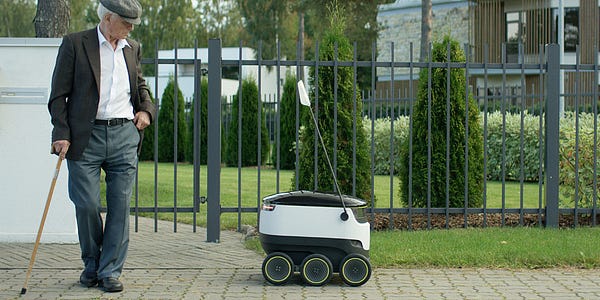
A small autonomous robot from Starship Technologies just made a splash in front of the Washington, DC, City Council.

The interesting thing about Starship Technologies is that they are designing a relatively small autonomous vehicle designed for delivering small packages, instead of a full-fledge self-driving car.

Although self-driving cars get most of the press, a lot of autonomous robotics work is being done with other types of robots. Some are designed to work on factory floors, others are designed to run on specified bus routes, others are designed to deliver packages.

Our current conception of a vehicle is largely one of an all-purpose transportation system, because: a) all vehicles need human drivers, and b) it is difficult to switch vehicles on an as-needed basis.

What I am seeing is that technology is rendering both of those constraints obsolete. So it makes sense that we will start to see much more customized vehicles, and also vehicles that we never would have imagined in our more constrained environment.