Buy vs. Rent vs. Subscribe

Cadie Thomson writes about a future in which fewer people own cars (note the headline overstates this a bit):

Industry experts predict car ownership will dramatically decline as cars become more automated. The notion being that people will instead take self-driving taxis hailed via app to get from point A to point B instead of owning their own car.

This is a scenario with which I am familiar, as Kristina and I spent about 18 months as a one-car household. Those 18 months can be broken up into 12 months of relative ease and 6 months of struggle.

The easy part was the first twelve months, when Kristina took public transportation to work in San Francisco. That meant our car was left to me five days a week. On weekends we needed to share, which sometimes got complicated but was mostly fine. Note that with a pair of kids that could have been a lot messier.

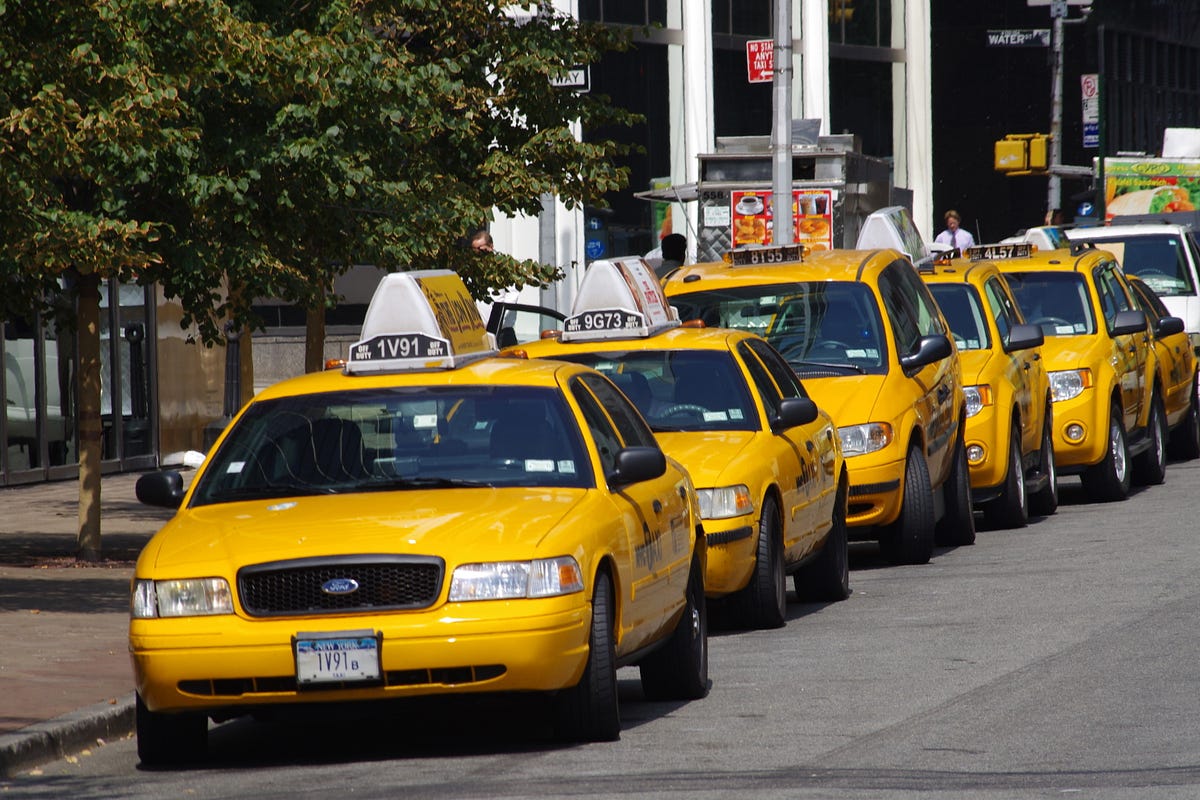
Even with just the two of us, though, things got frustrating when Kristina switched jobs and needed the car to commute four days per week. Then it was me who was left car-less. Most days I didn’t need a car (home office), but on days when I had meetings or errands that couldn’t be pushed, I was forced into a combination of Uber, Enterprise, ZipCar, biking, and public transportation.

Here’s the thing — even after paying for those alternatives, we probably saved money only having one car. But it was a huge pain.

Every time I needed to go somewhere, I did the mental calculations of how much each option would cost, how much time it would take, would I need a car again later, and so on.

Those calculations are the worst part about renting. Much better to subscribe to an all-you-can-ride service where the marginal cost of a ride is $0.

Even the subscription service could be a pain, though. Hailing an Uber is so much better than hailing a cab, but it’s still less convenient than walking out to the driveway and getting in the car.

Maybe that convenience cost flips for urbanites, though. For them maybe it’s easier to walk out onto the street and wait for an Uber, rather than to get into the parking garage and navigate out.

In sum, renting seems like too much of a pain to me, on an individual level, at least.

Subscription services seem promising, if the network is dense enough and the trade-offs come out right.

But there is a huge convenience factor to having a car in the driveway, ready to go whenever I need it.


Originally published at www.davidincalifornia.com on October 30, 2015.
SLAM

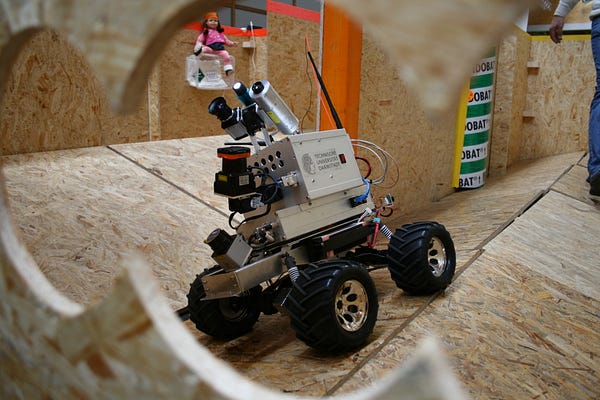
The final lesson in CS 373: Artificial Intelligence for Robotics, is about SLAM — Simultaneous Localization and Mapping. This is a category of techniques that a robot (or autonomous vehicle) can use to both map its area and determine its own location on that map.

This sounds like a standard problem, but it’s quite difficult, and often robots avoid the problem by relying on maps provided ahead of time. This is one reason, for example, that Google so heavily maps streets.

The class covers GraphSLAM, in particular, which is a way to reduce the computational complexity of mapping, essentially by reducing the amount of information necessary to store.

It’s a pretty neat algorithm, and one that involves more linear algebra than I’ve had to use in a while.

Linear algebra actually seems to be a theme that seems to be arising in a number of different machine learning and robotics courses that I’m taking.

I never really used linear algebra in any of the networking, probability, or web development work I have done, so I always questioned why I learned it in the first place. Now I can see.


Originally published at www.davidincalifornia.com on October 29, 2015.

Trolleyology: Driverless Car Edition

Reason reports on an interesting study that seems obvious but hadn’t occurred to me — would people buy a driverless car that was programmed to kill them, if it meant saving other people’s lives.

This is like the trolley problem, which is well-studied in philosophy, and has been often applied to driverless vehicles.

It seems pretty intuitive that if our car has to choose between staying in its lane and killing three people, or swerving and killing one pedestrian, we want the car to choose the option that minimizes loss of life.

But what if the life is our own?

What happens when there is no onlooker, but the one who gets sacrificed to save ten strangers is you as the passenger in the car? Should cars be programmed to sacrifice you? In fact, most respondents agreed that self-driving cars should be programmed that way, but a significant portion believe that manufacturers will more likely program them to save their passengers no matter the cost.

That’s an interesting take, and one where I’m not sure that stated preferences and revealed preferences will actually prove to be in alignment.


Originally published at www.davidincalifornia.com on October 29, 2015.

Japan vs. USA

Or is it technology companies vs. auto manufacturers?

Bloomberg reports that the Japanese Big Three (Toyota, Nissan, and Honda) are projecting the arrival of driverless cars to be in 2025 — five years after the 2020 deadline targeted by American firms.

The reasons seem to be liability concerns, and the fear of putting a beta product onto the road.

“On an experimental pilot stage, if the automated vehicle is driving a test course, that’s really possible and easy,” Toyota President Akio Toyoda told reporters on the sidelines of the show on Wednesday.

Putting self-driving cars on public roads too early risks a major accident that sets back the development of autonomous vehicles, he said. “The technological advancement would stop suddenly. We have to have a very long-term perspective.”


Originally published at www.davidincalifornia.com on October 28, 2015.

Anatomy of an Autonomous Car

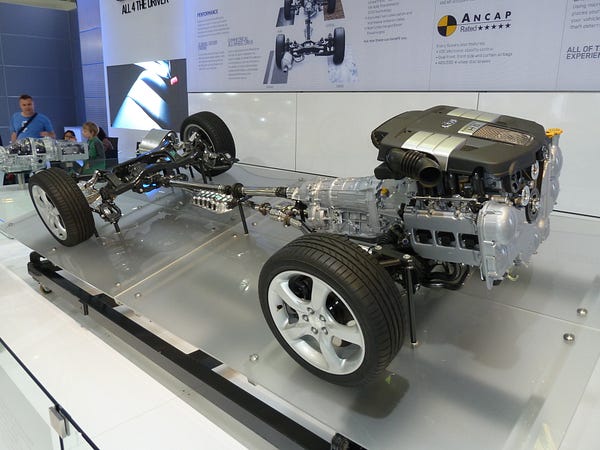
Re/code has a neat article that breaks down autonomous cars by component, and examines which suppliers are building which pieces.

The body, the eyes, and the brains all involve a collection of different, sometimes competing, suppliers. The suppliers range from longtime auto industry giants like Continental and Bosch, to niche firms like Mobileye, to computer hardware firms like Nvidia.

Recommended.


Originally published at www.davidincalifornia.com on October 27, 2015.

Auto Repair Shops: Another Casualty of the Driverless Revolution?

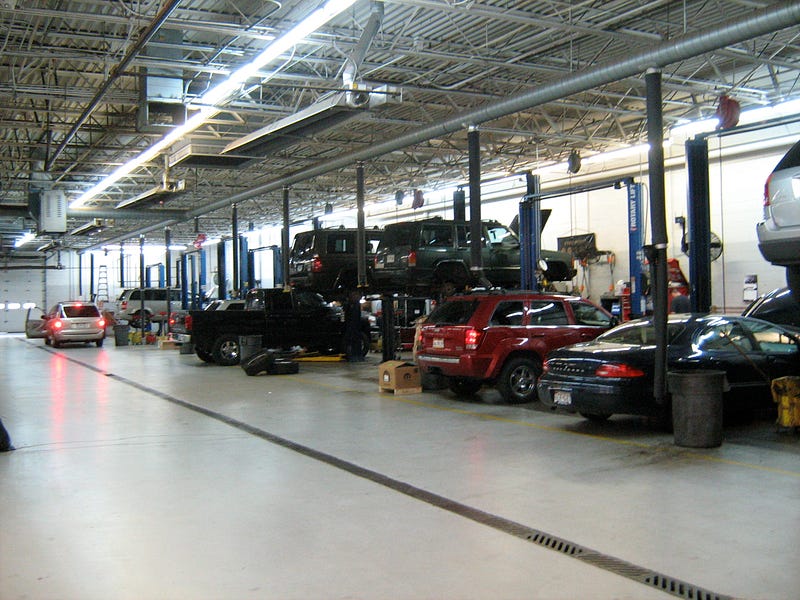
As cars go driverless, will auto repair shops go bankrupt?

It’s not an obvious corollary, but the argument is there. Particularly if private vehicle ownership declines and we all begin to rent rides from Uber-like fleet owners, the viability of independent auto shops could be threatened.

But I’m not ready to go there quite yet. My local independent auto shop often has US Postal Service vehicles inside, proving that some fleet owners still outsource their maintenance to small operations.

Of course, USPS is a government operation, and perhaps privately-owned fleets are maintained differently. How do Hertz or FedEx manage maintenance and repair for their fleets?


Originally published at www.davidincalifornia.com on October 26, 2015.

Could Self-Driving Cars Turn Into a Nightmare?

I suppose so, but I doubt it. Progress marches forward.

The Telegraph tries to envision how this nightmare would occur and isn’t very convincing.

Looking back from 2025:

I walk everywhere in the city now because traffic is worse than ever. Who needs parking spaces when you can send your driverless car around the block while you do your shopping? And commuting distances have doubled, with vehicle occupants happy to zone out in their pleasure booths, watching movies or working themselves to death, seemingly losing track of time.

The upshot here seems to be that getting more flexibility in parking and commuting is actually a bad thing.

I suppose if the “drive in circles instead of park” problem became bad enough, it could be a real drag. But driving in circles is not free (whether the car is gasoline or electric). And this assumes we all have our own driverless cars that need to idle while we run our errands — a future that seems increasingly unlikely in the age of Uber.

I imagine there are some potential driverless dystopias out there, but let’s get a little more creative. And plausible.


Originally published at www.davidincalifornia.com on October 25, 2015.

Disruption

Autonomous vehicles could shrink U.S. personal auto insurance sector by 60%:

“Autonomous vehicles are poised to completely transform the auto insurance industry, and underlying market forces, including technology enablement, consumer adoption, and regulatory permission, are already aligning to enable mass change,” said Jerry Albright, principal in KPMG’s Actuarial and Insurance Risk practice. “The risk profile of vehicles is changing daily, and the subsequent drop in industry loss costs would reduce the size of the auto insurance market, trigger consolidation in the personal lines space, attract new competitors, and force dramatic operational changes within carriers.”

Originally published at www.davidincalifornia.com on October 23, 2015.

The Autonomous Vehicle Supply Chain

In place of famous Silicon Valley names, a network of established automotive electronics and software suppliers is developing advanced driver-assist systems, connectivity and autonomous features that are customized to OEM specs instead of being hand-me-downs from the consumer electronics industry.

WardsAuto argues that Silicon Valley companies aren’t going to control the driverless car market, both because car manufacturers are on their toes, and because the supply chains are so important and intricate.

I think kind of probably right, but misses the point.

Looking at the mobile phone industry — which is a somewhat analogous — Apple and Google control the operating systems, and Silicon Valley start-ups come up with the cool applications.

The layer in the middle — actually constructing the phones — is controlled by OEMs and suppliers in Asia.

The middle layer is the most commodified and least profitable layer of the value chain, though.


Originally published at www.davidincalifornia.com on October 22, 2015.