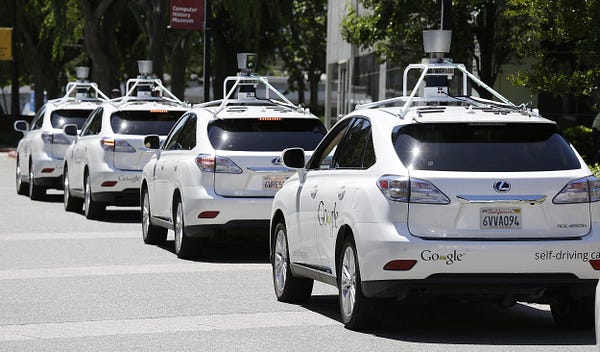
The self-driving car revolution is mostly being led by big companies — Google, Uber, Tesla. Outside of the tech companies, there are traditional auto manufacturers like Audi and BMW, as well as a host of suppliers ranging from nVidia to Mobileye to Continental Automotive.
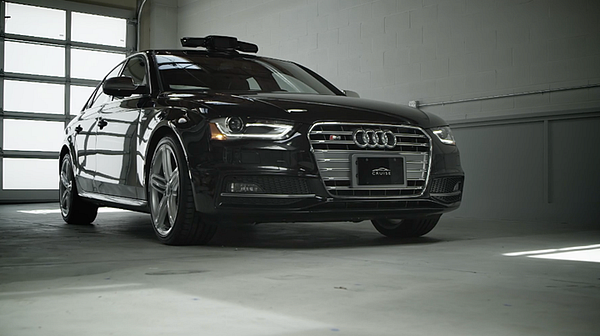
One of the few small startups that is emerging in the driverless car space is Cruise. They just raised another $12MM+ to fund hardware that turns a normal car into an autonomous vehicle.
I have recently been reading The Great Raceby Levi Tillemann, which is a history of the automotive industry and the quest for the electric car, in particular.
At the end of the book, Tillemann spends a few pages riffing on the brief recent history of, and potential for, self-driving cars. Since most of the book is focused on the electric vehicle and it’s environmental benefits, it’s no surprise that Tillemann’s thoughts on autonomous vehicles also converge on environmental benefits.
A few original (to me) points Tilleman makes have to do with the potential for self-parking and the materials requirements of cars.
On the parking front, it is widely believed that autonomous vehicles will sharply decrease parking needs, making everyone’s lives better. But what Tillemann pointed out that I hadn’t considered, is the environmental and time-saving benefits of this. In particular, drivers spend a lot of time circling around their destinations, looking for parking. Eliminating this circling will bring meaningful benefits.
Perhaps a more significant benefit will be the reduction in materials needed to construct cars. As Tillemann writes, “Cars that don’t crash could also be much smaller and lighter, with fewer safety features.”
As I understand it, a lot of the environmental cost of a car comes not even burning fuel for driving, but in the initial construction. If we can make building cars simpler and cheaper, this will ease resource and financial constraints.
I recently wrote about how self-driving cars will revolutionize the world, for the better. Of course, not all changes will be for the good, although I believe the overwhelming effect of self-driving cars will be positive.
But here are some of the potential negative consequences of self-driving cars. For this list, let’s focus on externalities — that is, let’s assume that the self-driving cars work well enough that individual drivers still want to use them, and then let’s think about what kind of societal costs that might entail.
Infrastructure — Self-driving cars will lower the cost of driving, which should lead to people driving (really, riding) a lot more. This will cause a lot of wear and tear on America’s road system. And if self-driving cars enable travel speeds of 100 mph+, that will make the problem even worse.
Pollution — Assuming self-driving cars increase the number and velocity of car trips, that will require a lot of energy. Ideally, self-driving cars will develop in tandem with cleaner electric cars, but even electric cars cause pollution.
Urban Design — We have optimized our cities for people-driven cars (think lots of traffic lights, intersections, and parking spaces). This design may not be ideal for self-driving cars in ways that we can forsee (too much parking) and ways that we cannot yet envision.
Traffic — With more cars on the road, rush hour could get really bad. My hope is that the volume of cars is offset by their throughput (if cars are moving twice as fast, we can get away with approximately twice as many cars on the road without increasing congestion). But it’s not totally clear how that will play out, especially if self-driving cars reduce the human cost of being in a traffic jam.
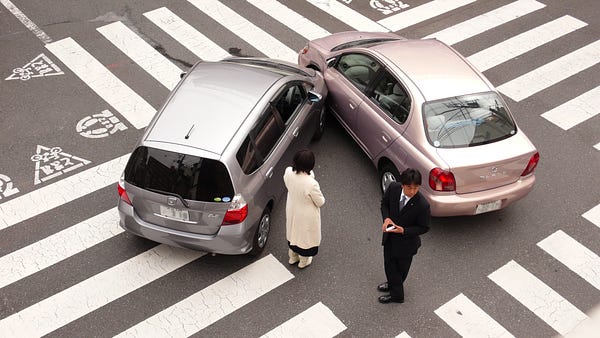
Fatalities — Self-driving car accidents might start to look like airplane accidents — rare, but when they happen, everyone dies.
I’m sure there are additional costs that I have not considered here. My strong belief, however, is that the benefits of self-driving cars will far outweigh the costs.
It’s probably the technological innovation on the horizon about which I am most excited.
Of course, there is the questions of when, but I think the payoffs will be so huge that investment and innovation in this area will happen faster than we think.
Commuting — When we can all send emails or watch YouTube videos or sext or sleep or Skype or write or whatever during our commute, the world will be a better place. And not only will the world be a better place, the world will change…
Real Estate — Once the cost of commuting decreases, people will do more of it. Which means living 90 miles from the office (or coming home for lunch, or working at normal hours instead of waking up at 5am to beat rush-hour). The Bay Area housing crisis will become a lot more manageable when living in Fairfield isn’t such a drag. And because land quantity increases exponentially with distance (think pi-r-squared), real estate costs will become more manageable.
Speed — It’s kind of amazing that the US speed limit tops out at somewhere between 65–80 mph (depending on the state). People were driving at these speeds 50 years ago! Of course, this is a biological and not a mechanical limitation. The speed limit is set (via a somewhat complicated process) based on the speed at which human drivers can safely travel. Once computers can drive, could we have 200mph highways? That would make a 100-mile trip to work quicker than many people’s current commutes.
Accessibility — It’s no accident that one of Google’s first public self-driving car demonstrations was with a blind driver. Self-driving cars will change the world for the driving-impaired. (And that’s not limited to physiological impairments — think of children, the elderly, or adults that never learned to drive).
Delivery — I’m less bullish on this angle, because I suspect driver costs are a relatively small percentage of shipping costs, but I nonetheless have confidence that self-driving cars will accelerate the move away from on-site retail and toward same-day delivery of e-commerce purchases.
Personal Finance — For many Americans, their cars are their most valuable assets, or their most valuable assets after their houses. Self-driving cars will make substantially decrease the cost of renting a car on-demand, which will in turn change many buyers to renters, improving the personal finances for millions of Americans (and of course the effects will be even more pronounced in developing countries).
Other Uses — Uber is something like a self-driving car company (and one day they expect to in fact be precisely such a company). Uber reported a while back that it’s San Francisco revenues are now several multiples of the previous size of the San Francisco taxi market. That is, Uber did not simply take market share from taxi companies, rather it dramatically increased the size of the market. Which is to say that customers found use cases for Uber that nobody anticipated at the start. It seems clear this will be the case for self-driving cars, as well.
Of course, all the wonders of self-driving cars will come along with a host of problems. I’ll write more about those in the future.

 David Silver