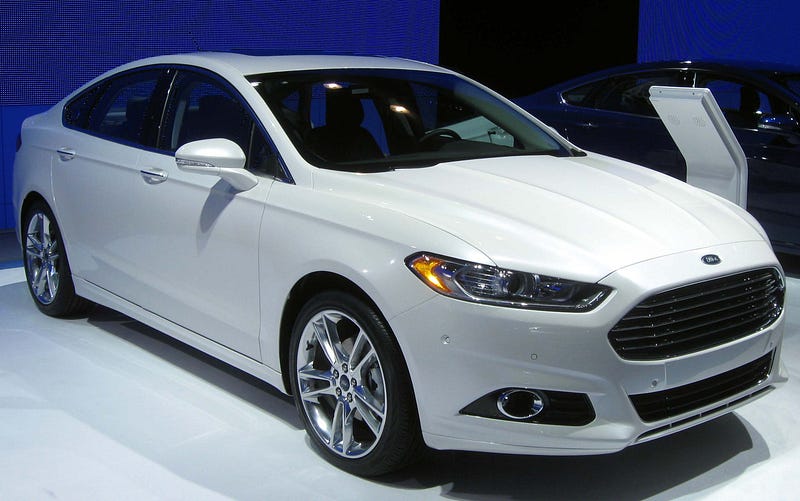
Ford Will Add a Lot of Software Engineers

The Mobile World Congress in Barcelona has expanded beyond strictly mobile technology, and has become something of a CES, Part II.

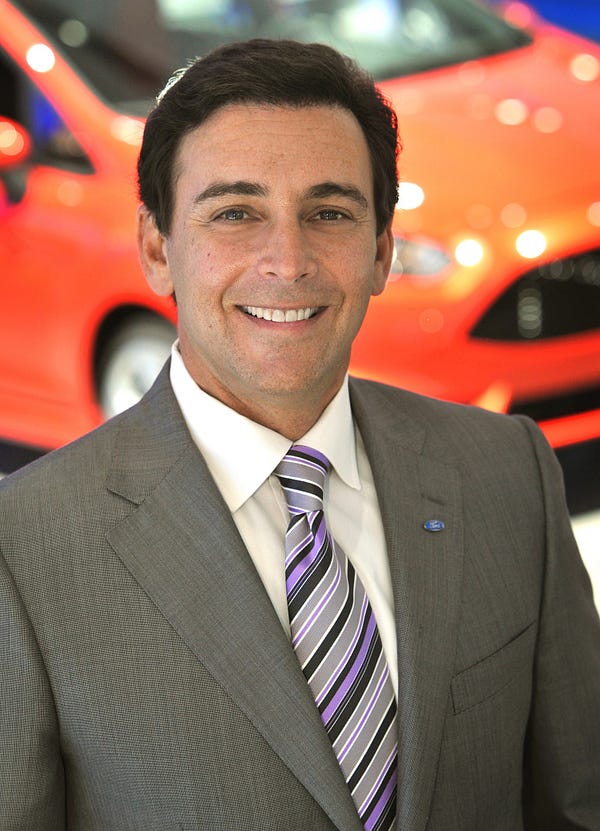
In that vein, Ford CEO Mark Fields announced at the conference that Ford will be tripling its investment in autonomous driving engineering staff, over the next five years.

“When the first Ford autonomous vehicle comes out, it will be an autonomous vehicle designed to serve millions of customers — not just for those who buy luxury vehicles,” Fields stated.

That’s pretty clearly aimed at Tesla.

To date, Ford has been the mainline auto manufacturer most dedicated to self-driving cars, with its MCity project and its University of Michigan partnerships.

With Toyota and Volvo and GM all stepping up their efforts, though, Ford is finally getting some competition. And thankfully they’re embracing the challenge.
Ford’s Self-Driving Car

Curtis Franklin, Jr. has the scoop at InformationWeek.

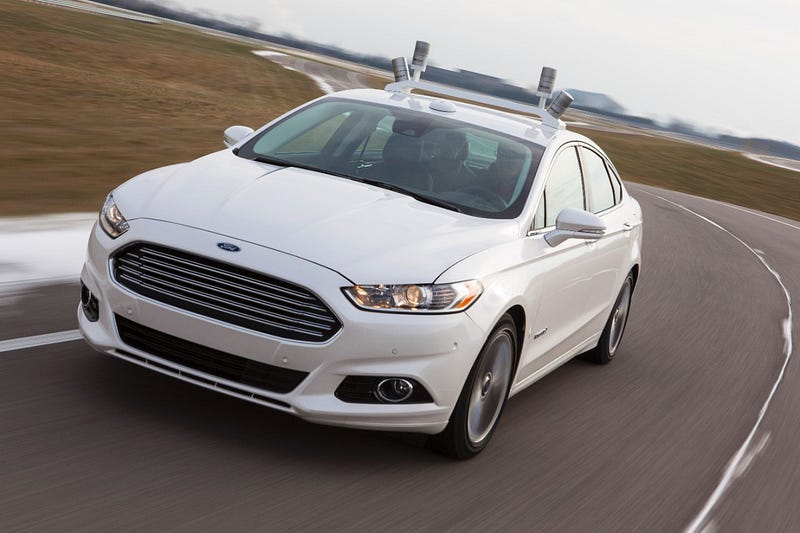
The virtual driver itself lives in a Linux cluster that sits in the trunk of the test vehicle. Williams said that the cluster is five nodes running Ubuntu Linux. Multiple nodes are required to handle all the sensor input and process it quickly enough to make driving decisions. Asked why there are five nodes in the cluster, Williams was succinct. “That’s all that would fit in the trunk,” he said.

Also, this:

Williams was quick to explain that assisting a human driver and creating a virtual driver are two distinct problems that share far less, electronically or conceptually, than it might seem at the outset. He said that the two programs are distinct, with separate management and development teams. [emphasis added]

Ford’s media release on the project is here.


Originally published at www.davidincalifornia.com on January 18, 2016.

Driving in the Snow

Big news in the self-driving car world from Ford Motor Company:

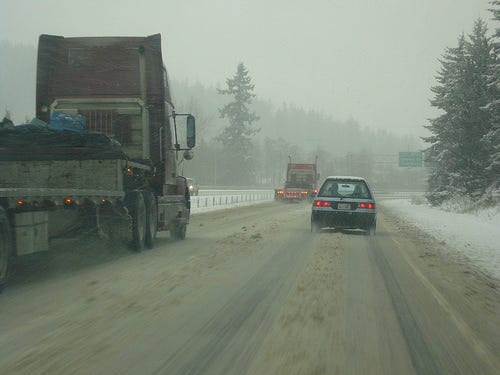
Ford Motor Company (NYSE:F) is breaking away from other autonomous car developers in a major way. The company is testing its self-driving car in snow condition, thus becoming the first of autonomous vehicle developers to take on such a challenge. Others such as Alphabet Inc (NASDAQ:GOOG)’s Google have mostly been testing their autonomous vehicle prototypes in dry, sunny weather conditions.

Testing an autonomous car in winter weather presents a greater but necessary challenge. The challenge is that the sensors used to keep autonomous vehicles on the road can hardly work unless the road and the environment of the vehicle are clear for better visibility. However, when it is raining or snowing and the lanes aren’t clear, maintaining a fully autonomous vehicle on the road and within the safety parameters becomes a herculean task.


Originally published at www.davidincalifornia.com on January 12, 2016.

Ford and Google

Since the announcement that Ford and Google are setting up a partnership, there has been relatively little news as to what that partnership will entail.

There has been some recent speculation that Google will work with Ford to turn the Fusion into the first mass-market autonomous vehicle.

Automotive News, however, believes that Google and Ford will build a car together from scratch.

By using Ford-built vehicles, Google would save billions in development costs. It would not have to design, build, test, manufacture and validate cars for safety and emissions. A deal would free the tech giant to focus on developing the automated driving software in use in a fleet of 53 self-driving bubble cars on the road in California and Texas. Those 53 cars, by the way, were assembled in Detroit by Roush Enterprises, a supplier closely aligned with Ford.

Devices like the Nexus phone series provide a model for how such a partnership would work. Google would provide the specs, and the partner would do the manufacturing.


Originally published at www.davidincalifornia.com on January 3, 2016.

Google and Ford

Google and Ford are going to build self-driving cars together!

Or so say several unnamed sources.

The news is apparently leaking in advance of the Consumer Electronics Show in January, where the announcement will be made official.

Ford has been building out its own city — MCity — to test self-driving cars, so they are an obvious choice for Google.

It will be interesting to see whether Ford manages to lock up Google’s software — similar to the way AT&T locked up the iPhone for several years after launch — or whether Ford is merely one of many partners with whom Google works.


Originally published at www.davidincalifornia.com on December 22, 2015.

Mcity

Ford is testing its autonomous vehicles in a simulated city in Michigan, named “Mcity”.

“Every mile driven there can represent 10, 100 or 1,000 miles of on-road driving in terms of our ability to pack in the occurrences of difficult events.”

Of course, note that this is similar to the difference between testing in a test harness, and testing in the real world, where users and the environment crazy things that the test designers never imagined.

Nonetheless, it’s an advantage that Michigan has over Silicon Valley when it comes to developing products for the non-digital world. Mcity is 32 acres dedicated to autonomous vehicle testing, and that kind of acreage is hard to come by in Silicon Valley.


Originally published at www.davidincalifornia.com on November 17, 2015.