NHTSA Says Computers are â€śDrivers”

The Obama administration, and US Secretary of Transportation Anthony Foxx, in particular, are huge fans of autonomous vehicles.

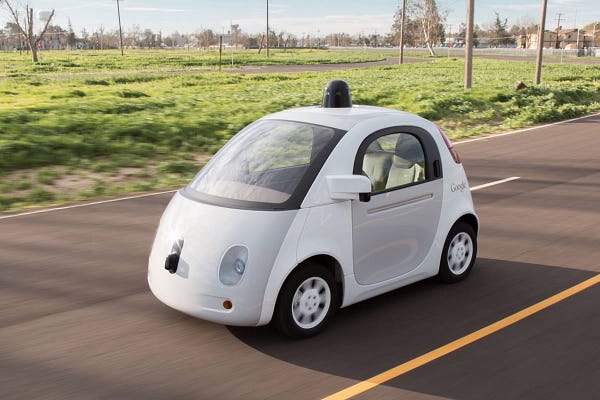
So it was nice to see the news that the National Highway Transportation Safety Administration views Google’s self-driving cars as legal and safe, even without a human driver.

On a practical level, this seems like a big deal, but I can’t actually pinpoint how this will affect legal and regulatory disputes. My understanding is that most motor vehicle regulation in the US is done at the state level. So when a federal regulator (the NHTSA) and a state regulator (the California DMV) disagree on whether a self-driving car needs a human driver, does the state win?


Originally published at www.davidincalifornia.com on February 12, 2016.
Wireless Car Charging

Google recently contracted with Hevo Power and Momentum Dynamics to install wireless car charging pads on its campus, according to engadget.

It sounds like pretty early stages, but apparently the pads are shaped kind of like manhole covers, and they use a technology called resonant magnetic induction to power cars hovering nearby.

It seems pretty early yet, but imagine if this works and entire highways get covered by these types of pads. It might work a little like cellular data — charging just happens in the background, without car owners ever having to think about it.


Originally published at www.davidincalifornia.com on February 8, 2016.

Google Cars Heading to Washington

Washington state, that is. For “bad weather” driving experience. As anyone who has been to Seattle knows, they get a lot of rain there.

This seems like a smaller and more natural leap that snow driving. My guess is that snow is relatively rare as a fraction of total miles driven, although certainly not negligible. Rain is common everywhere.

Western Washington state also has mountains with snow a relatively short drive from the Seattle area, so that’s not out of the question, either.

Notably, Washington governor Jay Inslee is welcoming the move, in contrast to California DMV officials who have been notably more cautious about self-driving cars. Federalism in action.


Originally published at www.davidincalifornia.com on February 4, 2016.

Google’s Training Simulator

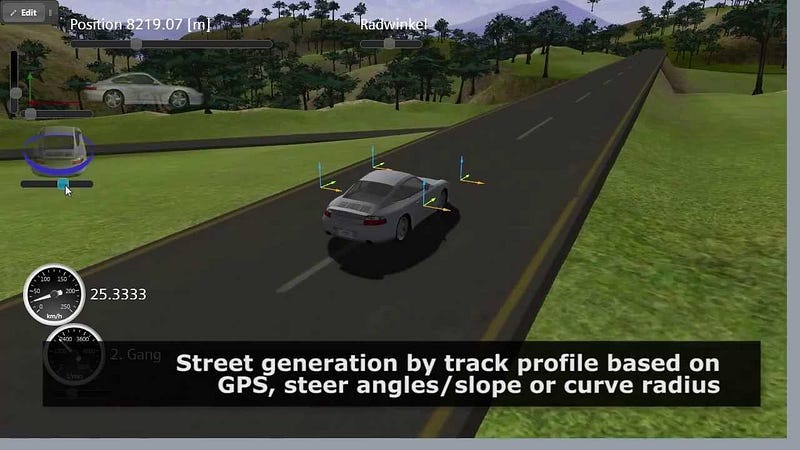
Google’s self-driving car team just released its January report, which highlights the role played by its simulator in improving its driving algorithms.

With our simulator, we’re able to call upon the millions of miles we’ve already driven and drive those miles again with the updated software. For example, to make left turns at an intersection more comfortable for our passengers, we modified our software to adjust the angle at which our cars would travel. To test this change, we then rerun our entire driving history of 2+ million miles with the new turning pattern to ensure that it doesn’t just make our car better at left turns, but that the change creates a better driving experience overall.

And the simulator isn’t not limited to what the car has already seen:

We can also create entirely new scenarios in our simulator, allowing us to concentrate on perfecting a particular skill. For example, to test our car’s performance in a three car merge, we will create thousands of variations of this situation (each car travelling at different speeds, and nudging to merge at different times) and then test that our car drives as intended each time.

To me, this is one of the coolest parts of machine learning. Without actually going out and getting new data, which can be expensive and slow, we can use data that we already have, and warp it to create lots of new data, which rapidly improves the learning rate of machines.


Originally published at www.davidincalifornia.com on February 3, 2016.

Google’s Self-Driving Car Facility

Over at Backchannel, Steven Levy has an amazing behind-the-scenes look at Google’s self-driving car test facility on the grounds of the former Castle Air Force Base in Merced County, California.

“Mission control at Castle is a double-wide trailer that seems more like the op center at a construction site than a dispatch center for the future. There are desks, a ratty sofa, and instead of the high-end espresso maker commonly found at the company’s facilities, a coffeemaker that Joe DiMaggio would recognize. The most Googley objects are what look like military-grade water ordnance; they are actually Bug-a-Salt rifles that shoot pellets at the swarms of insects that are ubiquitous during the Central Valley summer.”

The piece is titled “License to (Not) Drive”. Read the whole thing.


Originally published at www.davidincalifornia.com on January 26, 2016.

Disengagement

The California DMV has just released a series of reports summarizing the data on self-driving car “disengagement”. That’s the term for when a human has to take over driving from the computer in an emergency.

The California DMV gets this data as part of the self-driving car licensing process, which requires car companies to report various data to the state.

The DMV released reports for each company testing self-driving cars. According to the report on Google:

Over the course of the testing — which took place between September 2014 and December 2015 — the vehicles covered 523, 958 miles. Google’s vehicles covered the majority of that — 424,331 — and the Google’s autonomous technology handed control to the driver 272 times and a test driver felt compelled to intervene 69 times.

The days of self-driving cars are getting ever-closer, but they’re not quite there yet.


Originally published at www.davidincalifornia.com on January 13, 2016.

VTTI Autonomous Vehicle Safety Report

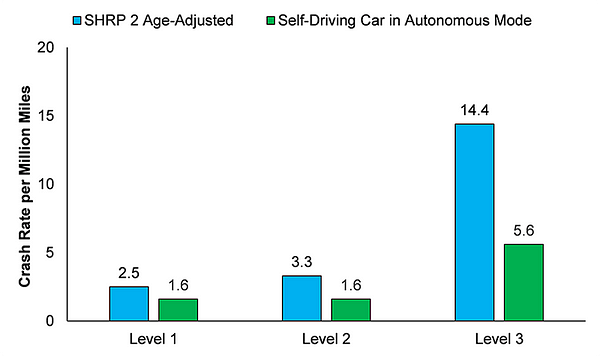
The Virginia Tech Transportation Institute (VTTI) has just published a report on the safety levels of autonomous vehicles compared to human-driven cars.

The VTTI numbers contradict earlier back-of-the-envelope calculations by The Motley Fool. Those earlier numbers indicated that self-driving cars were involved in far more accidents (per mile driven) than traditional cars, although the accidents were all the fault of the human-driven cars.

The VTTI report is much more thorough, although it was also commissioned by Google, so of course there is a conflict of interest issue.

One of the major differences between the VTTI report and The Motley Fool calculations is that VTTI (quite reasonably) controls for the fact that many crashes go unreported. This is particularly true of crashes that result in no injuries and minimal property damage.

However, self-driving cars are required to report all crashes, so a straight comparison of uncontrolled statistics is misleading.

After adjusting the human-driver crash numbers upward (to account for unreported crashes), self-driving cars appear to be involved in far fewer accidents than human-driven cars. This is especially true for Level 3 (minimal property damage) crashes.


Originally published at www.davidincalifornia.com on January 10, 2016.

Accidents

The Motley Fool has published a list of important numbers for self-driving cars.

Many of these numbers are familiar for industry followers. Google has 53 self-driving cars, that travel at 25 mph, etc.

However, two number stand out.

6 states currently permit autonomous vehicles. However, several more states, like Virginia and Texas, state that autonomous vehicles are allowed by default. Perhaps I am biased as a Virginian, but I suspect development may shift to those states with the fewest restrictions.

The other number that stands out is actually an inequality. “61,883 < 730,000”. Actually, 61,883 <<< 730,000.

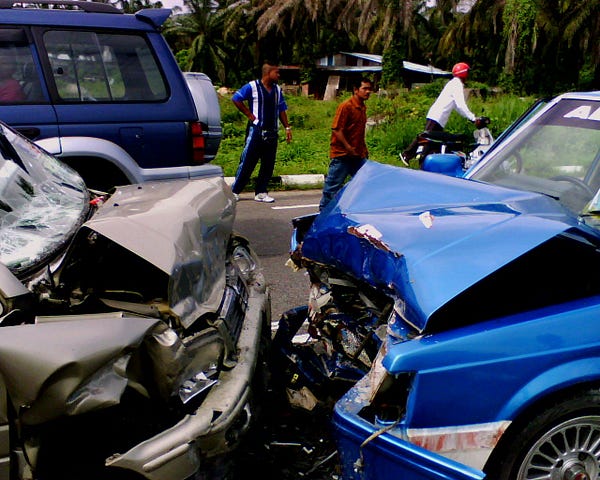
The Motley Fool does a good job putting those numbers in context. In the last six months, Google vehicles have been involved in one fender-bender per 61,883 miles. The national average, however, is 730,000. Which indicates that human-driven cars are much less likely to be involved in accidents than Google cars.

There are a few considerations, to be sure. For one, Google cars have never been “at fault” in these accidents. It’s always been the driver of the other car who has been at fault.

Also, Google has to report all of its accidents, whereas many human drivers cause minor accidents and never report them.

Nonetheless, the huge disparity in these numbers indicates that Google cars may need to get less accident-prone before they are released to the general public.


Originally published at www.davidincalifornia.com on January 3, 2016.

Ford and Google

Since the announcement that Ford and Google are setting up a partnership, there has been relatively little news as to what that partnership will entail.

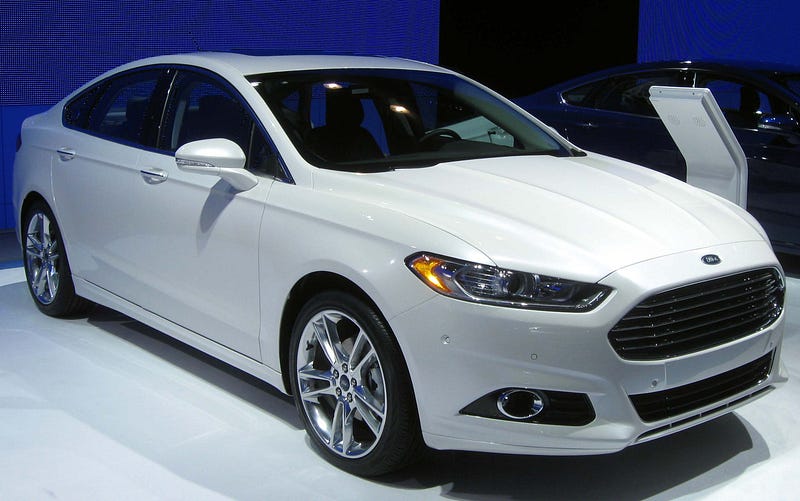
There has been some recent speculation that Google will work with Ford to turn the Fusion into the first mass-market autonomous vehicle.

Automotive News, however, believes that Google and Ford will build a car together from scratch.

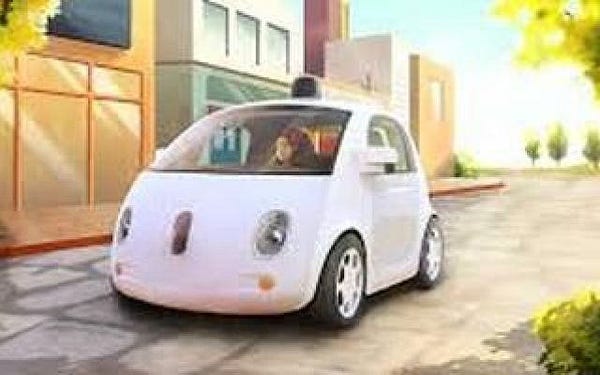
By using Ford-built vehicles, Google would save billions in development costs. It would not have to design, build, test, manufacture and validate cars for safety and emissions. A deal would free the tech giant to focus on developing the automated driving software in use in a fleet of 53 self-driving bubble cars on the road in California and Texas. Those 53 cars, by the way, were assembled in Detroit by Roush Enterprises, a supplier closely aligned with Ford.

Devices like the Nexus phone series provide a model for how such a partnership would work. Google would provide the specs, and the partner would do the manufacturing.


Originally published at www.davidincalifornia.com on January 3, 2016.