
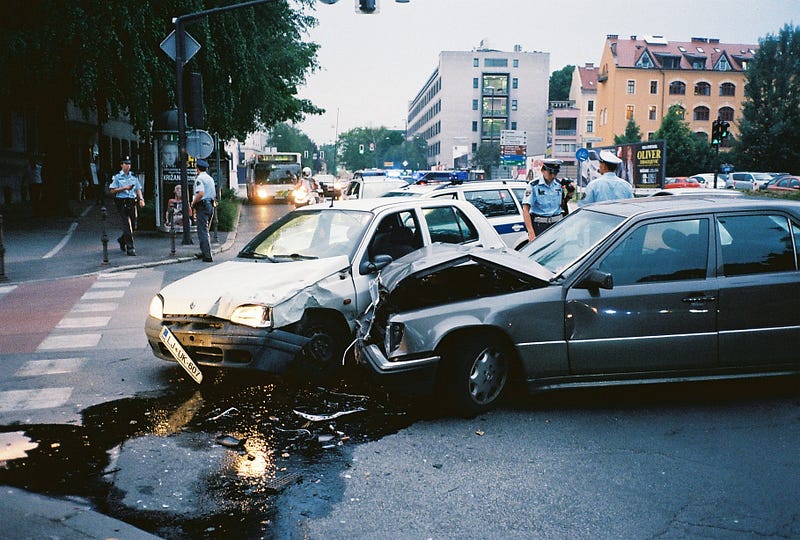
The Washington Post reports today on the growing inequality between auto fatality rates for the highly-educated and less-educated in America.
The article is itself reporting on an academic paper (gated) that finds:
Adjusted death rates were 15.3 per 100,000 population (95% confidence interval (CI): 10.7, 19.9) higher at the bottom of the education distribution than at the top of the education distribution in 1995, increasing to 17.9 per 100,000 population (95% CI: 14.8, 21.0) by 2010. In relative terms, adjusted death rates were 2.4 (95% CI: 1.7, 3.0) times higher at the bottom of the education distribution than at the top in 1995, increasing to 4.3 times higher (95% CI: 3.4, 5.3) by 2010. Inequality increases were larger in terms of vehicle-miles traveled. Although overall MVA death rates declined during this period, socioeconomic differences in MVA mortality have persisted or worsened over time.
First things first, death rates declined overall, which is great news.
The disparity across educational classes is troubling, but there doesn’t seem to be a solid explanation. Seat belt usage, automobile model year and safety features, drinking, and other behavioral issues are among the possible culprits.
The Post points out that self-driving vehicles will make the disparity even greater in the near term (assuming self-driving cars are safer than human-driven cars). They do not highlight that this, too, is a good thing. Fewer deaths are better, even if the reduction comes at the higher end of the educational distribution.
My hope, though, is that self-driving cars become so ubiquitous so quickly that the disparity goes to zero, sooner rather than later.
H/T Tyler Cowen
Originally published at www.davidincalifornia.com on October 2, 2015.
 David Silver