Car Shopping

Despite my best intentions, I spent almost all of today car shopping.

My wife and I have only one car, a single 2004 Toyota Camry. It’s great, but for years we have been talking about getting a second car, even doing test drives, and never buying anything.

With a seven week-old baby, plus two dogs, however, I think we’re finally going to have to get another car.

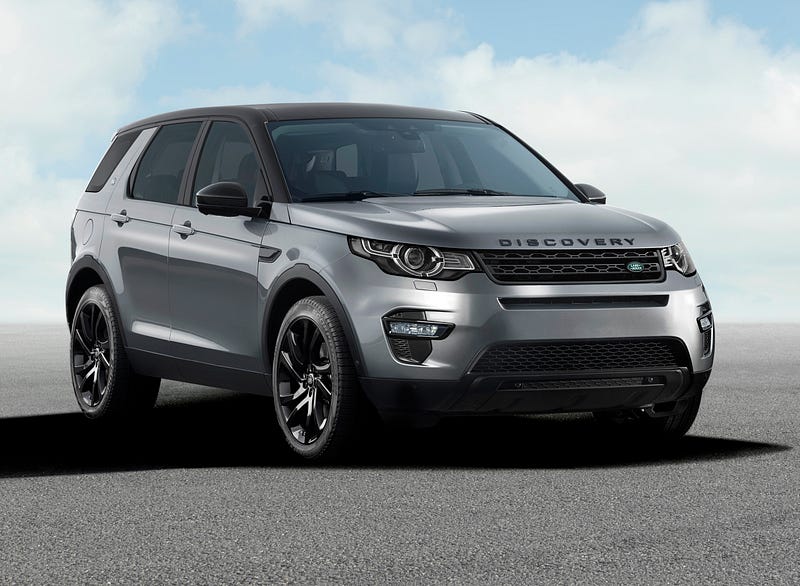
So I looked at a lot of different cars today, particularly small crossover SUVs, and with a special focus on driver assistance technology.

In lieu of big writeups, here are a few sentences on each.

Subaru Outback: There’s a lot to love about this car. They offer a terrific Eyesight ADAS package on almost all trim levels. Eyesight includes adaptive cruise control, lane keeping, automatic headlamp adjustment, rear cross-traffic alert, and blind-spot alert. Plus Subarus hold their value incredibly well, although they are a little pricier than comparable vehicles.

Toyota RAV4: Super-smooth ride. Great car at a great price. No ADAS features at any trim level, though.

Mazda CX-5: Terrific car. It felt similar to the Outback, if maybe a little smaller. Mazda’s i-ACTIVESENSE ADAS package is comparable to the Outback’s Eyesight. However, Mazda only offers ADAS on their highest-end, Touring trim level.

Fiat 500e: Changing gears entirely, I checked out Fiat’s cute and awesome 500e all-electric model. It feel about the size of a Mini or a Volkswagen Beetle, which could be awesome for a pure commuting car. Plus the all-electric drivetrain makes it eligible for California HOV stickers. No ADAS features except a backup camera, though.

Honda CR-V: Back to crossovers. The CR-V is an awesome and economical car. And Honda has introduced a suite of ADAS technologies called Honda Sensing. Basically, this includes adaptive cruise control and lane departure warning. Honda Sense is only available on the top trim level, though.

Ford Fusion Energi: Back to small electric vehicles. This is a small car, but bigger than the Fiat 500e, that is all electric and 70 miles to the charge. No ADAS features, but it does come with the all-important HOV stickers.

Ford C-MAX: A little larger than the Fusion, the C-Max is electric with a gas tank, which gives it a range that the Fusion Energi doesn’t have. The HOV stickers are hit-or-miss, depending on whether the dealer applied for stickers before the DMV ran out for electric+gas drivetrains.

I still need to pick a car, thoughĀ šŸ™‚

Plus I haven’t yet tried out the German models. I worry they might be out of my price range, but I hope to test out the crossover models for BMW, Mercedes, and Audi this week.

2,000 Automobile Companies

The Motley Fool has a short piece out about Warren Buffett and self-driving cars. That piece references back to another article, this one in Fortune, and written by Buffett himself.

The dateline was 1999, and Buffett was taking a lot grief for his refusal to invest in the dot-com market.

Buffett’s view was that very few of these companies would survive over the long haul, and he wasn’t capable of picking the winners.

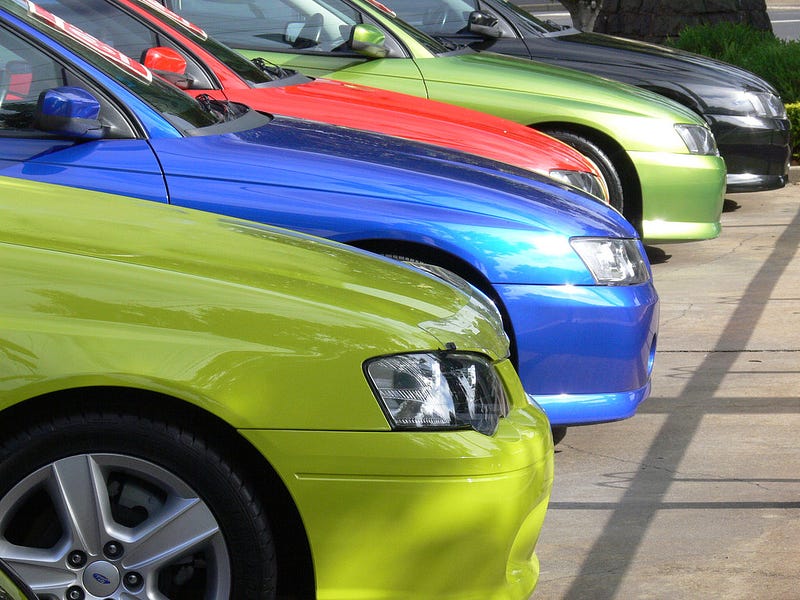
Well, I thought it would be instructive to go back and look at a couple of industries that transformed this country much earlier in this century: automobiles and aviation. Take automobiles first: I have here one page, out of 70 in total, of car and truck manufacturers that have operated in this country. At one time, there was a Berkshire car and an Omaha car. Naturally I noticed those. But there was also a telephone book of others.

All told, there appear to have been at least 2,000 car makes, in an industry that had an incredible impact on people’s lives. If you had foreseen in the early days of cars how this industry would develop, you would have said, ā€œHere is the road to riches.ā€ So what did we progress to by the 1990s? After corporate carnage that never let up, we came down to three U.S. car companiesā€Šā€”ā€Šthemselves no lollapaloozas for investors. So here is an industry that had an enormous impact on Americaā€Šā€”ā€Šand also an enormous impact, though not the anticipated one, on investors.

So the funnel went from 2,000 to 3.

And today, almost 20 years later, we still have Ford and GM and we sort of have Chrysler (as part of the Fiat-Chrysler conglomerate).

But we also have Tesla and Uber and Google and maybe Apple and startups like Otto and Comma.ai and McLaren.

Maybe here is the road to riches. But reading Buffett makes me a little less sure.

Civil Maps

News broke today that Ford has invested in a startup called Civil Maps, as part of a group that raised a $6.6 million funding round.

I did not work directly with Civil Maps while I was at Ford, but there was a lot of excitement around the company, so I have a general understanding of what they do.

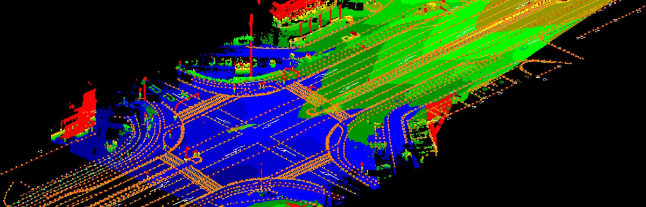
Civil Maps creates ā€œsemantic mapsā€, which differ from traditional maps in that semantic maps convert raw sensor data into units like lane lines and intersections and curbs.

In particular, Civil Maps’ semantic map format is super-compressed, which means that corrections can be transmitted over cellular networks. This makes it feasible to crowd-sourcing map data from people’s smartphones.

Mapping has been one of the chokepoints in the autonomous vehicle world, with less than a handful of companies capable of supplying the data that autonomous vehicles need to function. And almost all of those companies are owned in some fashion by OEMs.

  1. Google
  2. Apple
  3. HERE (owned by a consortium of German OEMs)
  4. Uber (their mapping program is under construction)
  5. OpenStreetMap

Ford’s investment in Civil Maps continues that pattern, and hopefully in a way that makes the field more competitive.

Joy and Fear

The Disney movie Inside Out features the five emotions running through a girl’s head: joy, saddness, anger, fear, and disgust. It’s a great movie that you’ve probably seen and if you haven’t seen it, you should.

I think that self-driving cars are driven by a little bit of both joy and fear.

The fear comes from the number of current automobile accidents: 32,000 US fatalities and 1.25 million worldwide fatalities per year.

Those are huge, almost unfathomable numbers. I suspect they mean a lot more if you’ve been personally touched by an automotive fatality. Fortunately, I haven’t been affected directly by that.

So for me the driving emotion is joy, which seems like a funny word to use. Maybe excitement?

Self-driving cars seem awesome to me for the sake of the technology, and even more so for how they will change the world. I hope this is a bigger technology breakthrough than anything we’ve seen since the Internet.

I always feel a little badly that I’m less moved by the safety issues, but I am so incredibly excited by the potential to make day-to-day living better.

Jaguar to Launch Vehicle-to-Vehicle Test Fleet

The computer vision and machine learning parts of autonomous vehicles get a lot of press, but vehicle-to-vehicle communication strikes me as an underrated game-changer.

Jaguar is building out a research fleet to test just that:

Jaguar Land Rover recently announced that it would create a fleet of autonomous vehicles. The British luxury car maker would create more than 100 research vehicles over the next four years that would allow the company to develop and test Connected and Autonomous Vehicle (CAV) technologies, with the first of these research cars expected to hit the roads around Coventry and Solihull later this year.

CAN Bus

Yesterday a colleague asked me what the term ā€˜CAN’ stands for, as in CAN bus, and I was embarrassed to admit I didn’t know. To be clear, I know what CAN is, just not what the acronym stands for.

According to Wikipedia, it stands for Control Area Network.

CAN is the standard protocol for communicating between electronic components of an automobile. It’s the language that the steering wheel uses to communicate to the wheel actuators in a drive-by-wire system, for example.

Think of it as the TCP/IP of the automotive world.

The CAN bus, which is the network carrying the CAN signals, turns out to be especially important in autonomous vehicles, as these vehicles are almost always drive-by-wire systems.

A traditional vehicle steering system, for example, involves a mechanical rack and pinion and no electronic signals. A drive-by-wire system, by contrast, involves sending electronic signals from the steering wheel to the wheel actuators (motors). Those signals travel over the CAN bus.

CAN is a bit-level protocol, and operates at a lower level of abstraction than some machine learning engineers are used to dealing with. But it’s a necessity for building a self-driving car.

Patents

This is old news, but six months ago Reuters reported that, ironically, foreign firms are outpacing U.S. firms when it comes to autonomous vehicle patents.

Toyota is, far and away, the global leader in the number of self-driving car patents, the report found. Toyota is followed by Germany’s Robert Bosch GmbH, Japan’s Denso Corp, Korea’s Hyundai Motor Co and General Motors Co. The tech company with the most autonomous-driving patents, Alphabet Inc’s Google, ranks 26th on the list.

The correlation between patents and autonomous vehicle progress seems low, though.

The raw number of patents does not necessarily equate to leadership in developing self-driving cars, [Reuters analyst Tony Trippe] said. Non-U.S. companies tend to be more aggressive in filing patent applications than American companies. The quality of patents is also important, since not all are created equal.

This also illustrates a divide between Silicon Valley and traditional automakers.

Silicon Valley tends be more skeptical of the value of patents, seeing them mostly as a defense against patent trolls. Traditional automotive companies rely more heavily on the intellectual property protection, and resultant competitive advantage, provided by patents.

Autonomy and Regulation

Two headlines this weekend show why autonomous vehicles are a win for the legal profession:

  1. Driver Automation to Be Scrutinized in NTSB Probe of Tesla Crash

2. Google’s Self Driving Car Project Gets Its Own Chief Lawyer

I assume there is some relationship between these headlines.

Tesla is now managing separate investigations by the Florida Highway Patrol, the National Highway Transportation Safety Administration, and the National Transportation Safety Board, all stemming from a single accident resulting in one fatality.

That type of scrutiny requires a lot of lawyers.

Of course, if self-driving cars prove to be far safer than human-driven vehicles, that would create an offsetting loss for plaintiffs’ attorneys.

Tesla Autopilot 2.0

Tesla Autopilot 2.0 is coming this year, according to anonymous sources.

The headline feature is the addition of a second front-facing camera to enable the car to recognize and stop at stop signs and stoplights.

That’s pretty awesome, and is worth a lot all by itself.

But what really caught my eye is the fact that Tesla is, in fact, using data from customers’ cars to learn how to drive better, and even build maps.

The Autopilot learns from all the vehicles equipped with the hardware in Tesla’s fleet (~80,000 vehicles) by building high precision maps, which it refines with every passing of a vehicle, and then downloads the map sections aligned with the vehicle’s GPS to help the vehicle’s own Autopilot system navigating the location in real-time with cross-checks from the vehicle’s sensors, primarily its front-facing camera and radar.

There are privacy considerations there, which Tesla will presumably have to address, but overall I think this is a huge win for self-driving technology, and for Tesla in particular.

Startup Watch: Zoox

News recently crossed the wires that Zoox, a self-driving car startup, just raised $200MM at a $1BB valuation.

And…that’s it.

Very little else seems to be known about Zoox.

Their homepage is a black screen with a small gray logo.

Business Insider reports that Zoox is a collaboration between Tim Kentley-Klay and Jesse Levinson, the former an Australian designer and the latter a Stanford-trained autonomous vehicle engineer.

In 2013, the company debuted some splashy renderingsof the car, nicknamed ā€œBoz,ā€ before reverting back into stealth mode. According to IEEE, the car is designed to not have windshields or a steering wheel or break pedal. Instead, it can drive in any direction while passengers sit inside, facing each other.

The funding news only broke because of an SEC document they had to file, which shows their address as being in a small shopping center in Menlo Park where I used to shop for groceries all the time.

Presumably that’s a front? Other news sources locate the company in Palo Alto, the city next door.

I’ll go back to that Safeway to buy a few heads of lettuce and see if I can find a super-awesome car.