Google’s Self-Driving Car Facility

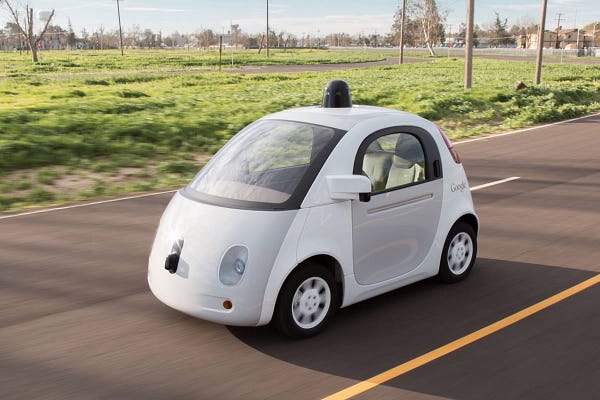
Over at Backchannel, Steven Levy has an amazing behind-the-scenes look at Google’s self-driving car test facility on the grounds of the former Castle Air Force Base in Merced County, California.

“Mission control at Castle is a double-wide trailer that seems more like the op center at a construction site than a dispatch center for the future. There are desks, a ratty sofa, and instead of the high-end espresso maker commonly found at the company’s facilities, a coffeemaker that Joe DiMaggio would recognize. The most Googley objects are what look like military-grade water ordnance; they are actually Bug-a-Salt rifles that shoot pellets at the swarms of insects that are ubiquitous during the Central Valley summer.”

The piece is titled “License to (Not) Drive”. Read the whole thing.


Originally published at www.davidincalifornia.com on January 26, 2016.

The Language of Autonomous Driver Assistance Systems

As I’ve done more work on autonomous driver assistance system (ADAS) components — on topics such as computer vision, localization, and controls — one topic that keeps popping up is the prevalence of C++ and, to a lesser extent, Python.

This is in some ways a stop backward, because I have worked in Ruby for the last five years, and Ruby is a powerful and concise language, especially with the Rails libraries layered on top of it.

Getting something done in C++ is considerably more verbose and open to bugs.

That said, C++ is fast. All of the beauty of Ruby comes at the cost of processes running behind the scenes to facilitate the beauty of the code. Garbage collectors, dynamic memory allocation, code compilation — all of those things take time.

In a car, time is crucial, far more so than on the web. So C++ it is.


Originally published at www.davidincalifornia.com on January 25, 2016.

Death-Proof Cars

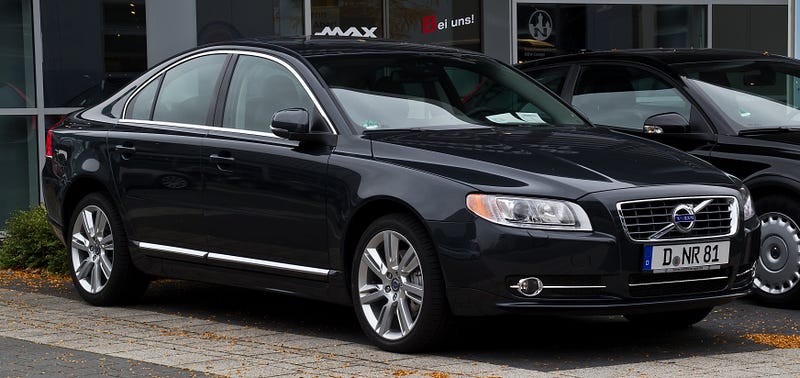
According to CNN, Volvo pledges that by 2020, all of their new cars and SUVs will be death-proof.

Volvo has made a shocking pledge: By 2020, no one will be killed or seriously injured in a new Volvo car or SUV.

I also didn’t know this:

Fatality-free vehicles are not unprecedented. In fact, there already are some, and they’re not just Volvos. According to data from the Insurance Institute for Highway Safety, there are nine vehicle models — including the Volvo XC90 — in which no one in the United States died in the four years from 2009 to 2012, the most recent period for which data is available.

However, note that drivers will still retain the ability to commit vehicular suicide.

CNN lists the principal components of the system as:

  1. Adaptive Cruise Control
  2. Auto Lane-Keeping Assistance
  3. Collision Avoidance
  4. Pedestrian Detection
  5. Large Animal Detection

Originally published at www.davidincalifornia.com on January 24, 2016.

Self-Driving Cars for Older Citizens

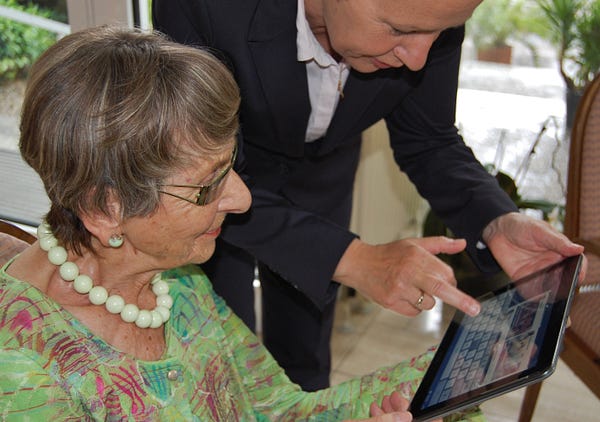
One of the key selling points for self-driving cars is the ability to transport people who cannot drive themselves. Largely, this group is comprised of the very young and the very old.

The very old, in particular, are a huge market for some of the wealthier nations on earth. Japan, for instance.

A big question is how readily the elderly will take to self-driving cars.

I think they will take to it like crazy. While old people have a reputation as technology late adopters, I think this is more a question of motivation than aptitude.

A lot of technology just isn’t useful enough to justify spending time and effort on, for an eighty year-old.

But when a technology brings a lot of utility (email, for instance), I have seen the elderly pick it right up.


Originally published at www.davidincalifornia.com on January 21, 2016.

OTA Software Upgrades

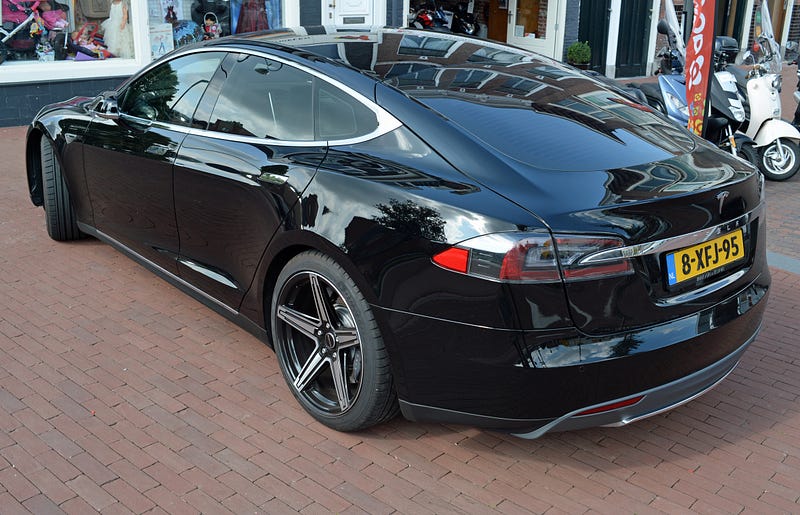
One of the best things about owning a Tesla, at least if Twitter is to be believed, is the fact that every vehicle gets over-the-air software upgrades.

At first glance, this seems almost trivial. Everyone who owns a smartphone gets OTA upgrades, and they are as much a pain as a pleasure. Most of the time, it’s not even clear what benefit the upgrade delivers, so I usually chalk it up to some sort of invisible security patch.

But Tesla has been rolling out new features at such a clip, particularly its autonomous driving features, that users marvel that “it’s like I got a new car overnight”.

I’m not sure how long this can last — after all, we’ve already seen with mobile phones that the novelty plateaus eventually — but for the moment it seems like an exciting part of owning a Tesla, or any vehicle receiving periodic OTA upgrades.


Originally published at www.davidincalifornia.com on January 21, 2016.

Ford’s Self-Driving Car

Curtis Franklin, Jr. has the scoop at InformationWeek.

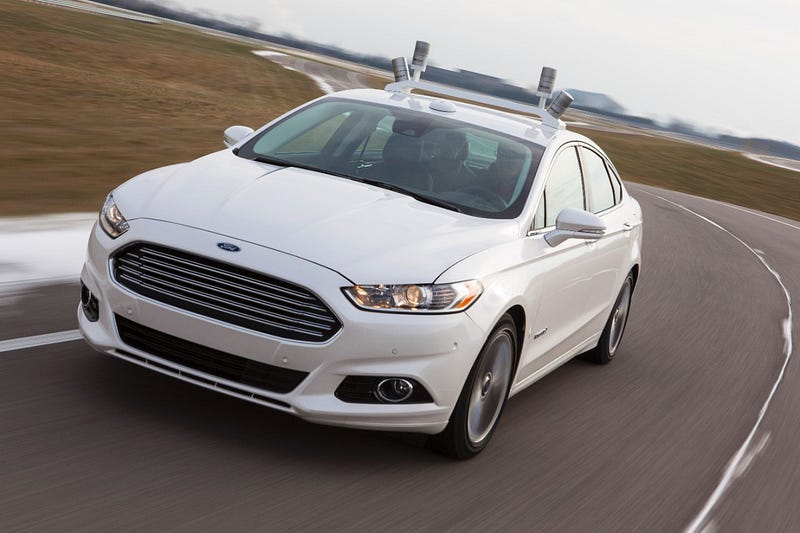
The virtual driver itself lives in a Linux cluster that sits in the trunk of the test vehicle. Williams said that the cluster is five nodes running Ubuntu Linux. Multiple nodes are required to handle all the sensor input and process it quickly enough to make driving decisions. Asked why there are five nodes in the cluster, Williams was succinct. “That’s all that would fit in the trunk,” he said.

Also, this:

Williams was quick to explain that assisting a human driver and creating a virtual driver are two distinct problems that share far less, electronically or conceptually, than it might seem at the outset. He said that the two programs are distinct, with separate management and development teams. [emphasis added]

Ford’s media release on the project is here.


Originally published at www.davidincalifornia.com on January 18, 2016.

$4 BB for Self-Driving Cars

President Obama’s 2016 State of the Union address included a proposal to spend $3.9 billion on driverless car initiatives over the next 10 years.

The headline number is a little bit like an NFL contract figure — eye-popping but of questionable veracity, since Obama will only be president for 1 more year. In fact, even if the next president was also committed to the program, it still wouldn’t be a sure thing, because in year 10 there will be yet another president.

And who knows, maybe in five years self-driving cars will be a done deal and the idea of spending government money promoting them will seem silly.

So while the financial figure is welcome, the real benefit might be in the regulatory accommodations.

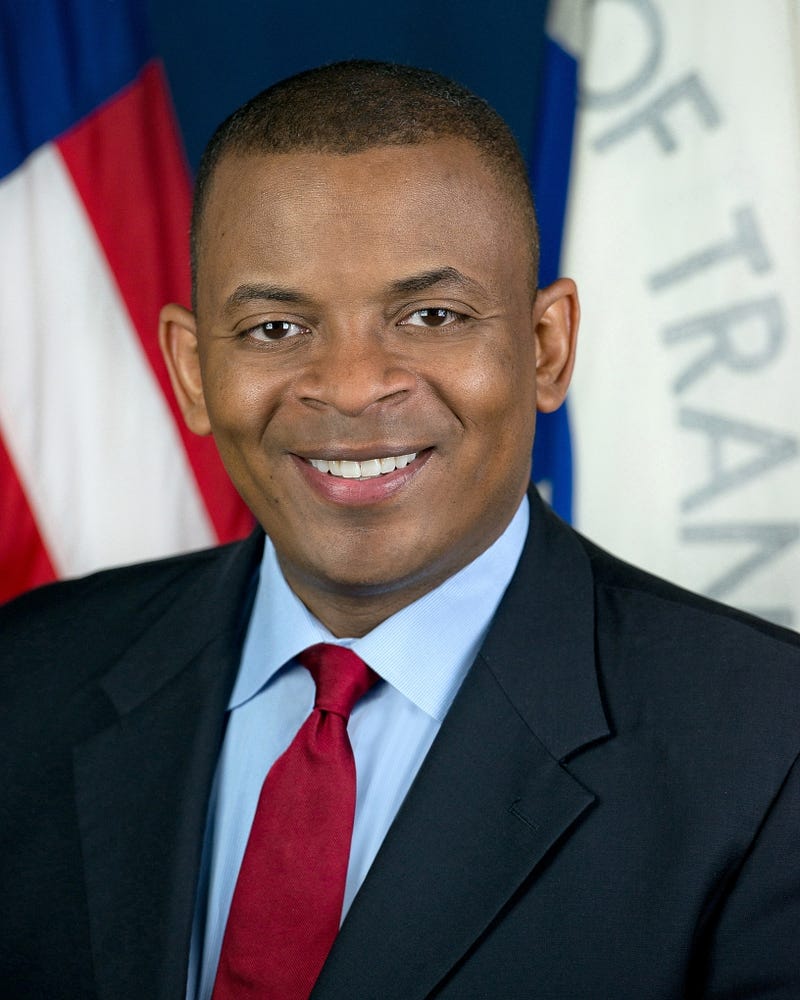
U.S. Transportation Secretary Anthony Foxx is making self-driving cars a big part of his final year in office.

“NHTSA said it will consider granting exemptions from regulations to automakers for up to 2,500 self-driving vehicles for on-road, real-world testing.”

There is a lot private money pouring into autonomous vehicles. What might need more than government money is government permission.


Originally published at www.davidincalifornia.com on January 15, 2016.

Disengagement

The California DMV has just released a series of reports summarizing the data on self-driving car “disengagement”. That’s the term for when a human has to take over driving from the computer in an emergency.

The California DMV gets this data as part of the self-driving car licensing process, which requires car companies to report various data to the state.

The DMV released reports for each company testing self-driving cars. According to the report on Google:

Over the course of the testing — which took place between September 2014 and December 2015 — the vehicles covered 523, 958 miles. Google’s vehicles covered the majority of that — 424,331 — and the Google’s autonomous technology handed control to the driver 272 times and a test driver felt compelled to intervene 69 times.

The days of self-driving cars are getting ever-closer, but they’re not quite there yet.


Originally published at www.davidincalifornia.com on January 13, 2016.

Driving in the Snow

Big news in the self-driving car world from Ford Motor Company:

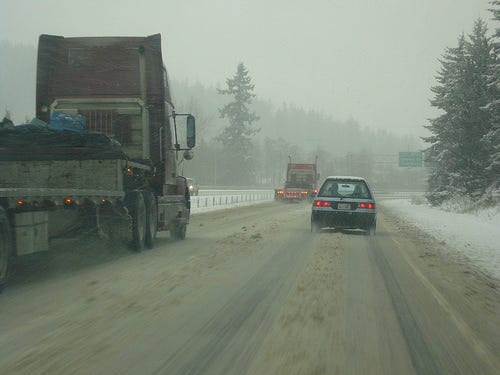
Ford Motor Company (NYSE:F) is breaking away from other autonomous car developers in a major way. The company is testing its self-driving car in snow condition, thus becoming the first of autonomous vehicle developers to take on such a challenge. Others such as Alphabet Inc (NASDAQ:GOOG)’s Google have mostly been testing their autonomous vehicle prototypes in dry, sunny weather conditions.

Testing an autonomous car in winter weather presents a greater but necessary challenge. The challenge is that the sensors used to keep autonomous vehicles on the road can hardly work unless the road and the environment of the vehicle are clear for better visibility. However, when it is raining or snowing and the lanes aren’t clear, maintaining a fully autonomous vehicle on the road and within the safety parameters becomes a herculean task.


Originally published at www.davidincalifornia.com on January 12, 2016.

Tesla Summon Feature

Tesla continues to push the boundaries of autonomous driving with its new Summon feature:

Tesla released today the version 7.1 of its software for the Model S and X. The new update includes everything we told you about when Tesla started testing the build with beta testers last month: UI improvements, a new self-parking feature, ‘Driver Mode’ and Autopilot restrictions, but the automaker is also introducing the “Summon” feature, which enables the Model S to drive itself without anyone in the car.

And this:

Once it will be combined with Tesla’s upcoming robot charging station (here’s a video of the prototype), the Summon feature is expected to eventually eliminate any hassle having to do with charging your electric car.

Brave new world.


Originally published at www.davidincalifornia.com on January 11, 2016.