This is an interesting strategy, and suggests a reason that cars will go from being a relatively fragmented industry, to a relatively consolidated, network-effects-driven industry.
There are no huge revelations, but it’s an insightful case study of yet another subset of jobs that self-driving cars will change, although maybe not “disrupt”.
“We do have some plans that we’d like to do in the next few years,” she said. “I think the topic has brought us more questions than answers.”
Questions like:
When will the technology fully be adopted and what impact will it have on traffic flow? How will automated cars and regular drivers interact?
If cars are able to move closer to one another without drivers, how much more capacity will an existing road be able to have? HRTPO says a current interstate lane can handle nearly 2,300 cars an hour. Self-driving technology means maybe 20 or 30 percent more could occupy that same stretch of highway.
Would the technology make future projects currently being planned become obsolete? If so, how does that change funding and project priorities?
How will drivers’ safety be affected?
How does the law adapt to impaired individuals in an automated vehicle? How do cities make up for speeding or parking ticket revenue if they become a thing of the past?
What happens to land use, especially parking, if the cars can store themselves in less-dense areas? Will people move farther away from work if they don’t have to pay attention during a commute?
What will it mean for long-term deals like the 58-year tolling agreement between the state and Elizabeth River Crossing to run the Midtown and Downtown Tunnels? A spokesperson said the contract doesn’t mention any stipulations for what would happen if self-driving cars change transportation, but that doesn’t mean it couldn’t be amended in the future.
The Motley Fool has published a list of important numbers for self-driving cars.
Many of these numbers are familiar for industry followers. Google has 53 self-driving cars, that travel at 25 mph, etc.
However, two number stand out.
6 states currently permit autonomous vehicles. However, several more states, like Virginia and Texas, state that autonomous vehicles are allowed by default. Perhaps I am biased as a Virginian, but I suspect development may shift to those states with the fewest restrictions.
The other number that stands out is actually an inequality. “61,883 < 730,000”. Actually, 61,883 <<< 730,000.
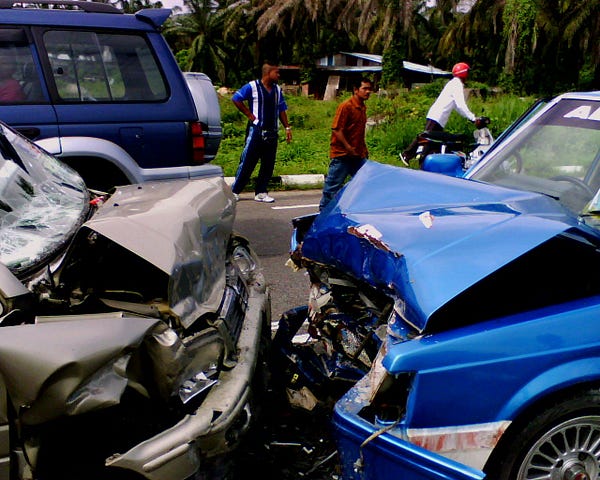
The Motley Fool does a good job putting those numbers in context. In the last six months, Google vehicles have been involved in one fender-bender per 61,883 miles. The national average, however, is 730,000. Which indicates that human-driven cars are much less likely to be involved in accidents than Google cars.
There are a few considerations, to be sure. For one, Google cars have never been “at fault” in these accidents. It’s always been the driver of the other car who has been at fault.
Also, Google has to report all of its accidents, whereas many human drivers cause minor accidents and never report them.
Nonetheless, the huge disparity in these numbers indicates that Google cars may need to get less accident-prone before they are released to the general public.
Since the announcement that Ford and Google are setting up a partnership, there has been relatively little news as to what that partnership will entail.
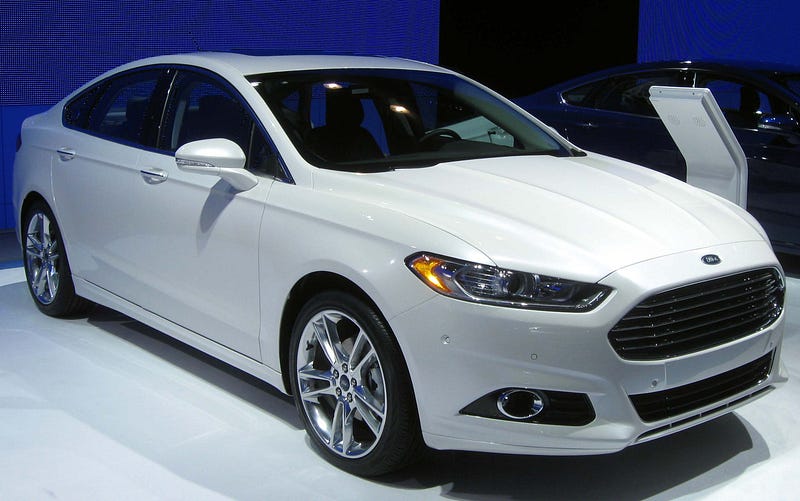
There has been some recent speculation that Google will work with Ford to turn the Fusion into the first mass-market autonomous vehicle.
By using Ford-built vehicles, Google would save billions in development costs. It would not have to design, build, test, manufacture and validate cars for safety and emissions. A deal would free the tech giant to focus on developing the automated driving software in use in a fleet of 53 self-driving bubble cars on the road in California and Texas. Those 53 cars, by the way, were assembled in Detroit by Roush Enterprises, a supplier closely aligned with Ford.
Devices like the Nexus phone series provide a model for how such a partnership would work. Google would provide the specs, and the partner would do the manufacturing.
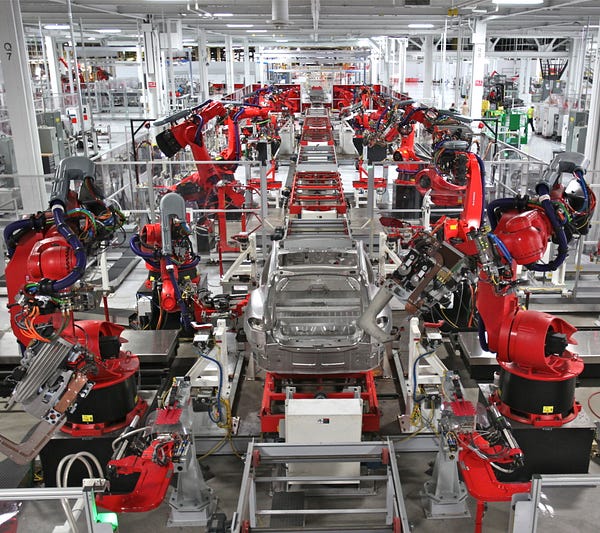
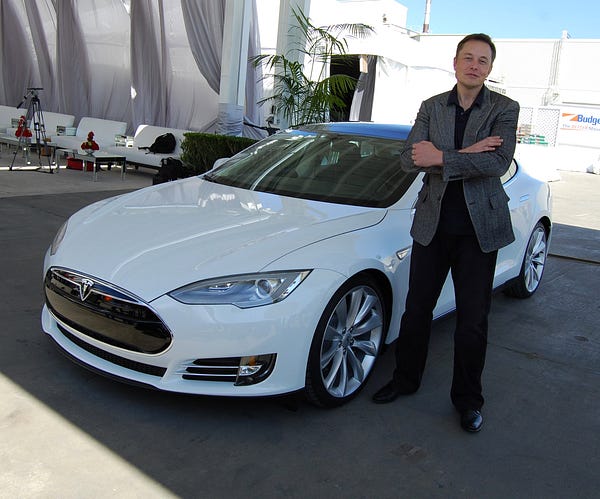
Musk’s company will probably be able to build and deliver roughly 50,000 vehicles this year. Next year, the total could get close to 75,000–100,000. But these are pretty small totals compared with the major players. Ford and GM build that many cars in a month and could easily assemble far more, if the market demanded it.
On yet another hand, however, Tesla’s new Nevada gigafactory is huge and holds space for all those manufacturing employees.
The article appears to be essentially a re-print of a press release by an industry research group called Vision Systems Intelligence, but it’s a pretty good press release.
Controls
Elektrobit and Vector Informatik
Processing
Renesas, NXP, NVIDIA and TI
LIDAR
Quanergy, Phantom Intelligence, TriLumina, and LeddarTech
Image Sensors
Toshiba, Sony, ON Semiconductor, and Melexis
Safety
QNX
Simulation
Mathworks, National Instruments, dSPACE, and Realtime Technologies
The development of self-driving cars is one of the great stories for academic engineering departments of the last twenty years. While the cutting-edge of software development and research has moved to open-source and commercial projects, robotics is an area where university researchers have made huge contributions, arguably the dominant contributions.
It feels like that dynamic has changed, though, as more and more companies pour resources into autonomous driving technology. Universities can’t keep up.
It’s telling that my first though was, “this probably isn’t relevant”. As great as the Cambridge technology is, and it may be more cutting-edge than anything any commercial vendors are doing, it must be so far from commercialization.
Elon Musk recently made the point that getting an autonomous vehicle to work for one team is a whole different animal than getting it to work in the wild, with millions of customers. He wasn’t talking about academic labs at the time, but he probably could have been.
The news is apparently leaking in advance of the Consumer Electronics Show in January, where the announcement will be made official.
Ford has been building out its own city — MCity — to test self-driving cars, so they are an obvious choice for Google.
It will be interesting to see whether Ford manages to lock up Google’s software — similar to the way AT&T locked up the iPhone for several years after launch — or whether Ford is merely one of many partners with whom Google works.
Elon Musk makes the important point that getting self-driving technology to work 99% of the time is much different than getting self-driving cars to work 99.99999% of the time.
Nonetheless, this seems pretty impressive. I don’t think I’d be worried if I were MobilEye or Tesla, but I am impressed by George Hotz.