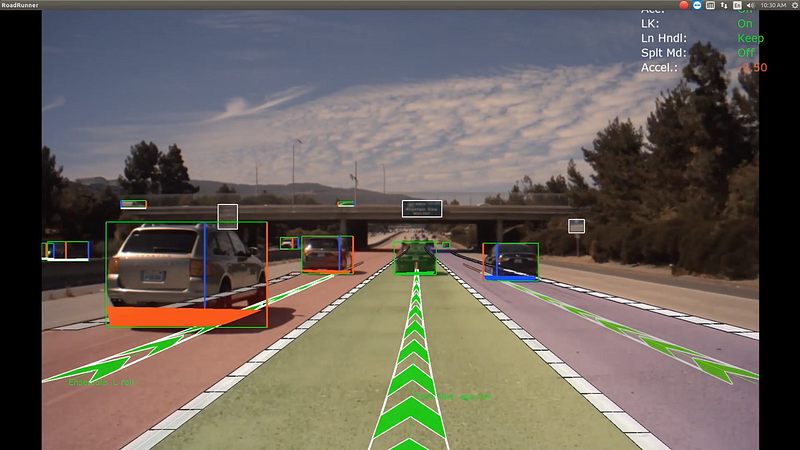
DRIVE Labs is a really nice series of lessons about NVIDIA’s deep learning approach to autonomous vehicle development. They have about twenty short videos, each accompanied by a longer blog post and dedicated to specific aspect of self-driving.
The videos are hosted by Neda Cvijetic, NVIDIA’s Sr. Manager of Autonomous Vehicles.
I particularly like this video on path prediction, which is an area of autonomous technology that really fascinates me.
NVIDIA is most famous for producing graphical processing units, which are useful for both video games and deep learning. As such, NVIDIA really specializes in applying neural networks to autonomous vehicle challenges.
One of the best developments around self-driving cars in the last few years is how open companies have become in sharing their technology, or at least the result of what their software can do. It’s a lot of fun to watch.
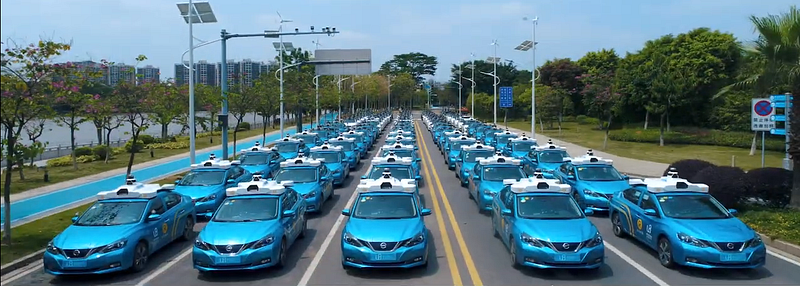
Chinese startup WeRide recently shared that, by its measurements, testing in Guangzhou, China, is thirty times more efficient than testing in Silicon Valley.
“The comparison between Guangzhou and Silicon Valley is pertinent to other self-driving operations, which have to consider where to test. Many self-driving car companies, including Waymo, have focused their operations on relatively favorable geofenced locations, such as Phoenix, Las Vegas, and Silicon Valley. In these areas, a combination of sunny weather, wide streets, and good infrastructure helps the programs progress.”
In 2016, when I was starting to build Udacity’s Self-Driving Car Engineer Nanodegree Program, it was so hard to find a good vehicle simulator to use. And the simulators that did exist had really bad graphics. They were like 1980s video games.
We wound up programming our own simulators with the Unity gaming engine, just because we didn’t have any other options.
Fast-forward to 2020 and there are so many amazing, photo-realistic simulators on the market.
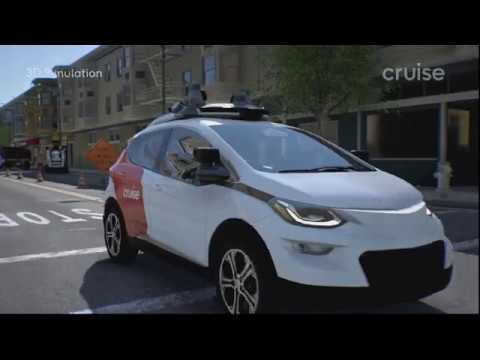
This Cruise video shows their simulator. I first started watching while only half paying attention. It wasn’t until halfway through the video that I realized I was watching a simulator.
The blog post describes how Waymo uses deep learning to tackle the challenging problem of predicting the future. Specifically, Waymo vehicles need to predict what everyone else on the road is going to do.
A model-based approach relies on our knowledge (“model”) of how actors behave. A car turning left through an intersection is likely to continue turning left, rather than come to a complete stop, or reverse, or switch to a right-turn.
A data-driven approach uses machine learning to process data from real world-observations and apply the resulting model to new scenarios.
VectorNet is a data-driven approach takes relies heavily on the semantic information from its high-definition maps. Waymo converts semantic information — turn lanes, stop lines, intersections — into vectors, and then feeds those vectors into a hierarchical graph neural network.
I’m a bit out of touch with the state-of-the-art in deep learning, so I followed a link from Waymo down a rabbit hole. First I read “An Illustrated Guide to Graph Neural Networks,” by a Singaporean undergrad named Rishabh Anand.
It was a longer rabbit hole than I anticipated, but this talk was just right for me. It has a quick fifteen minute review of CNNs, followed by a quick fifteen minute review of graph theory. About thirty-minutes in she does a really nice job covering the fundamentals of graph neural networks and how they allow us to feed structured data from a graph into a neural network.
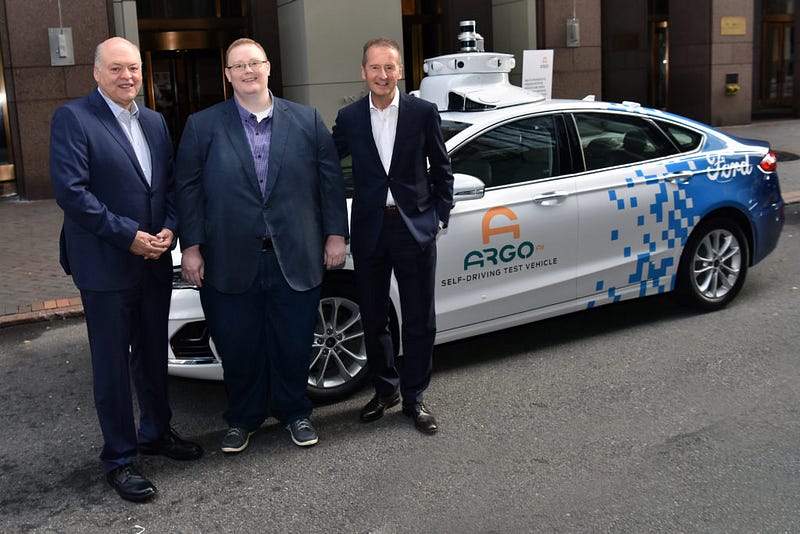
Wired has a recent and very flattering profile of Brian Salesky, founder and CEO of Argo, Ford’s self-driving car venture.
The piece has more information than I’ve read elsewhere about the early history of the Google Self-Driving Car Project, now known as Waymo. There’s also a good description about the friendship and rivalry between Salesky and Aurora CEO Chris Urmson.
I confess I was previously unfamiliar with the term “middle mile”, which apparently refers to the fixed routes between centralized distribution centers and dispersed retail locations.
The advantage, I take it, is that “middle mile” routes are limited and fixed, which would dramatically simplify technical challenge.
The box trucks should also be simpler to handle than articulated tractor-trailers.
The middle “swivel” point between a tractor and trailer adds a huge degree of complexity for control systems — not only laterally, but also vertically. The back of the trailer literally bounces up and down.
Box trucks are essentially rigid bodies in that way, like cars.
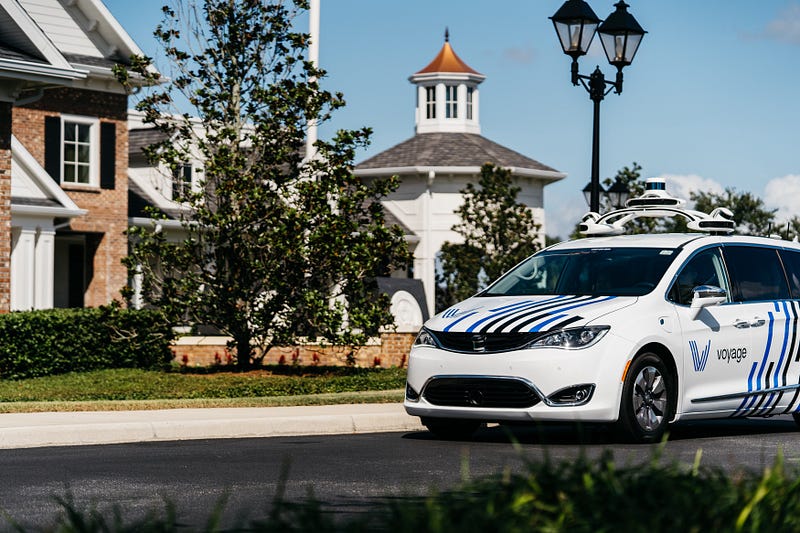
One of the big questions in autonomy is how and how much it is possible to simplify the technical challenge of autonomy. Tesla approaches this by limiting self-driving mainly to highways. Waymo limits its vehicles to specific geofences in a few metro areas. Voyage tackles this deploying relatively low-speed vehicles in gated retirement communities. Other vehicles work on sidewalks, or farms, or warehouses, or mines.
Gatik is betting that “middle mile” logistics will be a favorable niche.
I’d love to see some way to quantify how simple an environment is.
“That was a clear moment in time where the whole industry went from being a bull market to a bear market,” Mr. Cameron said. “Covid has taken us even further into the bear market.”
The Times closes with the high capital needs of self-driving companies.
With autonomous vehicles, “you may find yourself in a company that requires billions of dollars of capital,” with no clear timeline for building a large business or seeing a return on the investment, said Aaron Jacobson, a partner at NEA.
This is true, and it is one reason robotics companies are not super attractive generally, at the moment. But it would be a mistake to get too spooked by the industry’s capital needs.
The other side of that coin, as Warren Buffett has preached for years, is that capital intensive businesses offer the opportunity to deploy huge amounts of capital with attractive returns. Capital requirements also form a durable moat around the business.
What this tells me is that direct to learner businesses are very attractive. They can serve a very large number of learners very efficiently, they can lightly monetize and yet produce massive revenues because of their scale, and they don’t require a huge amount of capital to build.”
Autonomous vehicles and online education are both attractive industries, but they are very different industries, with distinct capital needs. Companies in each industry have to tailor their business plans to that reality.
I remember less than four years ago meeting the whole Voyage team was at Udacity and had never worked on self-driving cars. Now they’re following the same path and building on the same platform as Waymo.
This team is truly an inspiration that if you work hard you won’t believe what you can accomplish.
And check out this video!
Got 2 minutes to kill? Nerd out with us by watching our self-driving car navigate:
The Detroit Free Press reports that new features are coming to GM Super Cruise. Specifically, Super Cruise will now perform lane changes “on demand”, and will negotiate highway interchanges.
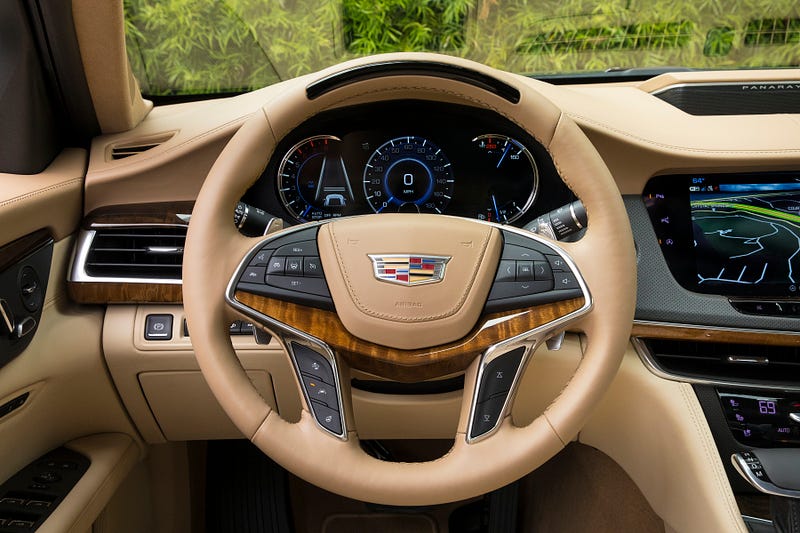
More significantly, Super Cruise will roll out to the Cadillac Escalade and the Cadillac CT4 and CT5 sedans.
Super Cruise is often touted as the closest competitor to Tesla Autopilot, and maybe even a superior alternative.
Maddeningly, however, for years Super Cruise has only been available on top-of-the-line Cadillac CT6 models. As a result, it’s really hard to find a car that has it. I’ve never been in a car equipped with Super Cruise.
The Free Press also quotes GM that Super Cruise has been activated for 5.5 million miles since it launched in 2017. That means Waymo has driven more Level 4 miles since 2017 than Super Cruise has driven in something approximating Level 3. Tesla Autopilot, which has logged billions of miles, has orders of magnitude more data.
Nonetheless, Super Cruise has the potential to roll out to the larger GM model base and begin recording data at a level far beyond anything we’ve seen so far — from any manufacturer.
The company was founded by Stanford PhD and AI wunderkind Jesse Levinson, along with Tim Kentley-Klay, a brash Australian designer.
For years Zoox was highly secretive about its technology and goals, even by the standards of the tight-lipped self-driving car industry. The Zoox website was a single HTML page sporting only the company logo.
In 2018, Zoox pulled back the curtain with awesome highlighting the its autonomous capabilities and Mad Max design ethos.
Only a month later, Kentley-Klay was ousted just after Zoox raised $500 million in venture funding. Eventually Zoox recruited Intel Chief Strategy Aicha Evans as CEO.
All of which is to say, Zoox has been quite a story.
Apparently the company terminated contractors and laid off 10% of its workforce in light of the COVID pandemic. Now it seeks either further venture capital funding, or an acquirer.
The status of being publicly for-sale is reminiscent of Drive.AI, another prominent (although much smaller) self-driving start-up. That firm was widely reported to be shopping for a buyer during the first half of 2019. Apple ultimately acquired the startup in a firesale, days before bankruptcy.
All that said, a few qualifiers.
The stories I’ve read seem to make a lot of hay that Zoox has hired an investment bank, Qatalyst Partners. Investment banks usually do spell “sale”. But they can also spell “investment”. Particularly for a company of Zoox’s size, the sources of private investment change from traditional venture capital firms to larger institutional funds that work more regularly with investment banks. Zoox may simply be working on a really large funding round, which would go hand-in-hand with also beating the bushes for any potential acquirers.
Also, the stories I’ve read indicate Zoox plans to hire back laid off employees and contractors once coronavirus subsides. That’s easy to say now, of course, but it’s worth keeping in mind that perhaps what looks bad is merely a bump in the road.




 David Silver