“From a purely technical perspective, it’s unlikely that Uber’s in-house mapping efforts will be able to compete with the massive scale of Waze’s crowdsourced information. Waze is something like the Wikipedia of mapping with, as of last year, almost 300,000 editors worldwide contributing regular updates — all for free.”
Of course this is to some extent a matter of options. Uber has raised enough money to at least attempt building its own features, whereas Lyft is more cash-constrained.
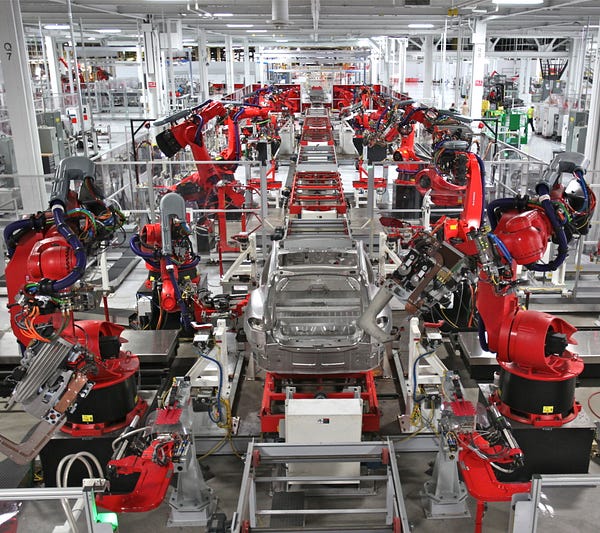
Musk’s company will probably be able to build and deliver roughly 50,000 vehicles this year. Next year, the total could get close to 75,000–100,000. But these are pretty small totals compared with the major players. Ford and GM build that many cars in a month and could easily assemble far more, if the market demanded it.
On yet another hand, however, Tesla’s new Nevada gigafactory is huge and holds space for all those manufacturing employees.
Last weekend, my wife and I returned home to the Bay Area after a weekend getaway to New Mexico.
Because of flight schedules, we landed at Oakland International Airport, even though our home is on the Peninsula, and much closer to SFO.
In the past, our arrival at Oakland would have necessitated a long trek back home on public transportation — airport monorail to the BART system, BART system all the way around the Bay to Millbrae, and a cab home from Millbrae.
That trip costs ~$30 for two people and takes probably 75 minutes. The transfers all involve lugging backs around train terminals.
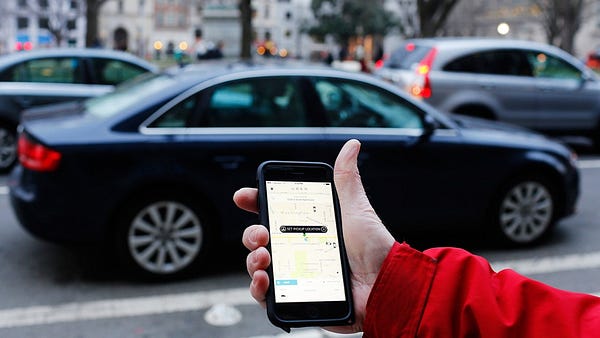
This weekend, however, we hailed an Uber at the airport drop-off lane, and it took us home for $42 (including tolls~).
The Uber trip took us half the time, felt five times as comfortable, and was only $10 more expensive.
Small victories, but the world is changing for the better.
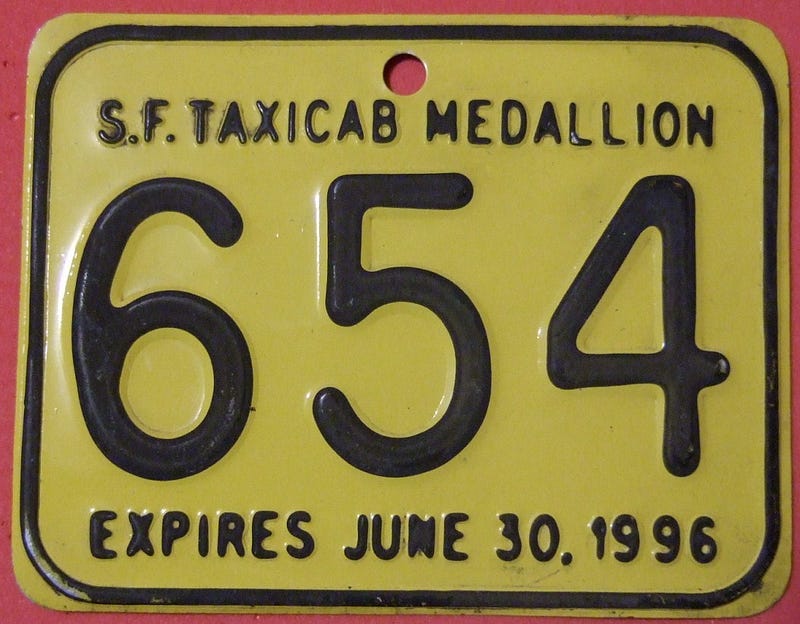
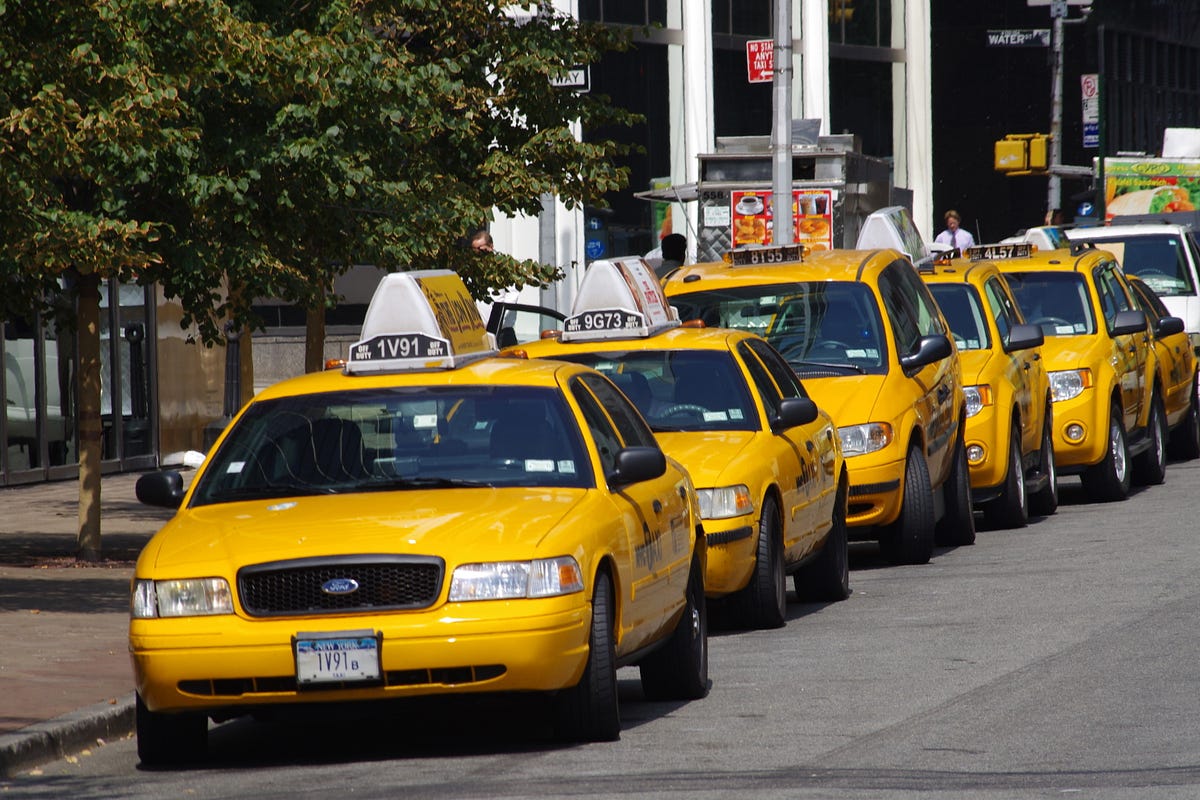
Other medallion lenders that have acknowledged being blindsided by the rapid rise of San Francisco-based Uber in New York City include Valley National Bank of Wayne, which said it is “closely monitoring” a $159 million portfolio of medallion loans; New York City-based Signature Bank, which added $2.4 million to its loan-loss reserve in the third quarter, partly due to concerns about its $600 million medallion loan portfolio; and Citibank, which is suing a New York City taxi mogul over alleged defaults on medallion loans.
This of course is due to Uber’s defeat of occupational licensing, not autonomous vehicles. But I think these lenders are an interesting example of the first- and second-derivative business that collapse when an industry gets disrupted.
What will the autonomous vehicle corollaries be? Auto insurance? Auto lending? Auto repair? Fast food might be an interesting example, if autonomous driving changes the cost/benefit economics of drive-through windows.
In GPS World, Kevin Dennehy makes the case that Uber’s recent partnerships and acquisitions have set it up beautifully to take the lead in autonomous vehicles.
Uber has made big moves implementing location technology by signing a deal with TomTom, buying Microsoft’s mapping technology, and outright purchasing deCarta this year. The company is working with Carnegie Mellon University in Pittsburg to develop autonomous vehicle technology.
And this:
“Because the continued success of [Uber’s] business depends on it, and they have the money to spend on it to gain a competitive advantage,” explained Scott Frank
Think of this as Uber diversifying it’s risks on the margin of mapping. Now Uber partners with Alphabet/Google, Apple, and TomTom.
It also highlights the complicated relationships at the automobile-technology intersection, particularly when it comes to giant companies like Alphabet and Apple.
A few weeks ago, I published a Friends and Enemies matrix, laying out the landscape for autonomous vehicles.
In that Matrix, I marked Uber as friends with Apple and Alphabet/Google.
Maybe that isn’t quite right.
I was thinking largely of Apple and Google as potential autonomous technology suppliers to Uber’s car network.
However, both Apple and Google touch Uber at a several different points, which complicates the relationships between the companies. It’s certainly conceivable that Uber could have a positive relationship with one division of Apple or Google, and an acrimonious and competitive relationship with another division.
Autonomous Driving: All three companies are developing self-driving technology, but for different reasons. Uber is motivated to lower the costs and increase the scalability of its transportation network. Apple is looking to sell vehicles. Google would like to become the operating system of all vehicles.
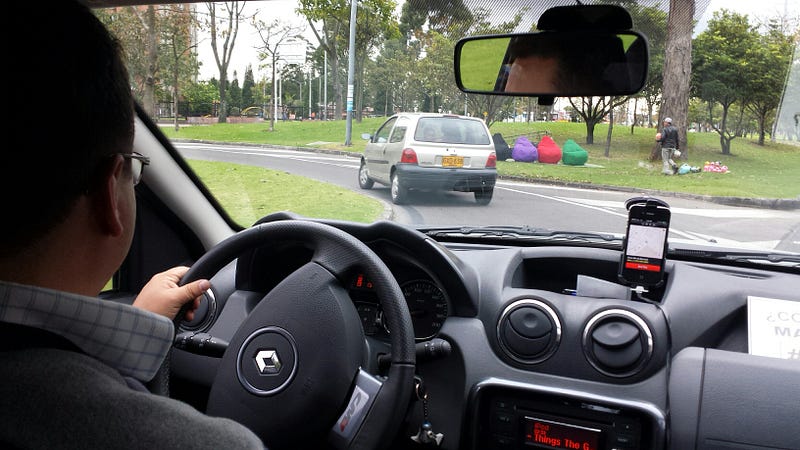
Mapping: Uber utilizes mapping technology provided by Apple and Google, and now by TomTom, as well. There are also reports of Uber starting its own mapping effort.
Mobile OS: Uber relies exclusively on Apple’s iOS and Alphabet’s Android for Uber customers to hail rides. Ditto for Uber driver apps, which are also where the mapping comes in (at least for now).
There are probably a few other margins along which Google, and maybe Apple, touch Uber. I wouldn’t be surprised if Uber uses Apple Macbooks to do work powered by Google Apps for Business. It makes for very complex relationships.
Also, and like my note about NVIDIA yesterday, it’s a little hard to figure out when to use “Alphabet” and when to use “Google”. Maybe that will clarify over time.
Cadie Thomson writes about a future in which fewer people own cars (note the headline overstates this a bit):
Industry experts predict car ownership will dramatically decline as cars become more automated. The notion being that people will instead take self-driving taxis hailed via app to get from point A to point B instead of owning their own car.
This is a scenario with which I am familiar, as Kristina and I spent about 18 months as a one-car household. Those 18 months can be broken up into 12 months of relative ease and 6 months of struggle.
The easy part was the first twelve months, when Kristina took public transportation to work in San Francisco. That meant our car was left to me five days a week. On weekends we needed to share, which sometimes got complicated but was mostly fine. Note that with a pair of kids that could have been a lot messier.
Even with just the two of us, though, things got frustrating when Kristina switched jobs and needed the car to commute four days per week. Then it was me who was left car-less. Most days I didn’t need a car (home office), but on days when I had meetings or errands that couldn’t be pushed, I was forced into a combination of Uber, Enterprise, ZipCar, biking, and public transportation.
Here’s the thing — even after paying for those alternatives, we probably saved money only having one car. But it was a huge pain.
Every time I needed to go somewhere, I did the mental calculations of how much each option would cost, how much time it would take, would I need a car again later, and so on.
Those calculations are the worst part about renting. Much better to subscribe to an all-you-can-ride service where the marginal cost of a ride is $0.
Even the subscription service could be a pain, though. Hailing an Uber is so much better than hailing a cab, but it’s still less convenient than walking out to the driveway and getting in the car.
Maybe that convenience cost flips for urbanites, though. For them maybe it’s easier to walk out onto the street and wait for an Uber, rather than to get into the parking garage and navigate out.
In sum, renting seems like too much of a pain to me, on an individual level, at least.
Subscription services seem promising, if the network is dense enough and the trade-offs come out right.
But there is a huge convenience factor to having a car in the driveway, ready to go whenever I need it.
Swedish automotive group Volvo Cars Wednesday urged U.S. federal authorities to impose nationwide guidelines for self-driving cars, vowing to accept full liability should one if its cars be involved in an accident while in autonomous mode.
Musk, who spoke Tuesday at the Automotive News World Congress conference, said he expects the lack of clear federal regulations covering self-driving cars could delay their introduction until 2022 or 2023.
These are smart guys, and I’m sure they’re aware of Uber’s success vis a vis regulators.
To at least some extent, presumably they are angling for regulations that will reduce their own liability or box competitors out of the market.
But, if companies can get driver-less cars into the hands of consumers before the regulations clamp down, then those consumers will wind up powering the driver-less car lobby.
To take just one example, a key market segment for driver-less cars will be the elderly. And the elderly vote. A lot.
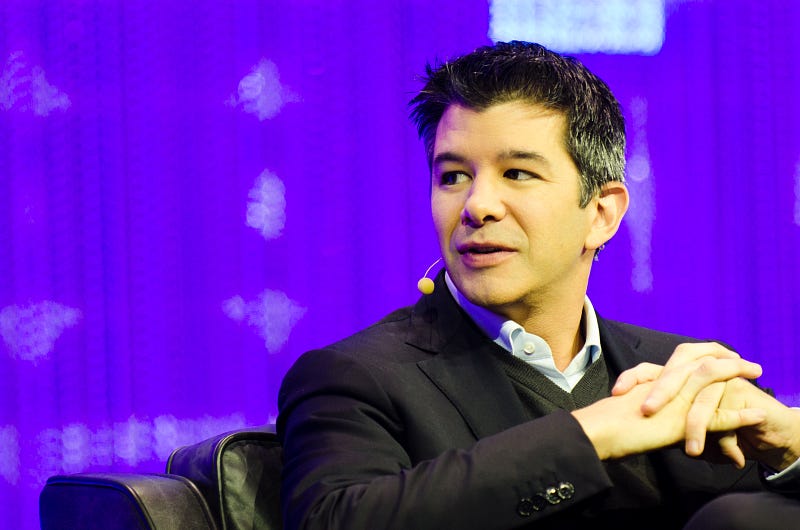
Uber CEO Travis Kalanick has been vocal about the company’s desire to move away from human drivers and toward self-driving cars, as soon as possible.
That day is still in the future, though, and for the moment, Uber is stuck in a globe-spanning collection of fights with taxi commissions and city governments. Uber has mostly been able to win these fights.
But presumably the advent of self-driving cars will lead to round two of these regulatory battles, and with the current Uber drivers standing in opposition to self-driving machines.
I hope and expect the forward march of progress to continue, but it is ironic that in order to prevail today, Uber is setting up a potential problem for tomorrow.



 David Silver