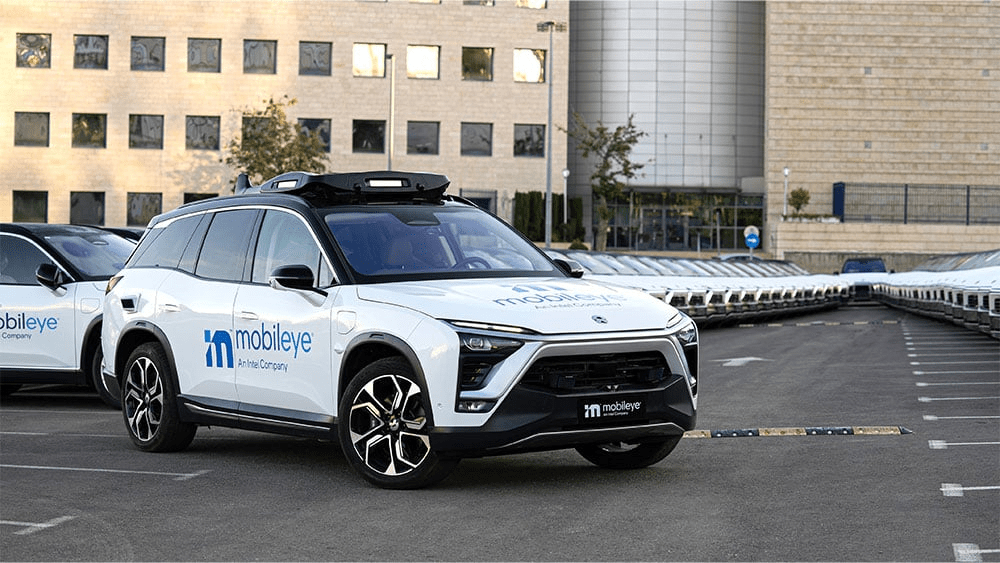
Mobileye is now a public company, under the symbol MBLY.
Perhaps the high water mark of autonomous vehicle funding was Intel’s $15 billion acquisition of Mobileye in 2017. Other transactions were more speculative, like GM’s $600 million acquisition of Cruise, or Uber’s comparable acquisition of Otto, or Ford’s investment in Argo, or Waymo’s multiple outside funding rounds with valuations in the billions and then tens of billions of dollars.
But no single transaction was as big as the Intel acquisition. That one might be bigger than all the other transactions combined.
Five years later, Intel is spinning Mobileye back out, as a public company, at nearly the same valuation as the 2017 purchase price.
This is not a great look for Intel or for the autonomous driving industry, and plays right into a waveofstories about how much cash autonomous driving companies have consumed over the last decade.
But amid all the skepticism, it’s worth looking at Mobileye’s fundamentals. The company has 70% market share in Advanced Driver Assistance Systems (ADAS), with $1.4 billion in revenue, growing something like 30% year-over-year.
That’s a pretty great business. I imagine the market will come around on it.
Aurora has a great blog post up about their upcoming Aurora Horizon service, which will operate with their upcoming self-driving trucks. In particular, the post features a great graphic describing “the middle mile” of autonomous trucking.
“…our customers will drop off and pick up their trailers at our terminals, which are positioned at major freight hubs along our launch lanes, and the Aurora Driver will take care of the long hauls.”
The blog post further describes the inspections and documentation that are required before and after the journey. At the end, Aurora mentions the long-term plan to cover the “first mile” and “last mile”, as well.
“In the future, as we mature our technology, we plan to transition to an end-to-end driver-as-a-service model—where Aurora Driver-powered trucks move customer loads to and from warehouses, and ultimately from distribution centers to stores…”
All of this is subject to change, of course. Since Aurora is a public company the blog post finishes with some boilerplate legalese about the future being unknowable:
“…These statements are based on management’s current assumptions and are neither promises nor guarantees, but involve known and unknown risks, uncertainties and other important factors…”
But as a summary of how an important player in the autonomous trucking industry thinks the business will look in the near future, this blog post is terrific.
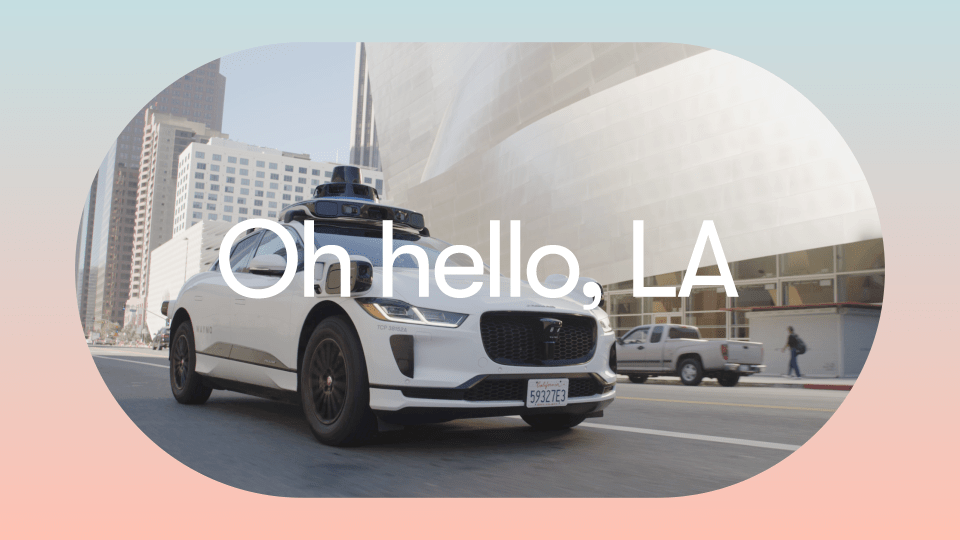
We’ve gotten to know many LA neighborhoods, including Downtown and Miracle Mile, Koreatown, Santa Monica, Westwood and West Hollywood, and we’ll begin driving autonomously in several central districts over the coming months as we prepare to serve Angelenos.
The language hedges somewhat – “begin driving autonomously…over the coming months” leaves a lot of ambiguity about how far along this is and to what extent the rides will be monitored by safety operators, versus fully driverless.
The blog post leans in pretty heavily to the continued uniqueness of Waymo’s Phoenix operation:
Waymo remains the only company operating a fully autonomous, commercial ride-hailing service for passengers round the clock in Phoenix’s East Valley – no NDAs, remote operators or pre-defined pick-ups. We’re the first and only company in the world providing autonomous ride-hail trips to and from an airport (Phoenix’s Sky Harbor), and we drive more fully autonomous miles in the U.S. than any other company.
That distinction in Phoenix is huge. Allowing anyone who wants to show up, download an app, and hail the service is a big step up from a limited test audience.
So far, that progress in Phoenix does not seem to have totally translated to San Francisco. In SF, Waymo still seems to be trailing behind Cruise, in terms of number of riders on the service and how ready the company is to go fully driverless. Although data is hard to come by, as both Waymo and Cruise are private companies running limited service in San Francisco.
How well the Phoenix operation translates to Los Angeles remains to be seen.
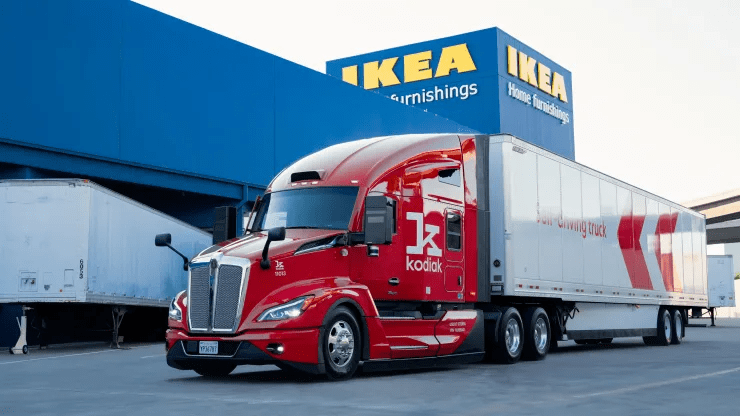
Kodiak just signed a deal to haul freight for IKEA in our self-driving trucks!
At Forbes, Ed Garsten has a great article situating this latest news in the context of Kodiak’s ever-expanding commercial business, hauling freight coast-to-coast. Kodiak has been on a roll.
One of the overlooked aspects of a big win like this is just how much it says about Kodiak’s ability to work with large multinational corporations. Companies like IKEA take their responsibilities to stakeholders – workers, communities, vendors – seriously. These companies typically have a deep set of partner requirements that new partners like Kodiak must meet. Kodiak’s ability to qualify to carry freight for IKEA speaks volumes about the robustness of our performance.
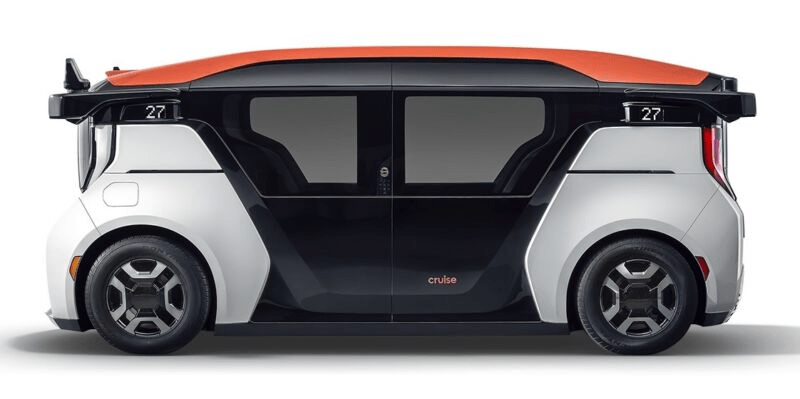
Our purpose-built AV, the Origin, is on track for production! While we eagerly await its arrival for commercial use in the coming months, you may see a human-operated Origin prototype driving on the streets of SF. 👀
I worked on the Origin when I was at Cruise and the vehicle was in pretty early stages. I spent a chilly December week at GM’s Milford Proving Grounds last year, getting the Origin moving autonomously.
If the Origin really is on the road in San Francisco now, or in the near future (the tweet is a little ambiguous), that is awesome progress by Cruise.
The company is on a roll. Eventually, hopefully in 2023, I will be so excited to take my first ride as a paying passenger in the Origin.
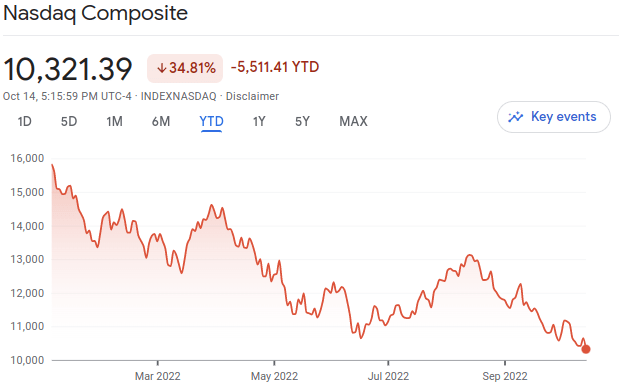
The article features a table of 14 self-driving-related companies that went public, ranging from Quanergy (down 99% since listing) to Arbe (“only” down 50% since listing). For comparison, the Nasdaq is down 35% from its high at the beginning of the calendar year.
On bright side, the article notes that “VCs are still investing.”
Maybe private market investment isn’t as robust as a year or two ago, and the term URINO made me chuckle, but for a startup cash is oxygen. Oxygen is easier to come by in the private markets than the public markets this year.
In a down market, it’s often easier to be private than public, as the relentless and public downward march of a company’s stock price can depress employees and potential new investors.
A year ago, multi-billion dollar valuations on zero revenue, and good-as-cash equity grants to employees, were pretty awesome. In 2022, maybe not so much.
I just watched this terrific tech talk from Lucid Motors CEO Peter Rawlinson. He does a great job explaining both the basics of electric vehicle battery packs and also some of the tricks Lucid has turned in order to push the technology forward.
Rawlinson incorporates just enough basic physics to ground the explanations in reality. I really appreciated that he took time to explain different approaches to battery pack configuration, what the trade-offs were between approaches, and why Lucid took the approach they did.
Kodiak Partners with Werner. The latest in a series of partnerships Kodiak has signed to haul freight for major industry shippers.
CEO Don Burnette in the New York Times. Don discusses where Kodiak is on the road to autonomy, and why trucking is such a good domain for driverless automation.
CTO Andreas Wendel on Austrian TV. In German, so I had to turn on YouTube’s auto-translated captions, which worked well. An interesting window onto how the world outside of Silicon Valley, and even the US, thinks about driverless technology.
GNSS (GPS) as part of Kodiak’s localization stack. Unlike urban self-driving companies, Kodiak uses lightweight, sparse maps for self-driving. These maps are fast to construct and rely much more on GPS than a high-definition mapping solution, which is almost entirely lidar-based.
Don Burnette on Fox Business. Starts with an interesting segue from rail to trucking, and then offers window onto how the investment community thinks about driverless technology. Also touches on recent Kodiak coast-to-coast freight routes.
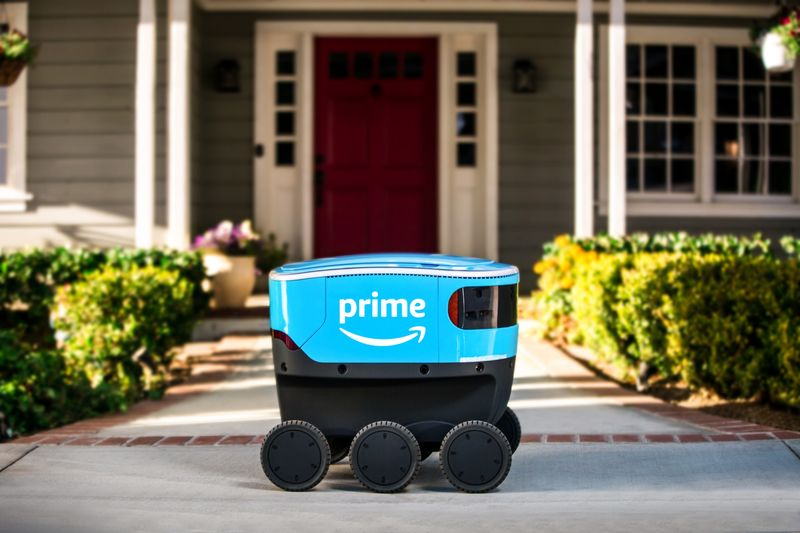
Bloombergreports the demise of Amazon Scout, the delightfully-shaped last-mile sidewalk delivery robot.
Amazon spokesperson Alisa Carroll said the Scout team was being disbanded and would be offered new jobs in the organization. About 400 people were working on the project globally, according to the person, who requested anonymity to discuss a private matter. A skeleton crew will continue to consider the idea of an autonomous robot, but the current iteration isn’t working.
400 people is a pretty huge project – well beyond Amazon’s famous “two pizza” rule. That also raises the question of how big the remaining “skeleton crew” will be.
Bloomberg puts this news in the context of a broader Amazon initiative to reign in far-flung experiments, in light of slower growth in its core business. Amazon is winding down its health care service, among other ventures.
No news on whether Amazon Prime Air drone delivery might be next for cutbacks.