Kodiak Hires Early Career Software Engineers

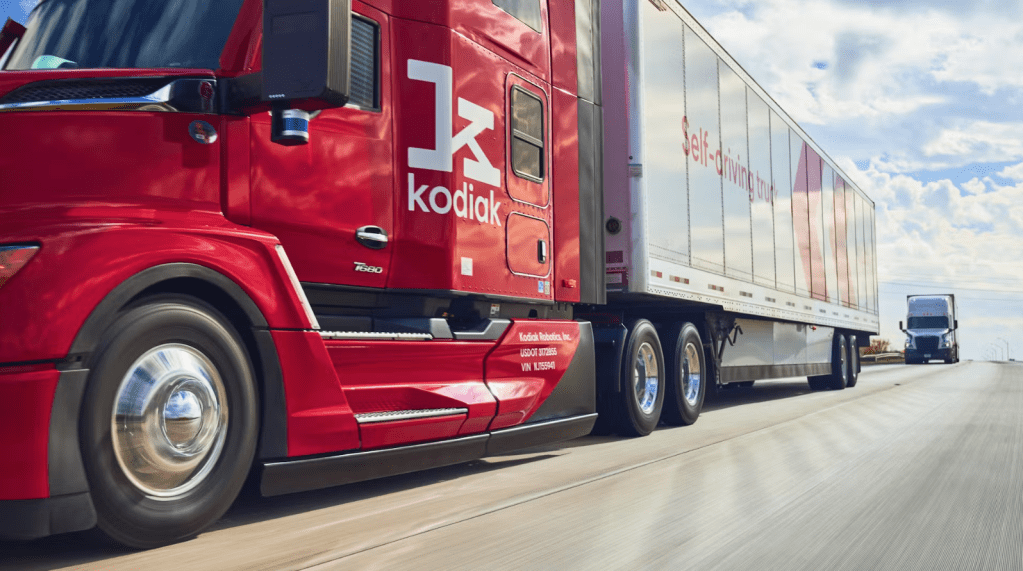
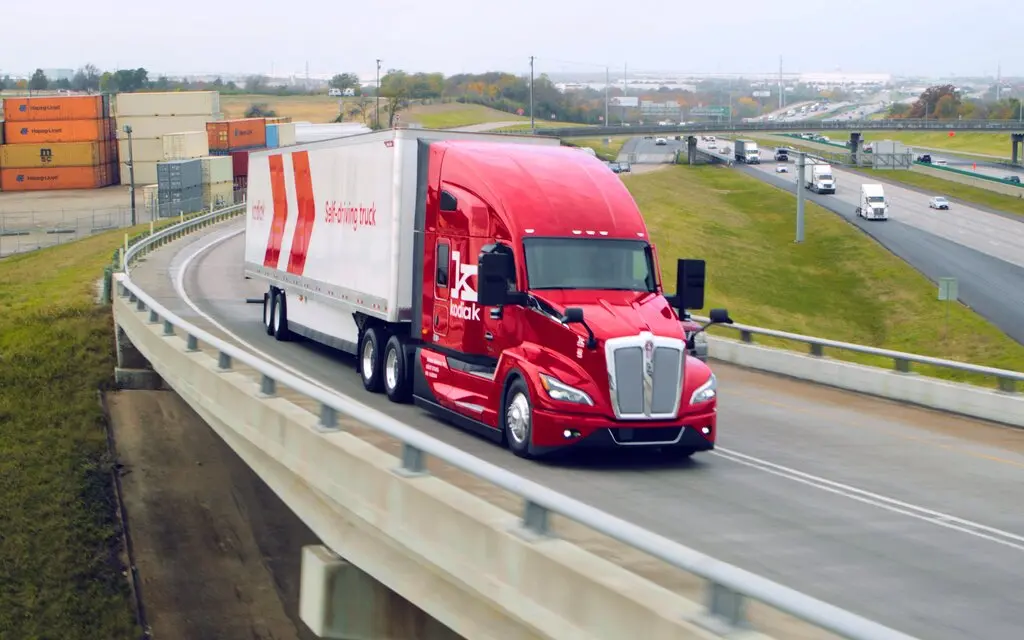
Kodiak put up a job posting recently for early career autonomy and AI software engineers. You should send us your CV and come build self-driving trucks with us!

This posting is specifically for new graduates and upcoming graduates and other engineers very early in their careers. At that stage, people are often flexible and hungry to make an impact. So this job is flexible and high impact, as well. This role is a pipeline to a wide range of our autonomy teams – perception, localization, planning, infrastructure, simulation, and more. The main thing we’re looking for is strong C++ programming ability. Beyond that, we’ll help you find a niche.

A lot has been written recently about the difficulty new graduates have in finding jobs. At Kodiak, we have great opportunities for early career engineers. Join us!

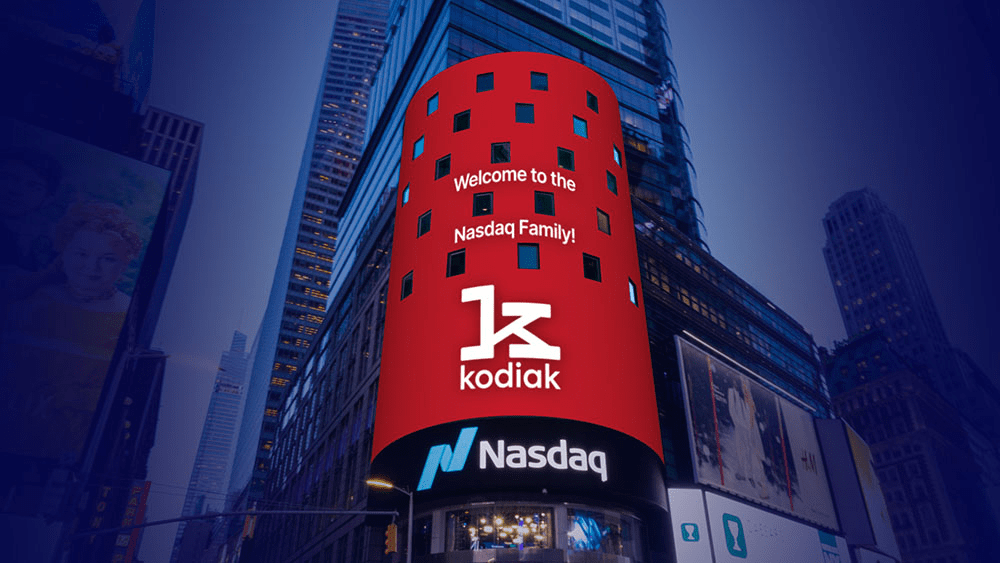
Kodiak To Go Public!

Very exciting news hit the wire this morning!

Here are some quotes from the press release that are especially important to me:

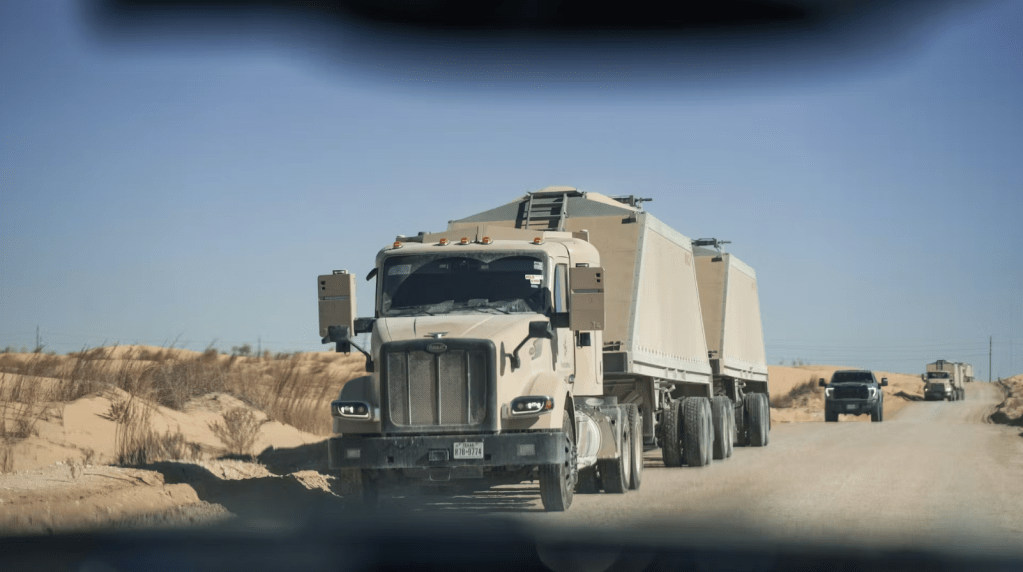
First to Market With Fully Active Driverless Semi-Truck Operations: Through its partnership with Atlas Energy Solutions (“Atlas”), Kodiak-powered driverless trucks have surpassed 750 hours of commercial driverless operations across West Texas’s Permian Basin without a human driver on board. This milestone marks the first publicly announced deployment of customer-owned autonomous semi-trucks in real-world operations. Kodiak expects to support Atlas in further expanding its fleet in 2025; in March 2025, the Company secured a firm commitment from Atlas to order an initial 100 trucks, after exceeding key performance and operational milestones.

New and existing Kodiak institutional investors including Soros Fund Management, ARK Investments and Ares have funded or committed over $110 million in financing to support the transaction alongside approximately $551 million of cash held in trust

Kodiak has secured a firm commitment from its strategic partner, Atlas Energy Solutions (NYSE: AESI), for an initial order of 100 trucks

Additional information about the proposed business combination will be described in the registration statement on Form S-4 relating to the transaction (the “Registration Statement”), which AACT and Kodiak will file with the SEC.

Kodiak Sells Autonomous Trucks!

I’ve now been part of two autonomous vehicle companies that have gone fully driverless – autonomous driving with no safety driver. Kodiak is the first company where we have sold that driverless vehicle to customers.

This is a big milestone. Selling an autonomous vehicle to a customer adds a lot of new complexity. Kodiak no longer dictates where and when the driverless truck operates.

For sure, we have specific domains in which the truck can operate without a driver. But within that domain, our customers determine where to send the vehicle, whether to send it, what it should haul.

This is a new milestone for the entire autonomous vehicle industry, and I’m super-excited to be a part of it!

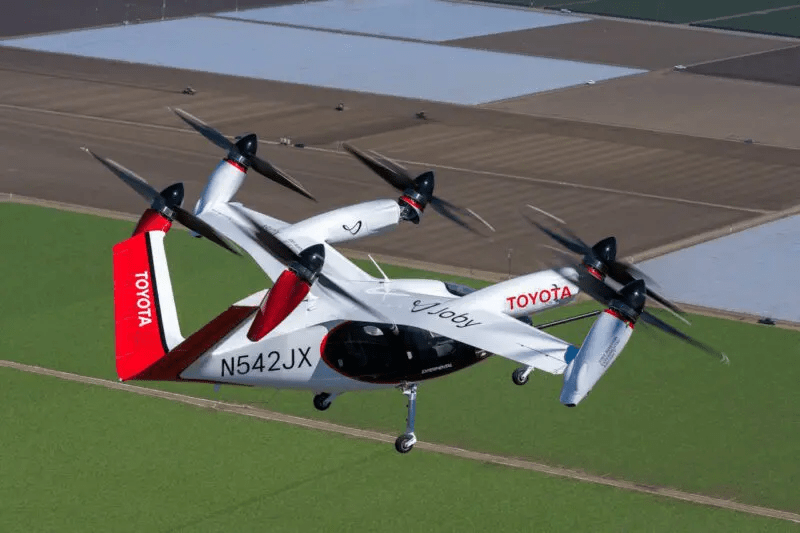
Toyota Commits $500 M More To Joby

Toyota announced that it is committing $500 M to Joby Aviation, above and beyond its existing commitments. The press release states that the this commitment brings Toyota’s total investment to $894 M!

One of the biggest challenges in robotics has been the huge amounts of capital required. Often that capital need leads to selling the company to a larger, established business, as Cruise sold to GM and Zoox sold to Amazon. Alternatively, some companies bring on larger investors without selling the company wholesale, as seems to be the case here.

The announcement is unusually transparent about the mechanics of the investment. The money is split into two tranches, neither of which will be invested immediately. Toyota will invest one tranche before the end of the year, and the other tranche next year. Toyota is subjecting the investments to various milestones, including regulatory approval. This form of capital-staging is typical for large investments, but often glossed over in the big press announcements.

Joby was part of a wave of eVOTL SPACs a few years ago. Those companies made aggressive predictions, which have been hard to meet. But the hardest part of robotics development is raising the money to keep going, and Joby seems to be successful at that. The rest will come eventually.

Autonomous Vehicles Create Jobs

The Chamber of Progress, which bills itself as “a new tech industry coalition devoted to a progressive society,” has a report out about autonomous vehicles and jobs.

There is a long list of “key findings,” which I boil down to:

  • AVs will create a wide range of jobs, from entry-level support staff to high-skill researchers.
  • AV jobs will be nationwide
  • Job displacement due to AVs will be gradual

It’s a trade group, so of course take the conclusions with a grain of salt. But they seem plausible to me. Most obviously, AV rollout has already been gradual (too gradual), so it stands to reason that job displacement will be very gradual, as well. Professional human drivers will continue to have jobs for many decades.

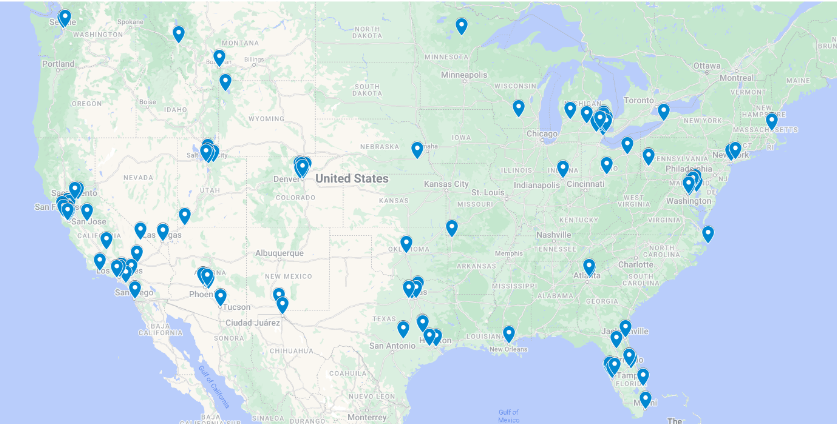
I found the map in the report interesting. There are AV clusters in a lot of places you’d expect – Silicon Valley, Detroit, Phoenix. Also, though, a lot of AV companies and operations in places I wouldn’t expect – Salt Lake City, Washington, DC, somewhere in northern Minnesota, New Orleans, Buffalo.

These things have a way of spreading out to surprising places.

Vision-Language Models

My colleague Shubham Shrivastava posted on Kodiak’s blog about our use of Vision-Language Models. These are deep learning models that build from ChatGPT-like architectures to fuse both visual and textual training data.

Basically, the model can accept as input both images and textual descriptions of those images. This fusion of different types of data generalizes the model to a wider range of inputs. And that generalization helps the model deal with novel inputs that might see on the road.

An illustrative example is that canonical “house on wheels.” Because visual language models “learn” during their training phase that trailers can haul many different things, and because we can use lots of images of houses to also train the model to recognize a house, then the model responds correctly when asked to classify a trailer on the road towing a prefabricated house.

VLMs are at the frontier of AI development, so check out Shubham’s post to learn how we use them!

WeRide Heading To The United Arab Emirates

Uber announced that it will partner with Chinese robotaxi firm WeRide to bring driverless vehicles to the United Arab Emirates “later this year.” If this comes to pass, it would provide much better visibility into the progress of Chinese autonomous vehicle development.

A variety of Chinese autonomous vehicle companies have release impressive demonstration videos, and announced seemingly-large service areas for driverless operations. But it’s been a bit hard for observers outside China to tell how real these accomplishments are. A lot of Chinese services run off of mobile payment platforms that are hard for foreigners to access. And, post-COVID, travel to China from the US has become a bit of a dicey geopolitical proposition.

Even within China the robustness and extent of Chinese AV efforts may be hard to grasp, due to the Communist Party’s censorship of media and communications.

Bringing those vehicles outside of China, to a more open and transparent domain, would be fascinating.

Andreas Wendel On The Road To Autonomy

Kodiak CTO Andy Wendel joined Grayson Brulte’s The Road To Autonomy podcast. They covered two big points – how Kodiak built its autonomy stack to cover diverse domains (highway and dirt roads and off-road environments) and also Kodiaks safety case.

The discussion about safety is particularly interesting. Companies tend to be pretty cagey when discussing their safety case. Andy is also a little circumspect, but I think he is more forthcoming than a lot of competitors I’ve seen. He touches on Kodiak’s probabilistic safety reasoning, the role of simulation vs. on-road miles in building a safety case, and he kind of nods toward some of the internal checklists we use when determining whether a truck is ready to go “driver-out.”

Zipline Platform 2

Zipline has a neat new video that focuses on Platform 2, their new aerial platform for US consumer deliveries.

The platform consists of a small eVOTL that carries and even smaller delivery container on a wire. The small container has a small rotor to allow for hyper-local maneuvering. So there is an eVOTL with many rotors hovering and lowering on a tether a smaller container with a single rotor.

It looks super-cool and pretty complex.

Zipline has been around for quite a while now. They got their start delivering blood to far-flung hospitals in Africa. My understanding was that, for those missions, they used catapults to launch their fixed-wing drones into the air. That helped reduce the amount of battery mass the vehicles needed, since they didn’t need to carry batteries for takeoff.

I wonder whether the decision to go with a VOTL approach for their new Platform 2 comes from technical, regulatory, or business considerations.