Self-Driving Tanks

The US Army spent about a month this summer testing self-driving combat vehicles, and is pretty bullish on the results. Major Cory Wallace, one of the test leaders, concluded:

“There’s no reason why we are using humans to breach complex obstacles while under fire. We have the technology to be better. The technology on our cars is often better than what we have on some of the combat platforms today. I am very excited to see that paradigm shift.”

The write-ups I’ve seen on this testing focus on the harm-reduction aspects of the technology, as does Major Wallace. Nonetheless, I would imagine there are potential performance enhancements the military might gain by automating fighting vehicles.

The analogy that jumps out at me is agriculture, where the real benefit of autonomous tractors and other farm equipment comes from precision, which leads to increased crop yields. The benefit from labor reduction is less important in that context.

In the short-run, I can certainly see why the military might use robots instead of humans for tasks like bomb disposal or scouting, even if the performance is inferior. Better to risk an automated tank that a platoon.

But in the long run I would imagine these vehicles will outperform manual drivers and gunners. That increased performance could cut two ways simultaneously: on the one hand, precision would hopefully mean less collateral damage and fewer civilian casualties; on the other hand, the Terminator 2 scenario comes to mind.

Update

My former colleague Art Gillespie, who is was a US Army soldier and is now an autonomous vehicle engineer, provides insightful commentary:

Volvo and Waymo Partner To Build An Electric Vehicle Platform For Ridesharing

My latest Forbes.com article explores the many facets and possibilities of the recently-announced partnership between Waymo and Volvo.

“Volvo and Waymo each announced that, “Waymo is the exclusive L4 partner for Volvo Car Group.” Waymo did not offer up any comparable exclusivity to Volvo. Indeed, Waymo has varying levels of partnership with Fiat-Chrysler, Jaguar, and Renault Nissan, which it mentions in the same blog post announcing the Volvo partnership.”

There’s a sensor angle, a ridehailing angle, an Uber angle, and even a China angle. Lots going on there. Check it out!

Argo and Ford and Volkswagen

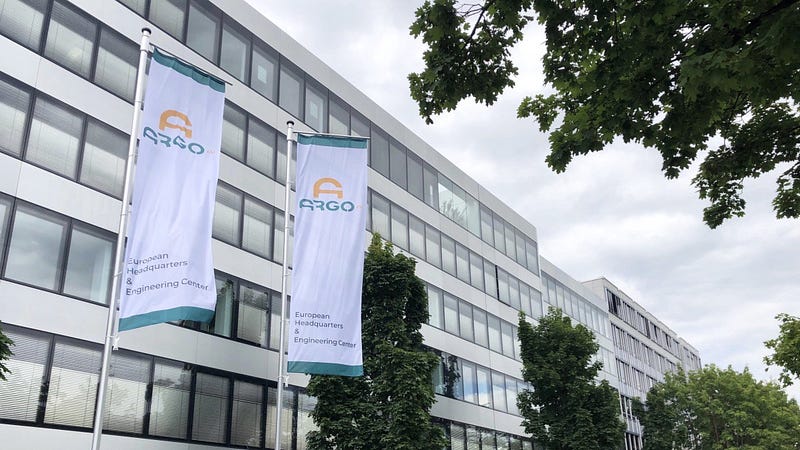
A few weeks ago, Volkswagen closed a multi-billion dollar investment in Argo AI. The investment was originally announced last summer, so this was hardly a shock. Nonetheless, the deal results in a really interesting ownership structure for Argo, that is shared by Cruise, and is pretty uncommon among startups.

When GM purchased a 40-person startup called Cruise Automation in 2016 for a reported $1 billion, a self-driving acquisition race began.

About a year later, Ford announced that it “would” invest $1 billion over four years in a little-known Pittsburgh-based startup called Argo AI. Confusingly (at least to me) for $1 billion Ford was not “acquiring” Argo — it was becoming a shareholder. It wasn’t even clear whether Ford would be a majority shareholder.

There is a certain logic to this structure, but it’s really unusual. The logic is that Argo, as an independent company, would be able to grow rapidly, like a startup, unencumbered by Ford’s constraints and brand. It would just have a lot of Ford’s cash.

On the other hand, Ford made a tremendous bet on what was then a very small team. If Argo hit a home run, Ford wouldn’t necessarily reap most of the reward. And if Argo took all that money and drained it, Ford had limited power to prevent that.

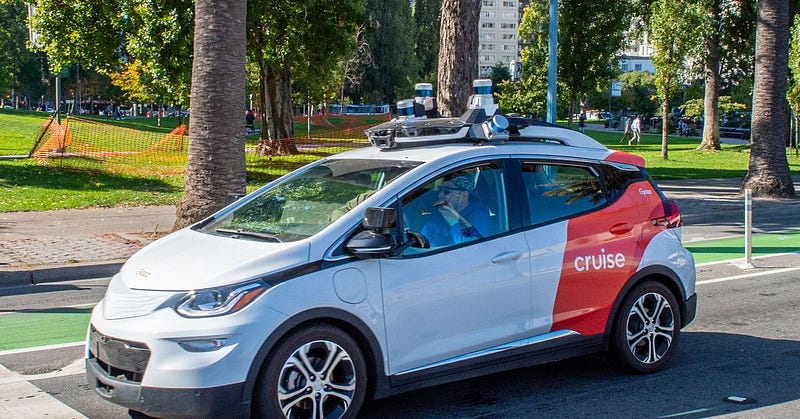
In the time since the Argo investment, Cruise has essentially spun out of GM into a similar structure. It’s taken major investments from both Softbank and Honda, to the point that Cruise is once again an independent company with corporate investors who have poured in billions of dollars but have a lot less control than you might imagine.

Volkswagen’s investment in Argo seems to be a vindication of this unorthodox approach. Unlike Ford, Volkswagen is investing in a real company — still a startup, but one with hundreds of employees and solid technical progress. Volkswagen’s investment shows they think this may be the path forward.

So often when you see a corporate investor try to become a venture capitalist, things go poorly for both the big company and the startup. In this case, things seem to be going quite well.

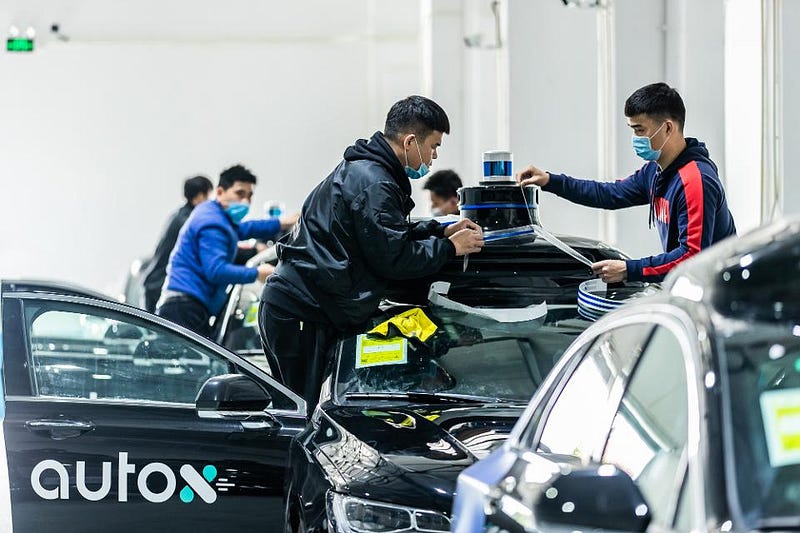
AutoX Works 24 Hours A Day

This week I had the pleasure of interviewing AutoX COO Jewel Li for Forbes.com. We discussed what it’s like to run a company spread across the US and China. Diversity brings challenges:

“Culture is hard to explain,” says Li, who immigrated from China to the United States in 2011 to pursue her PhD at the University of Delaware. “It’s in every single detail. Are you writing all of your documents and messages in English, so that everyone can understand? If the company caters for employees, is it a diverse selection of food?”

But there are unexpected advantages:

“A lot of AV companies haven’t been testing and are data hungry. We were very lucky that there were always fleets to test in China. It never slowed us down,” says Li.

Lots more at Forbes.com.

American Electric Cars

There’s been a lot of news about American car companies — Ford and GM, specifically — building electric cars.

First, the news that this fall’s electric Ford Mustang Mach-E will come with hands-free driving on over 100,000 miles of US highways.

Second, Ford’s partnership with Volkswagen involves the creation of 600,000 electric vehicles in Europe.

Third, GM has announced its new, pouch-style Ultium batteries will support a range of 400 miles.

GM CEO Mary Barra also recently stated that there will still be gas cars on the road in 2040, but that’s just stating the obvious. Cars last for 15 years, on average. So unless you believe that gas cars will no longer be for sale in 2025, then they’ll still be on the road 15 years later.

But these still seem like exciting steps forward for electric cars.

Where Are The ADAS Startups?

The second quarter of 2020 has been pretty great for Phantom.ai. The Silicon Valley-based ADAS startup closed a $22 million Series A financing in April, led in part by Ford Motor Company. Today, they announced a partnership with Renesas, a Japanese Tier 1 automotive supplier, to develop “full stack Level 2 advanced driver assistance systems.”

This makes Phantom.ai one of the very few startups targeting what would seem to be a lucrative and promising market.

An oddity of the self-driving car revolution is that startups have so far had much more success tackling Level 4 full autonomy, compared to Level 2 advanced driver assistance.

Level 2 means that a driver still needs to be in control of the vehicle, which leaves startups with one of two difficult paths:

  1. Become a manufacturer and build vehicles for consumers.
  2. Sell ADAS packages into the existing automotive ecosystem, with lead times approaching a decade.

Faced with that challenge, and perhaps also for safety concerns, most startups have opted to instead work on Level 4 autonomy. This is a much harder challenge, but carries the potential of deploying robotaxis directly and probably (maybe?) avoiding the existing automotive supply chain.

The only company that has cracked this nut, Mobileye, cracked it in a huge way, exiting to Intel in 2017 for $15 billion. On the one hand, I would have thought more entrants would’ve been attracted to this space. On the other hand, it took Mobileye 18 years to achieve this success, highlighting how long the automotive supplier road can be.

That leaves Phantom.ai, which has survived on a mere $5 million seed funding round since 2016, and overcame a cringe-inducing 2018 rear-end collision with a press crew on-board. Kudos to them as the leading startup in the space.

Even Phantom’s own employees seem a little dumbstruck by this state of affairs. One anonymous employee wrote in a 2019 Glassdoor review:

“ If they exist, we don’t know who our competitors are, other than MobilEye. Is another company going to come in and steal our thunder? It’s my biggest worry. [Our competitors, by the way, are not Waymo, Aurora, Cruise, etc… their product is for a different market.]”

The main competitor I can think of is Comma.ai. I own their EON DevKit and have installed it in several different vehicles. The performance of the OpenPilot software it runs is impressive. I wish it would get to market in a bigger way than it has so far.

But cracking the automotive supply chain is tough.

Net City In Shenzen

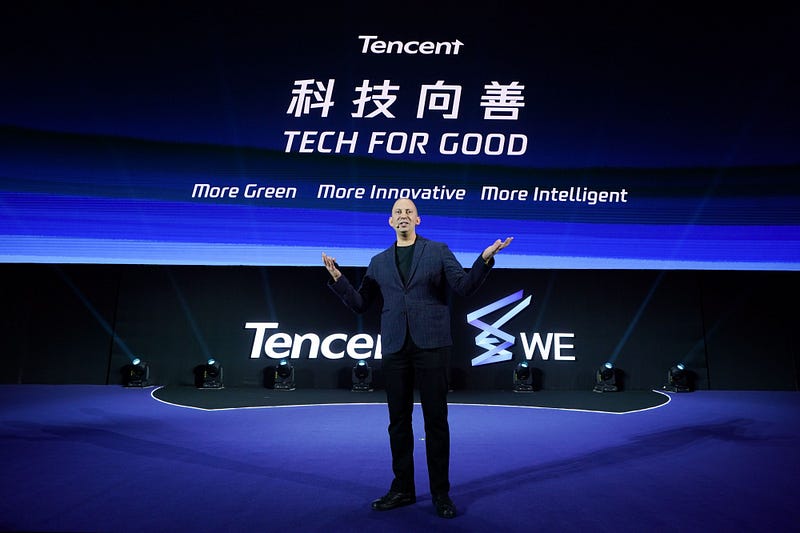
Tencent, the Chinese technology giant behind WeChat, has announced plans for a “Net City” on a two square kilometer portion of their campus in Shenzen.

The Tencent announcement notes that, “A “green corridor” for buses, bicycles and autonomous vehicles will be the backbone of the district, running down its length.” They’ve hired a US architecture firm to design it all.

The zone will “accommodate” 80,000 people, although it’s not clear if those are residents or Tencent employees who will actually live off-site.

The report is pretty light on details, and even notes that there have been a few other announcements like this in Japan and North America, from Google no less. Google’s Sidewalk Labs just announced they will not proceed with their “smart city” in a Toronto neighborhood. The culprit was an inability to overcome a combination of urban regulatory burden, NIMBYism, and data privacy concerns.

To me, the North American contrast is the most interesting aspect to the Tencent project. This could either be read as a Chinese tech giant simply running a few years behind an American tech giant, only to give up in a few years itself. Or it could prove the point that China is capable of major infrastructure projects that just aren’t possible in North America anymore.

Time will tell.

Robotics Funding Picks Up

Every month Robotics Business Review compiles a list of private financing deals for robotics companies.

In April, as the world shut down for COVID-19, funding basically dried up.

“Robotics Business Review tracked about 26 transactions worth a total of more than $600 million last month, compared with 29 deals worth $2.7 billion in March 2020 and 30 transactions worth $6.5 billion in April 2019.”

Many of the April transactions that did occur were in China.

May, however, showed a meaningful uptick. May 2020 numbers were comparable to where they were a year ago, and at least in the same order of magnitude as the March 2020 figures.

“In May 2020, Robotics Business Review tracked 18 deals worth about $1.5 billion, compared with 26 robotics transactions worth more than $600 million in April 2020 and $1.5 billion in 27 transactions in May 2019.”

The May figures were led by huge funding rounds for Waymo and Didi. The rest of the May transactions totaled only $250 million.

For comparison, the May 2019 figures were even more concentrated, with the bulk of the month’s investments driven by a huge fundraising round for Cruise Automation.

I’m not quite ready to declare a return to normalcy yet, but it’s a big step in the right direction.

Tesla Takes A Baby Step Toward Ridesharing

Elon Musk famously tweeted that Tesla vehicles will be appreciating assets, a first for automobiles, if that comes to pass. The logic stems from another controversial Musk claim, that Teslas will eventually become robotaxis, generating passive income for their owners.

Recently, Electrek and other outlets wrote Tesla has taken a baby step toward the robotaxi vision. Nothing self-driving, much more pedestrian (excuse the pun) than that.

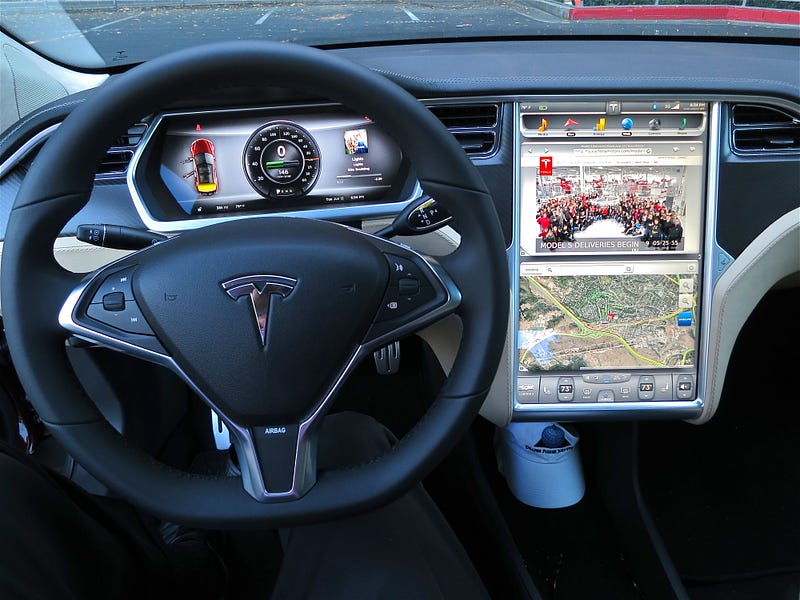
Tesla has created an “Add Drive” feature in its app.

Tesla does not yet appear to be advertising this feature, and I don’t own a Tesla, so I can’t confirm for myself. But apparently Tesla owners can now give access to their car to anybody, just by adding an email address. No key necessary, just the Tesla app and a confirmed email address.

Even if the robotaxis are a long time coming, you could imagine this might make it a lot easier for Tesla owners to rent their vehicles to other drivers through sites like Turo.

Udacity’s Free Intro To Cloud Computing Course

Today Udacity launched a free, four-week Intro to Cloud Computing course that I have been working on for the last few months with Ami Malhoof. It’s a great course and if you are new to cloud computing, you should take it!

Ami had a really ambitious vision for this course, and I think it turned out really well. Over the course of five lessons, students:

  • Learn the basics of cloud computing
  • Boot a virtual machine locally
  • Create Identity and Access Management (IAM) roles and policies
  • Upload files to Amazon Web Services (AWS) Simple Storage Service (S3)
  • Launch an AWS Elastic Cloud Compute virtual server instance
  • Construct an AWS Lambda serverless function
  • Configure AWS API Gateway, Lambda, and S3 together to host a website

That’s a lot to accomplish in just a few weeks! And it’s free!

Join us today 🙂