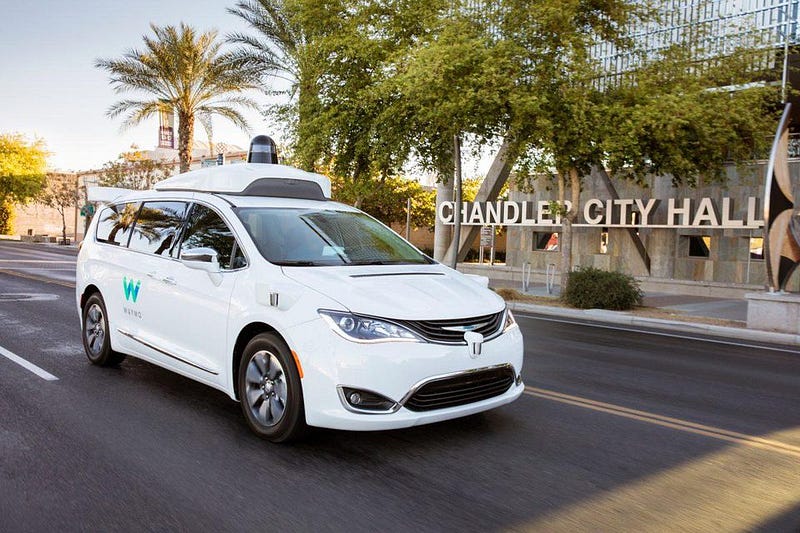
My latest post on Forbes.computs some context around the recent news of Arizona residents attacking Waymo self-driving cars.
“On the one hand, this kind of intimidation is bananas. On the other hand, it raises the question: how often does this type of thing happen to regular citizens?”
The type of behavior that the The Arizona Republic and The New York Times would be totally unacceptable if they were directed against human drivers. But they’re no better when the targets are self-driving cars.
Road rage is just bad.
And besides, there are human safety operators in these vehicles!
“Reading the stories of Arizona residents using weapons to assault Waymo self-driving vans, it doesn’t seem that far-fetched that a person could get hurt or seriously killed.”
I hope we can all take a deep breath and remember that violence is not the answer.
At the beginning of the year I make predictions about how self-driving cars will progress over the coming 12 months. At the end of the year, I score those predictions.
No Level 5 self-driving cars will be deployed anywhere in the world.
90% Certain
Level 4 autonomous vehicles will be on the road, at least in test mode, somewhere in the US. Deep learning will remain the dominant tool for image classification. Human drivers will be permitted on all public roads in the US. No car for sale anywhere in the world will include vehicle-to-traffic-light communication. C++ will be the dominant programming language for autonomous vehicles. Autonomous drone delivery will be available commercially somewhere in the world.
80% Certain
Level 4 self-driving cars will be available to the general public (with or without a safety operator) somewhere in the US. Waymo will have recorded more autonomously-driven miles (all-time) than any other company. Level 4 vehicles will operate, at least in test mode, without a safety operator, somewhere in the US. No vehicle available for sale to the general public will come with OEM-installed lidar. No dominant technique will emerge for urban motion planning.
70% Certain
Level 4 vehicles will be available to the general public somewhere in Europe. Level 4 vehicles will be available to the general public somewhere in China. An autonomous shuttle running on public roads will be open to the general public somewhere in the world. A company will be acquired primarily for its autonomous vehicle capabilities with a valuation above $100M USD. Grocery delivery via autonomous vehicles, with no safety operator, will be available somewhere in the world.
60% Certain
No Level 4 self-driving cars will be available to the general public, without a safety operator, anywhere in the US. Tesla will offer the best-performing Advanced Driver Assistance System available to the public. All publicly available Level 4 vehicles will use lidar. A member of the public will die in a collision involving a Level 4 autonomous vehicle (including if the autonomous vehicle is not at-fault). Self-driving cars will be available to the general public somewhere in India.
50% Certain
A Level 3 vehicle will be for sale to the general public somewhere in the world. Tesla’s full self-driving hardware will include a custom-designed computer. Amazon will make routine (e.g. non-demonstration) autonomous deliveries using autonomous vehicles. A company will be acquired primarily for its autonomous vehicle capabilities with a valuation above $1B USD. Two of the US Big Three and German Big Three (i.e. two of six) will merge.
Here are my predictions from one year ago, scored.
100% Certain
✓ No Level 5 self-driving cars will be deployed anywhere in the world. ✓ No GPS or DGPS system will reliably exceed 10cm localization accuracy on all public roads in the US.
90% Certain
✓ Level 4 self-driving cars will be available to the general public, on public roads, somewhere in the world. [Explainer: I count the ongoing Lyft-Aptiv trials in Las Vegas as fulfilling this prediction, even though they include a safety operator. Also, supposedly Drive.AI is operating in Texas, although that’s been surprisingly quiet.] ✓ Deep learning will remain the dominant tool for image classification. ✓ No US road will have a speed limit for autonomous vehicles that is faster than the speed limit for human-driven vehicles.
80% Certain
✓ All Level 4 vehicles available to the general public will use lidar. ✓ Somebody will die in a crash due to a failure of Tesla Autopilot. [Explainer: Mountain View, California, in March.] ✓ Waymo will still have driven more autonomous miles than any other company. ✓ Level 4 self-driving cars will be available to the general public somewhere other than Pittsburgh. ✗ A company will be acquired primarily for its autonomous vehicle capabilities with a valuation above $100M USD. [Explainer: Maybe I’m missing something, but no obvious acquisition jumps out at me. Either the Ford/Autonomic deal or the Hexagon/AutonomouStuff deal might qualify, but neither reported a price. Cruise took some pretty significant minority investment, but was not acquired.] ✓ No dominant technique will emerge for urban motion planning.
70% Certain
✗ Level 4 self-driving cars will be available to the general public in Pittsburgh. ✓ Level 4 self-driving cars will be available to the general public somewhere in China. [Explainer: Pony.AI, although the lack of corroboration makes me suspicious.] ✓ Tesla will sell the most advanced self-driving system available to the general public. [Explainer: IIHS report.] ✓ Deep learning will not be the dominant tool for object classification from point clouds. [Explainer: I don’t have a smoking gun, but my observations indicate that deep learning is still making headway for point clouds, but has not yet taken over.]
60% Certain
✓ 2,000 students will have graduated the Udacity Self-Driving Car Engineer Nanodegree Program. ✗ Level 4 self-driving cars will be available to the general public somewhere in Europe. ✓ Waymo will have exceeded 10 million miles driven. [Explainer: October, 2018.] ✓ Tesla will produce 5,000 Model 3 vehicles in a single calendar week. [Explainer: July, 2018.] ✓ No member of the general public will die in a Level 4 autonomous vehicle. [Explainer: I should have worded this differently, as it fails to capture the Elaine Herzberg fatality, which was probably the most important self-driving car incident of the year. But, as written, this prediction was correct.]
50% Certain
✗ Cruise Automation will open its Level 4 fleet to the general public. ✗ Level 3 self-driving cars will be available for purchase by the general public. ✗ A company will be acquired primarily for its autonomous vehicle capabilities with a valuation above $1B USD. 1,000 Udacity students will have jobs in the autonomous vehicle industry. [Explainer: I’m not going to count this one either way. One thing Udacity has discovered over the last year is how hard it is for us to track students in jobs.] ✓ Self-driving cars will be legal for public use somewhere in India. [Explainer: Startups in India.]
Conclusion
100% of my 100% predictions were correct.
100% of my 90% predictions were correct.
83% of my 80% predictions were correct.
75% of my 70% predictions were correct.
80% of my 60% predictions were correct.
25% of my 50% predictions were correct.
It seems like I did pretty well this year. That I can see I was neither systematically over-confident nor under-confident.
For 2019, I’d like to do a better job identifying issues that are 50/50 uncertainties.
Congratulations on putting 2018 in the books. Here’s looking forward to 2019!
Last week NIO invited me to Hangzhou, China, to speak with NIO owners and team members about self-driving cars. It was awesome!
NIO is one of China’s most advanced electric car companies. The NIO ES8 SUV and EP9 race cars are already on the market. Next summer the ES6 SUV will launch in China with a breath-taking 500km (300mi) of range.
NIO owners have access to special facilities, or NIO Houses, throughout China. The NIO House at which I spoke in Hangzhou is located right on West Lake, one of China’s most beautiful areas.
What really impressed me were the quality of the questions from the audience of NIO owners and employees. People knew all about the different types of sensors on self-driving cars, but they wanted to know about redunancy, and how different car manufacturers were preparing for failure scenarios. They also wanted to learn about how US manufacturers were thinking about Level 3 and Level 4 autonomy. What are the advantages and disadvantages of high-precision GPS, specifically in China? This is a group of people who know their stuff!
Everyone was unfailingly polite and generous, and every visit to China is a reminder of how fast this country moves. Chinese companies have only recently begun working on autonomous vehicles in earnest, having ceded US companies a 5–10 year headstart. But it’s easier to move fast when somebody else has already blazed a path, and Chinese companies like NIO are making tremendous progress.
Check out this video the self-driving NIO EP9 — the world’s fastest autonomous vehicle!
The trigger for returning vehicles to the road appears to have been approval from the Pennsylvania Department of Transportation. This approval was not required — Pennsylvania law places no restrictions on self-driving cars — but Uber solicited the approval nonetheless. Presumably the company plans to work more closely with regulators than it has in the past.
When Uber shut down self-driving operations last spring, it had recorded approximately 2 million autonomously-driven miles. That put it solidly in second place, behind Waymo’s then-8 million miles and ahead of the 500,000 or so miles driven by Cruise.
Since then, everyone else has kept testing while Uber has been on pause. The latest numbers aren’t publicly available, but Waymo announced 12 million autonomous miles a few months ago, and Cruise may well have passed Uber’s 2 million miles by this point.
It’s still early days, but it will be interesting to see how long it takes Uber to get back into the full swing of testing and development.
This was a surprise because, until the announcement, CPUC hadn’t even come up in any discussion of self-driving cars, at least as far as I can remember.
CPUC did announce a twin pair of self-driving car pilot programs — one program for vehicles with safety operators (“back up drivers”) and one program for fully driverless vehicles. Zoox’s permit requires safety operators. That said, CPUC pilot program applies to “companies using autonomous vehicles that…are under the CPUC’s jurisdiction…”
Which companies are under CPUC jurisdiction is not obvious. The CPUC website states:
“The essential services regulated include electric, natural gas, telecommunications, water, railroad, rail transit, and passenger transportation companies.”
I imagine “passenger transportation companies” as something akin to a limited entry, licensed, monopoly-like services. Bascially, taxi companies. There appears to be an ongoing back-and-forth between Uber and CPUC over jurisdiction for regulating human-driven ridesharing services.
Mainly this seems like a reminder of how new self-driving cars are everywhere. Presumably, the self-driving ride-sharing services will be regulated by some government entity. Whether that entity is local or state or federal, and whether it is the Department of Transportation or the Public Utilities Commission or something else, most of that is yet to be determined.
The answers may come down to who steps forward and claims authority.
During my trip home for Thanksgiving, I got a bit of an on-the-nose reminder about why not everyone is willing to trust self-driving cars and artificial intelligence more generally.
I grew up in northern Virginia, where my parents and one of my brothers still live. At the end of this trip home, before driving from my parents’ house to the airport, I mapped the route on my phone. This is standard procedure for me, but my family loves to make fun of me for mapping a route I’ve driven a million times.
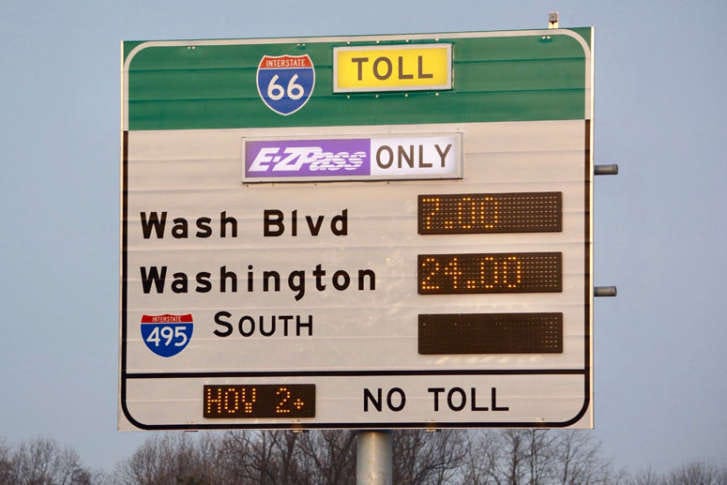
In this case, the map instructed me to avoid Interstate 66, which would’ve been the most direct route to National Airport. Instead, Google Maps sent me on a meandering sequence of surface streets.
My dad and I began debating why not to take 66. I assumed there must be a big traffic backup. If I had fiddled with my phone a little more, I probably could’ve verified this. But by this point I was driving, so I just assumed.
My father was certain that Google was “confused” and thought I-66 was a toll road. I had set the route preferences to avoid tolls.
I countered that there is no way Google was wrong about the I-66 toll policy. No tolls on the weekend.
Eventually, my dad grew weary of the surface streets and insisted we merge onto the Interstate. We did that, and the road was empty. Smooth sailing to the airport.
My father’s disdain was vindicated. He will never trust Google Maps over his 30 years of experience driving in northern Virginia. And maybe he’s right.
Shortly thereafter, Ford announced its purchase of electric scooter startup Spin. This appears to be another step in the direction of Ford as a mobility solutions provider, following its acquisition of the Chariot shuttle service and the launch of Ford GoBike bicycle rentals.
Next came an impressive series of self-driving car demos for journalists in Miami, Florida. Ford is currently testing self-driving cars in a six square-mile section of the city.
Most recently, Ford announced a partnership with Walmart and other retailers to deliver merchandise using self-driving cars.
In addition to its strategic moves, Ford seems to be improving its ability to communicate its vision for autonomous vehicles. Ford posts on Medium.com appear from Sherif Markaby, CEO of Ford Autonomous Vehicles, LLC, but also from team members in business development, marketing, and engineering.
Markaby recently posted a helpful infographic outlining the different components of the Ford autonomous vehicle ecosystem.
“Ford will not be first to the party. We all know that. But in cooperation with Argo, it is well on its way to creating what seems to be as good an AV system as any out there with smoother operation than much of what I’ve felt from several of its top competitors.”
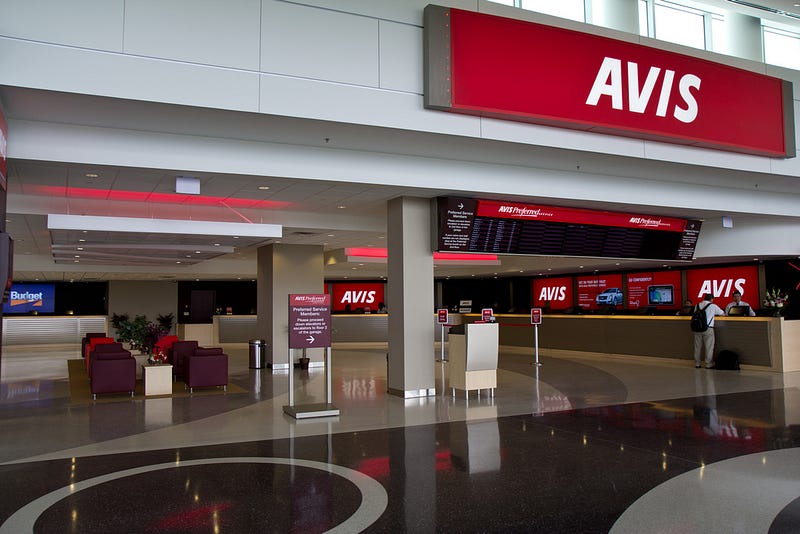
When I think of mobility, I think of Uber and Waymo and Ford, my old employer. But Avis very much considers themselves a mobility company.
Kaelin boils it down to, “We provide solutions to get from Point A to Point B.”
And also this:
“Future mobility will be connected, integrated, and on-demand. Connected cars put us in a strong position to provide those services,” Kaelin envisions.
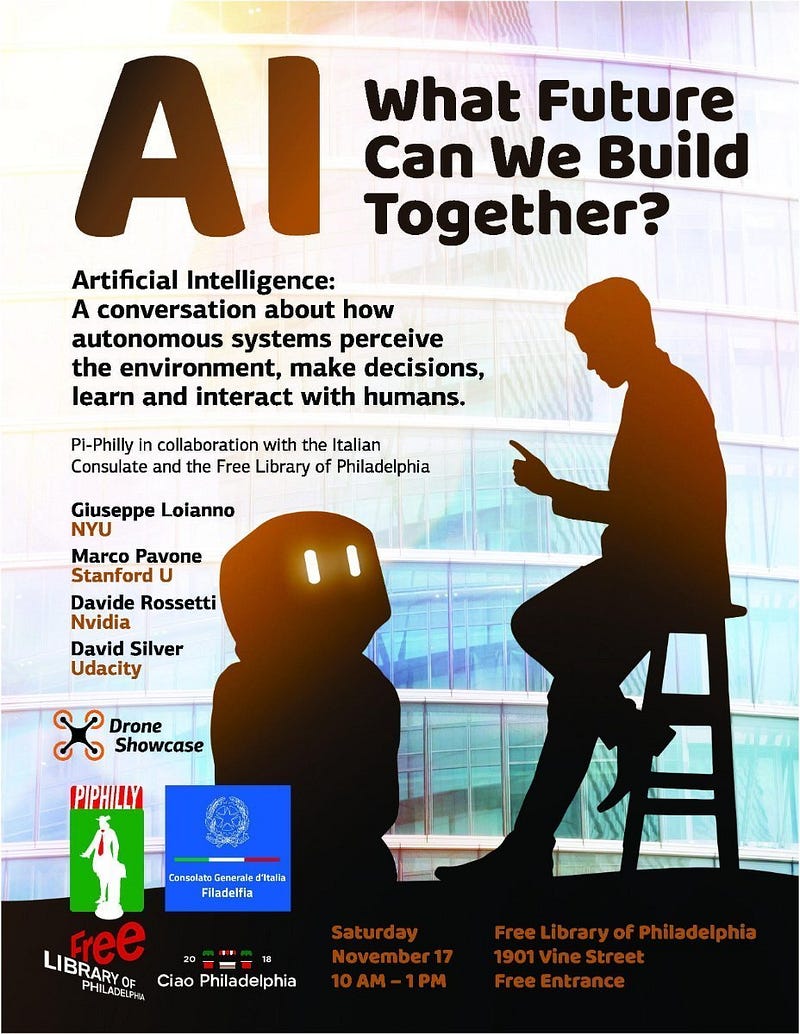
The Saturday before Thanksgiving I will be speaking at an event in Philadelphia, discussing artificial intelligence and the future. The event is hosted by the Free Library of Philadelphi and sponsored by the Italian Consulate.







 David Silver