The Model 3 is a mass-market vehicle, priced at $35,000. In some locations, tax credits will lower cost to $25,000 or less.
So a big question is, will the Model 3 bring self-driving cars to the masses?
The answer would seem to be yes, given that Elon Musk’s stated timeframe of 2–3 years until self-driving cars, and the Model 3’s 20-month launch countdown.
However, some analysts wonder whether the Model 3 can include the necessary hardware and still maintain its price goal.
According to The Motley Fool:
With Model 3’s $35,000 starting price at half the starting price of Model S and well below the $80,000 starting price of Model X, Tesla may be planning to use a more advanced autopilot hardware system in its more expensive Model S and Model X.
I’ve finished NVIDIA’s introductory Deep Learning course, and I’m now starting Udacity’s.
These courses outline the construction and use of Deep Neural Networks (DNNs) for image processing and text recognition. They’re great!
Here are some of the highights:
DIGITS: This is NVIDIA’s Deep Learning visualization program. It presents a GUI for both building and reviewing DNNs.
Caffe: There are several frameworks for building DNNs, but Caffe seems the most straightforward. Although it is written in C++ and provides a Python interface, no coding is required to get started. This is because Caffe can be configured with Google Protobuf, a JSON-like text format.
Theano: NVIDIA’s course advises that the various Deep Learning frameworks are “more similar than they are different”, but Theano is at least syntactically different than Caffe. Theano is a Python symbolic math library, on top of which various packages offer DNN capability.
Torch: Torch is Facebook’s tool of choice for DNN research, and it gets support from Google, NVIDIA, and other major Deep Learning companies, as well. It uses the Lua programming language (yay, Brazil!).
TensorFlow: In the same way that Torch is Facebook’s go-to DNN tool, TensorFlow fills that role for Google. Like many Google projects, it is Python-based. I am just diving into TensorFlow now, via Udacity’s course, so I may have more to say later.
cuDNN: This is NVIDIA’s library for parallelizing DNN training on the GPU. It is the key to building large neural networks, and all of the DNN frameworks integrate with it. As Google’s Vincent Vanhoucke relates, neural networks went through a period of popularity in the eighties and nineties, and then slumped in the 2000s, as CPUs weren’t able to provide enough power to train large networks. The publication of AlexNet (2012), showed that the use of GPU parallelization could provide massive training acceleration. This revolutionized the field.
Convolutional Neural Networks (CNNs): Convolutional Neural Networks are a building block of DNNs that involve learning on small parts of an image and then tiling the neighboring small parts to learn over the entire image. This blocking and tiling reduces the learning complexity, which is especially important for large images.
BMW is turning its focus to self-driving cars. “The youngest head of a major carmaker, Krueger is part of a generational shift that’s now looking for ways to respond to new challengers such as Apple Inc. and Google, which the BMW CEO on Monday described as competitors.”
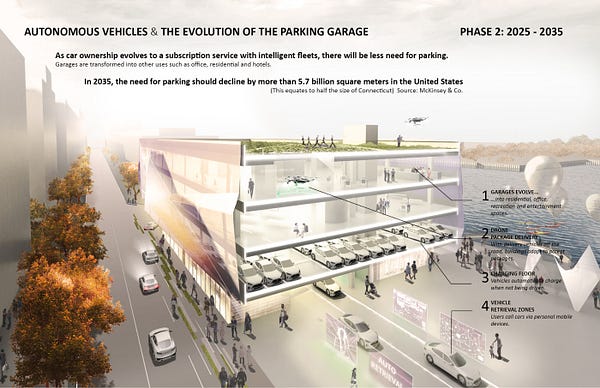
Arrowstreet is a Boston-based architectural firm that specializes in parking garage design.
So they’ve naturally been thinking about what autonomous vehicles mean for the future of parking garages.
Their hypothesis is that garages will evolve in two stages.
The first stage involves modifying conventional parking garages to support both conventional cars and self-driving cars. Conventional cars would park closer to the pedestrians, to minimize effort for drivers, and autonomous vehicles can park themselves further back (or up) in the garage.
The second stage of development will be garages oriented completely towards autonomous vehicles. These garages will have very tight parking in a restricted area, with vehicles driving out to specified zones for passenger retrieval.
Arrowstreet even thinks that conventional garages can be retro-fitted for residential and commercial space once parking is no longer a necessity.
NPR has a short interview with Chris Urmson, technical director of Google’s self-driving car project.
The interview focuses on whether human drivers should be able to take over from the computer or not.
Urmson has a neat analogy I hadn’t heard before:
You wouldn’t imagine that in the back of a taxi, we put an extra steering wheel or brake pedal there for the passenger to grab ahold of anytime. It would just be crazy to think about doing that.
Interestingly, Urmson notes that Google might allow human drivers to take control of the car from a standing start, because people might enjoy driving on the weekend.
The Motley Fool reports that Tesla has hired away to top-notch chip designers from Apple, and also that Elon Musk is being coy about whether Tesla wants to design its own chips.
The Motley Fool concludes that this is insane and chip-making is not Tesla’s business.
That seems about right to me, but one question is whether Tesla hired these chip designers as carrots or sticks.
The carrot approach is that, by having amazing chip designers on staff, Tesla can better work with NVIDIA and other manufacturers, guiding product development.
The stick approach is that Tesla might like to credibly pressure chip manufacturers, as a means to getting what it wants.
This isn’t strictly related to self-driving cars, but it came across the wire and is fascinating.
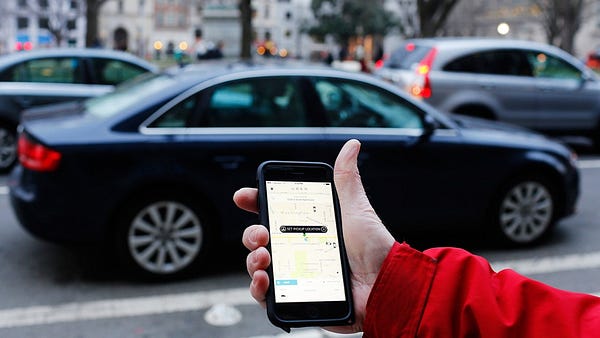
Altamonte Springs, Florida, (near Orlando) has chosen to subsidize Uber in leiu of building new roads.
The hope is that subsidizing Uber will encourage people to use mass transit.
“It is infinitely cheaper than the alternatives,” said Martz, whose city has a population of about 43,000 and median income of $50,000. “A mile of road costs tens of millions of dollars. You can operate this for decades on $10 million.”
The logic here is that Alamonte Springs is home to many commuters who ride public transportation into Orlando. However, just getting to public transportation can be a pain. The train and bus stops may not be close to a person’s house. So the city will subsidize Uber rides within town, to help people get to their bus stops and to the train station.
It might not be as crazy as it sounds.
For a while, my wife worked in a suburban office right next to the DC Metro’s Red Line, exactly between two Metro stations. Unhappily, the office was 1.5 miles from each station, which was just far enough to make Metro impractical. So she drove every day, even though her office literally overlooked the Red Line.
Maybe this service can solve that problem.
There are lots of objections to this project, but I suspect much of that is because people don’t like tax dollars “subsidizing” a huge company like Uber.
In this case, though, it’s probably more accurate to think of the city as contracting with Uber to offer a better in-town public transit service.
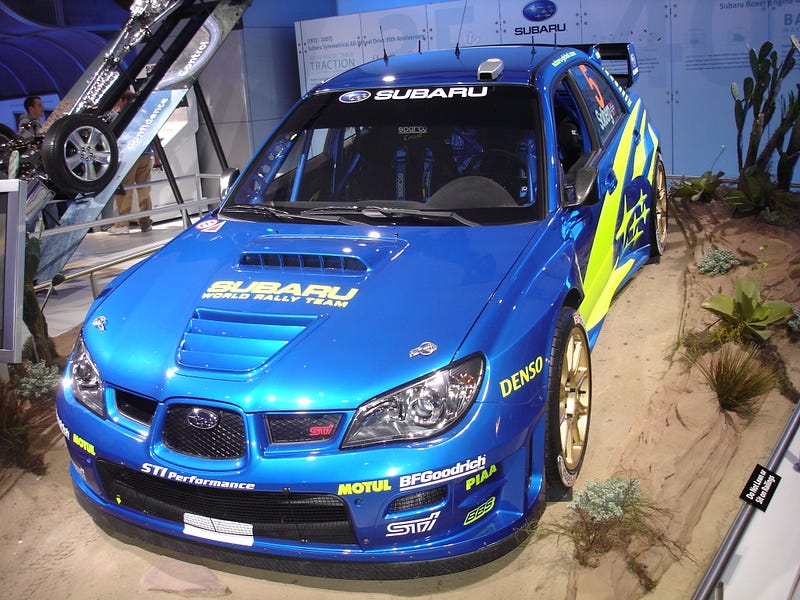
For years, Stanford’s Chris Gerdes has been working with students to build a self-driving race car.
The car recently hit speeds of 120mph at Thunderhill Raceway in Willows, California, and the video shows what it looks like to have a car weave around a track with nobody at the wheel.
Of course, a racetrack lacks many of the variables and obstacles that cars encounter in real life. But raw performance is important, particularly since I dream of one day commuting in self-driving cars at 300mph 🙂




 David Silver