This is an interesting strategy, and suggests a reason that cars will go from being a relatively fragmented industry, to a relatively consolidated, network-effects-driven industry.
According to media accounts, the vaunted Consumer Electronics Show is turning into an auto show.
Ten percent of CES floorspace will be taken up by the automotive industry.
Notably, however, Google and Tesla — currently the two most visible companies in the autonomous driving space — will not be in attendance.
Faraday Future, however, will be front and center. Tomorrow night the new hot tech-auto startup backed by Chinese billionaire Jia Yeuting will unveil a prototype car.
Although the Ford-Google partnership is getting a lot of attention, a different, similar partnership is also in the works.
Business Korea reports that BMW, Samsung, and Nuance Communications are partnering to develop “the brains” of future autonomous vehicles.
The initial report is light on the details, although it does note that, “Samsung Venture Investment Corp. made investments worth billions of won in the U.S.-based connected car startup Vinli.”
The article appears to be essentially a re-print of a press release by an industry research group called Vision Systems Intelligence, but it’s a pretty good press release.
Controls
Elektrobit and Vector Informatik
Processing
Renesas, NXP, NVIDIA and TI
LIDAR
Quanergy, Phantom Intelligence, TriLumina, and LeddarTech
Image Sensors
Toshiba, Sony, ON Semiconductor, and Melexis
Safety
QNX
Simulation
Mathworks, National Instruments, dSPACE, and Realtime Technologies
The development of self-driving cars is one of the great stories for academic engineering departments of the last twenty years. While the cutting-edge of software development and research has moved to open-source and commercial projects, robotics is an area where university researchers have made huge contributions, arguably the dominant contributions.
It feels like that dynamic has changed, though, as more and more companies pour resources into autonomous driving technology. Universities can’t keep up.
It’s telling that my first though was, “this probably isn’t relevant”. As great as the Cambridge technology is, and it may be more cutting-edge than anything any commercial vendors are doing, it must be so far from commercialization.
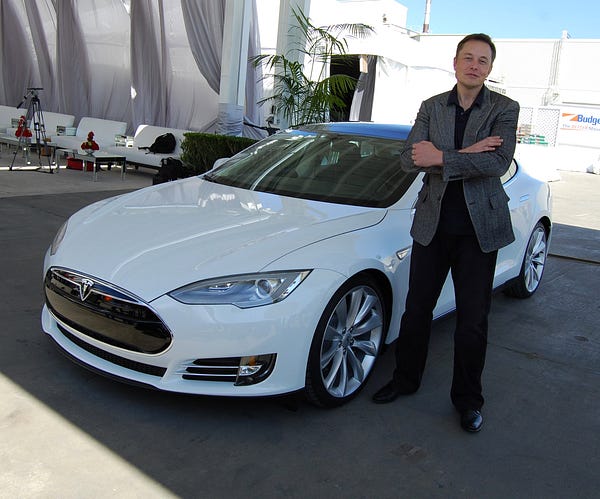
Elon Musk recently made the point that getting an autonomous vehicle to work for one team is a whole different animal than getting it to work in the wild, with millions of customers. He wasn’t talking about academic labs at the time, but he probably could have been.
The news is apparently leaking in advance of the Consumer Electronics Show in January, where the announcement will be made official.
Ford has been building out its own city — MCity — to test self-driving cars, so they are an obvious choice for Google.
It will be interesting to see whether Ford manages to lock up Google’s software — similar to the way AT&T locked up the iPhone for several years after launch — or whether Ford is merely one of many partners with whom Google works.
Last weekend, my wife and I returned home to the Bay Area after a weekend getaway to New Mexico.
Because of flight schedules, we landed at Oakland International Airport, even though our home is on the Peninsula, and much closer to SFO.
In the past, our arrival at Oakland would have necessitated a long trek back home on public transportation — airport monorail to the BART system, BART system all the way around the Bay to Millbrae, and a cab home from Millbrae.
That trip costs ~$30 for two people and takes probably 75 minutes. The transfers all involve lugging backs around train terminals.
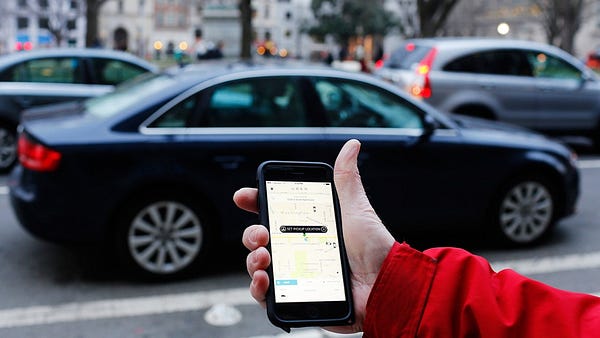
This weekend, however, we hailed an Uber at the airport drop-off lane, and it took us home for $42 (including tolls~).
The Uber trip took us half the time, felt five times as comfortable, and was only $10 more expensive.
Small victories, but the world is changing for the better.
Yesterday, I had a frustrating experience with a ride-sharing service, which highlights one of the problems not yet overcome.
I live in the suburbs, albeit in a fairly dense part of the suburbs and near the airport, so it’s a little hit or miss how long it will take to catch a ride with a ridesharing service.
Yesterday afternoon I had an important meeting in the city, so I hailed my ride about twenty minutes before I needed to.
Unhappily, my ride to 25 minutes to show up. And guess what? I arrived to my important meeting 5 minutes late.
In retrospect, I should have just cancelled the ride and hopped in my car. Even more unhappily for me, however, the ride sharing service and I were both wrong about that 25 minute pick-up delay. On the map it looked like the driver was 5 minutes away, and the ride-sharing service was 5 minutes away. The map was not yet accounting for a recent accident, however.
So the big problem here is that waiting for a ride in the suburbs is still a little dicier than just hopping in your own car. In the cities, you would think this problem has been solved, but I’m not sure that’s true either.
On the way home from my important meeting, I had a long wait for my ride, while one driver cancelled the trip and another one had to do some navigational contortions to get to the correct side of the street.
These problems seem solvable, perhaps just by offering more money to be retrieved sooner, but the system isn’t quite there yet. And that’s a reason to keep owning a car, at least for now.