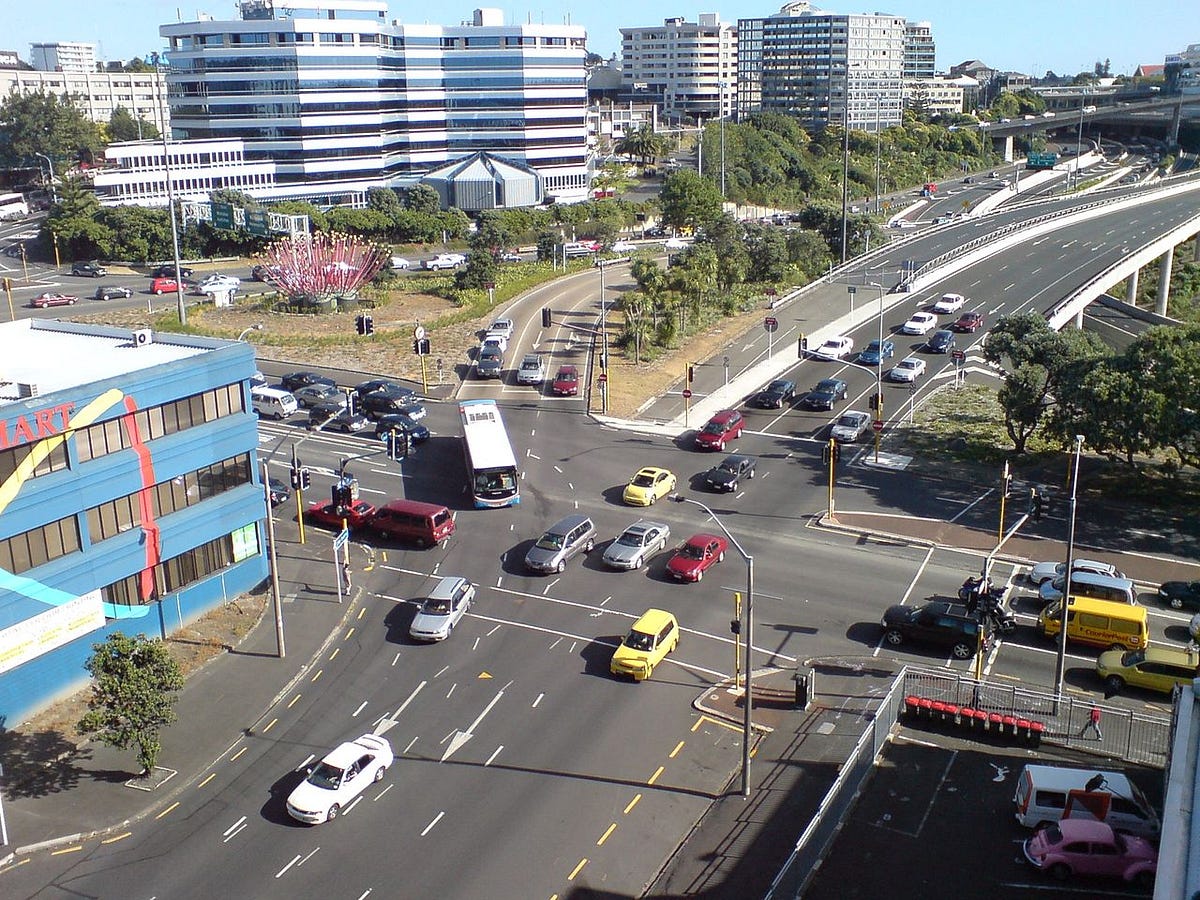
A Google self-driving car was pulled over, for driving too slow.
Mostly this is just funny. But it does raise questions about how driving incentives (as opposed to just skill) will differ when humans cede control to machinesāāāparticularly machines programmed by other people.
Maybe I want to speed in order to get to a meeting, but Google doesnāt particularly want me to do that. Who gets final say?
Think of this as Uber diversifying itās risks on the margin of mapping. Now Uber partners with Alphabet/Google, Apple, and TomTom.
It also highlights the complicated relationships at the automobile-technology intersection, particularly when it comes to giant companies like Alphabet and Apple.
A few weeks ago, I published a Friends and Enemies matrix, laying out the landscape for autonomous vehicles.
In that Matrix, I marked Uber as friends with Apple and Alphabet/Google.
Maybe that isnāt quite right.
I was thinking largely of Apple and Google as potential autonomous technology suppliers to Uberās car network.
However, both Apple and Google touch Uber at a several different points, which complicates the relationships between the companies. Itās certainly conceivable that Uber could have a positive relationship with one division of Apple or Google, and an acrimonious and competitive relationship with another division.
Autonomous Driving: All three companies are developing self-driving technology, but for different reasons. Uber is motivated to lower the costs and increase the scalability of its transportation network. Apple is looking to sell vehicles. Google would like to become the operating system of all vehicles.
Mapping: Uber utilizes mapping technology provided by Apple and Google, and now by TomTom, as well. There are also reports of Uber starting its own mapping effort.
Mobile OS: Uber relies exclusively on Appleās iOS and Alphabetās Android for Uber customers to hail rides. Ditto for Uber driver apps, which are also where the mapping comes in (at least for now).
There are probably a few other margins along which Google, and maybe Apple, touch Uber. I wouldnāt be surprised if Uber uses Apple Macbooks to do work powered by Google Apps for Business. It makes for very complex relationships.
Also, and like my note about NVIDIA yesterday, itās a little hard to figure out when to use āAlphabetā and when to use āGoogleā. Maybe that will clarify over time.
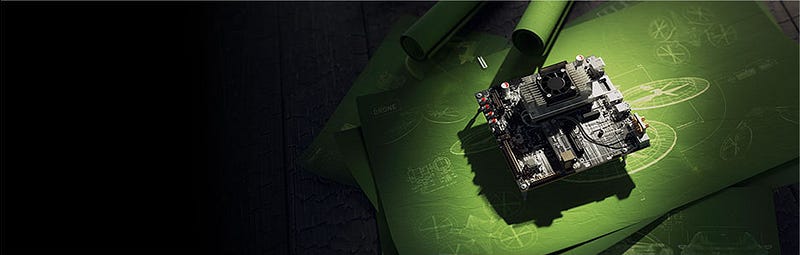
They bill it as āa supercomputer on a module thatās the size of a credit cardā.
NVIDIA is targeting the unit principally at autonomous vehicles, and also medical imaging, which presumably tackles a lot of similar computer vision issues.
The last few years have seen a deceleration in the mobile phone market, as phone manufacturers and app developers have had a harder time figuring out how to improve the smartphone.
I think we will see the converse in the autonomous vehicle market, and the Jetson TX1 is an example of that. In the robotics market, there is a lot more room for improvement, and a greater number of currently-binding technological constraints that can be relaxed.
As a side note, I always waffle on how to spell in NVIDIA, which can appear in the press as āNVIDIAā, āNvidiaā, ānVidiaā, or ānVIDIAā. Since NVIDIAās own website seems to be leaning toward the āNVIDIAā styling, Iāll go with that.
In Wired, Alex Davies compares the self-driving approaches of Google and Ford, and finds them philosophically similar.
Davies compares the two companiesā approaches in light of the NHTSA definition of autonomous driving. The NHTSA definition is lengthy, but Wikipedia has a concise summary:
Level 0: The driver completely controls the vehicle at all times. Level 1: Individual vehicle controls are automated, such as electronic stability control or automatic braking. Level 2: At least two controls can be automated in unison, such as adaptive cruise control in combination with lane keeping. Level 3: The driver can fully cede control of all safety-critical functions in certain conditions. The car senses when conditions require the driver to retake control and provides a āsufficiently comfortable transition timeā for the driver to do so. Level 4: The vehicle performs all safety-critical functions for the entire trip, with the driver not expected to control the vehicle at any time. As this vehicle would control all functions from start to stop, including all parking functions, it could include unoccupied cars.
According to Davies, Level 3 presents significant challenges not present at any other level. Those challenges relate to on-the-fly communication between the driver and the car. Plausibly enough, if the car reaches its limits and needs to pass control to the driver in an emergency, that can be pretty dicey.
Audi says its tests show it takes an average of 3 to 7 seconds, and as long as 10, for a driver to snap to attention and take control, even with flashing lights and verbal warnings.
A lot can happen in that timeāāāa car traveling 60 mph covers 88 feet per secondāāāand automakers have different ideas for solving this problem. Audi has an elegant, logical human machine interface. Volvo is creating its own HMI, and says it will accept full liability for its cars while in autonomous mode.
Googleās opting out of this dilemma. So is Ford.
Perhaps the incrementalist approach is not a winner, after all.
People like to drive. People crave control. People love banal tasks done for them, but the transfer to a computer of a task that can threaten lives with one wrong turn will take a long time.
Iām even cynical that weāre five years from seeing millions of totally autonomous vehicles legally swamping our cities. Itās an exciting idea, a realistic ideaāāābut the scariest idea in the world to rush.
This reminds me of the debate over whether people like to buy vs. rent music. We had that debate a lot when I was in business school. Some people (notably Steve Jobs) insisted that the failure of Rhapsody proved that consumers want to own their music.
I always thought that debate missed the point.
People like to listen to music. Theyāre agnostic about buying vs. renting. They choose to buy or rent purely as a mechanism to get the benefit of listening.
And now that renting offers more benefit than buying, sure enough people are renting.
I see the same thing with cars.
People donāt crave control. Nobody I know refuses to fly planes because they canāt sit in the cockpit.
People crave getting to where they want to go. Once self-driving cars can do that as well or better than people-driven cars, the switch will come faster than most of us expect.
The beauty of audio-only formats is that they do not demand full attentionāāāin particular they do not demand any visual attention, which allows us to listen to audio while doing things like drive, clean the dishes, and vacuum the house.
As cars go fully-autonomous (i.e. the driver no longer even needs to pay attention to the road), will people stop listening to digital audio?
The dishes will always be there, but once vehicular transportation no longer demand our visual attention, I suspect people will opt for YouTube over Pandora.
For what itās worth, I am a big fan of the Slate podcasts.
Tesla Motors CEO Elon Musk hinted Tuesday the carmaker may launch its own network of shared autonomous cars for users to borrow on demand, but he cautioned the company is not ready to make a formal announcement.
So letās work out a preliminary matrix.
Apologies for the poor cut and paste job.
A few things jump out here.
Niche suppliers like MobilEye are friends with everyone.
Startups like Cruise have complicated relationships with everyone, because they are competitors to the same companies that might eventually acquire them.
The relationships status for Uber and Tesla just changed to, āitās complicatedā.
The Wikipedia entry for the Trolley Problem poses a further interesting question for autonomous vehicles:
there is a single person on the tracks who can be easily saved at the cost of inconveniencing your passengers, and the question is no longer āwould you stopā, but āhow many people need to be on the trolley for their inconvenience to trump someone elseās lifeā
Imagine that a vehicle has a choice between mowing down a pedestrian, or swerving and causing a tremendous traffic jam.
My sense is that while these are interesting ethical dilemmas, we can solve a lot of this by falling back on the laws governing human behavior.
Thanks to my brother Adam for an interesting discussion on this topic.