S auto sales are booming, which provides money for R&D. Along those lines, GM has just announced that Super-Cruise hands-free driving will appear in Cadillacs next year.
This is a great step forward technologically, although it’s unclear how important this highway-only, handsfree mode will be to consumers.
“It’s going to be a creep, it’s not going to be a mind-bending thing,” said GM’s product development chief Mark Reuss earlier this year. “I don’t think you’re going to see an autonomous vehicle take over the city anytime soon.”
I’m reminded a little bit of the first touch-screen phones. When I worked at mSpot, I managed a few of our products that ported to the Samsung Instinct, which was pretty buggy and not so functional.
Anyone judging the future of smartphones by using the Instinct could have been forgiven for doubting the whole endeavor.
But the iPhone the phones improved rapidly, due to competition and consumer demand, and by 2010 nobody doubted the importance of smartphones.
I wouldn’t be surprised to see a similar story play out with the first autonomous driving systems.
Yesterday, Sergey Brin made a surprise appearance at a press event for Google’s self-driving car.
USA Today doesn’t report any notable quotes or announcements, but this is still a great sign for self-driving cars.
Brin is famously press-averse, so to see him lavish this much attention both on the automotive group and furthermore on a press event, can only help focus resources on this area.
CNET has a mostly speculative article reporting that in certain cases, Google is training it’s self-driving software to behave more like human drivers.
But which rules of the road is Google prepared to break and which ones will be all too much for its righteous soul? It will now cross double-yellow lines to avoid a car that’s, say, double-parked and blocking its path.
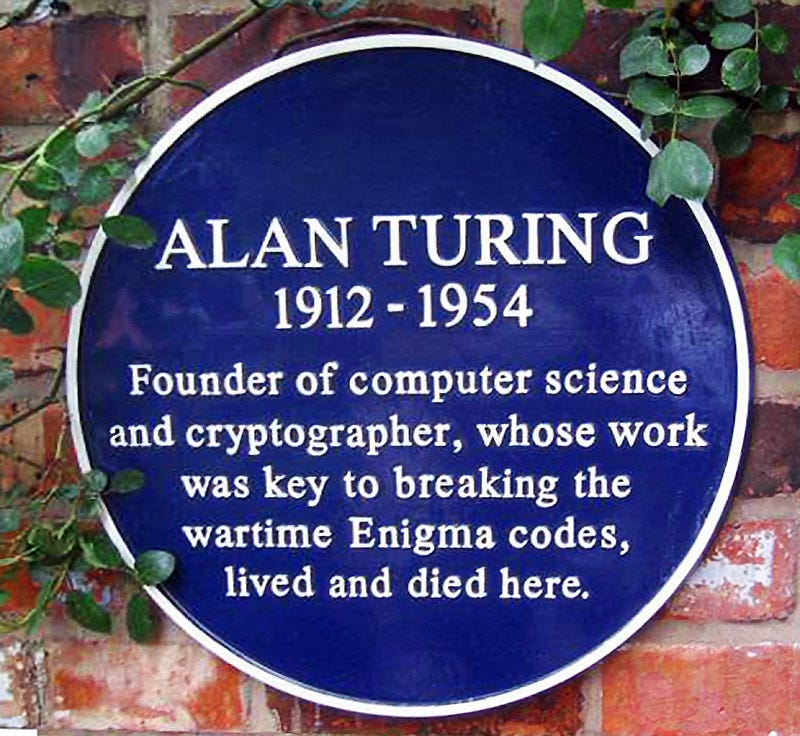
This is an interesting variant on the Turing Test. And do we even want self-driving cars to pass?
After all, to drive in a manner indistinguishable from a human probably means allowing for some unnecessary probability of fatal accident.
There is a wide range of driving ability among humans. If self-driving cars are indistinguishable from the best human drivers, how much less safe are they than if they are programmed to drive perfectly?
In the past few days I’ve seen predictions that we will have self-driving cars by October, 3 years, 5 years, and probably a few more dates.
The question depends on what we mean by “self-driving”.
Elon Musk was just reported to have predicted fully-autonomous cars in 3 years, although in the quote he hedges a little bit, “My guess for when we’ll have full autonomy is about three years, approximately three years.”
Another interesting question is how widespread driving autonomy will be, when it launches.
Both the iPhone and the fully electric car, for example, were luxury goods when they launched, but decidedly mass-market luxury goods. Not $100,000 toys that only the super-rich could afford.
Tesla, however, has yet produce to a mass-market luxury vehicle (let’s define that as a car in the $40,000 range). So far, Tesla’s strategy has worked, and it has moved steadily down-market from the $100,000+ Roadster. But it will be interesting to see where driving autonomy hits on the price scale.
Amusingly, the text of the article does not mention any such collaboration, or why the future will demand it.
Still, it’s worth thinking about the friend and foe relationships.
A helpful analogy is to the mobile phone industry.
On the Android side, the software itself is owned by Google, but the phone manufacturers are separate entities, who try to add value through a combination of superior hardware, distribution, pricing, and some proprietary software.
On the iPhone side, almost everything is branded and owned by Apple, except for the manufacturing, which is done by a variety of largely-anonymous Asian firms. Perhaps the most famous of these is Foxconn.
I am curious whether we will see a lot more of this, and whether these more focused efforts will launch faster than more generalized autonomous vehicles.
Lots of industries have specific purposes for autonomous vehicles — shipping, manufacturing, agriculture, defense, aviation. And presumably it is easier to develop automation within the more narrow confines of a niche industry.
Against that, there is the weight of the auto industry — both incumbents and new entrants — who see an enormous market for self-driving cars.
My guess is that we will see the industries develop in parallel, with successful innovations from one field being cross-purposed in other fields. That warms my heart and makes me thing that self-driving cars are coming even faster.
The self-driving car revolution is mostly being led by big companies — Google, Uber, Tesla. Outside of the tech companies, there are traditional auto manufacturers like Audi and BMW, as well as a host of suppliers ranging from nVidia to Mobileye to Continental Automotive.
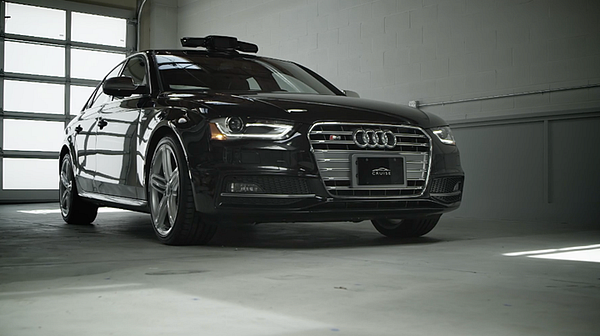
One of the few small startups that is emerging in the driverless car space is Cruise. They just raised another $12MM+ to fund hardware that turns a normal car into an autonomous vehicle.
I have recently been reading The Great Raceby Levi Tillemann, which is a history of the automotive industry and the quest for the electric car, in particular.
At the end of the book, Tillemann spends a few pages riffing on the brief recent history of, and potential for, self-driving cars. Since most of the book is focused on the electric vehicle and it’s environmental benefits, it’s no surprise that Tillemann’s thoughts on autonomous vehicles also converge on environmental benefits.
A few original (to me) points Tilleman makes have to do with the potential for self-parking and the materials requirements of cars.
On the parking front, it is widely believed that autonomous vehicles will sharply decrease parking needs, making everyone’s lives better. But what Tillemann pointed out that I hadn’t considered, is the environmental and time-saving benefits of this. In particular, drivers spend a lot of time circling around their destinations, looking for parking. Eliminating this circling will bring meaningful benefits.
Perhaps a more significant benefit will be the reduction in materials needed to construct cars. As Tillemann writes, “Cars that don’t crash could also be much smaller and lighter, with fewer safety features.”
As I understand it, a lot of the environmental cost of a car comes not even burning fuel for driving, but in the initial construction. If we can make building cars simpler and cheaper, this will ease resource and financial constraints.
I recently wrote about how self-driving cars will revolutionize the world, for the better. Of course, not all changes will be for the good, although I believe the overwhelming effect of self-driving cars will be positive.
But here are some of the potential negative consequences of self-driving cars. For this list, let’s focus on externalities — that is, let’s assume that the self-driving cars work well enough that individual drivers still want to use them, and then let’s think about what kind of societal costs that might entail.
Infrastructure — Self-driving cars will lower the cost of driving, which should lead to people driving (really, riding) a lot more. This will cause a lot of wear and tear on America’s road system. And if self-driving cars enable travel speeds of 100 mph+, that will make the problem even worse.
Pollution — Assuming self-driving cars increase the number and velocity of car trips, that will require a lot of energy. Ideally, self-driving cars will develop in tandem with cleaner electric cars, but even electric cars cause pollution.
Urban Design — We have optimized our cities for people-driven cars (think lots of traffic lights, intersections, and parking spaces). This design may not be ideal for self-driving cars in ways that we can forsee (too much parking) and ways that we cannot yet envision.
Traffic — With more cars on the road, rush hour could get really bad. My hope is that the volume of cars is offset by their throughput (if cars are moving twice as fast, we can get away with approximately twice as many cars on the road without increasing congestion). But it’s not totally clear how that will play out, especially if self-driving cars reduce the human cost of being in a traffic jam.
Fatalities — Self-driving car accidents might start to look like airplane accidents — rare, but when they happen, everyone dies.
I’m sure there are additional costs that I have not considered here. My strong belief, however, is that the benefits of self-driving cars will far outweigh the costs.