Gamechangers Podcast

Image

I just finished listening to my friend, Bryan Catanzaro, on the Gamechangers podcast, from The Economist. The whole podcast series is terrific. There are only three episodes so far, but I recommend all three.

The first episode expands the history of lithium-ion batteries, including the migration away from lead-acid batteries. The episode features interviews with John Goodenough and Stanley Whittingham, two of the three recipients of the 2019 Nobel Prize for Chemistry. Tesla founder Marc Tarpenning also features prominently.

The next episode focuses on messenger RNA, the basis for the most successful COVID-19 vaccines. Drew Weissberg, who has not yet won a Nobel Prize, but will, appears, as well as Moderna co-founders Derrick Rossi and Robert Langer. I did not know that “Moderna” is an abbreviation of “modified RNA”.

The final episode explores the connection between video games, graphical processing units, and deep learning. Andrew Ng has some good stories, as does Yoshua Bengio, and Bryan Catanzaro represents NVIDIA.

Relatedly, I enjoyed this interview with Akira Yoshino, the third recipient of the 2019 Nobel Prize in Chemistry. The man just seems so excited about the future, and lithium-ions, in particular.

Farm To Fleet

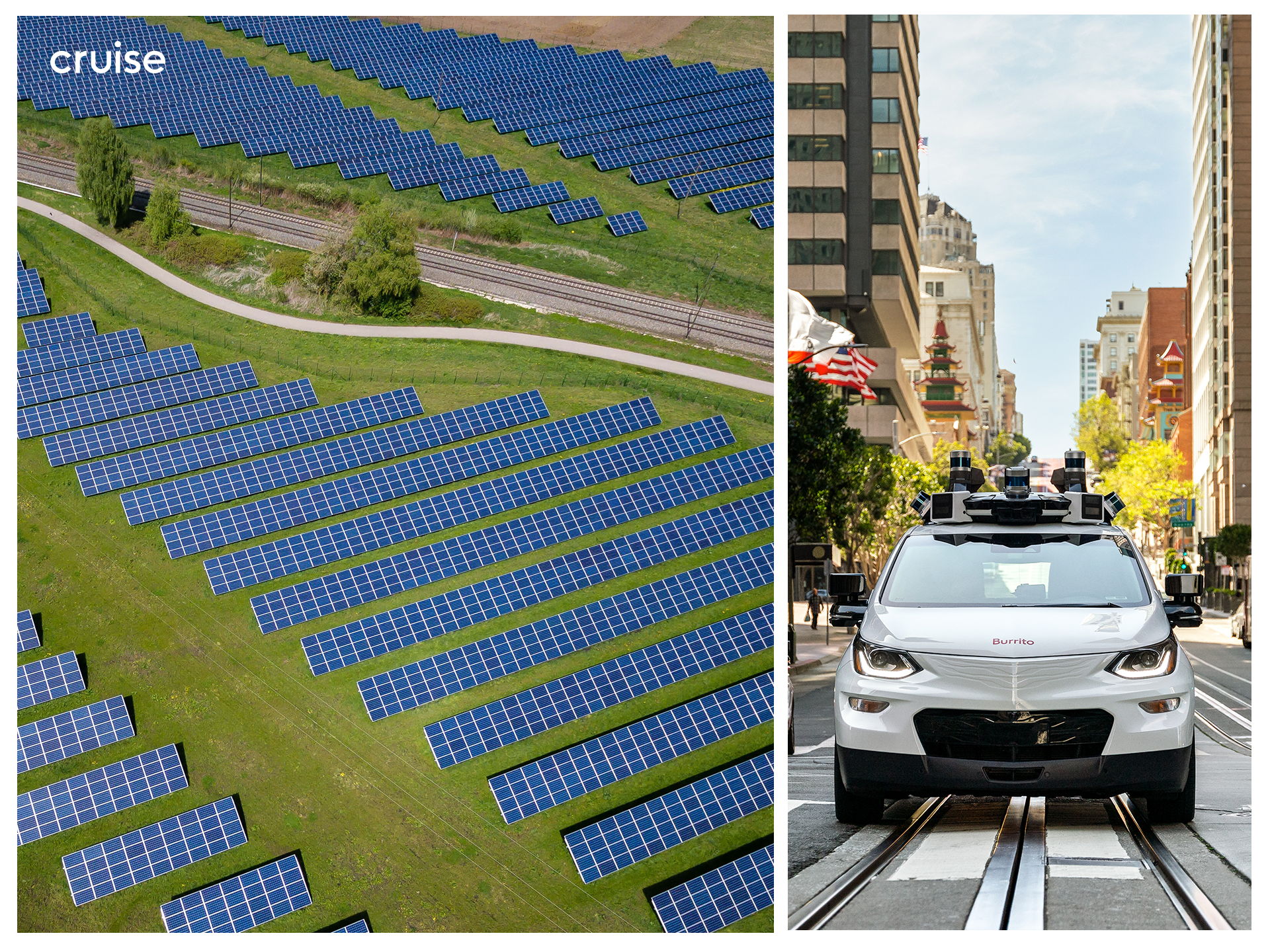
This week, Cruise announced a Farm To Fleet initiative to power our all-electric self-driving vehicle fleet with renewable energy from California’s Central Valley.

“Cruise began sourcing our solar renewable energy credits (RECs) from farms in California’s Central Valley that generate their own solar power on-site earlier this spring…
Through this initiative, every mile that Cruise drives in California helps to directly generate economic opportunity for farmers.”

I learned about this initiative right after reading Scott Alexander’s blog post about carbon credits.

“I think the most important thing it could convince you of is that if you were previously planning on letting yourself be miserable to save carbon, you should buy carbon offsets instead.”

Renewable energy credits come with some real monitoring and enforcement challenges, as Alexander explains in his blog post.

But monitoring and enforcement can make renewable energy credits, like those that Cruise is sourcing from the Central Valley, an important part of fighting climate change.

Tuesday Autonomous Vehicle Round Up

Andalusia, The Round Up by Joaquin Sorolla

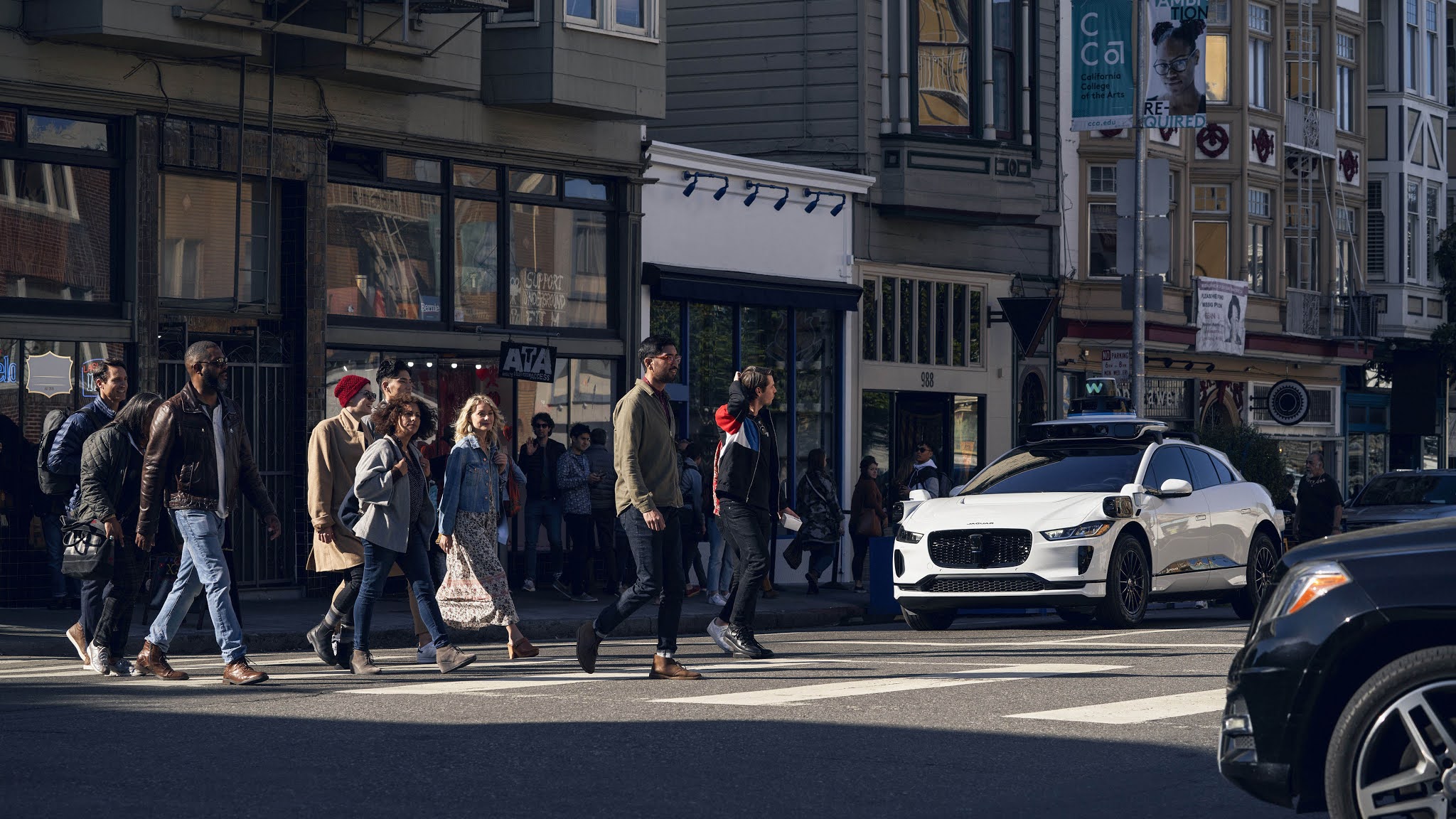
Waymo Is Driving 100,000 San Francisco Miles Per Week

Waypoint - The official Waymo blog: Expanding our testing in San Francisco

They identify four core strengths:

  1. Custom sensors
  2. Machine learning
  3. Transfer learning (e.g. from Phoenix and from trucking)
  4. Focus

“Our machine learning models have observed and learned countless other small nuances that help us drive like locals. Through our experience of driving in San Francisco, for example, the Waymo Driver has learned that residents often drive slightly slower while traveling up steep slopes. Therefore, based on its experience and depending on the speed and flow of traffic, the Waymo Driver does, too, to provide San Franciscans with a familiar and comfortable experience navigating the city’s many hills.”

Lots more on the Waymo blog.

AI Day Shows How Many Things Tesla Is Doing

Tesla AI Day 2021 featured executives presenting the full range of the company’s artificial intelligence efforts, from computer vision to planning and controls to simulation to data infrastructure to automotive super computers to data center supercomputers. Elon Musk capped the event by announcing a humanoid robot that Tesla TSLA+0.9% is developing.

For example:

Tesla optimized the training nodes for neural network computation, with a focus on parallel matrix multiplication. And the team custom designed the D1 chip with 7 nanometer silicon etching technology.

Tens of thousands of D1 chips come together on a pizza box-sized “training tile”, which has 9 petaflops of computational power.

One million training tiles will make up the ExaPOD, Tesla’s data center supercomputer.

More to read in my latest Forbes.com article.

Autonomy, Front And Center At Baidu World 2021

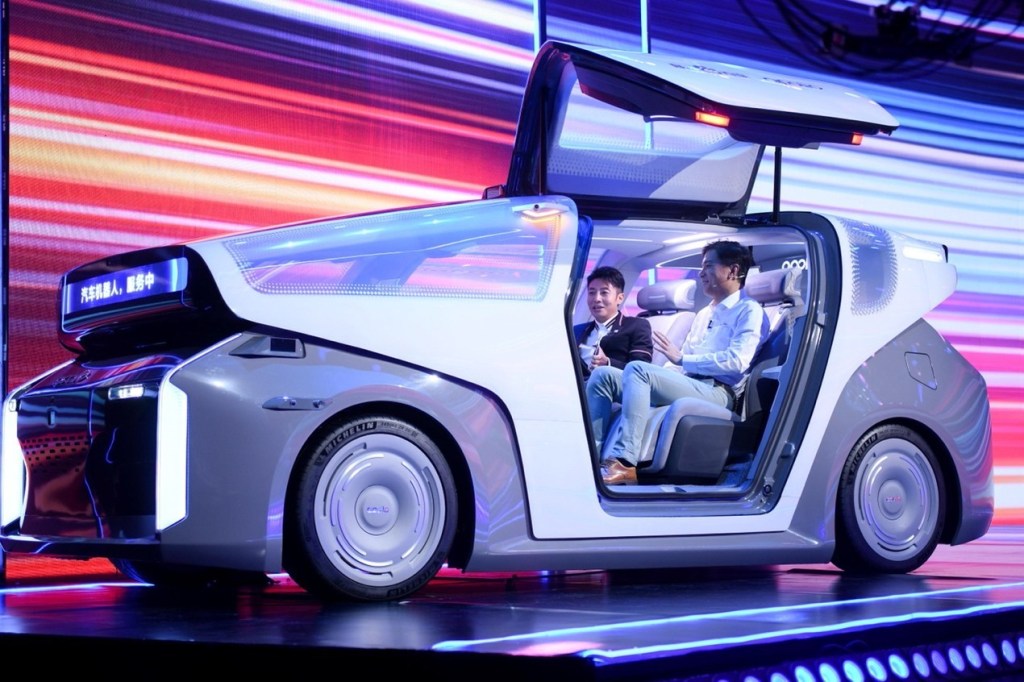
Baidu Co-founder and CEO Robin Li and CCTV host Beining Sa sit in Baidu’s newly launched robocar

Baidu World 2021 showed how central autonomous mobility is to the Chinese Internet giant. The company, which operates the most popular search engine in China, has dedicated immense resources toward next-generation transportation, first and foremost through its Apollo self-driving car program.

The three hour Baidu World presentation kicked off with CEO Robin Li unveiling the company’s new Robocar. The vehicle has two seats, no steering wheel, gull wing doors, and windshields that double as computer displays.

The vehicle has the feel of a concept car, rather than something that might ever hit real live streets. But the presentation quickly cut to a live demonstration of the car transporting Baidu employees in a suburban-style environment. The number of Robocars in existence, and their true capabilities, are unclear, but they are real enough to at least handle a demonstration route.

Read my latest Forbes.com article.

QCraft Raises $100M

qcraft

I’ve been writing about autonomous shuttles having a moment, which continues with the announcement that Meituan led a $100 million investment round for QCraft, a Chinese autonomous shuttle company.

QCraft is building and operating autonomous shuttles in Suzhou, Shenzhen, and Wuhan. The company hinted at expansion into point-to-point or even robotaxis models.

Meituan, the lead investor in this round, is China’s largest food delivery company. Presumably they are interested in the application of this technology for that purpose.

In Praise Of Pittsburgh

Pittsburgh's population slides, but no longer falling off a cliff |  Pittsburgh Post-Gazette

I was just talking yesterday with a Cruiser who is currently located in Pittsburgh, because his girlfriend is in grad school there. I mentioned that Pittsburgh might have the best combination of amenities compared to cost of living in the United States.

PNC Park rivals Chicago’s Wrigley Field and San Francisco’s Oracle Park as the best stadium in baseball. Carnegie Mellon has ridden the strength of its computer science department to become of the country’s premier research institutions. The topographic location of the city, at the confluence where the Allegheny and Monongahela Rivers merge to form the Ohio, is spectacular. Plus there’s a funicular.

All of that makes Pittsburgh a first-class city, but what really sets it apart is the cost of living, which is half that of San Francisco. Cost of living in Pittsburgh is actually comparable to cost of living in Roanoke, Virginia.

And what is really striking are the employment opportunities. In addition to the old industrial behemoths like US Steel and Heinz, and alongside UPMC, Pittsburgh has built a robust technology ecosystem. The Post-Gazette just highlighted all the Pittsburgh technology companies going public: Duolingo, Aurora, Argo, Cognition Therapeutics, Stronghold Digital Mining.

Google has long had an office in Pittsburgh, along with many other companies seeking to hire Carnegie Mellon students. Waymo just opened an office, and Motional has a big presence.

You just have to survive the winters.