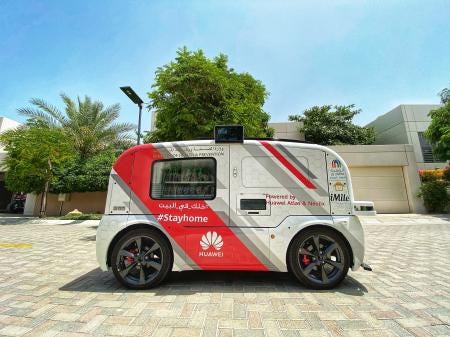
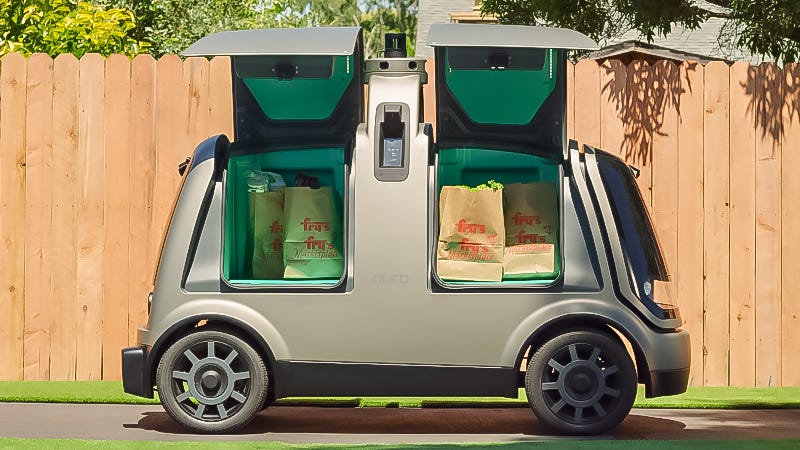
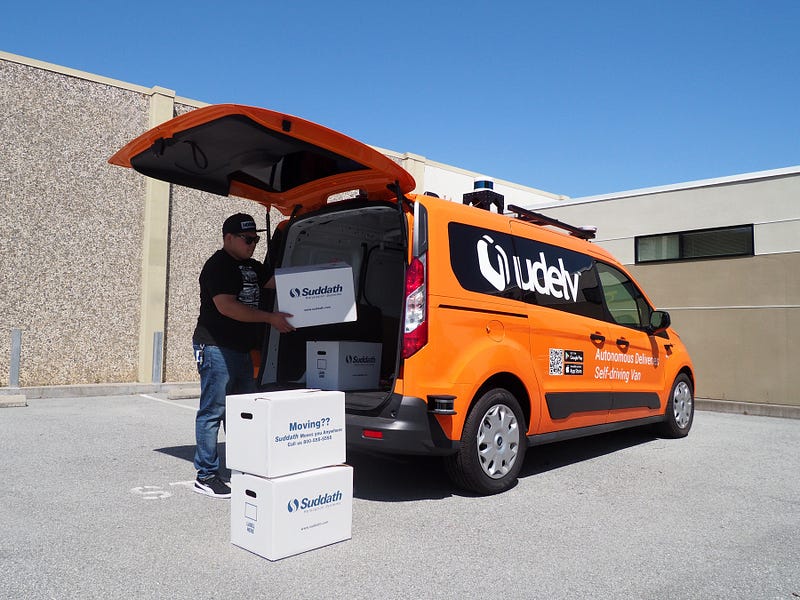
It can be hard keeping up with all the different companies working on autonomous vehicles!
I recently came across two lists of autonomous vehicle companies that I found helpful: “The State of the Self-Driving Car Race 2020” (Bloomberg) and “Factbox: Investors Pour Billions Into Automated Delivery Startups” (New York Times).
The Bloomberg article summarizes the larger, better-funded efforts, whereas the Times covers fundraising by smaller startups.
Between the two of them, how many of these companies are you keeping up with?
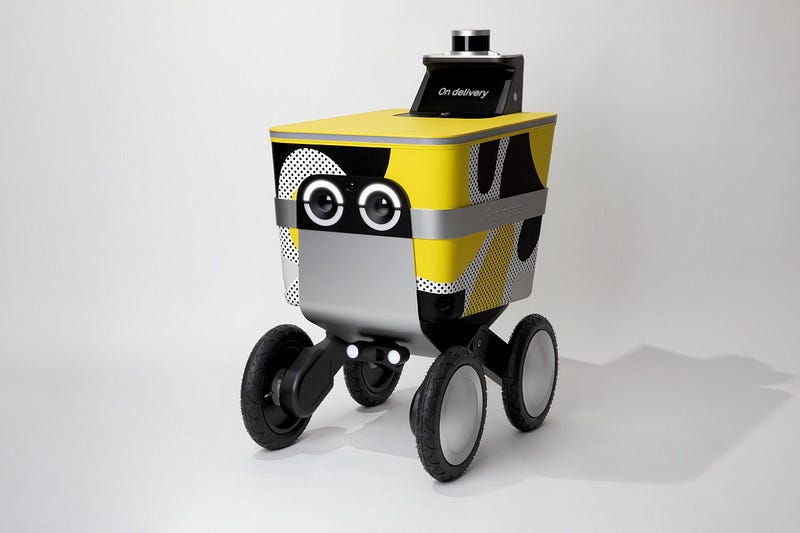
Postmates teleoperations staff is now working from home, as are so many office workers during the COVID-19 pandemic. Postmates has provisioned its teleoperations staff with the necessary equipment to remotely operate vehicles from home.
Postmates says that by moving this job to a work-from-home setup, it’s opened the role to many more possible operators.
The interesting question, for me, is whether Postmates and Phantom Auto can make this setup economical enough for massive scale.
Teleoperators can be free data labelers, as well. If Postmates and Phantom can make the teleoperators economical at scale, that would be a huge data advantage.
The blog post describes how Waymo uses deep learning to tackle the challenging problem of predicting the future. Specifically, Waymo vehicles need to predict what everyone else on the road is going to do.
A model-based approach relies on our knowledge (“model”) of how actors behave. A car turning left through an intersection is likely to continue turning left, rather than come to a complete stop, or reverse, or switch to a right-turn.
A data-driven approach uses machine learning to process data from real world-observations and apply the resulting model to new scenarios.
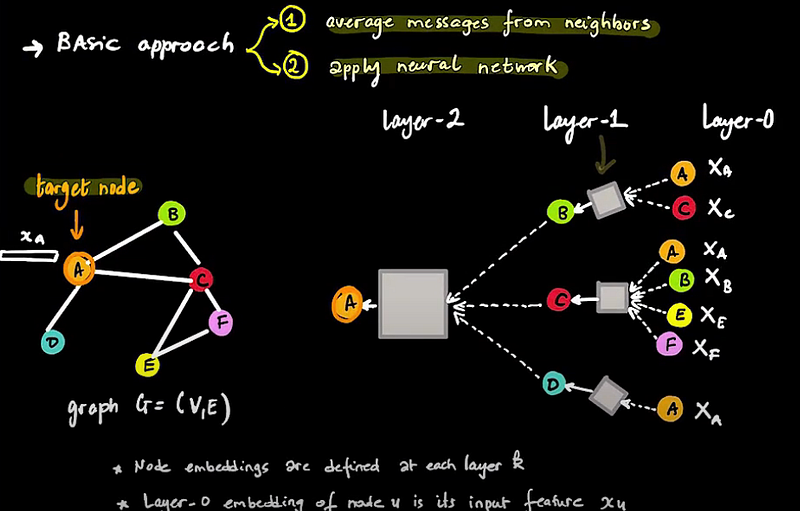
VectorNet is a data-driven approach takes relies heavily on the semantic information from its high-definition maps. Waymo converts semantic information — turn lanes, stop lines, intersections — into vectors, and then feeds those vectors into a hierarchical graph neural network.
I’m a bit out of touch with the state-of-the-art in deep learning, so I followed a link from Waymo down a rabbit hole. First I read “An Illustrated Guide to Graph Neural Networks,” by a Singaporean undergrad named Rishabh Anand.
It was a longer rabbit hole than I anticipated, but this talk was just right for me. It has a quick fifteen minute review of CNNs, followed by a quick fifteen minute review of graph theory. About thirty-minutes in she does a really nice job covering the fundamentals of graph neural networks and how they allow us to feed structured data from a graph into a neural network.
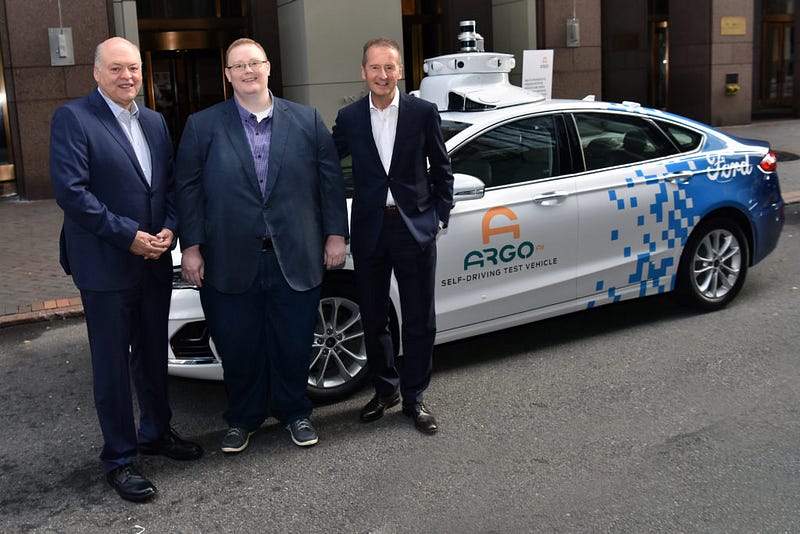
Wired has a recent and very flattering profile of Brian Salesky, founder and CEO of Argo, Ford’s self-driving car venture.
The piece has more information than I’ve read elsewhere about the early history of the Google Self-Driving Car Project, now known as Waymo. There’s also a good description about the friendship and rivalry between Salesky and Aurora CEO Chris Urmson.
Paul Leinert reports an amazing read in Reuters. Tesla is planning to launch breakthrough electric batteries that will make the cost of electric powertrains as economical or even better than gasoline.
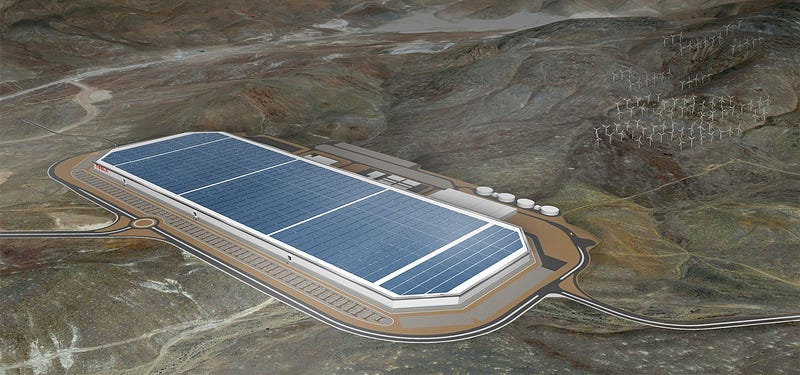
As if that’s not enough, Tesla is going to build “Terafactories” in China to produce these batteries. Terafactories will be at least an order of magnitude bigger than Tesla’s Nevada “gigafactory”.
There’s also some battery chemistry in the piece, as well as an academic laboratory from Nova Scotia, of all places.
It’s almost too out there to believe, but it seems just plausible and Paul is one of the automotive industries best reporters on future technology.
I confess I was previously unfamiliar with the term “middle mile”, which apparently refers to the fixed routes between centralized distribution centers and dispersed retail locations.
The advantage, I take it, is that “middle mile” routes are limited and fixed, which would dramatically simplify technical challenge.
The box trucks should also be simpler to handle than articulated tractor-trailers.
The middle “swivel” point between a tractor and trailer adds a huge degree of complexity for control systems — not only laterally, but also vertically. The back of the trailer literally bounces up and down.
Box trucks are essentially rigid bodies in that way, like cars.
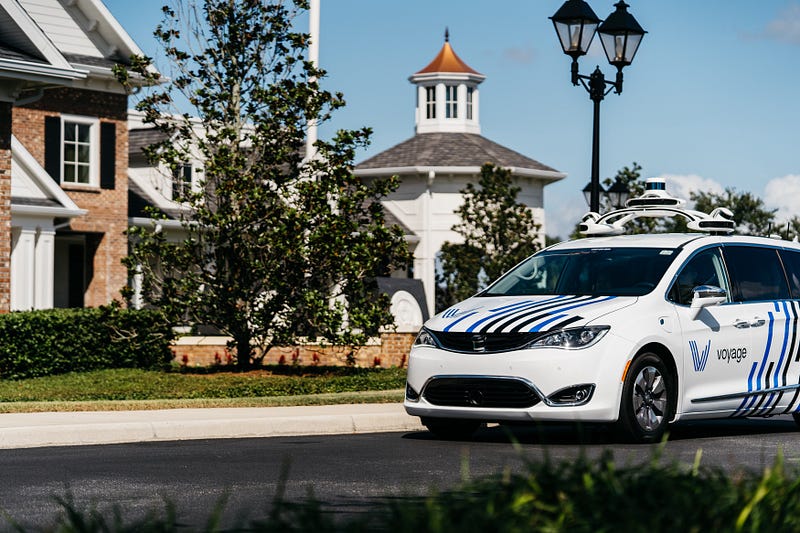
One of the big questions in autonomy is how and how much it is possible to simplify the technical challenge of autonomy. Tesla approaches this by limiting self-driving mainly to highways. Waymo limits its vehicles to specific geofences in a few metro areas. Voyage tackles this deploying relatively low-speed vehicles in gated retirement communities. Other vehicles work on sidewalks, or farms, or warehouses, or mines.
Gatik is betting that “middle mile” logistics will be a favorable niche.
I’d love to see some way to quantify how simple an environment is.
Rivian, which operated in stealth mode for nearly a decade, continues to quietly fly under the radar as one of the most intriguing startups in mobility.
The average American has never heard of them, and probably will never hear of them until they launch their first electric vehicles next year.
They’ve raised a ton of money since their founding in 2009, and they’ve made some recent news as a possible pawn in a (possibly non-existent?) competition between Jeff Bezos and Elon Musk.
If you want to learn a bit more about Rivian and listen to highly-energetic take on why first Ford and now Amazon should buy Rivian, check out this video from HyperChange last year.
“That was a clear moment in time where the whole industry went from being a bull market to a bear market,” Mr. Cameron said. “Covid has taken us even further into the bear market.”
The Times closes with the high capital needs of self-driving companies.
With autonomous vehicles, “you may find yourself in a company that requires billions of dollars of capital,” with no clear timeline for building a large business or seeing a return on the investment, said Aaron Jacobson, a partner at NEA.
This is true, and it is one reason robotics companies are not super attractive generally, at the moment. But it would be a mistake to get too spooked by the industry’s capital needs.
The other side of that coin, as Warren Buffett has preached for years, is that capital intensive businesses offer the opportunity to deploy huge amounts of capital with attractive returns. Capital requirements also form a durable moat around the business.
What this tells me is that direct to learner businesses are very attractive. They can serve a very large number of learners very efficiently, they can lightly monetize and yet produce massive revenues because of their scale, and they don’t require a huge amount of capital to build.”
Autonomous vehicles and online education are both attractive industries, but they are very different industries, with distinct capital needs. Companies in each industry have to tailor their business plans to that reality.
I remember less than four years ago meeting the whole Voyage team was at Udacity and had never worked on self-driving cars. Now they’re following the same path and building on the same platform as Waymo.
This team is truly an inspiration that if you work hard you won’t believe what you can accomplish.
And check out this video!
Got 2 minutes to kill? Nerd out with us by watching our self-driving car navigate: