US DOT Issues Self-Driving Car Guidelines

The United States Department of Transportation has issued guidelines about self-driving vehicles.

The tone seems to be largely positive:

For DOT, the excitement around highly automated vehicles (HAVs) starts with safety. Two numbers exemplify the need. First, 35,092 people died on U.S. roadways in 2015 alone. Second, 94 percent of crashes can be tied to a human choice or error.2 An important promise of HAVs is to address and mitigate that overwhelming majority of crashes.

A goal that DOT highlights is to prevent a patchwork of regulations across state lines. Of course, one person’s “patchwork of regulations” is another person’s “laboratories of democracy”.

The full report is over 100 pages and I confess I’ve only read the Executive Summary. But so far, so good.
Udacity Self-Driving Car Online Open House

At 4:30pm PDT today (Tuesday, September 20) we’ll be hosting an online open house for the Udacity Self-Driving Car Engineer Nanodegree program.

We’re collecting questions from students and our Director of Learning, Dhruv Parthasarathy, will be asking me to answer them live. Hopefully I won’t trip up on live Internet.

If you have any questions you’d especially like us to answer, please leave them in the comments here.

And tune in!

The Future of Lyft (and the World) is Autonomous

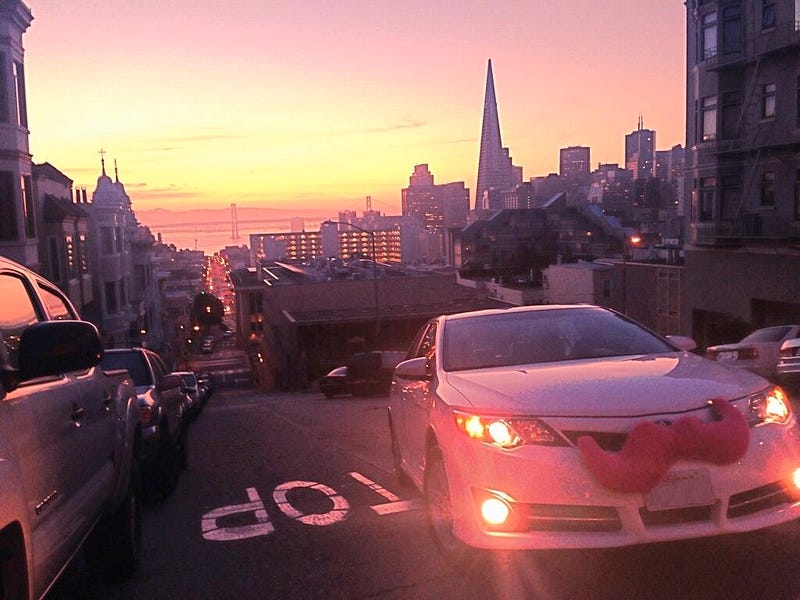
Lyft co-founder John Zimmer has written a long thinkpiece on Medium, outlining the future of Lyft, transportation, America, and the world.

The headlines coming out of the piece are that most of Lyft’s rides will be driverless by 2025, and that private car ownership will be dead in urban America by that time.

But it’s really a magnum opus on transportation and technology.

Helpfully, Zimmer divides the piece into sections.

1. Autonomous vehicle fleets will quickly become widespread and will account for the majority of Lyft rides within 5 years.

2. By 2025, private car ownership will all-but end in major U.S. cities.

3. As a result, cities’ physical environment will change more than we’ve ever experienced in our lifetimes.

Read the whole thing.

The Electrification of Self-Driving Cars

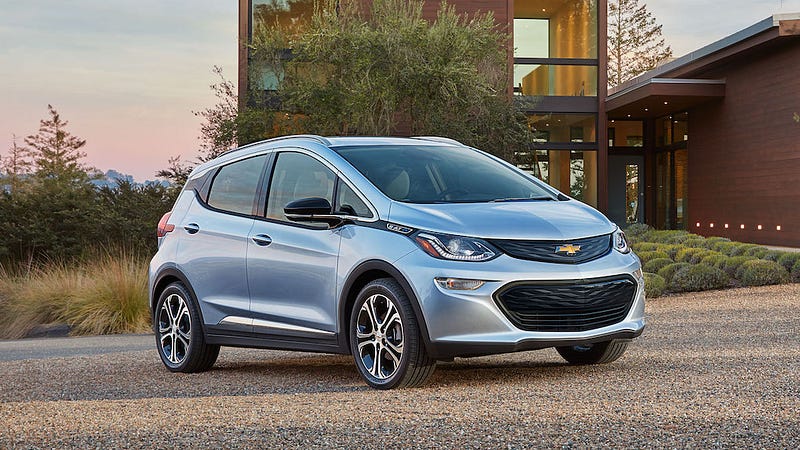
The Detroit Free Press has a long article on why self-driving cars will be mostly electric, instead of gas powered.

“There are a lot fewer moving pieces in an electric vehicle. There are three main components — the battery, the inverter and the electric motor,” said Levi Tillemann-Dick, managing partner at Valence Strategic in Washington, D.C., and author of “The Great Race: The Global Quest for the Car of the Future.” “An internal combustion engine contains 2,000 tiny pieces that have to be kept lubricated and they break every once in a while.”

That’s probably true (although I’m not a powertrain expert), and it might account for why big OEMs are going electric vs. gas for their self-driving car fleets.

But there’s a more pressing and practical reason for self-driving car engineers working on today’s vehicles: it’s not possible to make most purely gas-powered vehicles self-driving.

It all comes down to braking. Hitting the brakes is still a purely mechanical function in almost all cars, for safety reasons. The logic is that computers are less reliable than mechanical parts, and you don’t want anything to jeopardize the functioning of the brakes.

However, that means that it’s not possible to retrofit the car drive itself, because there’s no computerized way to tell the car to brake.

The solution is to use electric and hybrid vehicles, which have electronic brake controls build into the hybrid powertrain. Combine that with some sort of brake control from parking assistance, and that’s enough to control to make a self-driving car stop.

TensorFlow vs. TF Learn vs. Keras vs. TF-Slim

One module in Udacity’s Self-Driving Car Nanodegree program will cover deep learning, with a focus on automotive applications.

We’ve decided to use the TensorFlow library that Google has built as the main tool for this module.

Caffe, an alternative framework, has lots of great research behind it, but TensorFlow uses Python, and our hope is that this will make learning it a lot easier for students.

Even with TensorFlow, however, we face a choice of which “front-end” framework to use. Should we use straight TensorFlow, or TF Learn, or Keras, or the new TF-Slim library that Google released within TensorFlow.

Right now we’re learning toward TF Learn, almost by default. Straight TensorFlow is really verbose, TF-Slim seems new and under-documented. Keras and TF Learn both seem solid, but the TF Learn syntax seems a little cleaner.

One big drawback to TF Learn, though, is the lack of easily integrated pre-trained models. I spent a while today trying to figure out how to migrate pre-trained AlexNet weights from Caffe to TF Learn.

So far, no one solution is jumping out at me as perfect. Let me know in the comments if you’ve got a suggestion.

More Self-Driving Car News

Ford Will Sell Self-Driving Cars to the Public by 2025

Monday’s news of an employee-only autonomous service is a middle step before the automaker’s first self-driving public implementation in 2021. And President and CEO Mark Fields said such vehicles likely won’t be ready for sale directly to the public until at least the middle of next decade.

George Hotz Will Ship by the End of the Year

Would you pay $999 to give your car self-driving chops?

George Hotz is betting the answer is yes. The 26-year-old iPhone and PlayStation hacker turned entrepreneur is behind Comma.ai, a new Bay Area company that is powered largely by his brains and chutzpah, as well as $3 million in funding fromAndreessen Horowitz.

Google X Employees (get it?) Are Forming a New Company

[Nuro.ai] wouldn’t reveal too many additional details about what exactly they’re doing, but here’s what we know:

The company’s plans involve creating a “level four,” which is geek for an entirely hands-free self-driving car.

But the car is only the first in a line of products Nuro plans to develop. We don’t know what else they’ll create, but it won’t be solely transportation-related.

That’s because Nuro’s team includes engineers with robotics, artificial intelligence and self-driving experience who had a hand in either developing or shipping an unusually wide range of products including Nexus cameras, Google Image search, the Mars Exploration and Curiosity Rovers, Google street view, Google’s self-driving cars and a number of surgical tools.

The company has raised funding, but it won’t say how much and from whom.

Nuro plans to launch its first product — a self-driving car — in two to four years.

Learn to Build Self-Driving Cars with Udacity

Build a self-driving car with Udacity!

I was at TechCrunch Disrupt yesterday, where Udacity’s founder and chairman, Sebastian Thrun, announced the opening of applications for our Self-Driving Car Nanodegree program.

He also announced that students will be able to run their code from the course on a real car.

The biggest company-wide emphasis at Udacity since I joined has been “Only at Udacity”, a focus on launching programs and courses and experiences that only Udacity provides.

A self-driving car program that is available to students everywhere in the world is, on its own, an Only at Udacity program.

Helping students around the world take their code and put it on an actual car takes us to something even beyond that.

So come build a crowd-sourced self-driving car with us. Sign up here!

Tesla Makes Radar a First-Class Citizen

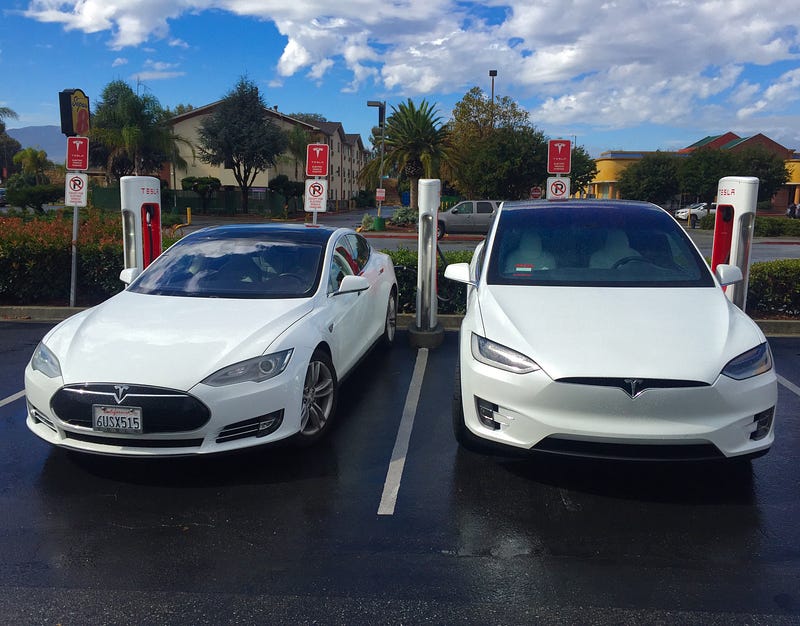
Tesla has announced that Autopilot will increase its reliance on radar, promoting it to first-class status within the sensor suite of Tesla vehicles.

The radar was added to all Tesla vehicles in October 2014 as part of the Autopilot hardware suite, but was only meant to be a supplementary sensor to the primary camera and image processing system.

After careful consideration, we now believe it can be used as a primary control sensor without requiring the camera to confirm visual image recognition.

The blog post does not mention the fatal accident back in May that occurred while the car was on Autopilot, although it’s easy to speculate that the Autopilot update may be related to that specific accident.

When the car is approaching an overhead highway road sign positioned on a rise in the road or a bridge where the road dips underneath, this often looks like a collision course. The navigation data and height accuracy of the GPS are not enough to know whether the car will pass under the object or not. By the time the car is close and the road pitch changes, it is too late to brake.

That is basically the same scenario that caused the May accident.

Tesla does relay some interesting information about why they initially relied much more heavily on camera than on radar.

This is a non-trivial and counter-intuitive problem, because of how strange the world looks in radar. Photons of that wavelength travel easily through fog, dust, rain and snow, but anything metallic looks like a mirror. The radar can see people, but they appear partially translucent. Something made of wood or painted plastic, though opaque to a person, is almost as transparent as glass to radar.

The blog post also covers at least one scenario in which Tesla is uploading driving data from its users and using that to teach the fleet to drive better. And that’s notable in and of itself.

So, all around, a blog post worth reading.

Sunday Self-Driving Stories

Volvo Self-Driving Mining Vehicles: I forgot to mention this in my round-up of niche industries for self-driving cars, but Paul Lienert reminded me on Twitter. Volvo has self-driving dump trucks operating in Sweden’s Kristineberg Mine.

Denso Buys Fujitsu Ten: Denso isn’t well-known in the US, but they are Japan’s biggest automotive supplier, and the second-largest in the world, behind Bosch. They purchased a controlling stake in a subsidiary of Fujitsu, specifically the radar group, which is critical for self-driving cars. It’s a move that signals the Japanese auto industry may focusing more on autonomous vehicles.

Layoffs in Apple’s Car Group: Apple’s self-driving car group, allegedly code-named Project Titan, is a little bit like the Delta Force — everybody knows they exist but nobody will confirm it. Recent layoffs in the group were reported by just about every major news outlet, though, so I think it’s safe to say that both the group and the layoffs are real. Reading between the lines, it looks like Apple may be moving away from physical hardware and focusing increasingly on self-driving software.

Udacity at TechCrunch Disrupt

Udacity will have a big presence at TechCrunch Disrupt in San Francisco this coming week, with a big emphasis on our Self-Driving Car Nanodegree program.

I’ll be at the conference all day on Tuesday, so please come say hello if you’re there. I’ll be standing next to the car wrapped in the Udacity logo, with lidars and radars on it 🙂

Also, Sebastian Thrun goes on-stage on Tuesday at 9:25am to speak about self-driving cars and online education, and he’s more interesting than me, so be sure to catch that.

See you there!