Tesla Crash Update

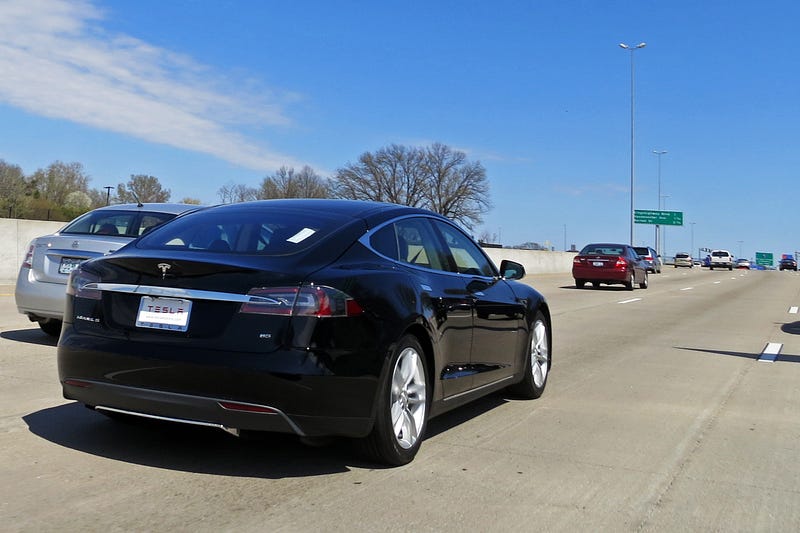
According to several news outlets, Tesla engineers testified in front of Congress that they are still uncertain what caused the fatal crash in Florida in early May.

There are two theories, one involving radar and camera, and one involving the brake system.

I tried to find a story to link to, but they all seem to open noisy videos, sorry.

This is a little bit of a puzzling outcome, and may explain why Tesla waited so long to announce the crash in the first place.

Standard practice would be to recover the sensor data leading up to the crash from the vehicle, feed that data into a simulator, and figure out what happened.

Surely Tesla has a simulator. So I can see at least two possibilities for the confusion:

  1. Tesla was unable to recover all of the sensor data from the crash.
  2. Tesla recovered all the sensor data, feed it into the simulator, and the simulator didn’t crash. That might leave Tesla at a loss to explain the discrepancy between the simulator and the real world.

The latter is more worrisome than the former.

Project Titan Update

One of the big mysteries in Silicon Valley is how far along Apple is with its development of a self-driving car.

Bloomberg delivers an update today, sourced entirely to “people familiar with the project.”

The immediate news is that Apple has hired Dan Dodge, the founder of QNX, presumably to lead their vehicle software efforts.

The larger story seems to be confusion at Apple, which supposedly has large software, hardware, and sensor divisions, yet is now planning to deliver automotive software.

I’m a little more impressed by what Apple’s done, even if it’s just keeping a huge engineering effort largely under wraps. I think we might see something impressive come out of it.

But mostly I’d like to see a named source willing to go on the record.

Research and Production

I just had lunch yesterday with a young engineer who works for a big SaaS software firm and would love to get a job working on autonomous vehicles. But, he asked, how hard is that to pull off without going to grad school?

Later yesterday I responded to some inquiries from potential Udacity students about jobs in the self-driving car industry. Same question: do I need a PhD to land a job in the industry?

At Udacity we are building a Self-Driving Car Nanodegree and we’re doing it because there’s a huge interest in this area and companies need to hire a lot of engineers! We wouldn’t be doing it if we thought you had to get a PhD to work on self-driving cars.

A lot of that demand for engineers, it turns out, comes from the transition of autonomous vehicles from research to production.

Until recently, autonomous vehicles were largely under the umbrella of the research divisions of large companies. Those research divisions are much smaller than production divisions, and they’re staffed by folks with sterling academic credentials — PhDs in computer vision and deep learning and robotics. They’re great at pushing the cutting edge.

What research divisions are less great at is pushing out products, because they’re not designed for that.

Production divisions tend to be staffed by terrific engineers who are focused on shipping code. These engineers are often not PhDs or cutting-edge researchers. They’re more oriented towards getting a product built, testing it, and scaling it.

There also tend to be a lot more engineers, just in absolute numbers, in production areas than in research.

The migration of autonomous vehicles from research to production is a big reason why this is a terrific time for engineers to move into the field of autonomous vehicles.

As my friend Jinesh from Ford said:

“It’s helpful to know C++ or to have experience with human-machine interaction. But being adaptable and a quick learner is more important since companies that design and build robotic cars may be using a different mix of technologies or applying them in different ways.”

“We’re Looking for Innovators”

Dice.com has a couple of articles up about the huge demand for self-driving car engineers. And my cricket buddy from Ford, Jinesh Jain, is featured!

So I thought I’d share some of Jinesh’s quotes.

“It’s helpful to know C++ or to have experience with human-machine interaction. But being adaptable and a quick learner is more important since companies that design and build robotic cars may be using a different mix of technologies or applying them in different ways.”

And I like to think that this quote is specifically directed at me 😛

“Successful candidates bring a fresh set of eyes and new ideas. The auto industry is on the cusp of a great transition so, we’re looking for people who can drive innovation.”

Jinesh is great. You should work on self-driving cars so you can meet him!

Tesla and Mobileye Break Up

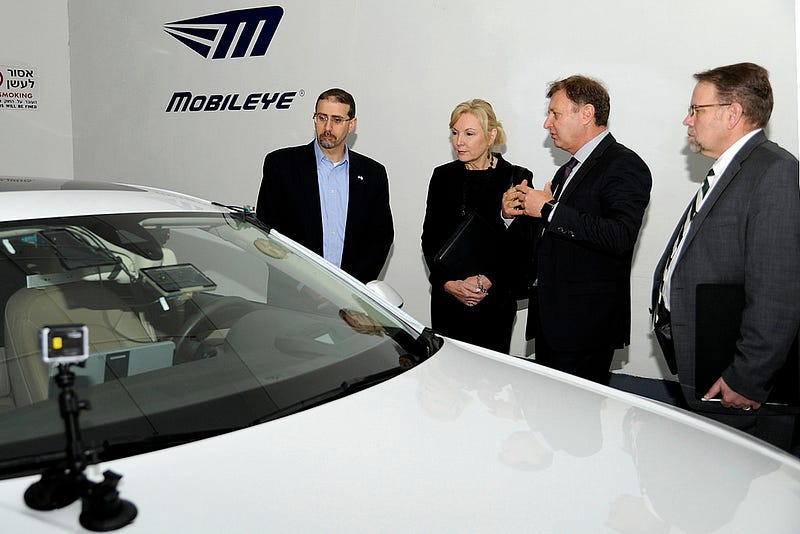
On an earnings call today, Mobileye announced that it will not be providing any more computer vision or sensing products to Tesla. This ends what had been perhaps the most prominent manufacturer-supplier relationship in the autonomous vehicle world.

Mobileye announced that it will move from focusing on driver assistance components to a focus on fully autonomous vehicle components. However, Mobileye CTO Amnon Shashua declined to state who broke up with who.

This is a huge surprise to me, although in hindsight there were some signs.

Immediately after the announcement of the first Tesla Autopilot fatality, Mobileye and Tesla issued conflicting statements about whether Tesla could have used Mobileye’s technology to prevent the crash. Mobileye said its products were not yet designed to handle that type of situation, whereas Tesla indicated the sensor data could be used to avoid future such accidents.

That was a surprising amount of daylight between two normally tight partners.

Tesla CEO Elon Musk also tweeted some positive statements about progress being made with Bosch, which is Tesla’s radar vendor. The absence of any such statements with Mobileye was conspicuous.

Finally, there have been on-again-off-again rumors about whether Tesla was looking for a different computer vision vendor for years.

Writing all that down, I’m thinking maybe this wasn’t such a shock after all.

Self-Driving Car Panel

A small team of us from the Udacity self-driving car team will be at the Silicon Valley Artificial Intelligence panel tonight, which focuses on Self-Driving Cars.

Please come out to meet us!

Sorry, I should have posted this information much earlier. The event opens in five minutes and the panel starts in an hour, so unless you happen to live right next to the NVIDIA campus (the host site), it might be impractical to attend.

But if you are here, please say hi!

Perfect Is Not the Enemy of Good

NHTSA administrator Mark Rosekind recently announced that automakers “can’t wait for perfect” in the release of self-driving technology, according to The Wall Street Journal.

Mr. Rosekind declined to address the May fatality involving Autopilot because NHTSA is investigating the incident. The agency’s main objective, he said, is to reduce traffic fatalities, which rose to 35,000 in 2015, an increase of 8% compared with 2014.

“We should be desperate for anything we can find to save people’s lives,” Mr. Rosekind said.

That strikes me as just right.

Unrelated Fun Fact

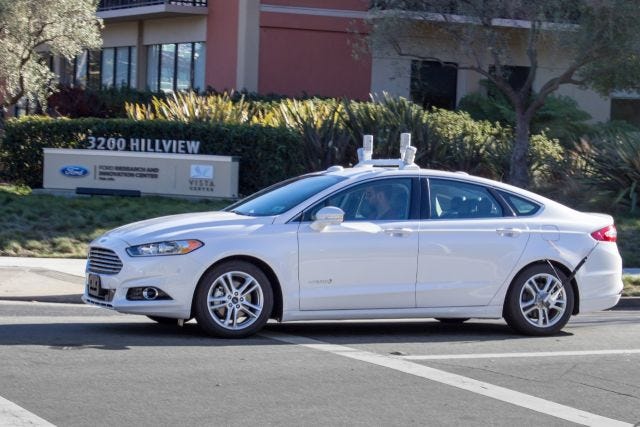
The building in the cover photo here is my old office when I worked for Ford, and the driver in the photo is my old boss Tory Smith.

Test Tracks

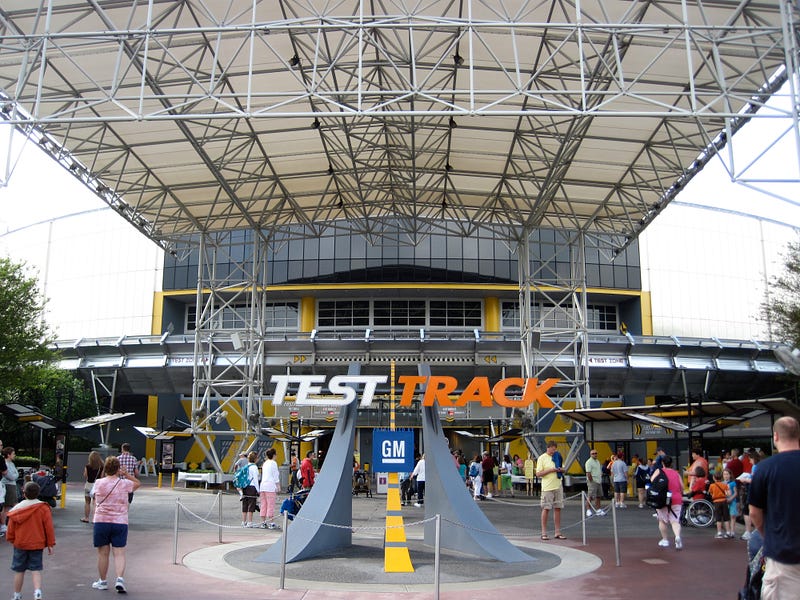
Today The New York Times banged on one of my favorite drums — the need for test tracks for autonomous vehicles testing.

Some Michigan lawmakers are pushing for a centralized national test track for autonomous vehicles.

“We know we need a national testing and validation site,” Senator [Gary] Peters said at an automotive digital security conference here. “We need one in place where all the auto companies can come together.”

Despite my love for test tracks, I am not crazy about a centralized test track run or funded by the US government. But maybe we take what we can get.

The Times lists several of the leading contenders:

  • GoMentum Station near Silicon Valley, in California
  • MCity in Ann Arbor
  • A site near Blacksburg, Virginia, run by the Virginia Tech Transportation Institute
  • Willow Run, the new General Motors test site in Michigan

There is also Castle Rock (Google) and Pittsburgh (Uber), although those don’t merit a mention in the article.

Self-Driving Car Employers

On Wednesday, Udacity announced the Self-Driving Car Nanodegree, about which I’m super-excited.

One of the first questions we got was, “Are there enough jobs to make this worthwhile? It’s just Google and Tesla, right?”

There are so many jobs!

Transportation-as-a-Service

Uber is building out their own autonomous vehicle division in Pittsburgh.

GM just announced that Lyft will be running GM’s first production run of self-driving cars.

Tech Companies

Google is the most famous tech company working on self-driving cars, but Baidu is working on this as well. Lots of rumors indicate Apple might be working on this.

OEMs

Every OEM has a team, or multiple teams, dedicated to self-driving cars. Tesla, Ford, GM, Toyota, Mercedes, BMW, Audi, Toyota, Mazda, Subaru, Kia, Volvo, and the list goes on.

Startups

Startups like Otto, Comma.ai, and Zoox are hiring as fast as they can.

Tier 1 Suppliers

Companies like Delphi, Bosch, and Continental are known as Tier 1 suppliers. They sell automotive-grade hardware in bulk to OEMs, and they badly want to win these contracts.

Tier 2 Suppliers

Tier 2 suppliers span a range of specialties, and typically sell their components to Tier 1 suppliers, who in turn package it up for OEMs.

This is a huge category!

In computer vision there is Mobileye, in mapping there is HERE, in processors there is NVIDIA and Intel, in lidar there is Velodyne. So many suppliers!

This is just a sample list of who is hiring. There are a lot more companies, and right now demand for talent is far outstripping supply. It is a great time to go to work on self-driving cars!

Musk’s Second Master Plan

Elon Musk dropped a pretty big blog post on the world yesterday.

I don’t think I could do any better than pull out two quotes, and encourage you to read the whole thing.

The first master plan that I wrote 10 years ago is now in the final stages of completion. It wasn’t all that complicated and basically consisted of:

Create a low volume car, which would necessarily be expensive

Use that money to develop a medium volume car at a lower price

Use that money to create an affordable, high volume car

And…

Provide solar power. No kidding, this has literally been on our website for 10 years.

And:

So, in short, Master Plan, Part Deux is:

Create stunning solar roofs with seamlessly integrated battery storage
Expand the electric vehicle product line to address all major segments
Develop a self-driving capability that is 10X safer than manual via massive fleet learning
Enable your car to make money for you when you aren’t using it