Forbes has a short post on a company called Mapbox, which offers maps to thousands of mobile apps, and is now releasing an autonomous vehicle product called Mapbox Drive.
What caught my eye here is the distinction between top-down and bottom-up map creation.
Traditionally, mapping has been a top-down exercise. Surveyors go out and measure the land, or, more recently, Google sends out special mapping vehicles to collect Street View data.
The Mapbox approach seems to be more bottom-up, utilizing user data to build maps.
This raises some privacy and usability issues, but it’s fundamentally more scalable than a top-down solution.
I should note that I ill-informed about the state of the art in mapping, and I wouldn’t be shocked if Google and HERE and other mapping companies are playing around with similar bottom-up technology, too.
The problem is that with user-generated data you have to take what you can get from users, without the control that comes in the top-down world. And whether the user data will contain everything Mapbox needs to create automotive-grade maps is an open question.
But this top-down vs. bottom-up question is going to come up a lot in autonomous vehicle engineering, and this seems like an interesting case study to watch.
A Wall Street analyst recently asked Elon Musk if he foresaw a future in which human drivers were banned.
Musk said no.
That seems right to me.
Modern vehicles are designed to last 10–20 years, and car manufacturers are having record years, so lots of consumers are buying cars today that will last until 2025 or 2030. Those consumers aren’t going to let governments ban their vehicles from the road, and retrofitting those vehicles will be prohibitively expensive for many people.
What seems more plausible is to build a network of “autonomous only roads”, kind of like an Interstate Highway system for self-driving cars.
Even that might be a heavy lift in the United States, though, where infrastructure projects are subject to an array of veto-wielding interest groups.
China, anyone? Brazil? Russia?
The list of states that might be able to build out autonomous vehicle infrastructure faster than the US is strange, and maybe a little depressing.
Much of the technology that underpins these systems is shared among the industry. A handful of companies like Bosch, Delphi, and Mobileye provide sensors, control units, and even algorithms to car makers, who then integrate and refine those systems.
That claim leaves some wiggle room. Just how much is “much”?
And some of the claim is oversimplified. Whether or not there are “a handful” or somewhat more than a handful of Tier 1 suppliers involved, a lot of that technology is actually flowing through from Tier 2 suppliers. In other words, the Tier 1s are doing a fair bit of “integrating and refining” of their own.
But all this raises more basic questions — who are the suppliers and why do they even exist?
Why The Supply Chain Exists
Few companies produce, distribute, and sell products end-to-end. For example, see Milton Friedman’s famous video about all of the suppliers involved in pencil production.
Many reasons exist for this, including:
Specialization. For example, automotive dealerships usually lack the skills and ability to manufacture vehicles.
Opportunity Cost. An automotive manufacturer might be really good at producing tires, but might decide not to pursue this opportunity because it’s a distraction from the core business of producing cars.
Scale. A lot of effort goes into producing computer chips, and chip manufacturers amortize that cost over all of the chips they sell. Since automobiles use relatively few computer chips, automotive companies don’t have the scale to amortize that cost by themselves.
Regulation. Many US states have laws preventing automotive manufacturers from selling vehicles directly to consumers. Only dealerships can legally sell cars in these states.
The Automotive Supply Chain
Cars are usually either the largest purchase a person makes, or maybe the second-largest, after a house. So it’s not surprising that the automotive supply chain is a little different than supply chains for pencils, or sodas, or basketballs.
Dealerships
Companies that sell vehicles are called dealers. I think of them as physical retail locations, which they often are, but they’re also distinct companies. Sometimes one company will own many dealership locations. The important thing to remember is that these dealerships are distinct and mostly independent from the auto manufacturers.
Dealerships are really good at customer service, understanding the needs of their specific geography and customer base, and vehicle maintenance and repair.
Tesla is trying to disrupt this model, bypass dealerships, and sell cars directly to consumers, but this is the exception, not the rule.
Manufacturers
Automotive manufacturers are the brands that everyone knows — Ford and Toyota and BMW and their competitors.
These firms are commonly referred to OEMs (original equipment manufacturers), which is an unfortunate misnomer. While these manufacturers produce some original equipment, their real strength is in designing cars, marketing cars, ordering the parts from suppliers, and assembling the final product.
The “design” part of that equation becomes a little hazy when it comes to software. Some of the software comes as part of subsystems that are specified by the OEM but built by suppliers. On the other hand, some of the software is built directly by manufacturers.
This is a fuzzy line even in the computer world. Apple and Dell both design computers. But Apple writes its own software (Mac OS, iOS), whereas Dell mostly uses Microsoft Windows software.
Tier 1 Suppliers
Companies that supply parts or systems directly to OEMs are called Tier 1 suppliers. Some of these brands are recognizable, like Bosch or Continental. Some of them are less so.
Tier 1 suppliers specialize in making “automotive-grade” hardware. This means hardware that withstands the motion, temperature, and longevity demands of OEMs.
These suppliers usually work with a variety of car companies, but they’re often tightly coupled with one or two OEMs, and have more of an arms-length relationship with other OEMs. Delphi, for example, was actually owned by General Motors and then spun out as an independent entity.
Tier 2 Suppliers
Many firms supply parts that wind up in cars, even though these firms themselves does not sell directly to OEMs. These firms are called Tier 2 suppliers.
Examples include computer chip manufacturers like Intel or NVIDIA.
Tier 2 suppliers are often experts in their specific domain, but they support a lot of non-automotive customers and so they don’t have the ability or desire to produce automotive-grade parts.
Tier 3 Suppliers
In the automotive industry, the term Tier 3 refers to suppliers of raw, or close-to-raw, materials like metal or plastic.
OEMs, Tier 1, and Tier 2 companies all need raw materials, so the Tier 3s supply all levels. Consequently, the line between a Tier 2 supplier and a Tier 3 supplier that sells into Tier 1s is blurry.
Putting It Together
Consumers shop for cars at dealerships.
Based on what dealerships learn from their customers, they place orders for specific types of cars with auto manufacturers.
Auto manufacturers use the order data to design new cars and source components from Tier 1 suppliers.
Tier 1 suppliers purchase components from Tier 2 suppliers and package it into automotive-grade systems.
Tier 2 suppliers make parts and are happy to sell them to automotive companies, but Tier 2s serve many other industries, too.
Tier 3 suppliers sell the raw materials that other firms in the supply chain require to make their specialized products, systems, and components.
That’s an over-simplified summary, of course.
In reality, consumers are shopping for cars directly on manufacturer websites, and dealerships are discussing after-market parts with Tier 1 suppliers, and Tier 2s are marketing their components directly to OEMs. But the summary above paints a good high-level picture.
Who’s In Control?
Historically, the automotive market has been fragmented, with lots of dealerships, OEMs, and suppliers.
Conversely, software is often a winner-take-most market. Windows is the dominant desktop operating system, Google is the dominant search engine, PowerPoint is the dominant presentation package.
That’s where the Ars Technica article comes in. A lot of people would like to figure out if automotive software is moving to a winner-take-most model, and who that winner will be.
The winner-take-most issue is deep in its own right, and it will take a whole separate post to deal with that. But this supply chain knowledge is kind of a pre-requisite to considering that question.
For now, my short take is that competition is ongoing, it’s not clear if this will be a winner-take-most market, and certainly there’s no clear winner yet.
This makes sense for the same reasons that almost all car manufacturers now have Silicon Valley offices. A wide array of people and companies that Google would like to work with are Michigan-based.
Amid all the speculation of whether Detroit or Silicon Valley will win the car war, it’s worth considering that maybe they’re both around for the long haul. Detroit could remain the manufacturing center of America, with Silicon Valley becoming a center of automotive software development. A lot of companies would maintain facilities in both areas.
The major exception to this trend is Tesla. As far as I know, Tesla does not have a large Michigan presence. That raises the question of how well Tesla can collaborate with all of the partners that Google is hoping to reach by being in Michigan themselves.
nuTonomy, an MIT-affiliated autonomous vehicle startup, just raised a big $16 million Series A round of funding.
Although they are Boston-based, their immediate goal is to build a self-driving taxi fleet for Singapore.
In addition to Singapore, nuTonomy is operating self-driving cars in Michigan and the United Kingdom, where it tests software in partnership with major automotive industry players such as Jaguar Land Rover.
This is a nice win for them, and the participation of Highland Capital Partners (Boston’s premier venture capital firm) shows that autonomous vehicle development can succeed outside of just Silicon Valley and Detroit.
It sounds like early days, but I was interested to read about “GoMentum Station, a special testing facility near San Francisco.”
A challenge with developing self-driving cars in the Bay Area is the cost of land, and thus the scarcity of test facilities. Google tests their cars at decommissioned Castle Air Force base in the Central Valley, hours from their Mountain View headquarters.
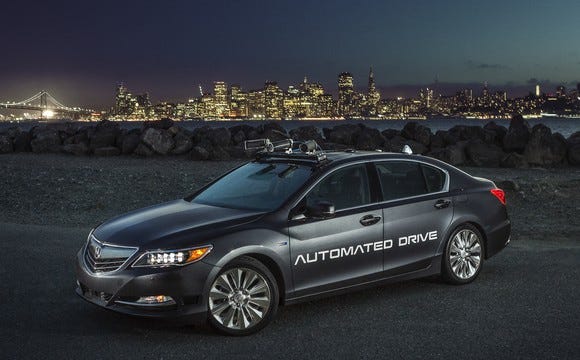
It’s also interesting to read about Honda’s foray into self-driving cars, as they have been one of the less visible autonomous vehicle OEMs, thus far.
Finally, the news-breaking ability of The Motley Fool is surprising to me. I think of them as a financial publication, not a tech or automotive shop. But they have been all over self-driving car news.
Chevy Bolt: GM is testing the Bolt in San Francisco. This is not surprising, given their acquisition of Cruise Automation. But it’s an indicator that the Cruise team is continuing to function post-acquisition, which is a good sign.
Tesla and Mando: Tesla has inked a deal with Mando, Korea’s largest Tier 1 automotive parts supplier.
Mando doesn’t have the name recognition in the US that Delphi, or Continental, or Bosch have, but they’re a major supplier, particularly to Korean car manufacturers.
It’s hard to tell how important this deal is — most OEMs have some sort of relationship with almost every supplier.
The theory floated by The Country Caller is that Mando is less expensive than other Tier 1 suppliers and this is a way for Tesla to cut costs as it moves down market to the $35,000 Model 3.
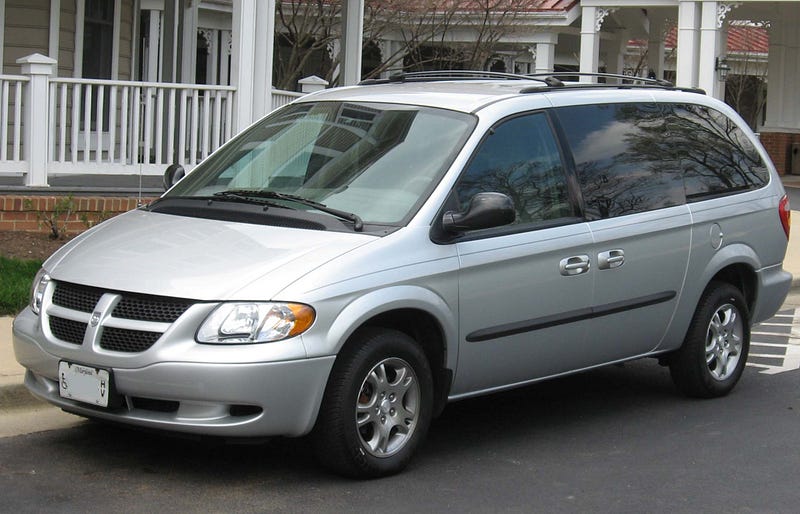
Google and FCA might be making minivans together, but they’re still seeing other people.
“This is just FCA and Google building 100 cars together,” Google self-driving car chief executive John Krafcik said in an interview on the sidelines of an energy conference in Washington.
“We’re still talking to a lot of different automakers,” he added. “We’ve been very open about what the technology is and the problem we want to solve together. Solving this problem is going to require a lot of partnership.”
That’s either a pretty good headfake or a remarkably unenthusiastic partnership endorsement.
Recall my earlier post that this partnership seems like a minor win for Google and even less promising for FCA.
Testing a self-driving car is a big step, especially in real-world scenarios.
Photos of the car show an impressive array of sensors, which must make the car insanely expensive. In fairness, Uber ATC head John Bares is completely open that this is “nascent technology”.
It’s pretty exciting for me that they picked a Ford Fusion as the base for the car!
Queen Elizabeth II of The United Kingdom of Great Britain and Northern Ireland recently gave her annual address to Parliament, and allegedly it contained a plug for self-driving cars.
I write “allegedly” because I read several headlines about the speech, but none of the articles I read actually quoted the Queen. Maybe there is a prohibition against quoting British royalty?
A Modern Transport Bill, which encourages investment in driverless cars and aims to ensure insurance is available to their users, has been announced by the Queen at the state opening of Parliament.
The Government says the Bill will help cut red tape and put the right framework in place to allow innovation, which it claims will put the UK at the forefront of autonomous and driverless vehicle ownership and use.
Good for the UK!
Jaguar, Land Rover, and Volvo are all testing autonomous vehicles in the UK already, so hopefully this clears a path for them to accelerate.
Otto is a hot new startup in the autonomous trucking space. They just landed a splashy article on the front page of The New York Times.
Otto, led by 15 former Google engineers, including major figures from the search company’s self-driving car and maps projects, is aiming at the long-haul freeway driving that is the bread and butter of the commercial trucking industry.
Beware any startup that is lead by 15 people, even if they are all former Google engineers.
That said, their approach seems terrific.
Their beachhead appears to be with owner-operators who drive their own trucks, because autonomy can help them stay on the road for more hours every day, which means more money in their pockets.
Also, presumably, those individuals are less risk-averse than big trucking companies that might have legal liability worries.
The article plays up the trucks vs. cars race to autonomy, but that seems like more of a sideshow to me.
Autonomous trucks are related to, but distinct from, self-driving cars and it makes sense that startups would exist to specifically target that market. Ultimately, I doubt Otto cares whether it beats Google cars to market, as long as they can gain a lock on the trucking industry.