
How to Land an Autonomous Vehicle Job

About eight months ago, I decided to wind down my long-running recruiting assessment business, Candidate Metrics, and move on to a new adventure.

I knew I wanted to get a big win for my career and work in an area that was really exciting. Self-driving cars were a natural fit.

Unfortunately, the web developer + recruiting software salesman + entrepreneur role I had been inhabiting for five years was only marginally relevant to the world of autonomous vehicles.

So I went to work building up the skills and CV to transition myself into autonomous vehicles. This transition had three big parts:

  1. Coursework
  2. Projects
  3. Networking

From start to finish, the whole cycle took almost six months, although I was winding down my old business at one end and finalizing my job offer at the other end, so there were really only three months where this was pretty much my full-time job.

Since there might be other people out there excited about autonomous vehicles but without a master’s degree in robotics, or years of embedded software experience, I’ll spend the next three days diving into each of the line items above.

Also, news seems to be slow in the AV world this week and I need something to write about 😉

Hopefully this will help somebody, though!

Investing in Self-Driving Cars

Rob Toews has a post up on TechCrunch outlining investment opportunities in the autonomous vehicle space.

It serves as a good overview of the OEMs and suppliers involved in the race to launch self-driving cars.

Toews covers several different sensor manufacturers, including those involved in Lidar, cameras, and computer chips. He also reviews software vendors in areas like mapping, machine learning, and security.

There are lots of nits to pick about parts of the ecosystem that he doesn’t cover — Tier 1 suppliers come to mind — but that might have just been due to editorial space constraints. And overall it’s a good overview of the industry.

I’ve been consistently impressed by the ability of the financial press to cover the autonomous vehicle space, and this is another example of their success.

Read the whole thing.

Tesla’s Risk Equation

One of the big dichotomies in the autonomous driving world is between companies targeting Level 3 autonomy and those jumping right to Level 4.

Basically, this is the distinction between vehicles in which the driver has to be ready to take control at any moment (Level 3) and vehicles in which the driver can safely tune out (Level 4).

This situation is made somewhat more confusing than necessary by the fact that the US National Highway Transportation Safety Administration has put out a 6-level autonomy classification chart, and the Society of Automotive Engineers has put out a 5-level chart. In both cases Level 3 has similar, but slightly distinct, definitions.

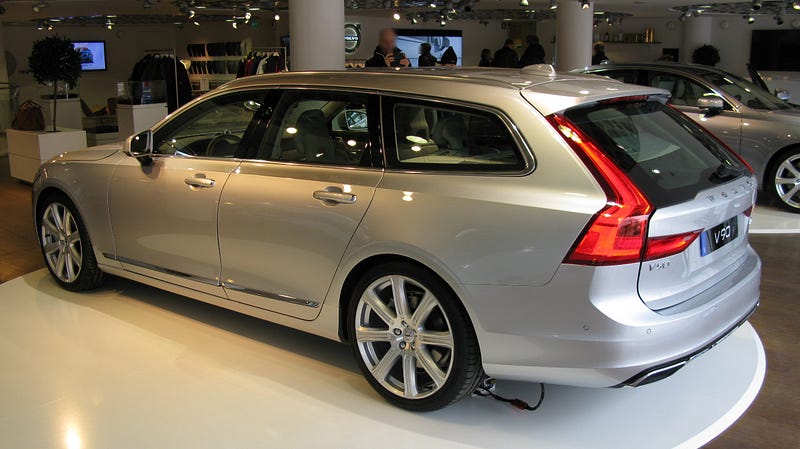
That is the context for Volvo’s ongoing criticism of Tesla’s autopilot strategy, most recently enunciated by Volvo R&D Chief Peter Mertens in The Drive.

Every time I drive (Autopilot), I’m convinced it’s trying to kill me…Anyone who moves too early is risking the entire autonomous industry.

That last part is an interesting externalities problem. For every autonomous mile driven, in any car, there is a small but non-zero chance of a fatal accident.

There is a risk that a fatal accident, particularly a rather gruesome one, might prompt regulators to clamp down on autonomous vehicle technology and research, across all manufacturers.

In that case, by launching its autonomous technology so aggressively, it is taking a risk for which it reaps the reward but only partially shares in the cost.

I’m not sure that’s an ironclad argument — after all, at some point, some automaker will have to release autonomous technology to the public. So why not Tesla, and why not now?

But a lot of people, most vocally at Volvo, are worried Tesla is doing this too early and too aggressively, and Volvo isn’t happy about the risk Tesla is foisting on the rest of the industry.

Self-Driving Lullabies

My wife just gave birth to our first child (not the child in the image— that’s a stock photo) two weeks ago, and he’s a total joy.

He would be more of a joy, though, if he could sleep through the night. Right now he’s on a nocturnal schedule, sleeping through chunks of the day and screaming all night.

One way to calm him down is to strap him into the car seat and drive him around town.

So last night, between the hours of 4am and 5am, I drove about 15 miles around San Mateo County. It worked.

When I mentioned that to people in the office this morning, one of them said, “Wouldn’t it be great to have a self-driving car for that?”

It would, and it will 🙂

Startup Update: Faraday Future

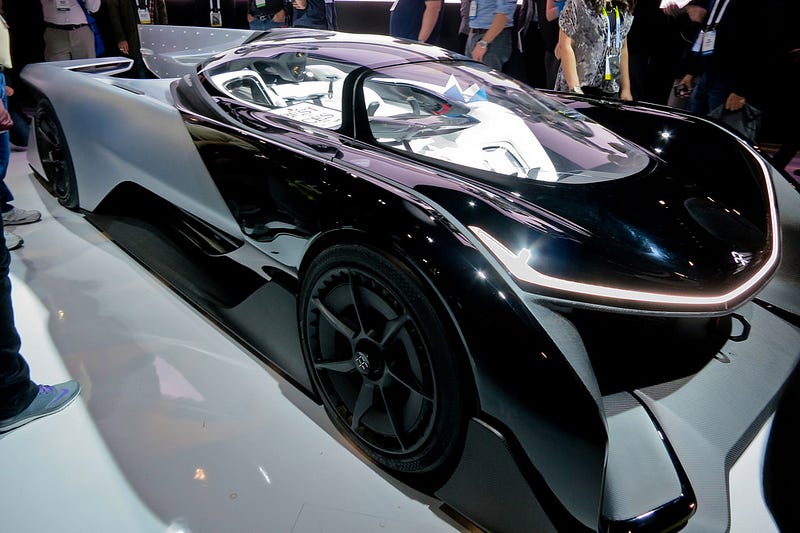
Faraday Future hasn’t made a lot of noise since it’s launch at CES.

However, they just applied for three autonomous vehicle manufacturer license plates.

The Detroit News has the story:

The Michigan plate application is a significant milestone for the company, which made its public debut in January at the CES technology trade show in Las Vegas. It’s backed by Chinese billionaire Jia Yueting and has about 700 workers at a former Nissan sales office near Los Angeles.

Faraday Future has been testing “mules” — test cars used to analyze powertrain and chassis systems before full prototype vehicles are developed — for about a year now. The company told The News it’s tested in its home state of California, as well as Michigan and other locations that it declined to reveal.

There is also this:

Faraday Future has no working prototype car, and a representative told The News that it can’t confirm a timeline for introducing one.

Keep your eyes peeled.

The $1000 Self-Driving Car Kit

A few months ago, while I was beating the bushes for an autonomous vehicle job, I read yet another profile of the wunderkind George Hotz and his self-driving car startup, Comma.ai.

So I wrote him. Would he hire me?, I asked.

A few minutes later he replied, Can you come by tomorrow?

It was the fastest response I got from any of self-driving car companies I pursued.

And so I found myself sitting in the garage of the George Hotz’s house and lab in San Francisco, brainstorming how to get an inexpensive, smartphone-based system to drive a car.

How much data would the video require? How could we train a neural network without labeling the data?

It was a lot of fun.

Shortly thereafter my job offer from Ford came through and I went in that direction, but I still have a lot of fondness for Comma.ai, and admiration for George Hotz, and appreciation for his willingness to give me a shot.

That’s the long wind-up for my perspective on the recent long article in The Verge on Comma.ai.

Comma’s autonomous driver sounds like it’s coming along nicely, and they’re soon to launch their data-gathering program, so they can train those neural networks we talked about.

As Hotz says in the article:

Tesla’s never going to sell aftermarket self-driving systems for Honda Civics. That’s what we’re doing.

And I wish them a lot of luck and success. The world will be a better place for it.

Academia to the Auto Industry

Baidu recently announced that it will be releasing a mass-market autonomous vehicle by 2021, shifting plans from its previous stated intention of building self-driving buses limited to well-defined routes.

Interestingly, Baidu has invested in Uber, and has stated their interest in ride-sharing partnerships. They also claim to be testing their autonomous vehicles on the road in China already.

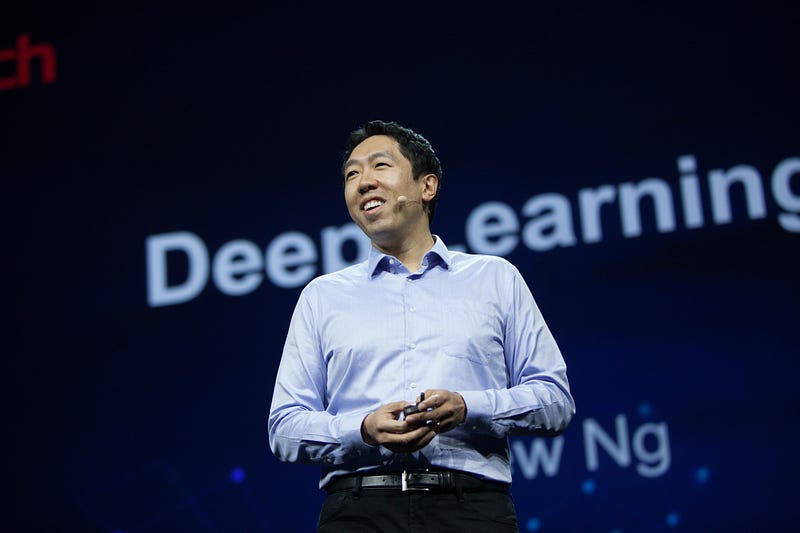
One angle of Baidu that is especially interesting to me is their employment of Andrew Ng as their chief scientist and one of leaders of their autonomous vehicle effort.

Ng has a lot of accomplishments under his belt for a 40-year-old. He earned tenure as a computer science professor at Stanford, he co-founded the online learning company Coursera, and he is now the chief scientist at Baidu.

I took Ng’s machine learning course on Coursera, and it was terrific. He’s a great a teacher. But, as I understand that, he left academia behind to build production software at Baidu.

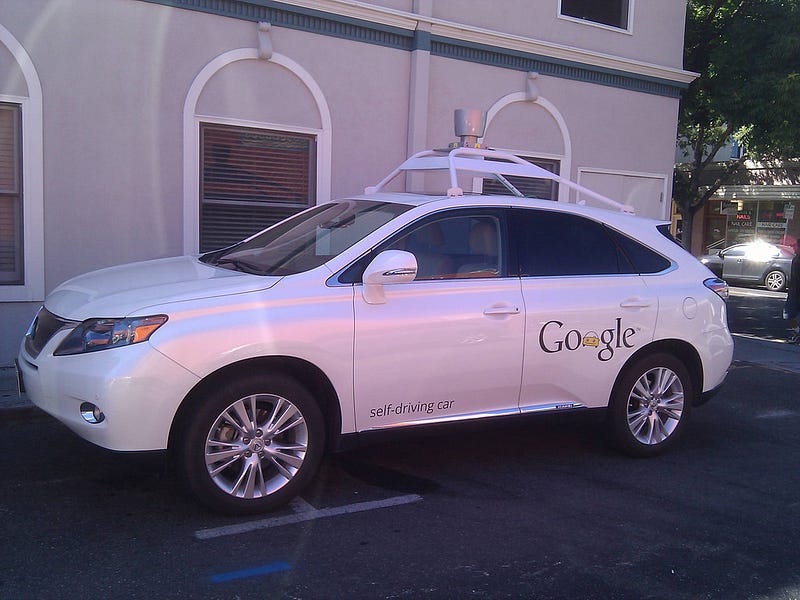
This is something of a trend. Google’s autonomous vehicle efforts were built by Sebastian Thrun, another Stanford computer science professor. Uber’s autonomous vehicle program largely consists of buying out the professors and scientists at Carnegie Mellon University’s vaunted robotics lab.

It’s rare for tenured professors to leave academia for industry, but it’s happened a few times now in the autonomous vehicle industry. I can’t help but wonder if we’ll see more.

Assorted Autonomous Vehicle Links

Google is teaching its cars to honk. But only in safety situations. No road rage robots.

Autonomous vehicles do not like puddles. It’s hard to distinguish them from potholes.

Microsoft is not building an autonomous vehicle. But they’d like everyone to wear Microsoft virtual reality headsets while riding in other companies’ autonomous vehicles.

GoMentum Station is built on the grounds of a decommissioned naval munitions depot. Honda is testing there and they like that the roads are in bad shape, because that’s what a lot of American roads look like. Doh.

What Google Car Drivers See

The Merc has a fun interview with Google Car Test Driver Stephanie Vargas. She’s been working at Google as a contractor since at least 2011, when she was on the Maps team and saw one of the early self-driving car prototypes.

Q: What are some dangers your cars have confronted?

A: A mattress has fallen from the back of a truck. Children running in the road after balls. People (on skateboards) skitching on vehicles, holding on, like Marty McFly in “Back to the Future.” Or coffining — people lie on their backs on skateboards and go between traffic. Imagine someone lying in a coffin, someone assuming the same position on a skateboard and then riding down the street. They ride between vehicles or under vehicles. It’s pretty death-defying. It’s actually pretty fun. I used to do it as a kid in my parents’ driveway. I’m not condoning that behavior. But very fun. Don’t do it in live traffic.

Yikes! Read the whole thing.

Startup Watch: Mapbox

Forbes has a short post on a company called Mapbox, which offers maps to thousands of mobile apps, and is now releasing an autonomous vehicle product called Mapbox Drive.

What caught my eye here is the distinction between top-down and bottom-up map creation.

Traditionally, mapping has been a top-down exercise. Surveyors go out and measure the land, or, more recently, Google sends out special mapping vehicles to collect Street View data.

The Mapbox approach seems to be more bottom-up, utilizing user data to build maps.

This raises some privacy and usability issues, but it’s fundamentally more scalable than a top-down solution.

I should note that I ill-informed about the state of the art in mapping, and I wouldn’t be shocked if Google and HERE and other mapping companies are playing around with similar bottom-up technology, too.

The problem is that with user-generated data you have to take what you can get from users, without the control that comes in the top-down world. And whether the user data will contain everything Mapbox needs to create automotive-grade maps is an open question.

But this top-down vs. bottom-up question is going to come up a lot in autonomous vehicle engineering, and this seems like an interesting case study to watch.