Demographics and Safety and the Tesla Model 3

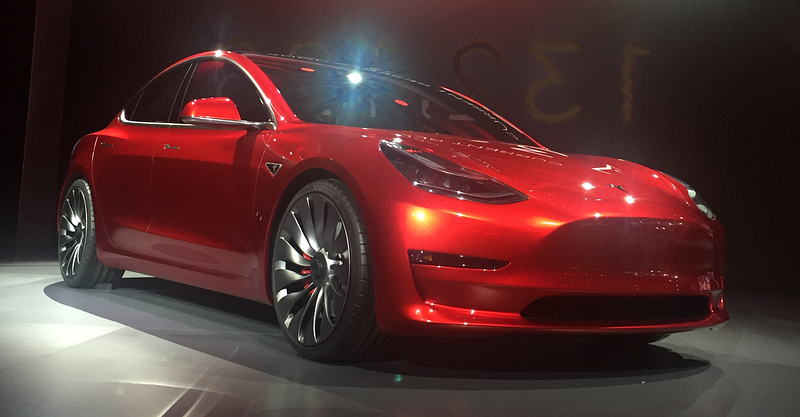
Will the Tesla Model 3 bring an uptick in Autopilot-related traffic fatalities?

It seems like that question can be broken into two parts: how many new cars will be sold, and how safe will Model 3 drivers be relative to Model S and Model X drivers?

To the first question, there are approximately 300,000 Tesla Model S and Model X vehicles on the road. Meanwhile, the Model 3 waitlist is about 400,000 people long. Of course, not every person on the waitlist will ultimately purchase a Model 3, but it seems likely Tesla will at least double its installed base over the next couple of years.

Since there has been one fatality attributed to Autopilot in the past two years, maybe with a doubled installed base Tesla will experience two fatalities over the next two years?

Maybe fewer — one or zero — since presumably Autopilot has gotten better over time.

As an aside, Tesla Autopilot is amazing. It is (along with GM SuperCruise) the best Advanced Driver Assistance System on the market. My guess is that it has saved a lot of lives.

But every time there is a crash involving Autopilot, the safety of self-driving cars gets evaluated.

So the question of how safe Model 3 drivers will be seems important.

The Model S and Model X are high-price luxury vehicles, on the order of $100,000 out the door. The Model 3, on the other hand, is designed for a decidedly lower price-point buyer: $50,000 out the door.

On average, older Americans are wealthier, and my guess would be Model S and Model X buyers are quite a bit older than Model 3 buyers.

Older drivers are also, on average, safer drivers (this changes somewhere above age 65, but it’s true for most ages).

If a lot of Model 3 buyers are younger, less safe drivers, it’s possible that we’ll see an uptick in Autopilot-related fatalities in the coming years. Intuitively, think of more younger drivers watching Netflix while Autopilot drives the car.

Of course, all of this is pretty speculative. I imagine both Tesla and automotive insurers have much better models for how this is likely to play it. But it seems worth watching.
Flying Cars at Udacity

Udacity just opened up applications for the Flying Car Nanodegree Program. It’s going to be amazing.

Sign up for the free preview!

I’m still focusing on Self-Driving Car, but I’ve watched the Flying Car team develop this program and I’m especially excited for the simulation environments they’re building. The projects students will get to construct in those simulation environments are incredible.

Here’s a quick summary of the curriculum:

Term 1: Aerial Robotics — You will learn the fundamental concepts required to design and develop robots that fly. You’ll work with the quadrotor test platform and our custom flight simulator to implement planning, control, and estimation solutions in Python and C++.

Term 2: Intelligent Air Systems — You will delve into the specifics of flying cars and coordinated autonomous systems. After an intro to fixed wing aircrafts, you will learn how to update and optimize vehicle parameters and routes over “flying car length” missions. From there, you’ll learn to coordinate entire fleets of flying cars as you leverage cutting-edge technologies, learn real-world systems and regulations, and complete projects culminating in an entire “flying city” finale.

Self-Driving Cars in the Real World

Between the new year, CES, and the North American International Auto Show in Detroit, there have been a lot of announcements about deploying self-driving cars in the real world.

Voyage will expand it’s self-driving car service to The Villages in Florida:

“Voyage is bringing self-driving cars to a retirement community (and city) like no other: The Villages, Florida. With 125,000 residents, 750 miles of road and 3 distinct downtowns, The Villages is a truly special place to live. Today, we’re excited to announce that Voyage has started testing its self-driving fleet within the community. Beginning in early 2018, we’ll start rolling out a door-to-door self-driving taxi service to residents.”

Uber is planning to remove the safety driver from its vehicles:

“Uber plans to carry passengers in autonomous vehicles without human backup drivers in about the same time frame as competitors, which expect to be on the road at the latest sometime next year, the service’s autonomous vehicle chief said Wednesday.”

“The ride service now has 1,600 people working on autonomous vehicles in the four test locations.”

Aptiv and Lyft will continue the self-driving car service that made such a splash at CES:

“Now, both are announcing that they’re definitely extending the project beyond the timeframe of CES in Las Vegas, and that they’re already in talks to expand a second pilot to another market located elsewhere in the U.S.”

GM is seeking a permit for Cruise to operate nationwide:

“If granted, the waiver would allow GM to launch as many as 2,500 self-driving vehicles a year into a form of taxi service and help pave the way for fully autonomous vehicles to move from niche testing fleets into broader commercial applications.”

“GM has announced plans to test the cars in Arizona, California and Michigan. It is expected to expand to New York City in 2018.”

The race is on.

Visiting MCity

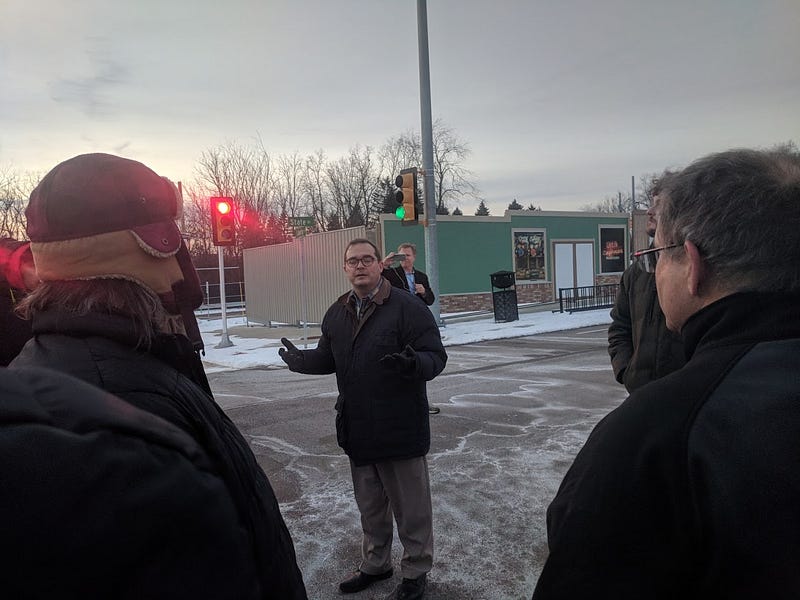
While we were visiting Detroit, the A2 Mobility Tech Meetup and the Detroit Autonomous Vehicle Meetup arranged for a tour of MCity with James Sayer, the creator of the facility and the director of the University of Michigan Transportation Research Institute.

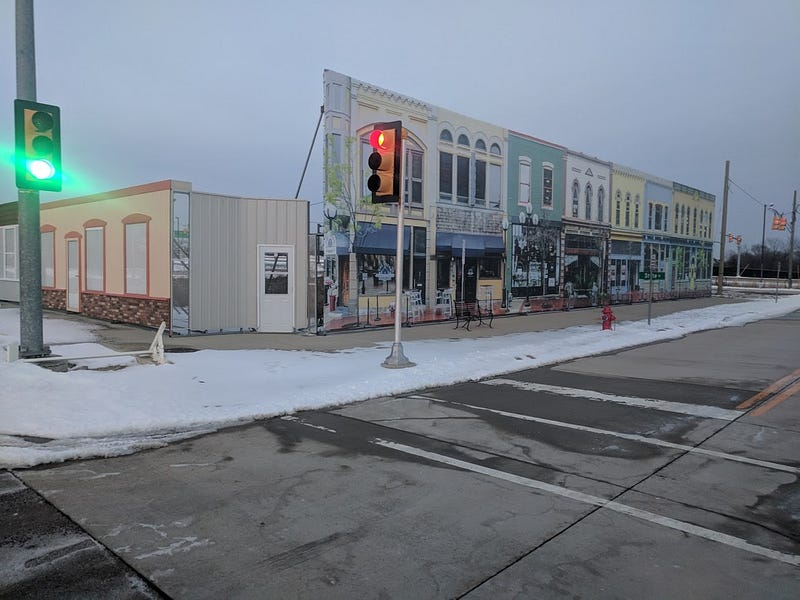
MCity is an automotive testing facility designed for self-driving vehicles — the very first of what Sayer says are now dozens of such facilities around the world.

Sayer led a walking tour of the facility and pointed out many of the test features.

The facility packs a lot into a small geographic footprint.

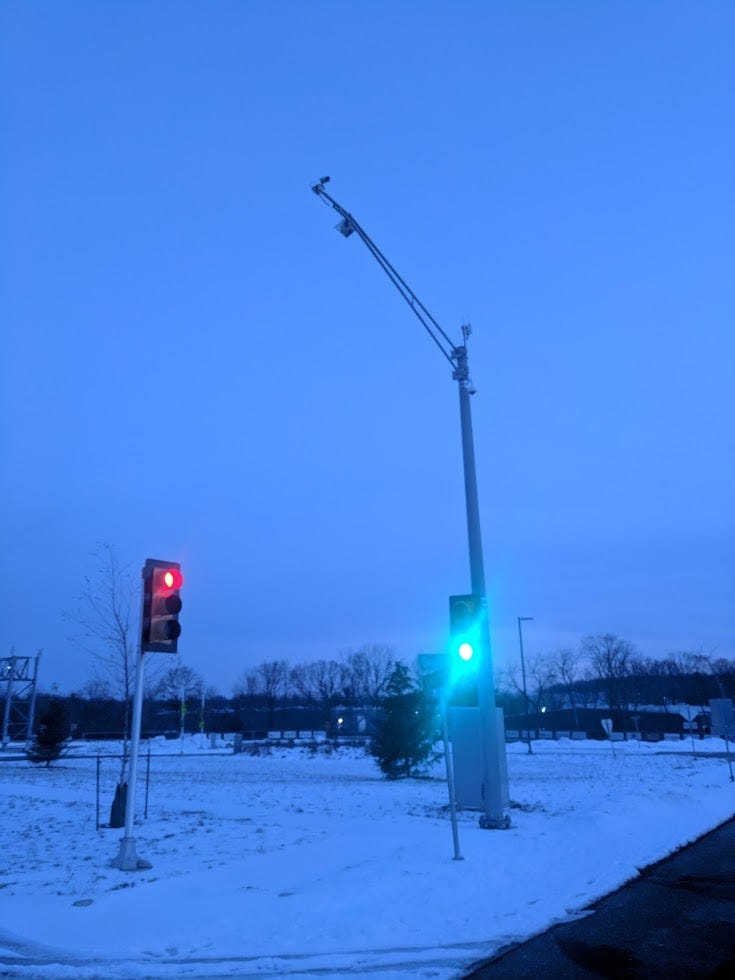
There are dozens of different traffic light configurations, between the various ways traffic lights can be hung or installed and the different types of lights and luminance available.

There are also several blocks of false storefronts, complete with mailboxes, fire hydrants, and other landmarks.

Some of the stoplights include vehicle-to-infrastructure communications equipment.

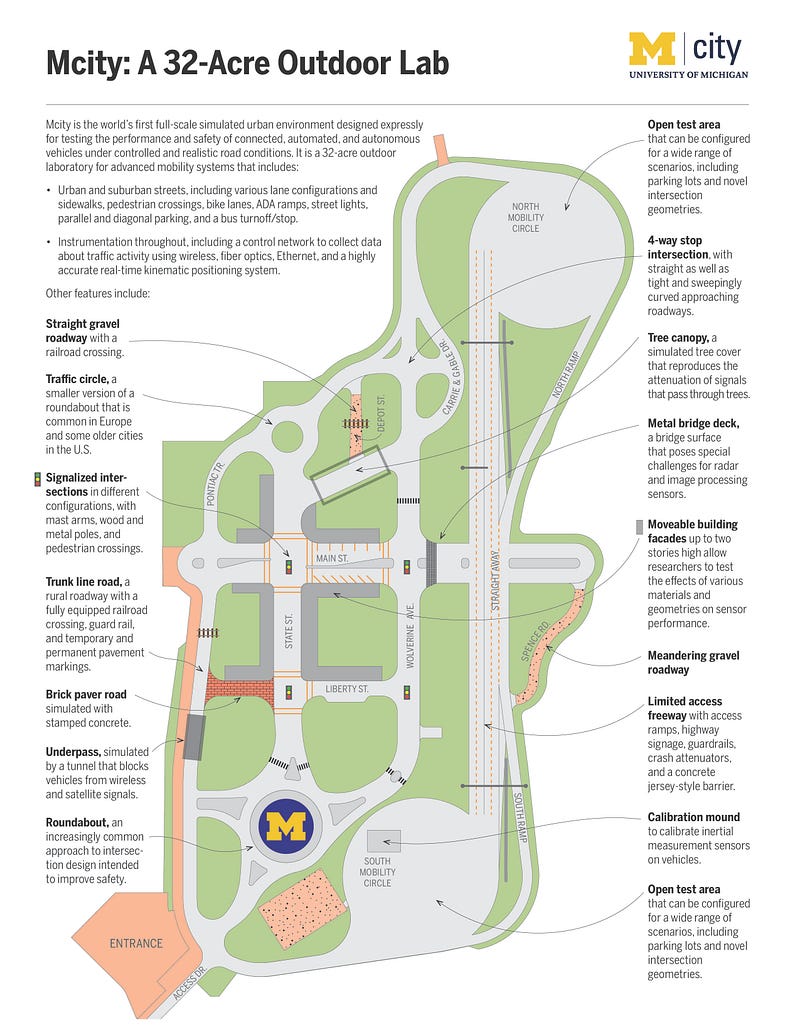
The facility even includes tree canopies, manhole covers, and a highway section.

Here’s a full map of the facility, from the university’s website.

We also say the Navya autonomous shuttles that will begin circling the campus in the spring. As Sayer described it, these will be Level 3 shuttles, following a fixed route, with conductors onboard. If the shuttle encounters any unexpected obstacles, the conductor will take manual control, but otherwise the shuttles will operate autonomously.

Pretty cool place, and thanks to Jim Sayer and the University of Michigan and the Meetup groups for the tour!

Visiting NAIAS

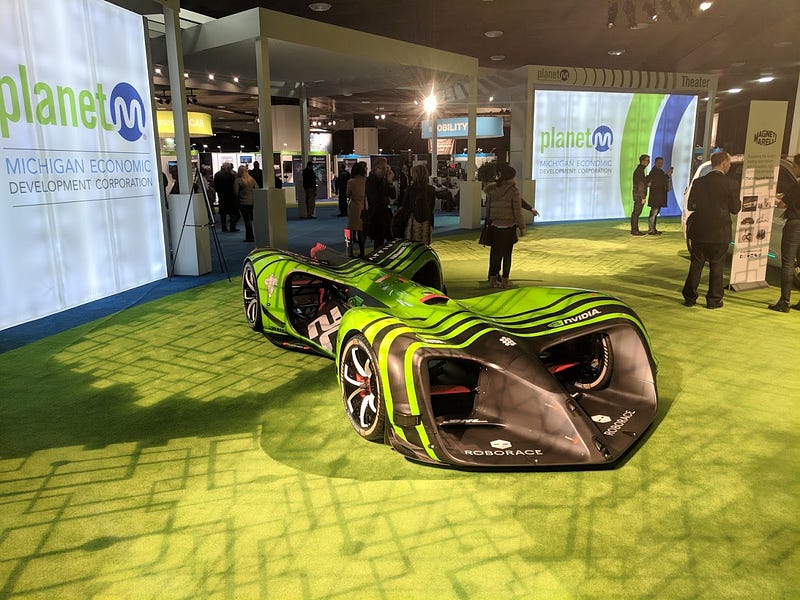
The NVIDIA Roborace self-driving Formula-E race car.

I’m in Detroit this week for the North American International Auto Show — the country’s largest car show. Here are some photos!

I spoke on a panel about the future of self-driving cars with Ed Olsen from May Mobility, David Bem from PPG, Samit Ghosh from P3, and Geoff Wood from HARMAN.

I toured the convention floor and saw Ford’s self-driving pizza delivery vehicle.

I also stood in line to ride the Ford “Cities of Tomorrow” VR attraction. Kind of like Epcot.

Detroit is cold right now! 7 degrees Farenheit in the morning. So I went ice skating downtown.

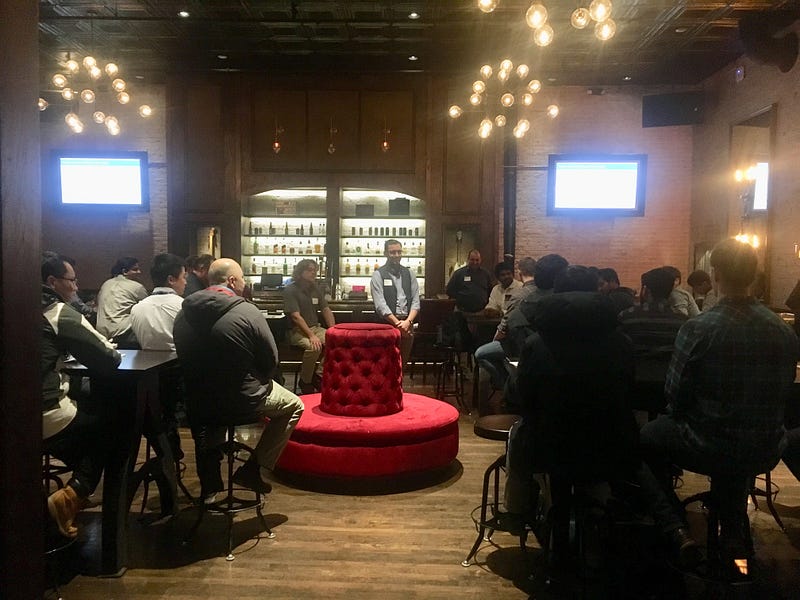
Last night we had a career workshop for current and prospective students in the Udacity Self-Driving Car Engineer Nanodegree Program. My colleague Martin McGovern flew out to lead it.

I’ll be speaking at the NAIAS Future Automotive Career Expo on Saturday, so come say hello while I’m in Detroit!

Coatings for Self-Driving Cars

I love how specialized capitalism is. There are entire companies built around aspects of production that I would never even think about, until somebody points them out to me.

So it is with automotive coatings.

Everything that goes into or onto a car must be “automotive-grade”. Built to withstand the heat and cold and wear and tear and speed and miles that a vehicle experiences over its lifetime.

Car companies can’t simply buy paint off-the-shelf. They source their paint and coatings from specialized automotive paint suppliers, who produce special paints designed for the automotive industry.

And those companies are now looking at how to support self-driving cars.

Did you know that dark colors — black and gray are apparently the most popular car colors in the US — don’t reflect sensor light as well as lighter colors?

“Paints giant PPG believes it has a solution.

It has developed coatings for dark vehicles that detect light in an under-layer and then reflect the signal back to the sensor before it’s absorbed too deeply.”

In a similar vein, self-driving cars need easy-to-clean, or even self-cleaning, coatings for sensors, so that rain and snow and dirt don’t impede a self-driving car’s perception.

At NAIAS on Wednesday, I’ll be on the Planet M stage with David Bem of PPG. Come and learn about parts of the autonomous vehicle world you’d never dreamed of.

The GM Cruise AV

Behold the GM Cruise AV.

“General Motors filed a Safety Petition with the Department of Transportation for its fourth-generation self-driving Cruise AV, the first production-ready vehicle built from the start to operate safely on its own, with no driver, steering wheel, pedals or manual controls.”

According to Reuters:

“GM’s Cruise AV is equipped with the automaker’s fourth-generation self-driving software and hardware, including 21 radars, 16 cameras and five lidars — sensing devices that use laser light to help autonomous cars “see” nearby objects and obstacles.”

And:

“GM executives said seven U.S. states already allow the alterations sought by the automaker. In other states — including those that stipulate a car must have a licensed human driver — GM will work with regulators to change or get a waiver from existing rules.”

Read the whole thing. One of the great stories of the self-driving car revolution continues to be that GM has found a way to make the Cruise acquisition work.

Udacity goes to the North American International Auto Show in Detroit

Udacity students in attendance on January 17th, you’re invited to lunch!

I am excited to be visiting Detroit next week for the North American International Auto Show. Please come say hello if you’re attending, or send me an email at david.silver@udacity.com.

Here’s the schedule:

Wednesday, January 17, 12:30pm: I’ll be at Automobili-D, speaking on a panel about the autonomous driving industry. Come watch! If you’re a Udacity student, we’ll take you to lunch afterward.

Thursday, January 18, 6pm: RSVP for our Career Workshop and Meetup! We’ll teach you how to present yourself to recruiters in the autonomous vehicle industry, and you’ll practice pitching yourself to other attendees. Also, free food!

Saturday, January 20, 10:30am: I’ll be speaking at the Future Automotive Career Exposition at NAIAS. Introduce yourself to me, then introduce yourself to the many recruiters who will be hiring autonomous vehicle engineers!

See you in Detroit!

Autonomous Vehicles at CES

The Consumer Electronics Show used to be the place to go to see the latest and greatest television sets, but in recent years it has essentially become a car show. And this year it was a self-driving car show.

I myself have never been, but my Udacity colleagues at CES this year report that the entire show is a tribute to self-driving cars.

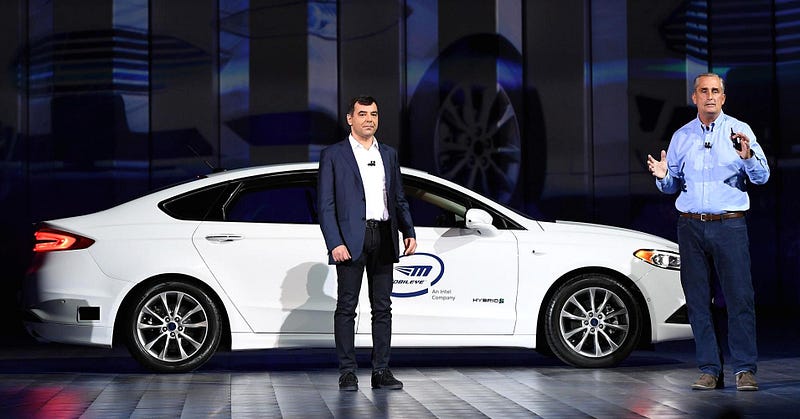
Intel demoed its first self-driving car, together with its subsidiary, Mobileye.

Renesas apparently rented out a parking lot and demoed their car.

Doogie Howser, MD, was blown away by his Aptiv-nuTonomy-Lyft self-driving car ride:

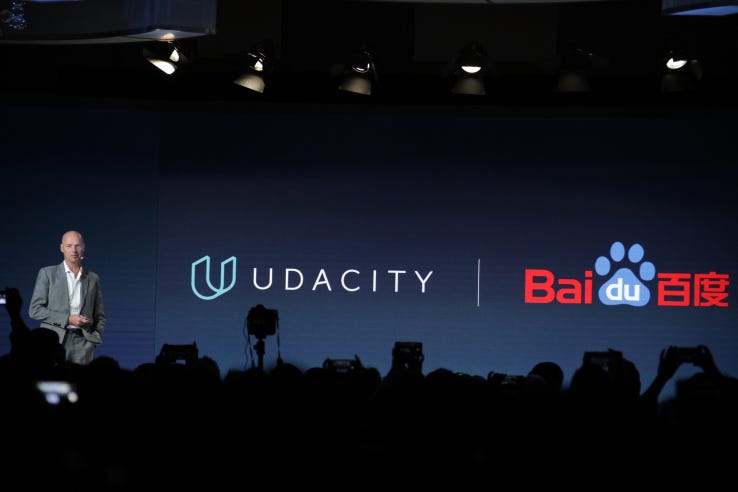
And of course Udacity announced a partnership with Baidu to build a free course teaching engineers around the world how to use Baidu’s open-source Apollo software for self-driving cars.

Big week for self-driving cars!

Get an Autonomous Vehicle Job at NAIAS

The Future Automotive Career Exposition (FACE) at next week’s North American International Auto Show (NAIAS) in Detroit is a terrific opportunity to connect with a huge number of autonomous vehicle employers at once. If you’re looking for a job in the field, you should go.

FACE will take place on January 20th and 21st. Large employers will be present, like Autoliv, Delphi, Flex, General Motors, HARMAN, Magna, Magneti Marelli, Nexteer, Nissan, Valeo, and Visteon. And many of the startups who will be presenting as part of the NAIAS Automobili-D showcase will also be recruiting: DropCar, eCharge.work, Einride, Karma Automotive, Navya, ParkWhiz, RideCell, and Savari.

There are many more companies on the list, which is posted at: https://naias.com/automobili-d/naias-career-expo

FACE is encouraging attendees to apply to the companies ahead of time so that they can review your CV before you introduce yourself in-person. I’m also told the first 500 entrants to the event will get free admission. After that, attendees will need to have an NAIAS pass ($14) to attend.

See you in Detroit!