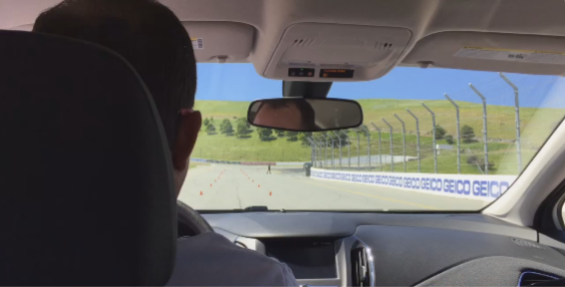
Last week I traveled with colleagues to Sonoma Raceway for Safe Driver Training, a mandatory class for autonomous vehicle operators.
The class itself is not oriented around autonomous vehicles, but rather how to anticipate and evade dangerous situations on the road. The logic of requiring this class of autonomous vehicle operators, I suppose, is that if you have to take over the vehicle in an emergency, hopefully you are able to anticipate and evade a collision.
The biggest lessons are to look as far ahead as possible. Sit lower in the vehicle and raise your eyes toward the horizon. Then, when performing an evasive maneuver, lock your eyes on where you want the vehicle to go. Or, as the instructors say, “Keep your eyes on safety.”
The class was a lot of fun. Several of the exercises involved negotiating tight turns at high speed, just like if an obstacle popped out at the last minute. Other exercises required us to spin out the vehicle in a tight turn, then regain control and proceed through a gate.
Here’s a practice run for a tight turn exercises — the procedure gets tougher when they don’t tell you which way to turn until the last second:
Since the program is held at Sonoma Raceway, there all sorts of cool racecars around.
Here are stories from Udacity students about what they wish they knew in the past, what they’re doing in the present, and what they hope to do in the future!
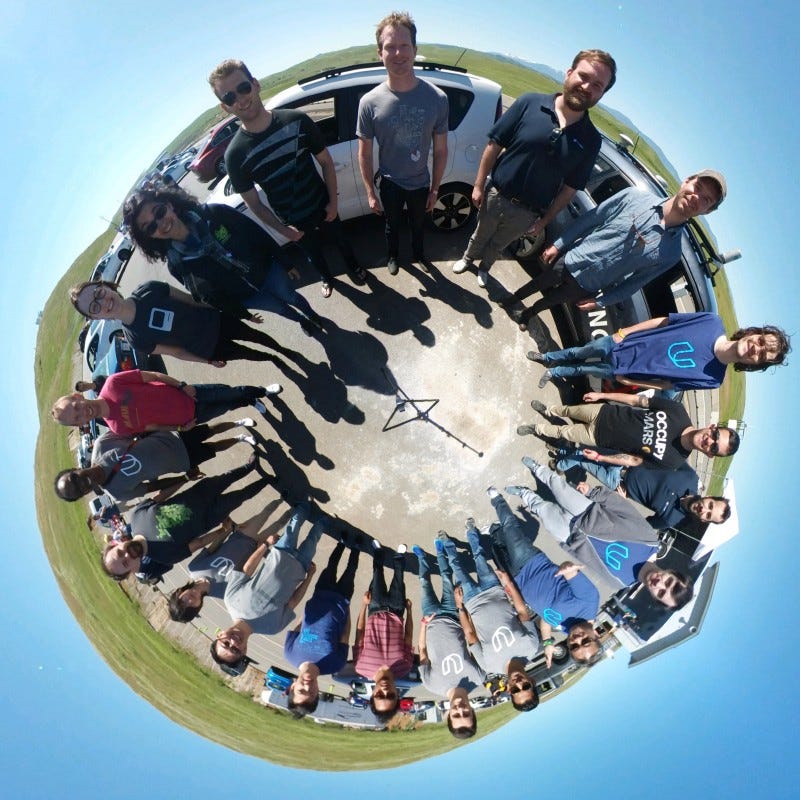
A self-managed team of Udacity students from around the world competed at the Self-Racing Cars event in California last month. They put in a ton of work and here’s what they learned:
“On February 15, Udacity selected the group of 18 talented engineers (out of hundreds of applicants) to form the Self-Racing Cars team. Our team was composed of individuals with largely varying backgrounds from all over the world, with the commonalities that we were all enrolled in the Udacity Self-Driving Car Nanodegree program, and extremely passionate about autonomous vehicles. The team was given six weeks to develop the software to drive an autonomous vehicle around the track at Thunderhill Raceway for the Self-Racing Cars event.”
Daniel, bless his heart, put together a terrific list of tips and tricks for Term 1 of the Nanodegree Program. He would know, after having mentored over 40 students!
“If I could send myself a note back in time to 6 months ago, I would probably find something more valuable than sending myself mentorship tips for Term 1 of the Udacity Self-Driving Car Nanodegree. That being said, I would have wanted to know these points soon after being accepted into the selective inaugural cohort in October 2016. I have mentored over 40 students after having some success in the SDC Nanodegree myself, and this post will reveal the pointers that have been most relevant to my mentees.”
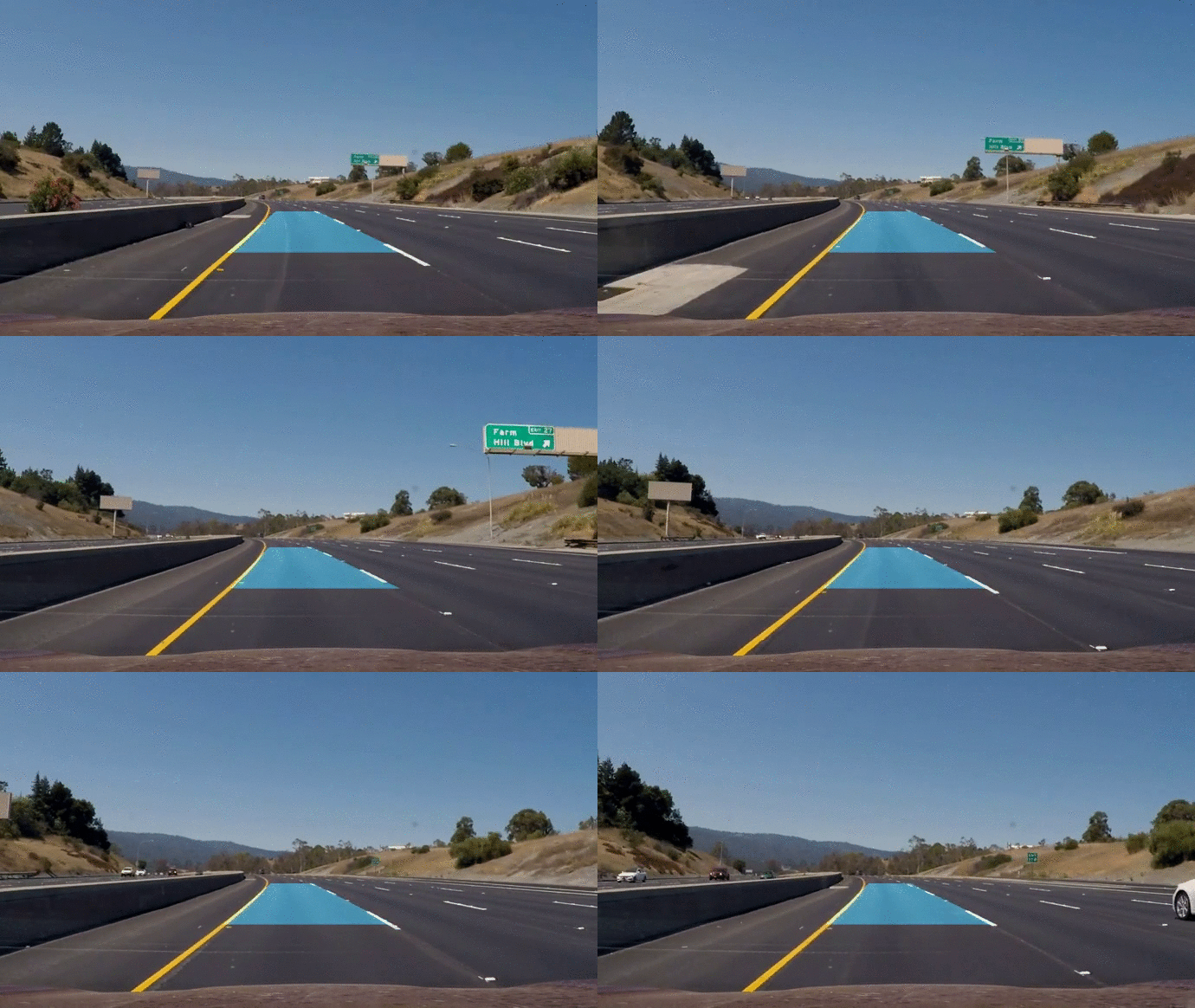
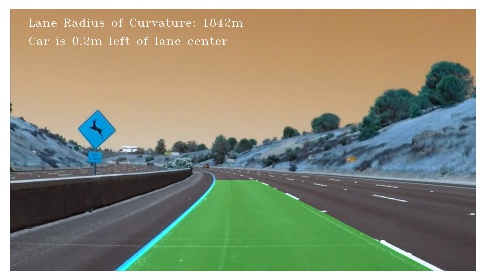
Check out how Eirik built these super-cool lane line GIFs!
“This project is the first among several projects in the Self Driving Car Engineer program at Udacity. Here we learn cutting edge technology equipping us with the tools for a career in the field of Self Driving Cars. Udacity calls it a “Nanodegree”, but it lasts over 9 months and with all the hours I am putting into this, it really becomes a full education for me. So that brings me to this project, which was so much fun I just had to stop myself, I could go on forever, there is always something to do better, and so much good Inspiration!”
Riccardo provides a terrific and thorough walkthrough of his vehicle detection project. I especially like the experiments he ran with color spaces and histograms.
“First, we identify and extract the features from the image, and then use it to train a classifier. Next, we execute a window search on the image, on each frame from the video stream, to reliably identify and classify the vehicles. Finally, we must deal with false positives and estimate a bounding box for vehicles detected.”
I love Michael’s story of leaving his Big Four accounting job to become a self-driving car engineer. He completed Term 1!
“Luckily in Silicon Valley many people are more focused on what you can do than simply how many years you’ve been doing something. For Udacity’s part, they’ve provided me with a mentor and lots of career content, as well as access to events with some great hiring partners, that also give me great hope that I’ll be able to make the jump to working directly on self-driving cars.”
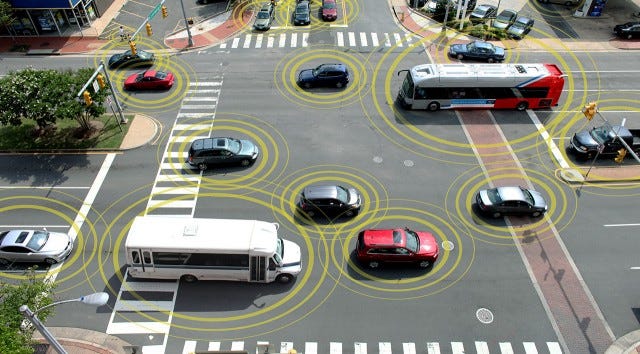
Nanalyze has a brief roundup of six vehicle-to-vehicle (V2V) startups to watch. What’s striking to me is how many of them have been around for quite a while — almost a decade in some cases:
Vehicle-to-vehicle communication is really exciting — imagine the hypothetical world with no traffic lights, because cars communicate with each other and weave through intersections.
This hypothetical future, though, might be a long ways out. V2V suffers right now from being at the losing end of a network effect — because almost nobody has V2V technology in their cars, it’s not particularly valuable to have V2V technology in your own car.
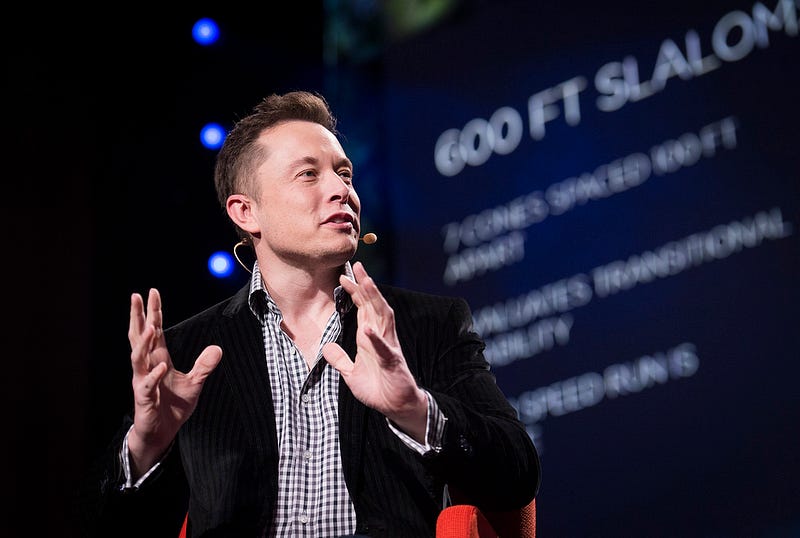
On a more immediately feasible note, he also says, “November or December of this year, we [Tesla] should be able to go from a parking lot in California to a parking lot in New York, no controls touched at any point during the entire journey,”
That’s pretty awesome, although the catch with these things is how generalizable the solution is.
If the demonstration works only from one very specific parking lot in New York, to another very specific parking lot in California, and only over one precise cross-country route, that’s impressive but not groundbreaking. Delphi actually did something like that a few years ago.
If, on the other hand, Tesla builds a system that can drive over a wide variety of routes, that will be a huge step toward Level 5.
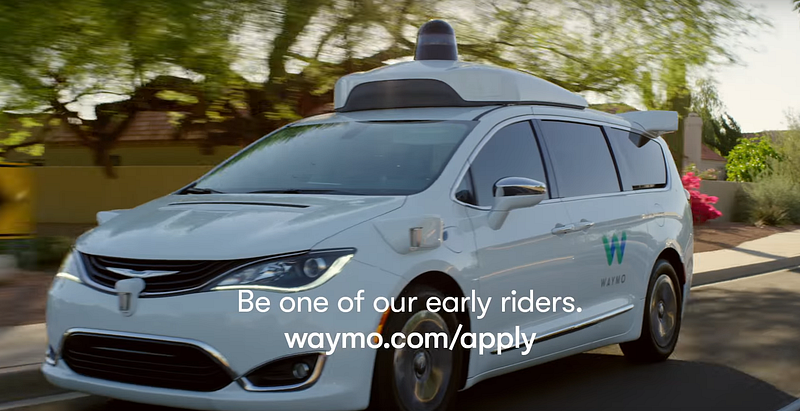
The cars are being tested in the Phoenix suburbs, and Waymo published a cute video with one of the families that has been testing the car.
To watch the video, it appears that the vehicle does not have a safety driver, although perhaps the family members are trained to operate self-driving cars in an emergency.
Now that Waymo is bringing the program out of stealth, it’s recruiting more families to try out the service, so if you live in the Phoenix area, you should apply!
This is a particularly interesting announcement, because speculation has been rampant about what Waymo’s next move is with self-driving cars.
Google (Waymo’s parent company) has had self-driving cars spinning around Mountain View for years, with paid test drivers. The caution about putting real passengers in these cars caused a lot of people to question whether Google was going to give up a big lead to more aggressive companies like Tesla and Uber.
It’s good to see Google getting out there and ramping up it’s customer base. Here’s hoping the vehicles come to northern California soon.
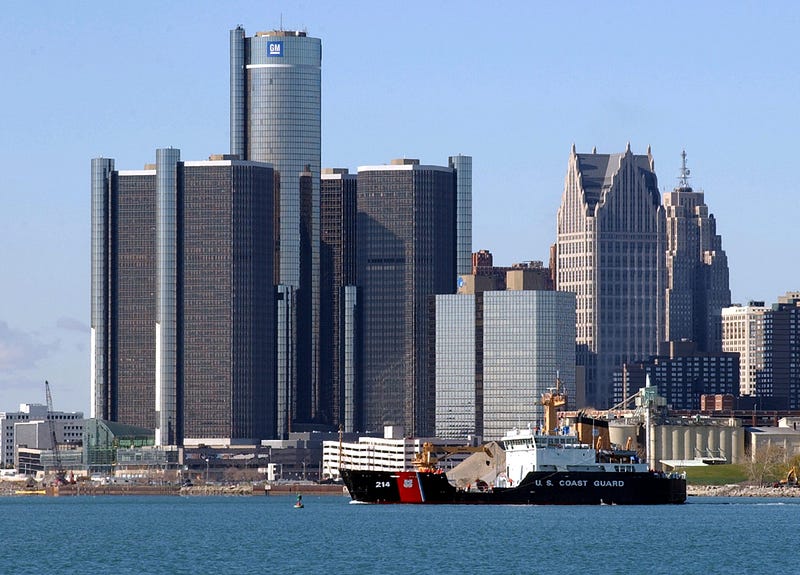
I just got back from a short trip to Detroit. Every time I go there, the city looks better. Downtown Detroit is now in really good shape, with lots of businesses and activity. Some combination of the casinos, the stadiums, and general urban renewal have really brought life back to downtown.
I’m also struck every time I go to Detroit by just how central the automotive industry is to the city. Probably half of the people I met worked in automotive, and it seemed like every business I drove past was automotive-focused. That’s especially true in the suburbs.
When I worked as a software engineer at AOL in the early aughts, I always got this sense that for all our good work, the real beating heart of the industry was in the Bay Area. Now that I work as an autonomous vehicle engineer in the Bay Area, it feels like the real beating heart of the industry is Detroit.
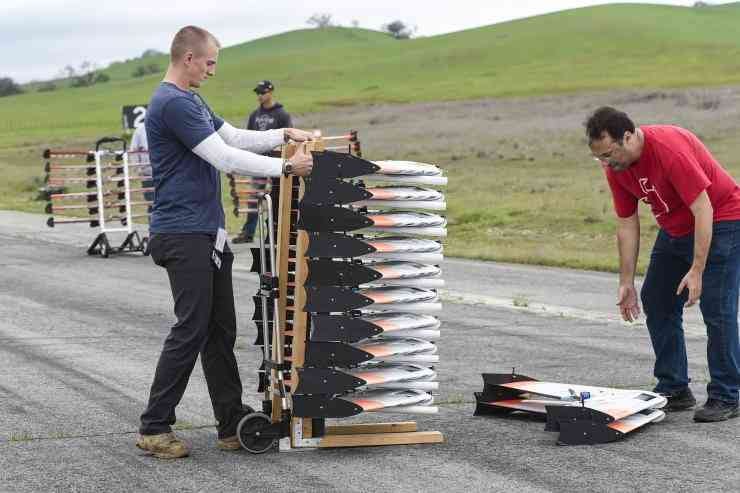
So far, this seems like a “research” project. For example, the drones are not yet equipped to perceive and identify their targets, so each drone just broadcast its GPS coordinates to its opponents, so they would know where to look.
And the drones aren’t shooting real bullets, yet.
But the future of aerial combat is in sight:
Dogfighting tactics have advanced dramatically since the World War I, but the advent of UAV swarms may bring a brand new set of challenges. Unmanned vehicles have freedom to dive, bank, and climb at rates human pilots cannot tolerate. But the real advantage may be in computing power that could track dozens of adversaries — far more than any human pilot could do — and develop new ways to address challenges.
Also, the Navy itself is testing swarms of autonomous vehicles, with governmental acronyms like LOCUST and CICADA. The Navy is primarily building them for purposes of reconnaissance and diversion, or so they say.
I will be in Detroit next Monday and Tuesday, speaking at the CAR HMI USA Conference! If you’ll be at the conference, please stop by at 9:30am on Tuesday to say hello.
If you won’t be at the conference, but you’re in the Detroit area, send me an email (david.silver@udacity.com). I am looking forward to meeting with people while I’m in the area, especially people who are interested in the Udacity Self-Driving Car Nanodegree Program.
And if you’re a Udacity student, join the #detroit channel in the student Slack community! We’re organizing an event for students.




 David Silver