More Federalism

Multiple reports state that the US Department of Transportation is warming up to autonomous driving.

Transportation Secretary Anthony Foxx has stated that USDOT will be releasing a new policy stance on driverless cars, and sooner rather than later.

This is one of those weird areas where the dividing line between federal and state authority is unclear. So far, driverless cars have primarily been the domain of state-level DMVs, but the USDOT has influence, as well, often via funding levels.

The classic example is that the federal government never mandated a nationwide drinking age of 21 years-old. Instead, Congress directed USDOT to withhold highway funding from any state that did not implement a 21 year-old drinking age.

The power of the purse is sometimes more meaningful than the power of the sword.


Originally published at www.davidincalifornia.com on November 27, 2015.
Innovator’s Dilemma

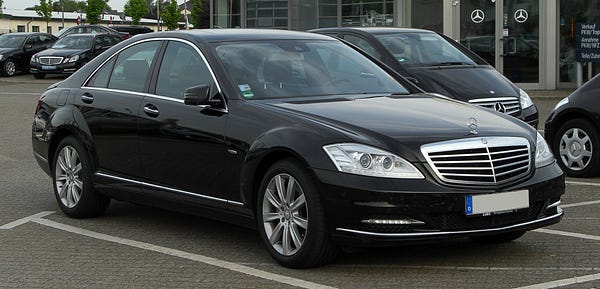
Mercedes-Benz

is surging ahead in the autonomous vehicle race.

The traditional, Innovator’s Dilemma model of the market suggests that Mercedes would be outflanked by technology upstarts. The upstarts, unencumbered by existing product lines and revenue streams, will be able to focus completely on the autonomous vehicle market.

The prescription for managing this is for Mercedes to open up an “internal startup”, in a separate geographic location.

Lo and behold, Re/code reports:

The company began with a brief history of its German founders. They were cast as disrupters before their time, birthing the automobile industry nearly a century ago “Silicon Valley-style.” That enterprising streak, the company continued, made it the first big carmaker to set up a research headquarters here in 1995.


Originally published at www.davidincalifornia.com on November 26, 2015.

Sex in Cars

Ben Guarino of Inverse makes the fun and 100% correct case that the rise of autonomous vehicles will lead to lots of sex in cars.

Who knew that The Mile High Club started in the early 1900s? Almost as soon as people got into the air they began having sex.

Guarino points out that people have sex in cars already, it’s just that the cars are stationary. That presents a few legal problems that could be solved by putting the cars in motion.

Nonetheless, other legal obstacles remain:

The gist of it is if you’re caught, you can get charged with something. Whether that’s indecency or prostitution or “crimes against nature” that’s up to whomever busts you.

Originally published at www.davidincalifornia.com on November 25, 2015.

Uber’s Autonomous Strategy

In GPS World, Kevin Dennehy makes the case that Uber’s recent partnerships and acquisitions have set it up beautifully to take the lead in autonomous vehicles.

Uber has made big moves implementing location technology by signing a deal with TomTom, buying Microsoft’s mapping technology, and outright purchasing deCarta this year. The company is working with Carnegie Mellon University in Pittsburg to develop autonomous vehicle technology.

And this:

“Because the continued success of [Uber’s] business depends on it, and they have the money to spend on it to gain a competitive advantage,” explained Scott Frank


Originally published at www.davidincalifornia.com on November 24, 2015.

Embry-Riddle to Study Driverless Cars

Since I am currently in Daytona Beach, Florida, this news seems worth noting.

A team of researchers from the College of Engineering at Embry-Riddle Aeronautical University’s Daytona Beach campus has begun a 14-month research project for the Florida Department of Transportation to determine the viability of using autonomous vehicles for the inspection of roadways and airport properties, line painting, and roadside trimming and mowing.

Originally published at www.davidincalifornia.com on November 23, 2015.

Quanergy and LiDar

There are relatively few startups in the autonomous driving industry right now. The big players are really big — Tesla, Google, Uber, Ford, Continental Automotive, and the list goes on.

One notable startup, however, is Quanergy, a mapping and navigation company that specializes in LiDar.

In Forbes, Liane Yvkoff highlights some daring statements the company has recently made:

“You cannot build autonomous cars without LiDar, and anyone who thinks differently, please challenge me.”

This statement about laser radar systems was made by Louay Eldada, CEO of Quanergy, to a crowd at the Connected Car Expo in Los Angeles, Calif., but it seemed directed to Tesla CEO Elon Musk or anyone who may have listened to his press conference in October when he announced the availability of AutoSteer.

I guess Elon Musk is challenging him.


Originally published at www.davidincalifornia.com on November 22, 2015.

One Trillion Extra Miles

KPMG just published a study about automotive innovation, which predicts that “personal miles traveled” which increase by 1 trillion miles between now and 2050. Half of that increase is due to population growth, but the other half is due to innovation and improvement in the automotive industry.

The increase due to innovation is projected to be ~10% of total PMT in 2050. In turn, the increase from 2015 total PMT to 2050 total PMT is projected to be ~50%.

I can’t comment on the specific numbers, but surely massive improvements in transportation automation will encourage people to travel more.

And that will affect resource development.

Traveling requires energy, and historically that energy has come primarily from fossil fuels.

While there is some hope that automation can help us become more efficient travelers, it seems likely we will need massive increases in fuel supply.

Even setting aside global warming concerns, it’s worth considering where we will find all of that fuel.

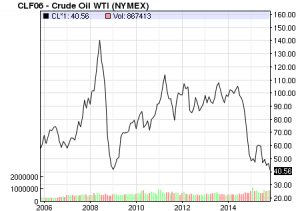
Oil prices are at decade-lows, so maybe now is a good time to go long oil.

On the other hand, Tesla is poised to revolutionize the battery industry, so maybe there.

By the way, coal (39%), natural gas (27%), and nuclear power (19%) account for 85% of current US electricity production.


Originally published at www.davidincalifornia.com on November 18, 2015.

Google Wins the Internet

A Google self-driving car was pulled over, for driving too slow.

Mostly this is just funny. But it does raise questions about how driving incentives (as opposed to just skill) will differ when humans cede control to machines — particularly machines programmed by other people.

Maybe I want to speed in order to get to a meeting, but Google doesn’t particularly want me to do that. Who gets final say?


Originally published at www.davidincalifornia.com on November 13, 2015.