Ford is targeting autonomous vehicles by 2020. These will be Level 4 autonomous vehicles, that provide fully autonomous driving in certain conditions — mostly notably favorable weather and geofencing.
Favorable weather is clear enough, but what is “geofencing”?
Geofencing is the act of limiting automotive autonomy to certain geographic areas — most notably well-mapped roads like highways and major thoroughfares.
Cars will (I assume?) be able to leave the geofenced area, but outside that zone, full autonomy is not guaranteed. This means the cars would need steering wheels, gas and brake pedals, and the full complement of human driving controls we associate with cars today.
It’s a little bit tricky to make that work, but not nearly as tricky as so-called Level 3 autonomy, where the computer and the human are passing control of the car amongst themselves, ping-pong-style.
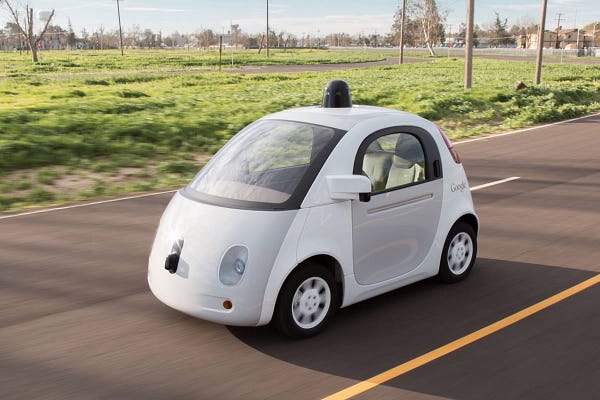
Or maybe not quite. The New York Times reports that, “Google said it would expand its testing of autonomous vehicles by installing its technology in a fleet of minivans made by Fiat Chrysler.”
That quote sounds more mundane.
This raises a couple of horse-race questions and one larger ecosystem question.
How much does this help Google?
It helps Google.
I’m not sure that Chrysler is specifically a great fit, nor am I sure that they’re a poor fit. It seems like if it weren’t Chrysler, it would be another car company. Perhaps partnering with an American-based manufacturer will help Google politically.
That said, this is a step forward, but maybe not a giant leap. 100 test vehicles is a great start, but it’s still a long way from a production model sold to consumers.
How much does this help Chrysler?
Hopefully it helps Chrysler.
FCA, as the company is known, has had less autonomous vehicle activity underway than many other manufacturers, so this puts them in the game.
But my mind immediately makes the comparison to mobile phone manufacturers, and here the record is not so promising. HTC was the first company to use Google software on its phones, and since then LG has produced Google’s Nexus line. In neither case has the Google partnership set the company up for huge success. Rather, Samsung has dominated the Android market.
How much does this help move forward autonomous vehicle technology?
Time will tell, but I view this as incremental, so far. If Google and Chrysler are able to work together mass-produce Level 4 autonomous vehicles on an accelerated schedule, that would be amazing.
But that’s a big if and so far it looks like small steps.
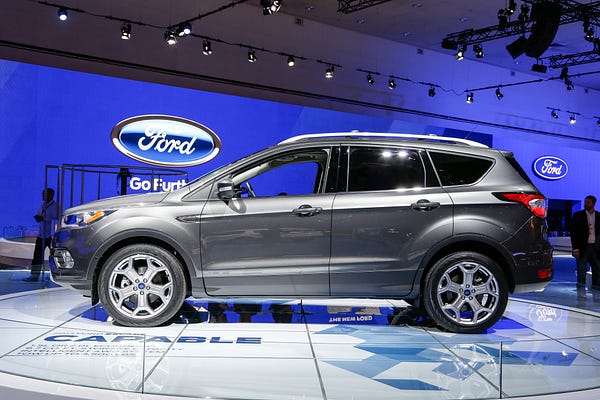
I took the 2017 Ford Escape for a test-drive yesterday and it is awesome!
Ford has revamped the interior, making it feel more spacious, but of course what really excited me are the self-driving features.
The 2017 Escape comes with self-parking for both left- and right-hand parallel park, and left- and right-hand perpendicular park. The driver still has to work the brakes, but the car will steer itself into the spot, including executing a three-point turn, if necessary.
The 2017 Escape also comes with true adaptive cruise control for the highway — it will slow down and speed up with traffic, at least at highway speeds.
I also noticed a little bit of steering assist for staying in the lane, and sure enough the owner’s manual describes the lane-keeping system as working above 40mph.
Of course, I’m most excited for 2020, when Ford has announced launching a Level 4 autonomous vehicle. In the meantime, I’m excited for the ADAS features on the 2017 Escape Titanium to make their way to other models. Eventually, I’d love to see these features available outside of the Titanium trim level and all the way down to base models.
This is a terrific car, and I’m not just saying that because I work for Ford. 🙂
The idea is to achieve the same effects as a suicide bomber, but without the unreliability or cost of a human terrorist.
Firstly, building self-driving cars seems well beyond the technological capability of ISIS.
Secondly, self-driving cars will be far less autonomous then the Model T. They will be connected back to the manufacturer, and presumably subject to government search warrants.
Thirdly, they are expensive.
On a related note, the FBI worries that self-driving cars will be uses for criminal activity generally.
I think the truth might be closer to the opposite. In a world where your car is constantly communicating with the Internet, who would want to use a car for crime?
“It gives you the impression that it’s doing more than it is,” says Trent Victor, senior technical leader of crash avoidance at Volvo, in an interview with The Verge. “[Tesla’s Autopilot] is more of an unsupervised wannabe.” In other words, Tesla is trying to create an semi-autonomous car that appears to be autonomous.
Volvo has promised death-proof cars in the past.
Other related news is that Volvo will launch fully autonomous, Level 4 vehicles with 100 test drivers in Sweden next year. The feature will be called Drive Me.
Also, Elon Musk says crashes occur 50% less frequently when drivers are in autopilot mode, although it’s not clear if this counts cars that exit autopilot mode only to crash seconds later.
The key takeaway here is apparently that the unit is ready to make money and stand on its own two feet, financially.
That, of course, raises the question of how the unit will make money.
The most likely scenario seems to be more-or-less direct competition with Uber. The unit might launch ride-sharing services first on geo-fenced areas such as college campuses, and grow out from there.
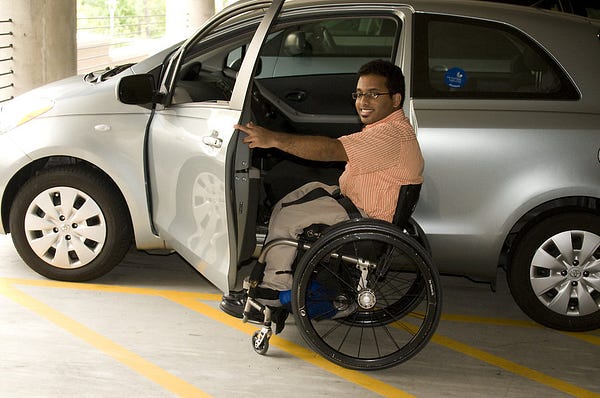
First, incorporating accessibility into the design of autonomous vehicles is the right thing to do, and will save people a lot of heartache in the long run.
Susan Henderson of the Disability Rights Education & Defense Fund argued, “For example, equal access to the internet for people who are blind and deaf and have other disabilities was not considered by web developers at first, and many people with disabilities experienced unnecessary obstacles to information — and still do.”
The second interesting point is that disability advocates are a natural constituency for relaxing autonomous vehicle regulation.
“NHTSA’s model state policies for [autonomous vehicle] operating or licensing users must preclude discrimination on the basis of disability by states or any government entity.”
That quote may be a little hard to decipher out of context, but what Henderson is saying there is that regulations — like those proposed by the California DMV — that mandate a sighted driver operate an autonomous vehicle, are obvious non-starters of the visually impaired.
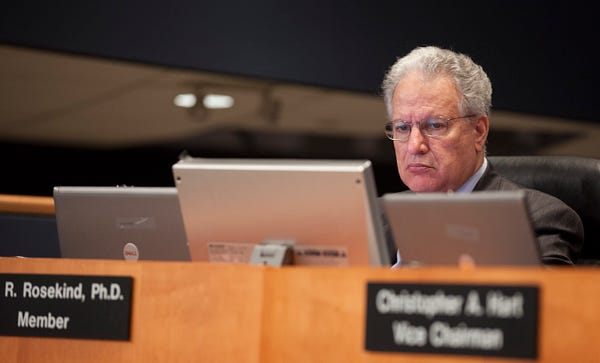
This appears to be mostly an information-gathering hearing, and I haven’t seen a lot of headline-grabbing news originating from the event.
What encourages me, though, is that the hearing was held in Silicon Valley.
I grew up near Washington, DC, and my wife has worked various stints for the federal government, so I have some familiarity with its strengths and weaknesses.
One of the strengths of the federal government is the quality of the people who aspire to work there. That is particularly true at senior levels, where appointees and staffers have substantial power, but it’s really true up and down the federal bureaucracy.
One of the weaknesses, however, is how Washington-centric the government can be. All three branches of government are located in DC. The senior bureaucracy, and much of the lower-level bureaucracy, is located in the DC-area as well.
Particularly outside of the most senior positions, the federal government is staffed largely by people who come from the DC area or who have lived in the DC area for years. It’s inevitable — those are the people who happen to be around when a vacancy opens.
And those are good people, but sometimes the rest of the country can contribute a little bit of diversity in viewpoint and experience.
So it’s nice to see the NHTSA escaping the DC bubble and visiting the rest of the country.
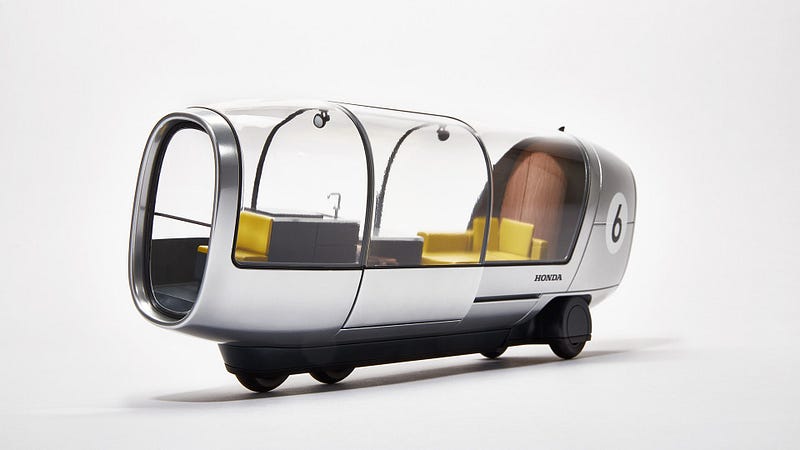
While engineers race to nail down the technology underpinning self-driving cars, automotive designers are brainstorming what the cars of the future will look like.
Honda. Great journey.envisions how vehicles of the future might look, if Honda were designing them to facilitate an around-the-world roadtrip.
Google, Ford, Lyft, Uber, and Volvo are forming the Self-Driving Coalition for Safer Streets.
The goal is to “work with lawmakers, regulators and the public to realize the safety and societal benefits of self-driving vehicles.”
One of the biggest challenges for self-driving cars is regulation, and companies have had to decide between whether to fly under the radar and hope for the best, or whether to get out in front of regulators and invite scrutiny.
This looks like a vote for getting out in front of the issue.