Disruption Watch: Gasoline, Insurance, and Rental Cars

Gasoline: This article teases the headline of a gasoline-less future, but the article doesn’t really deliver on the headline.

I got to thinking, though — in a self-driving world, maybe gasoline doesn’t go away, but gas stations change a lot.

Modern gas station infrastructure is predicated on people stopping at stations that are convenient relative to their pre-existing routes. But if the car can drive itself to the station and fill up (or a station attendant fills it), then the stations no longer need such prime real estate.

It might also make sense to consolidate gas stations, much the way landfills are consolidated.

And that’s to say nothing of the convenience stores at the station, which presumably the self-driving car won’t need.

Could it be the end of iconic gas station price signs?

Insurance: A Cal Poly professor offers a contrarian take on insurance in the age of self-driving cars. Patrick Lin argues that a combination of corporate risk-aversion, personal privacy, and software bugs will necessitate the continued existence of auto insurance.

I think maybe so, but the industry might also be so different as to be almost unrecognizable. At some point that must count as the end of the auto insurance industry and the beginning of the self-driving car insurance industry.

Also, reinsurers may prove more adept at servicing this market than existing auto insurers.

Car Rental: A press release highlights a panel discussion about how self-driving cars will affect the rental car industry.

It sounds like early days for them, but it’s definitely on the radar.

Breaking the Law

Is it ethical to program a robot to break the law?

Is it good business practice?

It seems like these questions will come up a lot in the future of self-driving cars. In fact, I bet they already have arisen, although I don’t know if any specific cases and how they’ve been handled.

The simplest case might be, is it legal to program a car to exceed the speed limit by 1 mph?

Or what about executing a three-point turn in the middle of an alley blocked off by a delivery truck?

It seems like a vehicle that perfectly followed all traffic laws might work great most of the time, but would occasionally come to a dead stop for hours, or days, on end, until an obstruction cleared.

It’s not clear to me how legislators and police should handle these situations, either.

Greenfields vs. Infill

I recently read two interesting articles about real estate development — one on greenfields and one on urban development.

The first article, by Lyman Stone, hypothesizes that American history is largely the history of greenfields. Over time, people have moved from the populated urban centers of the East Coast, and into undeveloped land in the West.

Stone’s hypothesis is that greenfields are much attractive to people than building more densely-populated urban centers. So much so that Stone advocates encouraging dying urban centers to just die already so that we can later re-develop them as greenfields.

Stone doesn’t tie this hypothesis to self-driving cars, but he does talk a lot about commuting costs and it’s not hard to see how autonomous vehicles will greatly expand the scope of practical greenfield development. This is particularly true in a population-sparse country like the United States.

The second article I read took the opposite tack. A report out of the U.K. estimates that self-driving vehicles will free up road and parking space in cities, opening perhaps 20% of the city for redevelopment.

This infill story is the opposite of the greenfield story, although of course they’re not mutually exclusive.

But I do wonder whether self-driving cars will cause a bigger revolution in urban or rural living.

In the short-term, my money is on urban living, since it will take longer for self-driving cars to work in rural areas.

But in the long-term, my bet is that self-driving cars will change rural-life in ways we can’t even imagine.

Rumor Mill: The Apple Car

One of the great mysteries of the self-driving car industry is what, if anything, Apple is building.

A related question is where are they building it?

Like most watchers, I assumed Apple was building its car in Cupertino, and there have been rumors and leaks to that effect.

But a German newspaper recently reported that maybe Apple is building its car team in Berlin.

Working backwards, there is some logic to this.

  1. Apple is famously secretive and Berlin is more discrete and lower-profile than Silicon Valley.
  2. Germany has a lot of great automotive engineers.

Or this could turn out to be just another unsubstantiated rumor about the Apple Car.

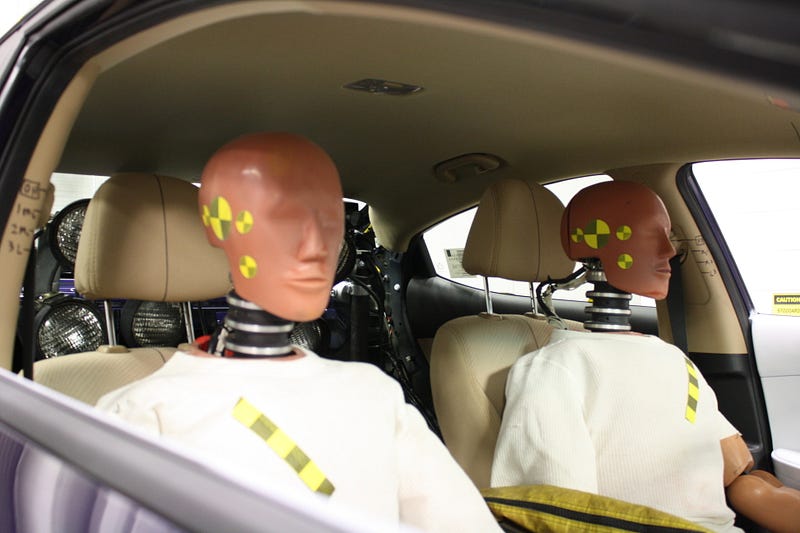
Safety Testing

The RAND Corporation just released a study hypothesizing that auto companies will not be able to prove the safety of self-driving cars in any feasible amount of time.

The key findings of the study are:

Autonomous vehicles would have to be driven hundreds of millions of miles and sometimes hundreds of billions of miles to demonstrate their reliability in terms of fatalities and injuries.

Under even aggressive testing assumptions, existing fleets would take tens and sometimes hundreds of years to drive these miles — an impossible proposition if the aim is to demonstrate their performance prior to releasing them on the roads for consumer use.

Therefore, at least for fatalities and injuries, test-driving alone cannot provide sufficient evidence for demonstrating autonomous vehicle safety.

Developers of this technology and third-party testers will need to develop innovative methods of demonstrating safety and reliability.

Even with these methods, it may not be possible to establish with certainty the safety of autonomous vehicles. Uncertainty will remain.

In parallel to developing new testing methods, it is imperative to develop adaptive regulations that are designed from the outset to evolve with the technology so that society can better harness the benefits and manage the risks of these rapidly evolving and potentially transformative technologies.

The study includes some sophisticated econometrics and comes across as an exercise in applied math more than anything else.

Which isn’t to say that the study is wrong.

But I would be curious for a comparison between safety testing for autonomous vehicles and safety testing for new car models, or even airplanes. Or maybe let’s look at how Henry Ford safety-tested the Model T way back when.

I suspect there are situations in which this is a solved problem, and hopefully we can learn something from those scenarios that we can then apply to self-driving cars.

My New Job

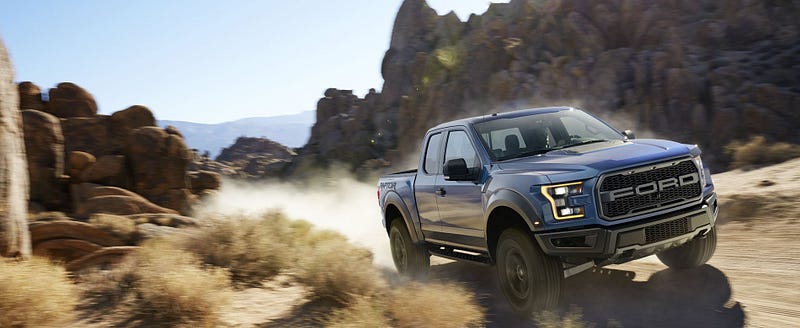
I am excited to write that on Monday, April 18th, I started a new job as a autonomous vehicle engineer at Ford Motor Company!

I work in Ford’s Research and Innovation Center in beautiful Palo Alto, California.

As you can imagine, I am incredibly enthusiastic about self-driving cars and I am thrilled to be working on them with one of the most advanced OEMs in the business. I am grateful to Ford for the opportunity!

Initially I was worried I might have to wind down my self-driving car posts as part of the new job, but it turns out Ford has a fairly open and well-defined social media policy.

Having taken Ford’s social media training during my first week, I will now make clear two things:

  1. I am work at Ford.
  2. I do not speak for Ford in my posts here. These posts are my own opinions and thoughts.

I will need to be a little circumspect about my new job, as a lot of the information is proprietary, but I think I am on safe ground saying that I will be splitting time between the domain controller group and the machine learning group, both on Ford’s autonomous vehicle team.

Wish me luck!

Autonomous Vehicles: China Update

Volvo: The Swedish car manufacturer Volvo announced plans to test self-driving cars in China.

Chang’an Automobile: The Chinese manufacturer just completed a test run of self-driving cars over 2000km (1200 miles) from Chongqing to Beijing.

The cars successfully drove distance from other vehicles, changed lanes, overtook and performed other manoeuvres, including three-point turns automatically but still need the help of a driver in certain road sections and gas stations, the designers said.

Ford Initiatives

Barron’s has an article out touting Ford’s advanced initiatives in electric and self-driving cars.

Among the Ford programs Barron’s highlights:

  • Ford Mobility — a subsidiary focused on gathering data for new business opportunities
  • Ford is the leading seller of plug-in hybrid vehicles in the U.S.
  • Ford’s fully autonomous vehicle test fleet will reach 30 vehicles by the end of 2016 — that’s more vehicles than any other company’s fleet
  • Autonomous vehicle testing in Michigan, California, and Arizona
  • GoPark — a parking app
  • GoDrive — a car-rental service
  • FordPass — a premium membership program

There’s a lot going on.

De Facto and De Jure Standards

A variety of European companies are banding together to push for uniform autonomous driving standards on the Continent.

According to Autocar professional:

Antoine Saucier, managing director for TomTom Automotive commented, “TomTom is delighted that the Dutch presidency is taking the initiative to accelerate innovation and development around autonomous driving in the EU. We are excited to work with PSA Group to support this event and to play a role in enabling the automotive industry to move closer to making autonomous driving a reality.”

This reminds me of the discussion of de jure and de facto standards we had in business school.

De jure (“by law”) standards are top-down and almost never work.

De facto (“by fact”) standards are bottom-up and generally are established by whoever gets a product to market first.

I wouldn’t be shocked to see the EU issue formal regulations in one direction, and then struggle to deal with the fact that the first autonomous vehicles don’t conform to the de jure rules.