
Almono

About a year ago, Uber more or less bought out the famed robotics department at Carnegie Mellon University in Pittsburgh.

The goal, of course, was to acquire a team capable of building autonomous vehicles.

Since then, however, not much news has come out of Steel City regarding Uber’s autonomous vehicle plans.

This week, though, Uber put forth a plan to turn an old steel mill into a vehicle test-drive site. The site, known as the Almono, is an exciting development for Pittsburgh.

There is some local opposition, however, mostly in the form of Pittsburgh-based Uber drivers who are not looking forward to being replaced by robots.

Environmental Impact

A team of researchers has put a little more thought into a topic I’ve been curious about for a while: what will be the environmental impact of self-driving cars?

The projection is that an self-driving cars will increase energy consumption by 5% to 60%, as people increase automotive usage.

It’s worth noting that this is an increase in energy used, which is correlated with environmental impact, but the fuel used to provide the energy matters greatly. Gasoline is a relatively unfriendly fuel for the environment, whereas electric cars charged by wind power are very environmentally friendly. In between, it gets a little fuzzy, although studies indicate that driving an electric vehicle powered by coal-fired plants is probably worse than a gas-powered car.

Of course these studies rely on significant assumptions about how people will behave in a future autonomous vehicle world, and we’ll have to see how those assumptions play out in practice.

One line of thought is that autonomous vehicles may be more problematic in Europe, where train-travel is currently common and might decrease, as compared to the US, where autonomous vehicles will mostly be a substitute for human-driven vehicles.

Mobileye Powers Forward

One of the key suppliers for autonomous vehicle manufacturers is the Israeli company Mobileye. Mobileye specializes in computer vision and produces the chips and software to help cars “see” the road.

The company has had to deal with significant bad press for the last six months, including the rumor that Tesla was looking to drop them and move to another supplier. Tesla later denied that rumor.

Mobileye just announced a big fourth-quarter 2015, though, and things appear to be on the upswing.

According to Tech Republic, here are the big takeaways:

1. Already known for its partnership with Tesla, Mobileye has signed up its third major automaker, Nissan, to add to existing partnerships with GM and VW.

2. Automakers are outsourcing the creation of vision-assistance tech instead of doing it themselves.

3. By teaming up with automakers, Mobileye is gathering information from cars on the road, which can allow it to “crowdsource” maps. This access to data gives it an edge over tech companies like Google, who have not yet announced partnerships with car companies.

Ford Will Add a Lot of Software Engineers

The Mobile World Congress in Barcelona has expanded beyond strictly mobile technology, and has become something of a CES, Part II.

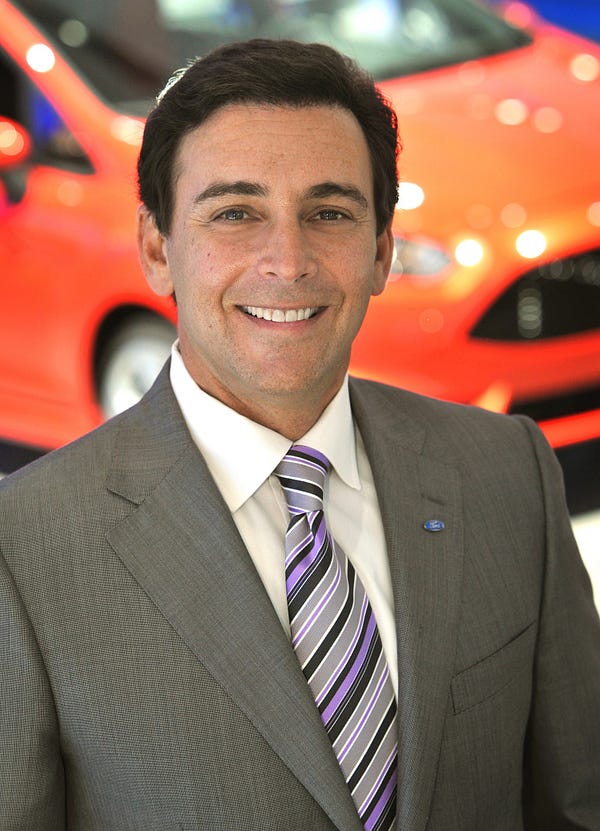
In that vein, Ford CEO Mark Fields announced at the conference that Ford will be tripling its investment in autonomous driving engineering staff, over the next five years.

“When the first Ford autonomous vehicle comes out, it will be an autonomous vehicle designed to serve millions of customers — not just for those who buy luxury vehicles,” Fields stated.

That’s pretty clearly aimed at Tesla.

To date, Ford has been the mainline auto manufacturer most dedicated to self-driving cars, with its MCity project and its University of Michigan partnerships.

With Toyota and Volvo and GM all stepping up their efforts, though, Ford is finally getting some competition. And thankfully they’re embracing the challenge.

Autonomous Vehicle Round-up

  1. NVIDIA is using their Gran Turismo game engine to power autonomous vehicle simulations.
  2. NVIDIA also beat their most recent revenue forecasts, thanks partly to autonomous vehicle demand.
  3. A UK startup called Immense Solutions is working on intelligence for autonomous vehicle fleets.
  4. UK-based Transportation Research Lab is launching a test environment in Greenwhich.

All in all, it’s a good time for self-driving car enthusiasts at NVIDIA or in the UK.


Originally published at www.davidincalifornia.com on February 18, 2016.

Moonshots

Google’s self-driving cars are developed within X, the department colloquially known as “Google’s Moonshot Factory”.

Astro Teller is the head of X (his name was Eric until he changed it to something that suited him more).

Recently, in Backchannel, Teller describes the secret of X as trying to solve huge problems and then killing the solutions (and entire projects!) that don’t work.

It’s a great meditation on the Silicon Valley “fail faster” ethos.

Read the whole thing.


Originally published at www.davidincalifornia.com on February 17, 2016.

Who Owns the Operating System?

An unexpected and brief article on the website of 7NEWS Denver raises the question of whether car buyers own the software that runs their cars.

This issue must have come up many times already — cars have had complex computer systems for years, if not decades — but I’m actually not sure what the answer is. Nor am I certain what the implications are.

The answer for computers and phones is (I think) that end-users purchase a software license (typically bundled into the purchase price of the device), but they don’t actually own the software.

Unless that model is for some reason unworkable in the automotive world, it seems reasonable enough to stick with that.

The 7NEWS story implies that the ownership issue has a bearing on how extensively end-users can modify their software, and indeed such an issue arose with Apple iPhones.

It will be interesting to learn more about the implications of this, especially since independent auto repair shops are a much larger economic force than independent computer repair shops.


Originally published at www.davidincalifornia.com on February 16, 2016.

Google Is Heading to Motor City

So reports Crain’s Detroit Business, although I have seen this rumor in other places, previously. Among other public evidence, Google is hiring a project manager in Ann Arbor.

It’s hard to say whether this is because Google is considering ramping up manufacturing, or because existing and potential partners are all there, or because of the local automotive talent pool. But it makes sense, and it will be interesting to see how much of X’s self-driving car project shifts to Michigan.


Originally published at www.davidincalifornia.com on February 16, 2016.

Could Self-Driving Cars Prevent 95% of All Accidents?

The UK-based Institution of Mechanical Engineers makes the claim that self-driving cars could prevent 95% of all accidents.

That report seems to be based on the fact that 95% of all accidents are caused by driver error.

Claiming that self-driving cars could prevent all of these accidents seems like a stretch, and certainly the computer drivers will create accidents of their own making.

And it’s possible that self-driving car accidents could be more rare but also more brutal, particularly if autonomous vehicles are able to routinely travel at higher speeds than human drivers.

But even withstanding all of that, it’s clear why auto insurers are nervous.


Originally published at www.davidincalifornia.com on February 12, 2016.