Tesla and AMD

Last week, CNBC broke news that Tesla is working hand-in-globe with AMD to design a new computational platform for self-driving cars.

To some extent, this is just more daily drama from inside the tiny world of autonomous vehicles in Silicon Valley. It seems like every few days a new partnership forms, or an old partnership frays, or an acquisition is announced.

The Tesla-AMD relationship does have a few interesting aspects, though:

  1. The relationship seems to depend largely on the presence of Jim Keller, an AMD veteran who now heads up Tesla’s Autopilot Hardware Engineering. I had never heard of Keller before, but the man has his own Wikipedia page as a hardware engineer, so I take it he’s a big deal.
  2. AMD had pretty much been out of the self-driving car game until now, at least publicly. This seems to put them right into the thick of it. And unlike Intel or NVIDIA, AMD specializes in both CPU and GPU design, so it has the potential to compete on both ends of the spectrum.
  3. Tesla had a public and messy breakup with Mobileye, which is now owned by Intel. Tesla currently uses the NVIDIA DRIVE PX 2 in its production vehicles. Now Tesla seems to be trying to singlehandedly turn AMD into an autonomous vehicle chip provider. Should we expect an NVIDIA-Xilinx partnership next?

Also, Keller is a Penn State alumnus, and the Nittany Lions are currently ranked #4 in both the AP and the Coaches’ Polls. Good time to be from State College.
Startup Watch: Aeva and Oryx

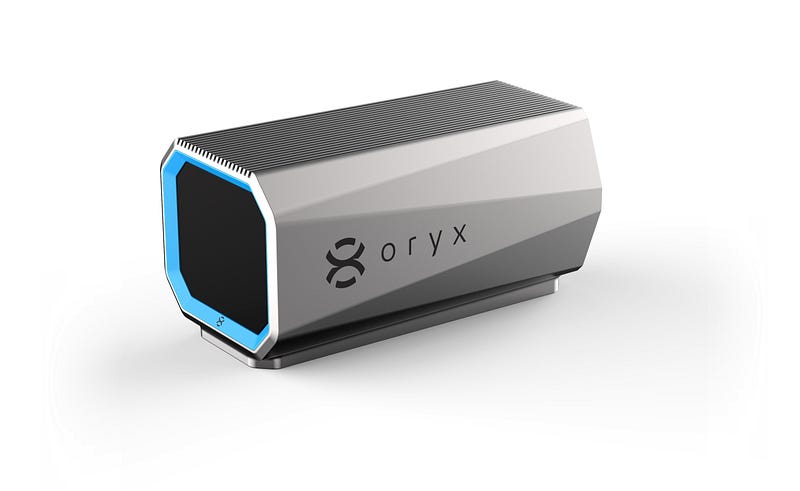
The New York Times recently ran a feature on a new Silicon Valley startup called Aeva, that aims to disrupt the autonomous vehicle sensor market. Two former Apple engineers are working on what sounds like essentially a lidar that measures velocity. Which, to be fair, would be a pretty big breakthrough.

The article was a little amusing in that it quoted Tarin Ziyaee, who is now the CTO of Voyage, the self-driving startup that spun out of Udacity. And, throughout the article, I thought, “Wow, this sounds a lot like Oryx,” a startup I met months ago with at the coffeeshop around the block from my house. Sure enough, at the end of the article:

“Researchers at the University of California, Berkeley, have built similar hardware, and companies like Velodyne and the start-ups Oryx Vision and Quanergy say they are exploring similar ideas.”

Small world.

New Nanodegree Programs

Big news at Udacity this week! We announced two new Nanodegree programs: Intro to Self-Driving Cars and Flying Car.

Intro to SDC opens up the world of autonomous vehicles to everybody. This program teaches students the Python, C++, linear algebra, calculus, statistics, and physics that you need to be successful in our Self-Driving Car Engineer Nanodegree Program. And once you complete the Intro to Self-Driving Cars Program, you are guaranteed admission to join me in the Self-Driving Car Engineer Nanodegree Program!

Our Flying Car Nanodegree Program takes self-driving cars into the third dimension. This program will launch early next year and will cover how to move vehicles in through the air: drones, quadcopters, and flying cars. I am excited to see where it goes!

Autonomous Vehicle Roundup

Google Spent $1.1 BB on Waymo So Far: In light of Mobileye, Cruise, Otto, and Argo AI, this seems like a steal.

Ford Faked a Self-Driving Car to Test out Human-Machine Interaction: It’s not clear to me that they really needed to fake the absence of a driver.

New Robotics Grads in Pittsburgh are Making $200,000 per Year: Carnegie-Mellon University basically caused this single-handedly. The returns to city from hosting a top-flight research university are looking pretty good.

Facebook’s Automotive Strategy

“I come with very good news. We’re the only company in Silicon Valley that’s not building a car.”

I wasn’t there, but apparently Sheryl Sandberg got some good laughs with that line at IAA New Mobility World yesterday.

So why is Facebook sponsoring one of the key events at the world’s largest automotive show?

Facebook does have an automotive strategy, and it seems to revolve around virtual reality and augmented reality.

The idea is that Facebook’s Oculus headsets could be used everywhere from the factory floor — where they would help autoworkers assemble vehicles more quickly — to in the car, where self-driving technology would free passengers to enjoy in-car virtual reality experiences.

So far it all seems to make sense, but it also seems a little vague. I’ll be excited when we see a specific product or service related to self-driving cars that Facebook wants to launch.

Udacity at IAA

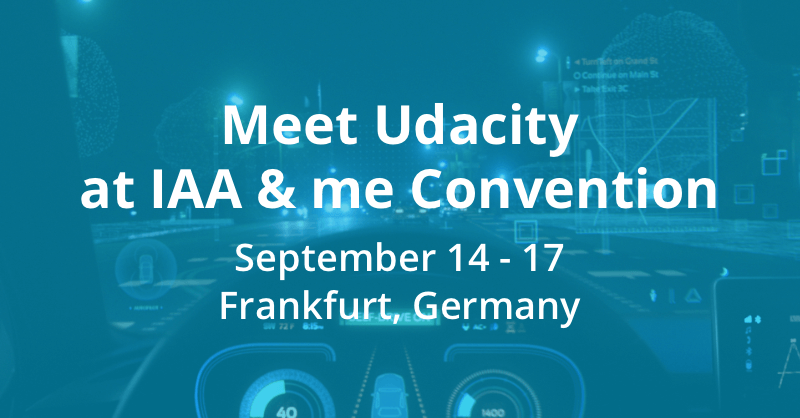
Udacity will be at the International Motor Show (IAA) in Frankfurt, Germany, this week!

Wednesday

I’ll be flying over on Wednesday as part of Lufthansa’s FlyingLab which is a little bit like South by Southwest in the sky.

Friday

My main event in Frankfurt will be at the me Convention, which is a conference put on by Mercedes-Benz in conjunction with SXSW. On Friday afternoon I’ll be speaking on a panel entitled, “Teaching Machines to Drive Like Humans”, with Sarah Marie Thornton from Stanford, and Danny Shapiro from NVIDIA. Come say hello!

Late Friday afternoon, Udacity will be at the Speaker’s Corner at the IAA New Mobility World. Meet our European team and ask me as many questions as you like about Udacity’s Self-Driving Car Engineer Nanodegree Program.

Saturday

Saturday afternoon we are excited to be holding a career workshop for Udacity students. Students will have the opportunity to take professional headshots, get career coaching from Udacity experts, and hear from me about hiring in the autonomous vehicle industry. This event is full, but drop a note here if this is something you’d be interested in attending for the future.

Saturday evening I’ll be hosting a dinner for Udacity Self-Driving Car students in Frankfurt. This event is full, too, but I am excited to meet everyone and we are working hard to squeeze people in. So if you are an enrolled student and would like to attend, send me an email to david.silver@udacity.com and we’ll find a space.

Sunday

I have to leave Germany on Sunday, sadly 😦

But the reason I’m rushing home is to get to TechCrunch Disrupt in San Francisco. Udacity has some big announcements coming out next week, so keep your ear to the ground for that!


If you’d like to say hello in Frankfurt, but won’t be able to make any of the events I mentioned here, email me at david.silver@udacity.com. I will have a little bit of down time between events and I’m excited to meet people on my first trip to Germany!

Chris Urmson on Recode Decode

On the latest episode of the Recode Decode podcast, Kara Swisher interviews Chris Urmson.

Urmson’s Carnegie Mellon team won the DARPA Urban Challenge in 2006. From there he joined my current boss, Sebastian Thrun, at the Google Self-Driving Car Project, back when Sebastian was running that. Urmson led the Google Self-Driving Car Project himself after Sebastian departed to launch Udacity. Most recently, Urmson left Google to found Aurora Innovation, his own self-driving car startup.

The interview is an hour long and Swisher lives up to her reputation as the best of tech journalists. They cover the early days of the DARPA challenges, how Urmson got to Google, why he left Google, what Aurora is doing, how the automotive industry and tech industry will partner and compete, when we will see fully autonomous vehicles on the road, and the moral responsibility autonomous vehicle engineers have to the drivers they might put out of work.

Listen to the whole thing.

https://art19.com/shows/recode-decode/episodes/e6ae4866-7f89-4674-810b-63fa991b7dce

Lyft and Drive.ai

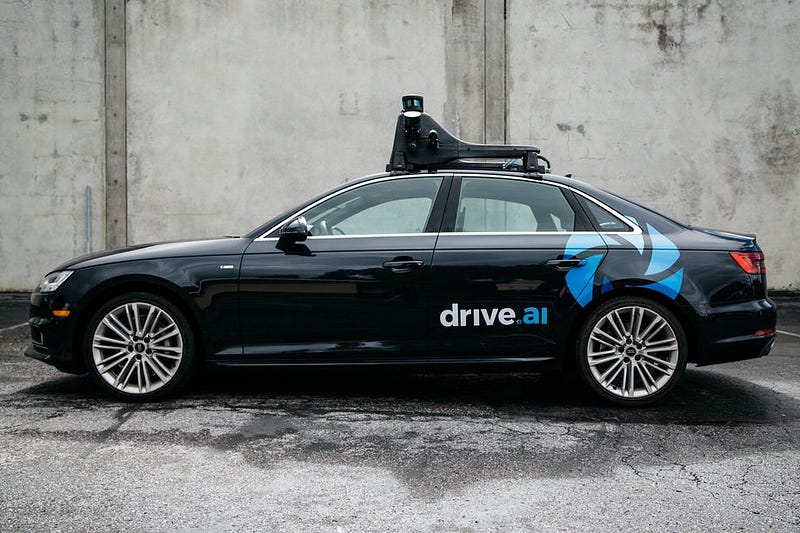
Lyft and Drive.ai will be offering free rides in self-driving cars to riders in the Bay Area who opt in. Soon, supposedly.

Lyft continues to build an impressive list of partnerships: GM, Jaguar Land Rover, nuTonomy.

The Drive.ai partnership sounds especially promising, since its written with the tone that this effort is going to start soon, maybe before the end of the year.

There are self-driving cars being tested on public streets in cities around the world: Pittsburgh, Phoenix, San Francisco, Singapore, Austin. Some of those cities even have self-driving cars testing with a limited set of pre-screened passengers.

But right now, as far as I know, there is only one city where any civilian off the street can show up and hail a self-driving vehicle. That would be Pittsburgh, where Uber has opened their fleet to public use (with safety drivers).

Drive.ai testing in the Bay Area would bring that number to two.

The SELF DRIVE Act

The Safely Ensuring Lives Future Deployment and Research In Vehicle Evolution (SELF DRIVE) Act just passed the House of Representatives unanimously. Congress loves a good backronym.

Wired has a nice rundown of the key parts of the bill. The major feature seems to be moving autonomous vehicle regulation from a patchwork of 50 different state regimes over to a single set of federal regulations. You’ll no longer have to worry about getting arrested when you take your self-driving car across state lines.

The law was pushed by a consortium of interested companies — Ford, Waymo, Lyft, Uber, and Volvo. To be honest, on self-driving cars, I trust my old employers at Ford more than I trust any department of motor vehicles.

The “unanimous” passage of the bill makes me a little nervous — as if not enough people were paying attention. Surely there is something in there somebody objects to. Personally, I kind of like the “laboratories of democracy” aspect of state regulation.

But since it seems destined to become law anyway, we should all hope this bill speeds the development of safe autonomous vehicles that prevent many of the 35,000 annual motor vehicle fatalities in the US.